June 25

Home / Uncategorized / June 25

Even more last words in history

“I have offended God and mankind because my work did not reach the quality it should have.” – Leonardo da Vinci, 2 May 1519

“I desire to go to hell, and not to heaven. In the former place I shall enjoy the company of popes, kings, and princes, while in the latter are only beggars, monks, hermits, and apostles.” – Niccolò Machiavelli, 21 June 1527


“All my possessions for a moment of time.” – Elizabeth I, 24 March 1603

“Oh, would to God I had never reigned! Oh, that those years I have spent in my kingdom I had lived a solitary life in the wilderness! Oh, that I had lived alone with God! How much more secure should I now have died! With how much more confidence should I have gone to the throne of God! What doth all my glory profit, but that I have so much the more torment in my death?” – Philip III of Spain, 31 March 1621

“I would never have married had I known that my time would be so brief. If I had known that, I would not have taken upon myself double tears.” – Alexis of Russia, 8 February 1676. For his two marriages Alexis held a Bachelorette-type competition, something that Byzantine emperors had occasionally done. Out of a hundred or so daughters of nobility, Alexis gave a handkerchief and ring to a young woman not favoured by his advisors. They diagnosed the poor girl with epilepsy and hustled her and her family off to Siberia. 

“I, John Brown, am now quite certain that the crimes of this guilty land will never be purged away but with Blood. I had, as I now think, vainly flattered myself that without very much bloodshed it might be done.” — John Brown, 2 December 1859

June 22

Home / Uncategorized / June 22

Still interested in famous last words? Here are some more.

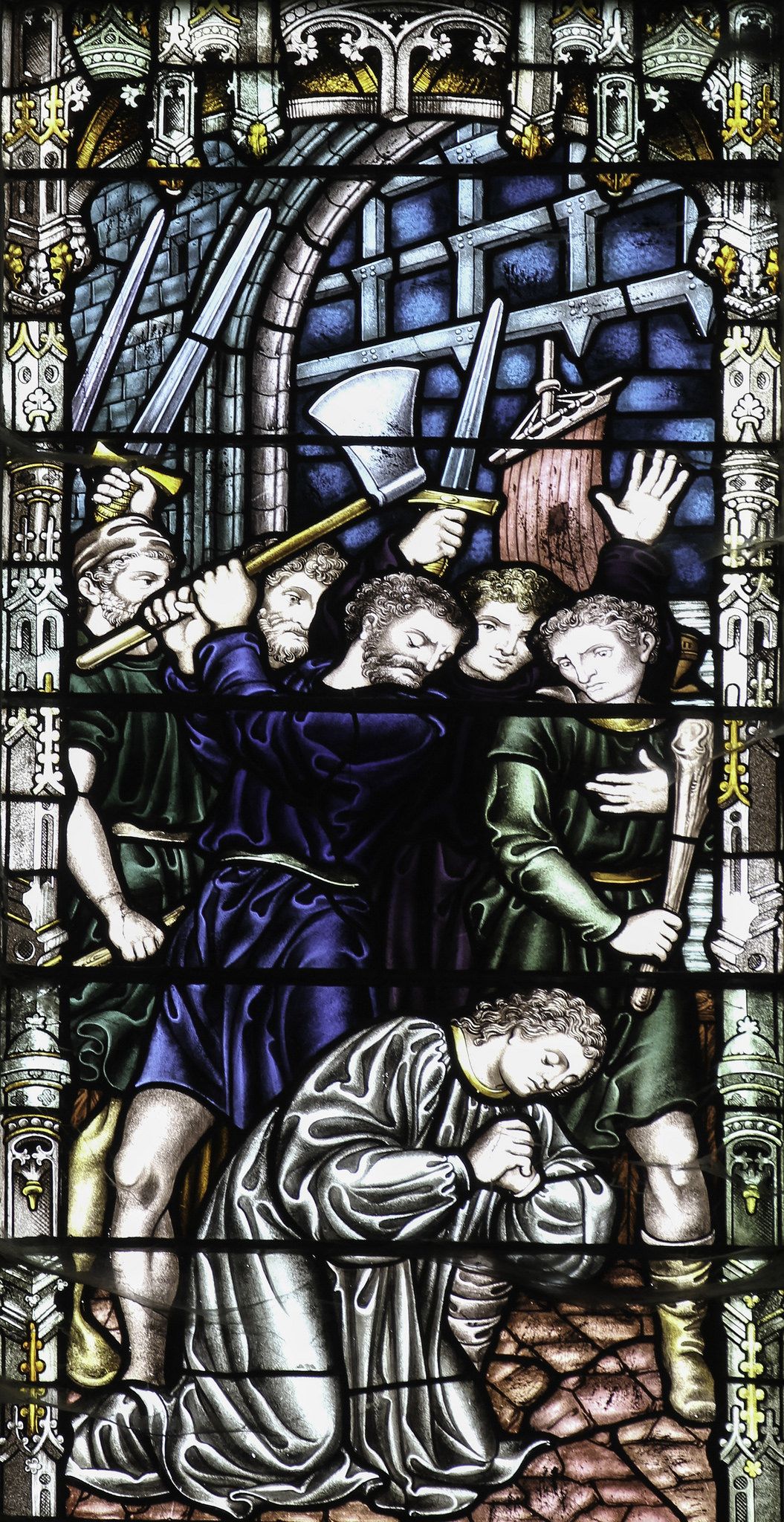
“You urge me in vain. I am not the man to provide Christian flesh for pagan teeth to devour, and it would be so acting if I delivered unto you that which the poor have laid by for their subsistence.”
— Ælfheah of Canterbury, (aka Alphege) Archbishop of Canterbury (19 April 1012), refusing to pay ransom before being killed in the hideous “blood eagle” fashion by his Danish captors. He was the first Archbishop of Canterbury to be martyred. Three more would follow in the next six centuries.

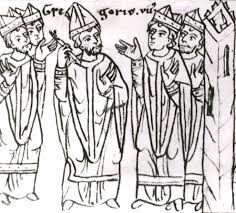
“I have loved justice and hated iniquity; therefore I die in exile.”
— Pope Gregory VII (25 May 1085), in exile in Salerno due to his conflicts with Henry IV, Holy Roman Emperor. One of the more quarrelsome popes of the Middle Ages, he excommunicated the Emperor Henry three times, waged war with the help of the rapacious Normans, and was driven from Rome by an angry populace.

“Pope Clement, Chevalier Guillaume de Nogaret, King Philip! I summon you to the Tribunal of Heaven before the year is out!” — Jacques de Molay, last Grand Master of the Knights Templar (11 or 18 March 1314), before being burned at the stake. This famous curse on the trio who had plotted the demise and plunder of the Templar order had great effect: all three died within the year.

“What have I done, or my children, that I should meet such a fate? And from your hands, too, you who have met with friendship and kindness from my people who have received nothing but benefits from my hands.”— Atahualpa, last Sapa Inca of the Inca Empire (26 July 1533), prior to execution by strangling. The Incans were a nasty bunch of human-sacrificing imperialist oppressors but the Spanish conquistadores led by the loathsome Francisco Pizarro who ended their domination were just as bad.

“All right then, I’ll say it. Dante makes me sick.” — Lope de Vega, Spanish playwright, the equivalent of Shakespeare in Hispanic culture, (27 August 1635). In the end, everyone is a critic.

June 18

Home / Uncategorized / June 18

Time to consider some last words of famous folk in history.

“Draw thy sword, and slay me, that men say not of me, A women slew him.” Abimelech, king of Schechem, wounded by a stone thrown by a woman during the siege of Thebez, 12th century BC

“Heaven has turned against me. No wise ruler arises, and no one in the Empire wishes to make me his teacher. The hour of my death has come.” – Confucius, 479 BC. The Chinese sage and philosopher was, like Plato, often asked to consult on political matters and suggest reforms but, like Plato, saw few of his suggestions implemented.


“Acta est fabula, plaudite.”  “Have I played the part well? Then applaud, as I exit.” Emperor Augustus, 14 AD

Seventeen centuries later, Samuel Johnson made this comment, alluding to the last words of Augustus:

A little more than nothing is as much as can be expected from a being who, with respect to the multitudes about him, is himself little more than nothing. Every man is obliged by the Supreme Master of the universe to improve all the opportunities of good which are afforded him, and to keep in continual activity such abilities as are bestowed upon him. But he has no reason to repine, though his abilities are small and his opportunities are few. He that has improved the virtue, or advanced the happiness, of one fellow-creature; he that has ascertained a single moral proposition, or added one useful experiment to natural knowledge, may be contented with his own performance; and, with respect to mortals like himself, may demand, like Augustus, to be dismissed at his departure with applause. 

“Vicisti, Galiaee.” “And yet Thou hast conquered, O Galilean!”

Julian the Apostate, Roman emperor (26 June 363 CE), mortally wounded in battle in battle against the Persians. Christian legend says that he was stabbed in the midst of the battle by the ghost of St. Longinus, the centurion who had supervised the execution of Jesus. His alleged last words were meant to acknowledge the triumph of Christ over Julian’s paganism.

I have now reigned above fifty years in victory or peace; beloved by my subjects, dreaded by my enemies, and respected by my allies. Riches and honours, power and pleasure, have waited on my call, nor does any earthly blessing appear to have been wanting to my felicity. In this situation, I have diligently numbered the days of pure and genuine happiness which have fallen to my lot: they amount to fourteen:—O man! place not thy confidence in this present world!

Abd al-Rahman III, Caliph of Córdoba, 961 was the founder of a new caliphate in Andalusia. He was a very successful politician and general, the scourge of the Christian kingdoms in Spain.

June 15

Home / Uncategorized / June 15

And now for some really good examples of personal vituperation.

Two British public figures slugged it out early in the 21st century. Christopher Hitchens, a witty commentator known for his aggressive atheism and flight from far-left politics to a position which supported the American invasion of Iraq, faced off against Scottish Member of Parliament George Galloway, who courted Muslim voters and backed the Syrian Assad regime. Neither let courtesy get in the way during their debates and writings.

A drink-soaked former Trotskyist popinjay. – George Galloway on Christopher Hitchens

Ba’athist, short-arse, sub-Leninist, Eastend carpet-bagger. – Christopher Hitchens on George Galloway

Made natural history by metamorphosing from a butterfly to a slug. – George Galloway on Christopher Hitchens

How unwise and incautious it is for such a hideous person to resort to personal remarks. Unkind nature, which could have made a perfectly good butt out of his face, has spoiled the whole effect by taking an asshole and studding it with ill- brushed fangs. – Christopher Hitchens on George Galloway

Ready to fight to the last drop of other people’s blood. – George Galloway on Christopher Hitchens

This is not just a matter of which of us can be the rudest, because I already conceded that to Mr Galloway. Or which of us can be the most cerebral, because he already conceded that to me. –Christopher Hitchens on George Galloway

June 11

Home / Uncategorized / June 11

Time for a few more tidbits from the history of the Eternal City.


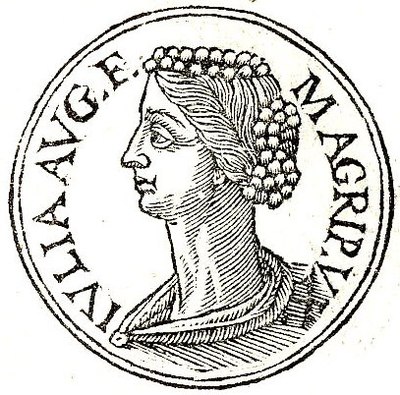
When some people–aware of the loose morality of Julia, the daughter of Augustus– expressed surprise that her children looked so much like her husband, Agrippa, she replied, “I never take passengers on board until the ship is loaded.” – Macrobius, Saturnalia


When the cost of buying meat to feed wild beasts that he had bought for a show was too high, Caligula decided to give them criminals to tear apart. Glancing at a line of prisoners, but paying no attention to the chart sheets, he stood in the middle of the colonnade and ordered everyone from ‘this bald man to that bald man to be led away.’ – Suetonius, Life of Caligula

The heretic Arius suffered a stomach upset and went into a public toilet in Alexandria. When he did not come back out, those who were with him with you and to look for him and found him dead. The seat on which she died was never used again, in recognition of his having thus been punished therefore his impiety. – Sozemus, History of the Church

In 1452 a single contractor removed 2,522 cart loads of marble from the Coliseum. Almost none of the marble use in building St. Peter’s Basilica was quarried for the purpose; it was plundered from existing buildings.


June 10

Home / Uncategorized / June 10

Time for a little look at some Roman oddities. 

Romulus ensured that his city should be large and populous by requiring the inhabitants to rear all their male children and also their firstborn daughters. He forbade the killing of any child under the age of three years unless it was born crippled or with deformities. In such cases he did permit exposure, provided the parents had first showed the child to five neighbours and obtained their agreement. – Dionysius of Halicarnassus

As censor, with the responsibility to defend traditional morality, the elder Cato expelled a member of the Senate for kissing his own wife in broad daylight in front of his daughter. He claimed that he himself never embraced his wife except after a loud peal of thunder, adding that he was happy when it thundered. – Plutarch, Cato the Elder

Putting goat dung in their diapers soothes hyperactive children, especially girls. – Pliny, Natural History

Sometimes we can refute a statement by pretending to agree with it. When Fabia, Dolabella’s wife, claimed to be 30, Cicero said, “That’s true, for I’ve heard her say it for the last 20 years.” –  Quintilian, Education of the Orator.

When the elder Cato was asked what he thought was the most profitable way of utilizing one’s resources, he replied,”Grazing livestock successfully”; what second to that, “Grazing livestock fairly successfully”; what third, “Grazing livestock unsuccessfully”; what fourth, “Raising crops.” When his questioner asked, “What about moneylending?” Cato replied, “What about murder?” – Cicero, On Duties

Dreaming that one is eating many onions is favourable for a sick man, for it means that he will recover and mourn for someone else whereas dreaming that one is eating just a few onions signifies death since the dying shed just a few tears, whereas those who mourn shed many. – Artemidorus of Daldis, The Interpretation of Dreams

When Nero was singing, no one was allowed to leave the theatre, even in an emergency. Some women therefore gave birth during his performances, and many people, weary with listening and applauding, secretly jumped over the wall or pretended to be dead and were carried out to be buried. – Suetonius, Life of Nero

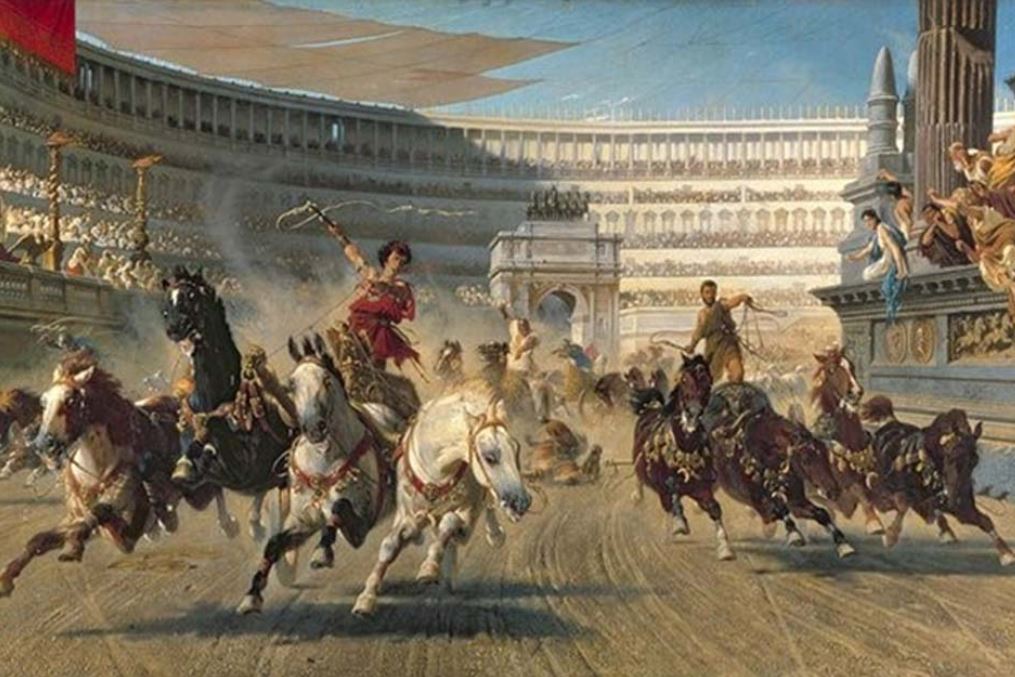
From memorial inscriptions it has been calculated that the mean age at death for charioteers was 22 1/2 years.

June 7

Home / Uncategorized / June 7

1780 The Gordon Riots

On the 7th of June in 1780, London was in the almost unchecked possession of a mob composed of the vilest of the populace, in consequence of a singular series of circumstances. A movement for tolerance to the small minority of Catholics—resulting in an act [The Papists Act,1778] for the removal of some of their disabilities in England, and the introduction of a bill (1779) for a similar measure applicable to the mere handful of that class of religionists in Scotland—had roused all the intolerant Protestant feeling in the country, and caused shameful riots in Edinburgh. A so-called Protestant Association, headed by a half-insane member of the House of Commons—Lord George Gordon [pictured below], brother of the Duke of Gordon —busied itself in the early part of 1780 to besiege the Houses of Parliament with petitions for the repeal of the one act and the prevention of the other.

On the 2nd of June a prodigious Protestant meeting was held in St. George’s Fields —on a spot since, with curious retribution, occupied by a Catholic cathedral—and a ‘ monster petition,’ as it would now be called, was carried in procession through the principal streets of the city, to be laid before Parliament. Lord George had by this time, by his wild speeches, wrought up his adherents to a pitch bordering on frenzy. In the lobbies of the Houses scenes of violence occurred, resembling very much those which were a few years later exhibited at the doors of the French Convention, but without any serious consequences. The populace, however, had been thoroughly roused, and the destruction of several houses belonging to foreign Catholics was effected that night. Two days after, a Sunday, a Catholic chapel in Moorfields was sacked and burned, while the magistrates and military presented no effective resistance.

The consignment of a few of the rioters next day to Newgate roused the mob to a pitch of violence before unattained, and from that time till Thursday afternoon one destructive riot prevailed. On the first evening, the houses of several eminent men well affected to the Catholics and several Catholic chapels were destroyed. Next day, Tuesday, the 6th, there was scarcely a shop open in London. The streets were filled with an uncontrolled mob. The Houses of Parliament assembled with difficulty, and dispersed in terror. The middle-class inhabitants—a pacific and innocent set of people—went about in consternation, some removing their goods, some carrying away their aged and sick relations. Blue ribbons were generally mounted, to give assurance of sound Protestantism, and it was a prevalent movement to chalk up ‘NO POPERY,’ in large letters on doors.


In the evening, Newgate was attacked and set fire to, and 300 prisoners let loose. The house of Lord Mansfield, at the north-east corner of Bloomsbury Square, was gutted and burnt, the justice and his lady barely making their escape by a back-door. The house and distillery of a Mr. Langdale, a Catholic, at the top of Holborn Hill, were destroyed, and there the mob got wildly drunk with spirits, which flowed along the streets like water. While they in many various places were throwing the household furniture of Catholics out upon the street, and setting fire to it in great piles, or attacking and burning the various prisons of the metropolis, there were bands of regular soldiery and militia looking on with arms in their hands, but paralysed from acting for want of authority from the magistrates. Mr. Wheatley’s famous picture, of which a copy is annexed, gives us a faint idea of’ the scenes thus presented; but the shouts of the mob, the cries of women, the ring of fore-hammers breaking open houses, the abandonment of a debased multitude lapping gin from the gutters, the many scenes of particular rapine carried on by thieves and murderers, must be left to the imagination.

Thirty-six great conflagrations raged that night in London; only at the Bank was the populace repelled—only on Blackfriars Bridge was there any firing on them by the military. Day broke upon the metropolis next day as upon a city suddenly taken possession of by a hostile and barbarous army. It was only then, and by some courage on the part of the king, that steps were taken to meet violence with appropriate measures. The troops were fully empowered to act, and in the course of Thursday they had everywhere beaten and routed the rioters, of whom 210 were killed, and 218 ascertained to be wounded. Of those subsequently tried, 59 were found guilty, and of these the number actually executed was twenty.

The leader of this strange outburst was thrown into the Tower, and tried for high treason; but a jury decided that the case did not warrant such a charge, and he was acquitted. The best condemnation that could be administered to the zealots he had led was the admission generally made of his insanity—followed up by the fact, some years later, of his wholly abandoning Christianity, and embracing Judaism. It is remarkable that Lord George’s family, all through the seventeenth century, were a constant trouble to the state from their tenacity in the Catholic faith, and only in his father’s generation had been converted to Protestantism, the agent in the case being a duchess-mother, an Englishwoman, who was rewarded for the act with a pension of £1000 a-year. Through this Duchess of Gordon, however, Lord George was great-grandson of the half-mad Charles Earl of Peterborough, and hence, probably, the maniacal conduct which cost London so much.

See https://georgiasouthern.libguides.com/c.php?g=602478&p=5463809 for an interactive map that charts the mayhem in London.


May 24

Home / Uncategorized / May 24

1856 Pottawatomie Massacre

Bleeding Kansas again. John Brown was an abolitionist activist who had recently moved to the Kansas Territory to aid the forces of anti-slavery settlers. In May, 1856, he joined a group riding to the aid of the town of Lawrence, centre of the Free State movement, which was threatened by a pro-slavery militia. Finding, en route, that they were too late to be of any use to Lawrence, Brown, four of his sons, and two other men decided to march toward Pottawatomie Creek, near present-day Lane, Kansas, to the homes of pro-slavery sympathizers. 

On the night of May 24th, 1856, Brown banged on the door of James Doyle and ordered the men inside to come out. Brown’s sons then attacked them with broadswords. They executed three of the Doyles, father and sons (a 16-year-old boy was spared after his mother pleaded for his life), splitting open heads and cutting off arms. Brown himself put a bullet into the head of James Doyle. The gang then sought out other pro-slavery supporters in the area. They traveled to Allen Wilkinson’s home, where, against the protestations of Wilkinson’s wife, who was sick with the measles, they took Wilkinson and hacked him to death, leaving his body alongside the road.

Brown’s men then crossed to the south bank of the creek and approached the home of James Harris. Here Brown’s group found several guests and questioned them about their views on slavery and whether they had participated in the attack on Lawrence earlier in the week. William Sherman’s answers did not satisfy Brown, and he was killed behind the residence and his body left in the creek. The Browns then disappeared into the night.

Proslavery forces launched a manhunt, plundering homesteads as they searched the countryside for the Pottawatomie killers. John Brown took to the woods and evaded capture. His sons did not fare as well; John Jr. and Jason — neither of whom had been involved at Pottawatomie — were savagely beaten. Frederick was shot through the heart at the Battle of Osawatomie and Brown’s Station was burnt to the ground. 


May 11

Home / Uncategorized / May 11

1812 The Assassination of Spencer Perceval

The only assassination of a British Prime Minister took place on this date when Spencer Perceval was gunned down outside the House of Commons. For some reason, political murders are rare in the British Commonwealth, much less frequent than in presidential systems. Yet another advantage of a constitutional monarchy.

A near-contemporary account reveals the fate of the assailant and his motives.

A weak ministry, under a premier of moderate abilities, Mr. Spencer Percival, was broken up, May 11, 1812, by the assassination of its chief. On the evening of that day, Mr. Percival had just entered the lobby of the House of Commons, on his way into the house, when a man concealed behind the door shot him with a pistol. He staggered forward with a slight exclamation, and fell expiring. The incident was so sudden, that the assassin was at first disregarded by the bystanders. He was at length seized, and examined, when another loaded pistol was found upon him. He remained quite passive in the hands of his captors, but extremely agitated by his feelings, and when some one said, ‘Villain, how could you destroy so good a man, and make a family of twelve children orphans?’ he only murmured in a mournful tone, ‘I am sorry for it.’ It was quickly ascertained that he was named John Bellingham, and that a morbid sense of some wrongs of his own alone led to the dreadful deed. His position was that of an English merchant in Russia: for some mercantile injuries there sustained he had sought redress from the British government; but his memorials had been neglected.

Exasperated beyond the feeble self-control which his mind possessed, he had at length deliberately formed the resolution of shooting the premier, not from any animosity to him, against which he loudly protested, but ‘for the purpose,’ as he said, ‘of ascertaining, through a criminal court, whether his Majesty’s ministers have the power to refuse justice to [for] a well-authenticated and irrefutable act of oppression committed by their consul and ambassador abroad.’ His conduct on his trial was marked by great calmness, and he gave a long and perfectly rational address on the wrongs he had suffered, and his views regarding them. There was no trace of excitable mania in his demeanour, and he refused to plead insanity. The unhappy man, who was about forty-two years of age, met his fate a week after the murder with the same tranquillity. He probably felt death to be a kind relief from past distresses, for it was his own remark on his trial, ‘Sooner than suffer what I have suffered for the last eight years, I should consider five hundred deaths, if it were possible for human nature to endure them, far more to be preferred.’ He had left a wife of twenty years, with a babe at her breast, in St. Petersburg, waiting to be called to England when his affairs should be settled. A more affecting image of human misery can scarcely be conceived.

April 17

Home / Uncategorized / April 17

1163 The death of Héloïse

The story of the tragic love between the philosopher Peter Abelard (1079-1142) and the beautiful and learned Héloïse d’Argenteuil (1100-1163) is told in Chambers’ Book of Days. Chambers is justifiably harsh on Abelard who, despite his academic brilliance, was a thorough-going jerk. 

The story of Heloise and Abelard is one of the saddest on record. It is a true story of man’s selfishness and woman’s devotion and self-abnegation. If we wished for an allegory which should be useful to exhibit the bitter strife which has to be waged between the earthly and the heavenly, between passion and principle, in the noblest minds, we should find it provided for us in this painful history. We know all the particulars, for Abelard has written his own confessions, without screening himself or concealing his guilt; and several letters which passed between the lovers after they were separated, and devoted to the exclusive service of religion, have come down to posterity.

Not alone the tragic fate of the offenders, but also their exalted worth and distinguished position, helped to make notorious the tale of their fall. Heloise was an orphan girl, eighteen years old, residing with a canon of Notre Dame, at Paris, who was her uncle and guardian. This uncle took great pains to educate her, and obtained for her the advantage of Abelard’s instruction, who directed her studies at first by letters. Her devotion to study rendered her remarkable among the ladies of Paris, even more than her beauty. ‘In face,’ Abelard himself informs us, ‘she was not insignificant; in her abundance of learning she was unparalleled; and because this gift is rare in women, so much the more did it make this girl illustrious through the whole kingdom.’

Abelard, though twice the age of Heloise, was a man of great personal attraction, as well as the most famous man of his time, as a rising teacher, philosopher, and divine. His fame was then at its highest. Pupils came to him by thousands. He was lifted up to that dangerous height of intellectual arrogance, from which the scholar has often to be hurled with violence by a hard but kind fate, that he may not let slip the true humility of wisdom. ‘Where was found,’ Heloise writes, ‘the king or the philosopher that had emulated your reputation? Was there a village, a city, a kingdom, that did not ardently wish to see you? When you appeared in public, who did not run to behold you? And when you withdrew, every neck was stretched, every eye sprang forward to follow you. The women, married and unmarried, when Abelard was away, longed for his return!’ And, becoming more explicit, she continues: ‘You possessed, indeed, two qualifications—a tone of voice, and a grace in singing—which gave you the control over every female heart. These powers were peculiarly yours, for I do not know that they ever fell to the share of any other philosopher. To soften by playful instruments the stern labours of philosophy, you composed several sonnets on love, and on similar subjects. These you were often heard to sing, when the harmony of your voice gave new charms to the expression. In all circles nothing was talked of but Abelard; even the most ignorant, who could not judge of harmony, were enchanted by the melody of your voice. Female hearts were unable to resist the impression.’ So the girl’s fancies come back to the woman, and it must have caused a pang in the fallen scholar to see how much his guilt had been greater than hers.

It was a very thoughtless thing for Fulbert to throw together a woman so enthusiastic and a man so dangerously attractive. In his eagerness that his niece’s studies should advance as rapidly as possible, he forgot the tendency of human instinct to assert its power over minds the most cultivated, and took Abelard into his house. A passionate attachment grew up between teacher and pupil: reverence for the teacher on the one hand, interest in the pupil on the other, changed into warmer emotions. Evil followed. What to lower natures would have seemed of little moment, brought to them a life of suffering and repentance. In his penitent confessions, no doubt conscientiously enough, Abelard represents his own conduct as a deliberate scheme of a depraved will to accomplish a wicked design; and such a terrible phase of an intellectual mind is real, but the circumstances in which the lovers were placed are enough to account for the unhappy issue. The world, however, it appears, was pleased to put the worst construction upon what it heard, and even Heloise herself expresses a painful doubt, long afterwards, for a moment, at a time when Abelard seemed to have forgotten her. ‘Account,’ she says, ‘for this conduct, if you can, or must I tell you my suspicions, which are also the general suspicions of the world? It was passion, Abelard, and not friendship, that drew you to me; it was not love, but a baser feeling.’

The attachment of the lovers had long been publicly known, and made famous by the songs which Abelard himself penned, to the utter neglect of his lectures and his pupils, when the utmost extent of the mischief became clear at last to the unsuspicious Fulbert. Abelard contrived to convey Heloise to the nunnery of Argenteuil. The uncle demanded that a marriage should immediately take place; and to this Abelard agreed, though he knew that his prospects of advancement would be ruined, if the marriage was made public. Heloise, on this very account, opposed the marriage; and, even after it had taken place, would not confess the truth. Fulbert at once divulged the whole, and Abelard’s worldly prospects were for ever blasted. Not satisfied with this, Fulbert took a most cruel and unnatural revenge upon Abelard, [his thugs castrated the philosopher] the shame of which decided the wretched man to bury himself as a monk in the Abbey of St. Dennis. Out of jealousy and distrust, he requested Heloise to take the veil; and having no wish except to please her husband, she immediately complied, in spite of the opposition of her friends.

Thus, to atone for the error of the past, both devoted themselves wholly to a religious life, and succeeded in adorning it with their piety and many virtues. Abelard underwent many sufferings and persecutions. Heloise first became prioress of Argenteuil; afterwards, she removed with her nuns to the Paraclete, an asylum which Abelard had built and then abandoned. But she never subdued her woman’s devotion for Abelard. While abbess of the Paraclete, Heloise revealed the undercurrent of earthly passion which flowed beneath the even piety of the bride of heaven, in a letter which she wrote to Abelard, on the occasion of an account of his sufferings, written by himself to a friend, falling into her hands. In a series of letters which passed between them at this time, she exhibits a pious and Christian endeavour to perform her duties as an abbess, but persists in retaining the devoted attachment of a wife for her husband. Abelard, somewhat coldly, endeavours to direct her mind entirely to heaven; rather affects to treat her as a daughter than a wife; and seems anxious to check those feelings towards himself which he judged it better for the abbess of the Paraclete to discourage than to foster. Heloise survived Abelard twenty-one years.

Visitors to Père Lachaise cemetery in Paris are told that the bodies of the two lovers are interred there side by side.