April 15

Home / Uncategorized / April 15

1889 Death of a leper saint

Native Hawaiians in the 19th century were beset by the ravages of imported diseases to which they had no natural immunity: smallpox, cholera, influenza, and leprosy. Those who contracted leprosy (now known as Hansen’s disease) were quarantined in villages on an isolated peninsula of the island of Molokai. There they lived in miserable conditions, demoralized and poorly supplied with essentials.

In 1873 the Catholic bishop decided that the lepers required the service of a priest. Four missionaries volunteered to go in rotation and the first to arrive was a Belgian of the Congregation of the Sacred Hearts of Jesus and Mary named Father Damien. He remained on the island for the rest of his life, treating the suffering with dignity, burying the dead, empowering leaders from among the community, and improving living conditions. Eventually hospitals, roads, schools and a church were built to serve the victims of leprosy. After serving there for 11 years he contracted the disease but carried on there until his death in 1889. He was buried on Molokai but the King of the Belgians asked for his body to be returned to his native land where it as interred near to his home village. In 1995 one of his hands was returned to Hawaii and is laid in his original grave.

In 2008 the Catholic Church declared him to be a saint. The anniversary of his death is a holiday in Hawaii.

March 22

Home / Uncategorized / March 22

1930 Birth of Pat Robertson

The son of a Democratic United States senator from Virginia, Pat Robertson turned from a career in the law to one in religion and made himself one of the most influential and enigmatic leaders of the so-called Christian Right during the Reagan era of the 1980s and beyond. As president of the Christian Coalition, which he founded, from 1989 to 1997, Robertson helped galvanize millions of evangelical Christians toward greater participation in the political process, and has himself considered running for the White House.

Raised in the Southern Baptist tradition, Robertson graduated magna cum laude from Washington and Lee University in 1950. After serving as a Marine Corps officer during the Korean conflict he returned to his education, receiving a J.D. from Yale Law School in 1955. Failures in an early business venture, and his attempts to pass the New York bar exam helped steer him back toward his religious roots. He attended a theological seminary, graduating with a B.Div., and worked for a time with the mostly black inner-city poor in Brooklyn before returning to Virginia where he was ordained a Southern Baptist minister in 1960.

Robertson demonstrated the intensely entrepreneurial side of his character in 1961 when he started operating WYAH, a television station in Virginia that became the first in the nation devoted to primarily religious programming. From this single station Robertson launched what would become a veritable communications empire: the Christian Broadcasting Network (CBN), offshoots of which grew to include a relief agency, cable television holdings, the American Center for Law and Justice, which specializes in First Amendment cases, and Regent University, which came to call itself “America’s premier Christian graduate school.”

The flagship program of his network was The 700 Club, which Robertson hosted from 1966. His success both behind and before the camera led many conservative Christians to promote Robertson’s involvement in U.S. politics. Though he at first thought political organizing was inconsistent with his clerical calling, he had a change of heart by the 1980s, when he began to organize mobilization efforts such as a 1980 “Washington for Jesus” rally and his own Freedom Council (1981-86). In 1984 he changed his party affiliation to Republican. When presented in 1987 with what was purported to be a petition of some 3.3 million names urging him to run for office, he resigned his church offices and launched a campaign for the 1988 Republican presidential nomination. Despite early successes in some primaries, Robertson’s candidacy had been decisively rejected by “Super Tuesday” in March of that year, even by many members of conservative Christian churches.

Undaunted by his electoral failure Robertson returned to the idea of grassroots organizing. In 1989 he founded and became the first president of the Christian Coalition, an organization whose mission was to represent evangelical opinion to government bodies, protest anti-Christian bias in public life, train leaders, and develop policies–all while being careful not to lose its tax-exempt status by supporting partisan candidates. The Christian Coalition proved very successful in enunciating the social agenda of the religious right in the United States. With a national membership well in excess of a million, the group raised the political profile of a hitherto-marginalized section of the population. Mirroring the Republican Party’s “Contract with America,” the Coalition advanced its “Contract with the American Family,” which was trumpeted as “A Bold Plan to Strengthen the Family and Restore Common-Sense Values.” Many attributed the G.O.P’s triumphs in 1996 Congressional races to the efforts of Robertson and his branch of the religious right.

Robertson astonished the media world in 1997 when, on the same day he resigned the presidency of the Christian Coalition, he sold his International Family Entertainment corporation to Rupert Murdoch, a media mogul whose television and newspaper holdings had often been criticized for taking the low moral road. Robertson tried to assuage criticism by promising that the hundreds of millions of dollars the sale had generated would go toward a new global television evangelism campaign as well as to enhance the endowment of Regent University. Part of the deal with Murdoch’s Fox Kids Worldwide Inc. was that The 700 Club would continue to be aired by the new entity and that CBN itself would remain independent.

Robertson remains a figure who defies easy characterization. For many on the political left, Robertson is, as described by Robert Boston, “the most dangerous man in America” due to his stances on social issues like homosexuality and the role of women. Those who valued the country’s multicultural heritage reacted with horror to Robertson’s suggestion that only devout Christians and Jews were fit to hold public office. Other liberals decried his proposals to abolish the Corporation for Public Broadcasting and the National Endowment for the Arts. Robertson’s hopes of restoring prayer to public schools and re-establishing the United States as a “Christian nation” seemed an affront to the constitutional separation of church and state and drew the ire of the Jewish Anti-Defamation League.

His capacity for stirring outrage continues to attract media attention. He seemed to attribute the 9/11 attacks in 2001 and Hurricane Katrina in 2005 as divine retribution against Americans for their permissive lifestyles; he blamed the 2010 Haiti earthquakes on a 1791 pact with the devil. He offended many fellow Christians with the suggestion that it was morally permissible to divorce a spouse with Alzheimer’s Disease and with revelations of financial dealings with African dictator Charles Taylor of Liberia. His frequent predictions of cataclysmic events that never ensue have grown tiresome.

Robertson is neither a backwoods fundamentalist nor a one-dimensional Elmer Gantry. He is well educated, well off, and well connected, with two American presidents on his family tree, and his pragmatism has made him an enormously successful businessman. His particular brand of charismatic theology, moreover, is opposed by many right-wing Christians who are uneasy about his claim to receiving divinely inspired “words of knowledge” and his belief that even the faithful will suffer from a pre-millennial period of tribulation before the final coming of Christ. During the 1988 primaries, for example, Robertson’s bid for the Republican nomination drew less support from members attending conservative Baptist churches than it did from other white voters. Despite the criticism he has received from some American Jewish groups, he is a leading defender of the state of Israel, which he sees in the context of Biblical end-times prophecies. Robertson, for a time, resumed the presidency of the Christian Coalition after the departure of Ralph Reed, and presided over the reorganization of the group into two entities–Christian Coalition International and Christian Coalition of America–in the wake of a 1999 IRS ruling that revoked its tax-exempt status. A supporter of Donald Trump, he continues to be active in business, media and social advocacy of issues favoured by the Christian right.


March 13

Home / Uncategorized / March 13

1954

The birth of Robin Duke

It is not often that I venture into the realm of popular culture on this blog but today provides me with an opportunity to salute the Canadian actress Robin Duke. She was a sorely underestimated contributor to that pinnacle of comedic genius known as SCTV and also starred in SNL and Schitt’s Creek.

I remember watching this skit in Saskatoon after I returned to Canada from years of studying in London. I had never heard of SCTV and my only experience of Canadian television humour came from watching the Wayne and Schuster Show where laughs were produced in a more sedate style. Molly Earl’s introduction of the “bingo drop can” convinced me my frozen nation could, if called upon, be suitably zany.

March 2

Home / Uncategorized / March 2

1848 was, as every schoolboy knows, the Year of Revolutions and the first monarch to lose his crown was Louis Philippe of France. The king, who had had the reputation of a lover of liberty, had in 1830 succeeded the last of the Bourbons to great acclaim but was by 1848 seen as a corrupt impediment to good government. He was persuaded in February of that year to abdicate in the hope that the French would accept his nephew as king, but the people demanded a Second Republic. Remembering what had happened to Louis XVI and his own father the Duke of Orleans when the First Republic sent them to the guillotine, Louis Philippe thought it best to go into exile. He travelled to the English Channel in the guise of “Mr. William Smith”. There he boarded a ferry and travelled to safety in Britain where he spent the last two years of his life living in obscurity as the ‘Comte de Neuilly’.

France continues to be a republic but members of the Orleans family still live in hope of the restoration of a monarchy. Jean, Count of Paris (b. 1965) is the current Orleans pretender.

February 10

Home / Uncategorized / February 10

1906

HMS Dreadnought and the arms race

With the exception of Great Britain, all of the major European states had adopted universal military service after 1871. Standing armies grew enormously, with millions of men under arms in many  countries. Moreover, all had copied the German General Staff and had adopted  their ideas on the scientific study of war and preparation for war. Thousands  of specialists in each country pored over maps, employed spies, sought out  enemy spies, assessed intelligence, and considered the problems of topography, ordnance, transportation and logistics. Once this sort of machinery had been put in motion, it was inevitable that they begin to have an influence on policy decisions. This was particularly true in France with its obsession about revanche and Germany, fully aware of French feelings and planning a “preventive war”. Militarism took an increasingly large part of national budgets: the British taxpayer who paid $3.54 for the armed forces in 1870 paid $8.23 in 1914; France went from $2.92 to 7.07; Germany from $1.28 to 8.19. The Dreadnought Race is symptomatic of this.

In 1906 the Royal Navy launched a new type of battleship: heavily armoured, all-big gunned, steam-turbine-powered, and fast. It made all other battleships obsolete. The problem was that HMS Dreadnought also made British naval superiority obsolete at a stroke. Hitherto Britain had insisted that its navy be as large as the next two navies combined so that no alliance could challenge its power at sea. Now, however, its numerical advantage was useless; what mattered was how many ships of the dreadnought class a nation could produce. Germany was particularly eager to compete and started building similar ships of their own, forcing the British into an ever more expensive arms race and heightening tensions that eventually exploded in 1914.

February 9

Home / Uncategorized / February 9

1964

The Beatles’ first appearance on the “Ed Sullivan Show”.

With so few entertainment choices, in the 1960s popular culture was still relatively uniform. It had not finished dividing into the many sub-categories we endure today; a television variety program like Ed Sullivan’s could attract a multi-generational audience with a variety of performers ranging from night-club crooners, Chinese plate-spinners, Mexican ventriloquists, borscht-belt comedians, and rock musicians.

The British Invasion that was changing the sound of pop music was led by those four lovable mop-topped lads from Liverpool, the Beatles. By early 1964, their hold on youth was so strong that my church youth group was resigned to letting us teenagers go home early to watch their first North American tv appearance. I sat on the polyester rug in our living room and sang along while my parents watched, manifestly unimpressed.

In the end, Sullivan’s show lost its appeal to those advertisers seeking to court the youth market and his show was cancelled in 1971.

February 5

Home / Uncategorized / February 5

By now every high school and college teacher has read one of the collections of student bloopers that circulate relentlessly on the Internet. “Francis Drake,” we are told, “circumcised the world with a hundred-foot clipper.” “Joan of Arc was Noah’s wife”. “Socrates died from an overdose of wedlock”, etc. It behooves me, therefore, to salute some of my University of Manitoba students who in their essays and exams contributed these gems.

• Who defeated the Spartans at Thermopylae? “The Persian emperor Xerox”.

• Aristotle was one of the “Immorals of Science”.

• Emperor Charles V “abolished Luther at the Doctrine of Worms”.

• Clovis, king of the Franks was a “barbaric worrier”.

• Define “buboes”: “The black plaque that hid Europe.”

• Define hedonism: “Geek pleasure”.

• One of Luther’s doctrines? “The just shall live by fate.”

• One of the contributions of medieval philosophy? “Ockham’s Raisin”.

• At what point did the French Revolution become less radical? “The 1794 Thermodynamic Reaction”.

• Who were the Flagellants? “The people who wiped themselves”.


January 16

Home / Uncategorized / January 16
Historians may justly claim that today’s date witnessed a number of significant events.
 

In 1493 on this date Christopher Columbus returned to Europe from his accidental discovery of the New World.
 
In 1604 the Hampton Court conference called for a new English translation of the Bible which resulted in the publication 7 years later of the magisterial Authorized (or King James) Version.
 
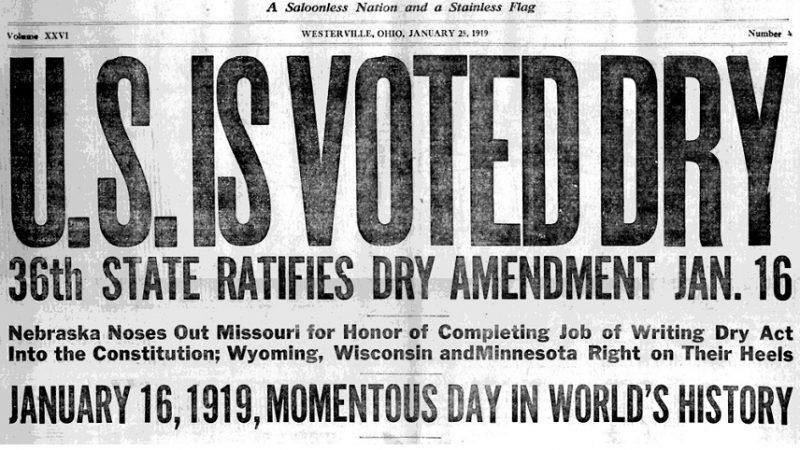
In 1919 Prohibition was ratified in the United States.
 
In 1969 Jan Palach set himself on fire in patriotic protest against the Soviet invasion of his native Czechoslovakia.
 

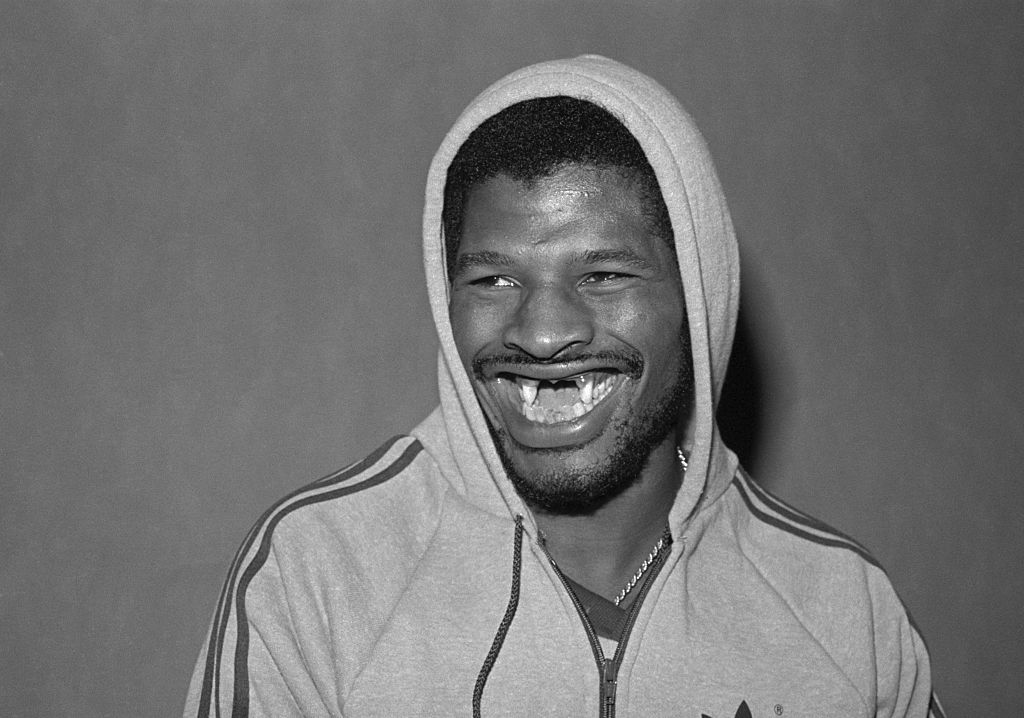
But for lovers of the absurd, January 16 will be forever sacred to the memory of heavyweight boxing champ and dental fashion-plate Leon Spinks who in 1981 was mugged and robbed of his gold teeth