


Month: April 2024
The New Yorker Santa Claus
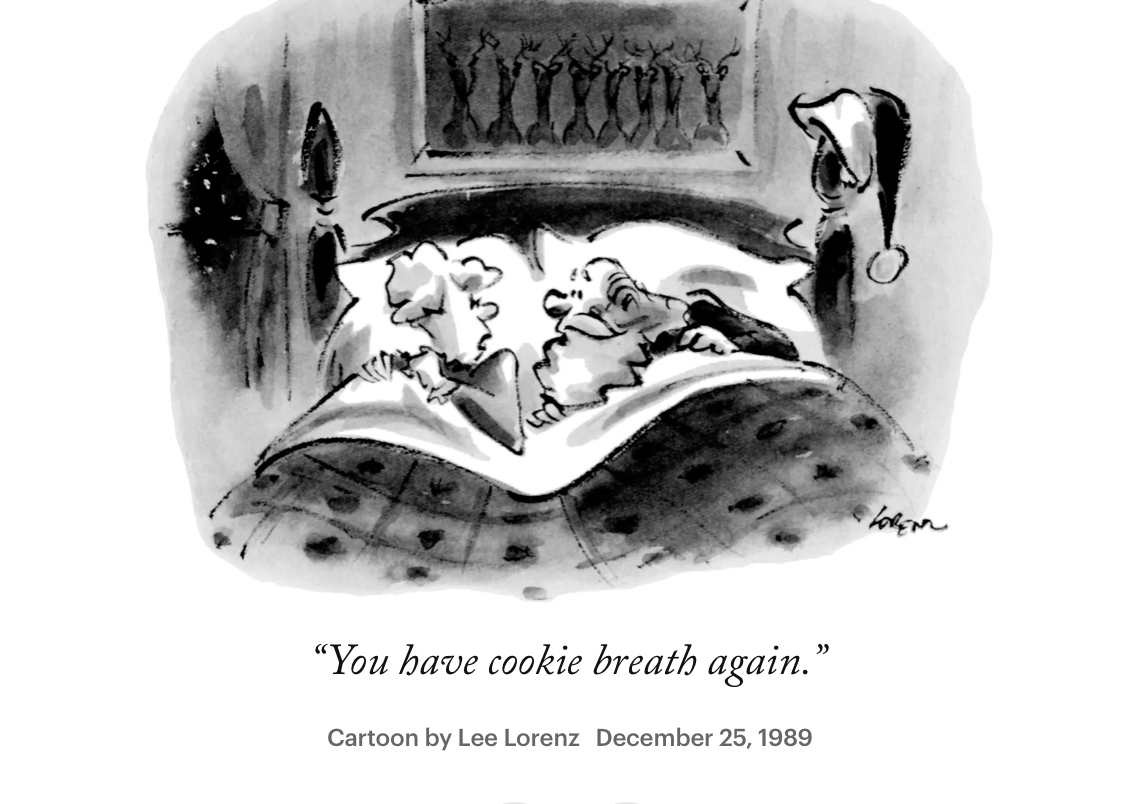
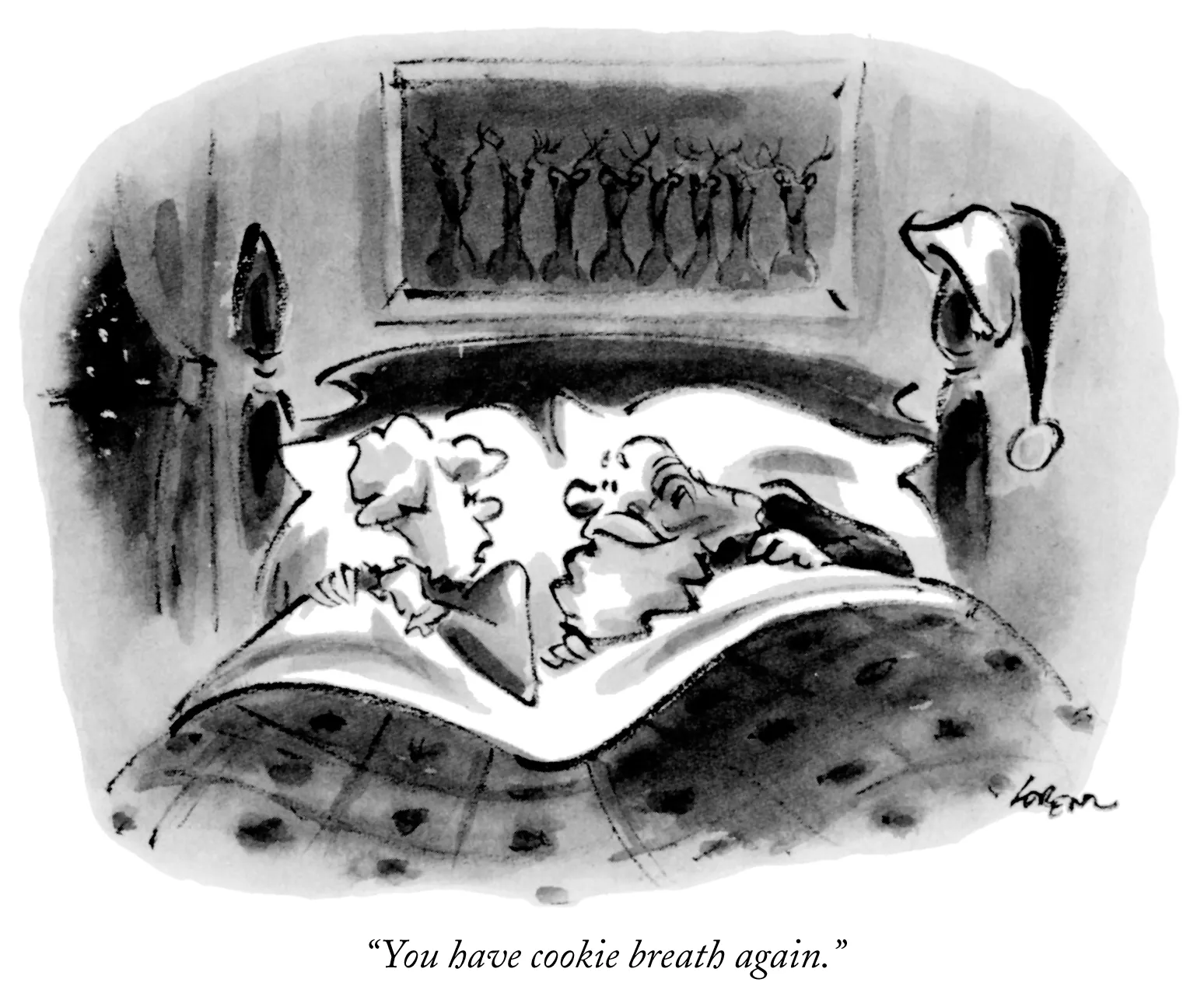
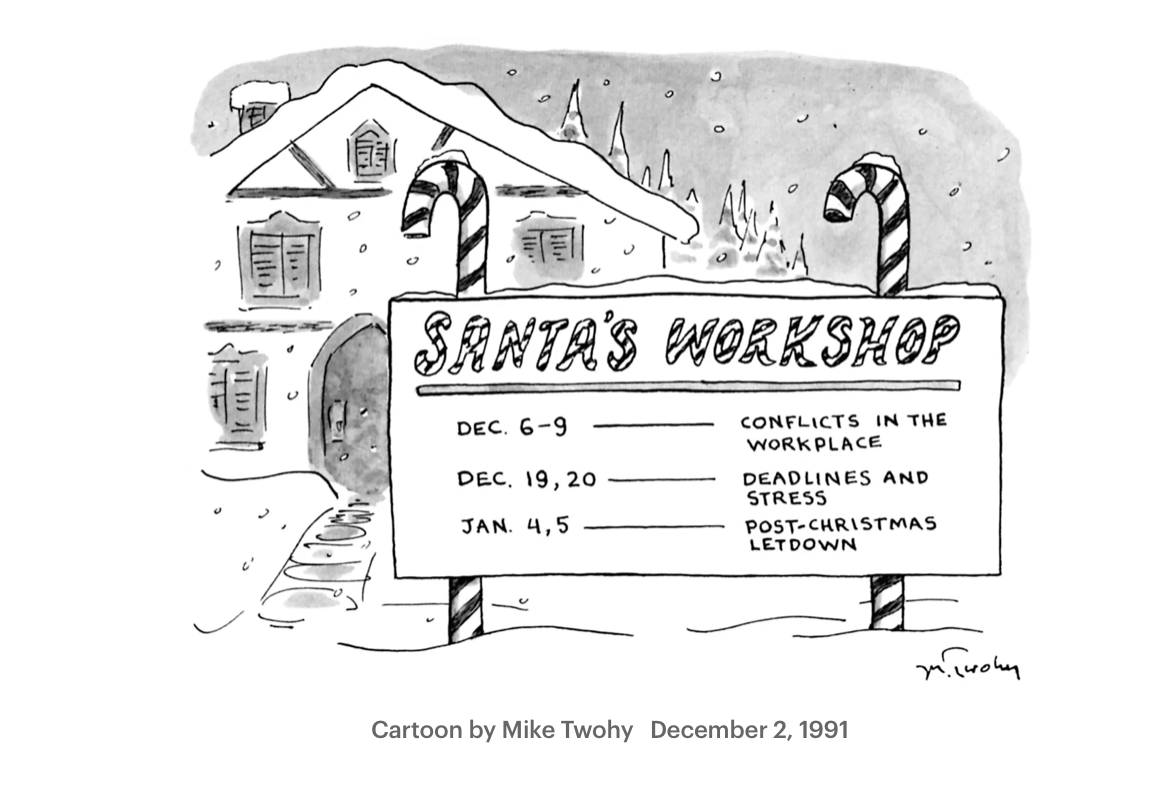
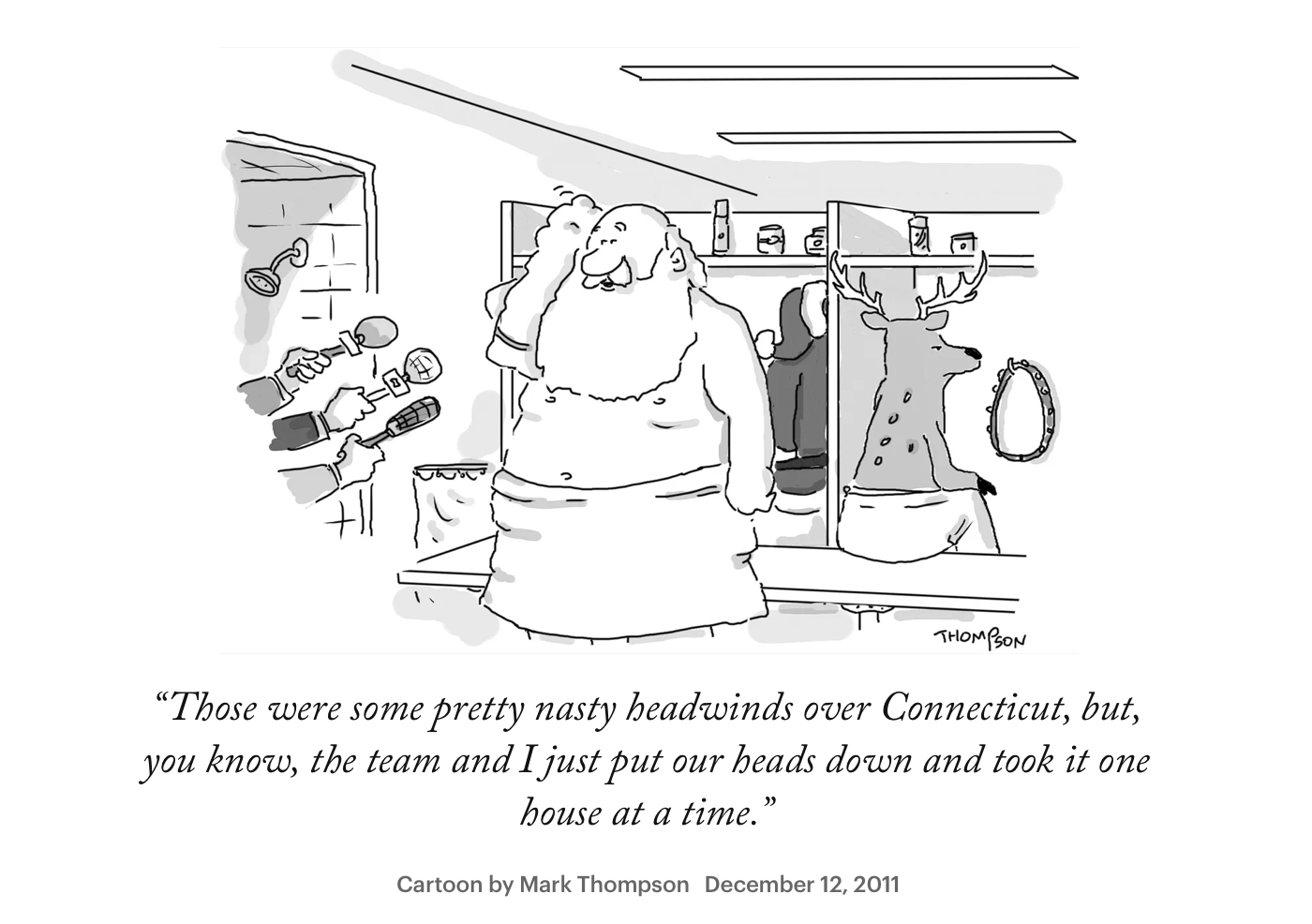
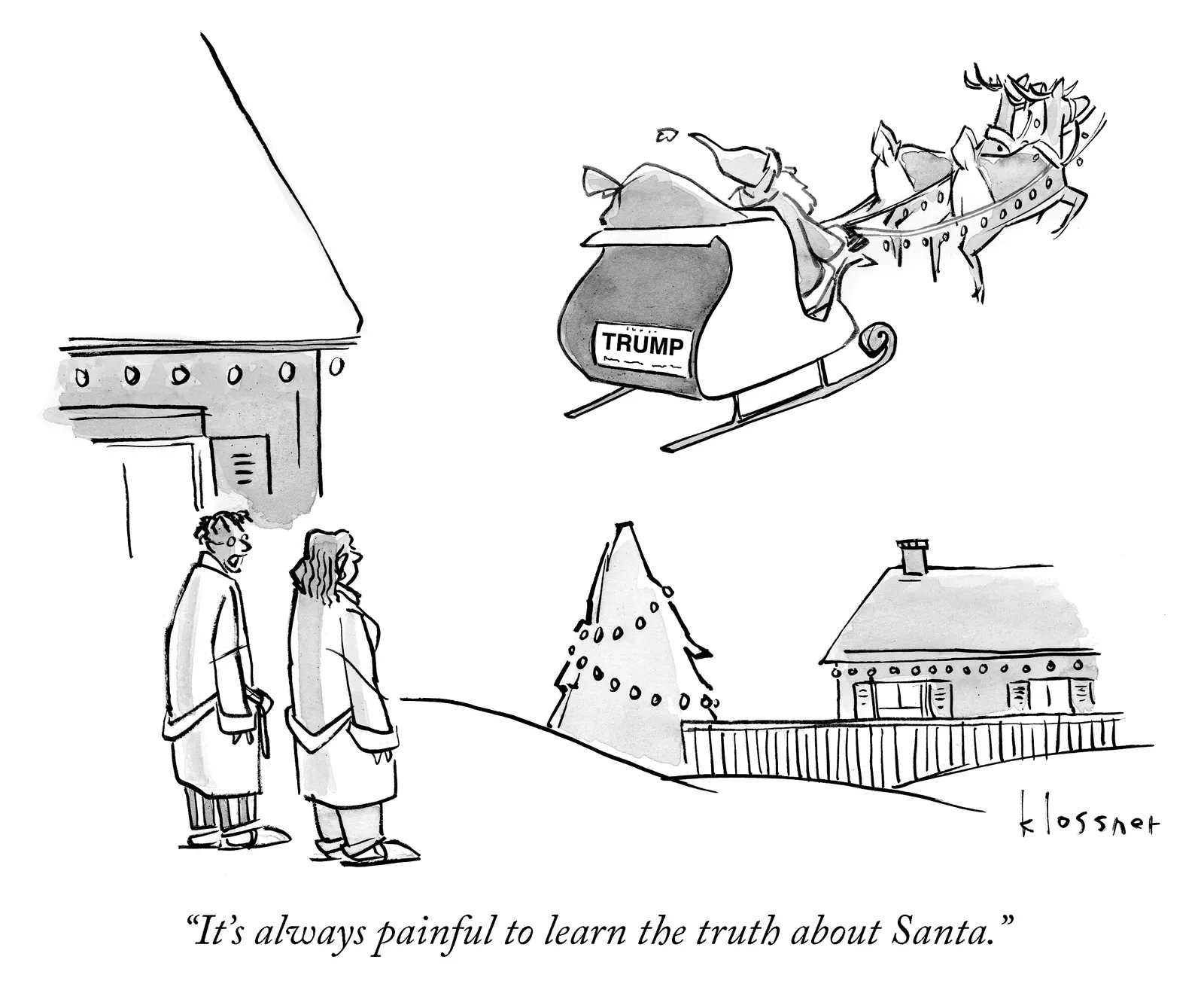
The figure of Santa Claus has been a prominent feature of the cartoons displayed in the New Yorker magazine over the years. Here are some amusing examples.
The first appearance of St Nick in the magazine came in 1926 with this:

It was followed by others, including a cover illustration.


The Yule Hole

Yule in York
It was the custom in medieval York for a Yuletide peace (called the “Youle-Girth”) to be proclaimed in which certain restrictions were cast aside for the Christmas season.
The sheriffs of the city would ride through the streets and make this proclamation:
“O yes We command of our liege lords behalf the King of England (that God save and keepe), that the peace of the King be well keeped and maynteyned within the citty amid suburbs, by night and by day, &c. Also, that no common woman walke in the streets without a gray hood on her head, and a white wand in her hand, &c. Also the Sheriffes of the citty on St. Thomas Day the Apostle [December 21], before Youle, att tenne of the bell, shall come to All-hallow kirke on the pavement, and ther they shall heare a masse of St. Thomas in the high wheare (quire), and offer at the masse; and when the masse is done, they shall make a proclamation att the pillory of the Youle-Girth (in the forme that followes) by ther serjant: We commaund that the peace of our Lord the King be well keeped and mayntayned by night and by day, &c. Also that no manner of man make no congregations nor assemblyes. Also that all manner of whores and thieves, dice players, carders, and all other unthrifty folke, be welcome to the towne, whether they come late or early, att the reverence of the high feast of Youle, till the twelve clays be passed.
“The proclamation made in forme aforesaid, the fower serjeants shall goe or ride (whether they will); and one of them shall have a horne of brasse, of the toll-bouth; and the other three serjeants shall every one of them have a horne, and so go forth to the fewer barres of the citty, and blow the Youle-Girth.”
By the 1700s the term “Youle-Girth” had come to mean something a little different:

An Epiphany Prank

From William Hone’s The Every-day Book; or, Everlasting Calendar of Popular Amusements, Sports, Pastimes, Ceremonies, Manners, Customs, and Events, Incident to Each of the Three Hundred and Sixty-Five Days, in Past and Present Times (London, 1826):
On Twelfth-night in London, boys assemble round the inviting shops of the pastrycooks, and dexterously nail the coat-tails of spectators, who venture near enough, to the bottoms of the window frames; or pin them together strongly by their clothes. Sometimes eight or ten persons find themselves thus connected. The dexterity and force of the nail driving is so quick and sure, that a single blow seldom fails of doing the business effectually. Withdrawal of the nail without a proper instrument is out of the question; and, consequently, the person nailed must either leave part of his coat, as a cognizance of his attachment, or quit the spot with a hole in it. At every nailing and pinning shouts of laughter arise from the perpetrators and the spectators. Yet it often happens to one who turns and smiles at the duress of another, that he also finds himself nailed. Efforts at extrication increase mirth, nor is the presence of a constable, who is usually employed to attend and preserve free “ingress, egress, and regress,” sufficiently awful to deter the offenders.