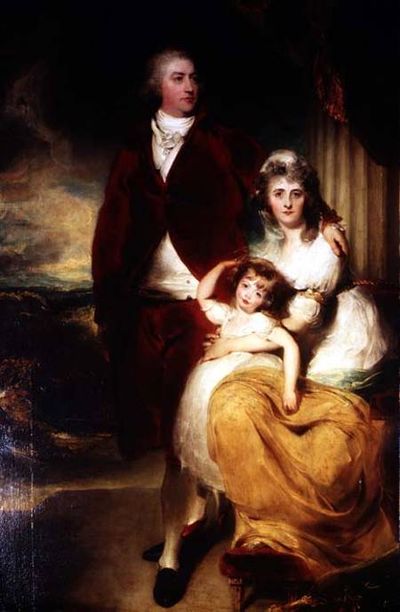
962 The first Holy Roman Emperor
Some consider Charlemagne’s coronation on Christmas Day 800 as the first creation of a Holy Roman Emperor, but credit should really go to Pope John XII crowning German king Otto I. Otto the Great united Germany, added other conquests, sparked the Ottonian Renaissance and saved Europe from barbarian invasion by defeating the Magyars at the Battle of Lechfeld.
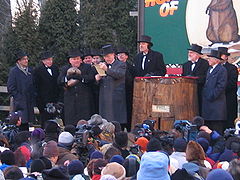
1857 The first celebration of Groundhog’s Day
Growing out of immigrant German customs in Pennsylvania, the first official Groundhog’s Day is observed in Punxsutawney. Promoted by Clymer H. Freas, the editor of the local Punxsutawney Spirit, the town’s annual celebration is still the biggest of its kind and the model for the immortal Bill Murray comedy, Groundhog’s Day.

1943 Germans surrender at Stalingrad
From August 1942 to February 1943 almost two million men contested control of the city of Stalingrad on the Volga River. Hitler’s 6th Army wished to seize the area as part of the German plan to control the oil supplies of the Caucasus; Stalin’s troops fought to keep Volga river traffic open and prevent a propaganda coup in losing a city named after their Supreme Leader.
In November Soviet counterattacks succeeded in surrounding the city and creating what the Germans called “the kettle”. Hitler refused permission for his men to withdraw believing that they could be supplied by air and that his other forces could break the encirclement. It was not to be. Out of food and ammunition, 95,000 German and Romanian troops surrendered on this date. Only 5,000 of them, mostly officers, ever saw their homes again.



 When he attempted to set up in that business at Glasgow, he met with an obstruction from the corporation of Hammermen, who looked upon him as an intruder upon their privileged ground. The world might have lost Watt and his inventions through this unworthy cause, if he had not had friends among the professors of the University,—Muirhead, a relation of his mother, and Anderson, the brother of one of his dearest school-friends,—by whose influence he was furnished with a workshop within the walls of the college, and invested with the title of its instrument-maker. Anderson, a man of an advanced and liberal mind, was Professor of Natural Philosophy, and had, amongst his class apparatus, a model of Newcomen’s steam-engine. He required to have it repaired, and put it into Watt’s hands for the purpose. Through this trivial accident it was that the young mechanician was led to ‘make that improvement of the steam-engine which gave a new power to civilized man, and has revolutionised the world. The model of Newcomen has very fortunately been preserved, and is now in the Hunterian Museum at Glasgow College.