The dark side of patriarchy


The dark side of patriarchy
1415 The execution of John Hus
The late medieval church faced a number of serious challenges from reformers and heretics who disputed fundamental Catholic beliefs. John Wyclif, (1320-1384) an English priest, was foremost among those who drew up a list of errors they felt that the Church had fallen into: transubstantiation, the papal monarchy, a separate celibate priestly caste, the denial of Scripture in the vernacular, the abuse of indulgences, and a corrupt, wealthy superstructure. Wyclif was able to evade the usual fate awaiting heretics because he was found to be useful as an anti-ecclesiastical tool by powerful English politicians. Wyclif’s ideas spread in the 1390s to Bohemia where they were taken up by Jan Hus, a prominent preacher in Prague.
The Conciliar movement of the early 1400s attempted to restore the unity of the Church which had been shattered by rival papacies and to attack the heresies that the chaos of the 14th century had allowed to flourish. The 1409 Council of Pisa condemned Wyclif’s writings and pressure mounted against Hus who was identified as a supporter of the banned ideas. In 1414, under an imperial safe-conduct pass, Hus journeyed to the Council of Constance.
Instead of the open discussion he had expected, Hus was almost immediately imprisoned and charges of heresy brought against him. Catholic clerics had convinced the emperor that faith need not be kept with heretics and that his safe-conduct need not be honoured. This act was brought up repeatedly by writers during the 16th-century Protestant Reformation and underlay much of the hostility and suspicion manifested in religious debates of the time.

On July 6, 1415 his writings and those of Wyclif were deemed heretical and Hus was burned. News of this prompted the bloody Hussite Rebellion which lasted until the 1430s engulfing much of central Europe. In 1999 Pope John Paul II apologized for Hus’s treatment and praised his bravery.

ST ATHANASIUS THE ATHONITE
FOR a thousand years Athos, the Holy Mountain, the most easterly of the three large headlands which the peninsula of Chalcidice thrusts out into the Aegean Sea, has been the chief centre of Byzantine monasticism; for nearly all that time this “monastic republic” has been out of communion with the Holy See, but at the time of its inception and organization, and during the preceding centuries when it was occupied by little colonies of hermits, Athos was Catholic and a stronghold of orthodoxy in a different sense from that in which it is so today. The father of Mount Athos as a congeries of regular monasteries was one Athanasius, who was born at Trebizond about the year 920, the son of an Antiochene, and baptized Abraham. He studied at Constantinople, where he became a professor; and while he was teaching he met St Michael Maleinos and his nephew, Nicephorus Phocas, who as emperor was to be Abraham’s patron. He received the monastic habit in St Michael’s monastery at Kymina in Bithynia, taking the name of Athanasius, and lived there till about the year 958. Kymina was a laura, the name then reserved for monasteries wherein the monks lived in separate cells grouped more or less closely round their church. When the abbot St Michael Maleinos died Athanasius saw that he would be pretty surely elected in his place; he therefore fled, and eventually found his way to Mount Athos, to avoid this responsibility —only to find that God was reserving for him a greater.
He disguised himself as an ignorant fellow, assuming the name of Dorotheos, and hid in a cell near Karyes, but he was soon traced and found by his friend Nicephorus Phocas. He was about to undertake an expedition against the Saracens, and persuaded Athanasius to come to Crete to help him organize it (it is so often found that the contemplative soul is a capable man of affairs-which, after all, is only to be expected) and to support it with his blessing and prayers. Athanasius was very unwilling to make this sally out into the world and its concerns, but he went; the expedition was victorious, and Athanasius asked permission to return to Athos. But before he was allowed to he was forced to accept a large sum of money, with which he was to build a monastery. This, the first monastery proper on Athos, was begun in the spring of 961 and the church two years later; it was dedicated in honour of the All-holy Mother of God, but is now called “of St Athanasius “, or, more often, simply Laura, ” The Monastery”.
When Nicephorus Phocas became emperor, Athanasius feared that he might be called to court or to other honours and disturbing offices, so he ran away from Athos to Cyprus. Phocas again found him and told him to go back and govern his monastery in peace, giving him more money, with which was built a harbour for Athos. In adopting the laura system for his monks, Athanasius had deliberately reversed the policy of St Basil and St Theodore Studites and returned in a measure to the ancient monastic tradition of Egypt; his monks were to be as ” out of the world” as is possible for human beings (even now the Athonite monks are still extraordinarily” out of touch with things”, as a general rule). But in spite of this he was involved in great difficulties with the solitaries who had been on Athos long before he came and who felt, understandably, that generations of predecessors had given them a prescriptive right to have the place to themselves; they resented his coming there and building monasteries and churches and harbours, imposing rules and keeping order generally. Twice attempts were made to murder St Athanasius. Criminal violence spoils the best of causes, and the Emperor John Tzimisces interfered; he confirmed the donations and rights granted by Nicephorus Phocas, forbade opposition to Athanasius, and recognized his authority over the whole of the mountain and its inhabitants. He thus became superior general over fifty-eight communities of hermits and monks, and the monasteries of Iviron, Vatopedi and Esphigmenou were founded, which still exist as living communities. St Athanasius died about the year 1000, being killed with five of his monks by the falling of a keystone of the vault of the church on which they were working.
As citizens of the United States of America celebrate their Independence Day, it is time for my annual lament over the success of their 18th-century rebellion from the crown. Americans, and the world, would have been better served by remaining subjects of His Britannic Majesty George III. A democratic trans-Atlantic empire, free of slavery and with an unwritten evolving constitution, might well have been in the cards.
 In 1776 the aforementioned king directed the Church of England to pray for the success of efforts to put down the ill-advised tumult in the thirteen errant colonies. Here are two prayers uttered to that end.
O Lord God of our salvation, in whose hands are the issues of life and death, of good and evil, and without whose aid the wisest counsels of frail men, and the multitude of an host, and all the instruments of war are but weak and vain; incline thine ear, we pray thee, to the earnest and devout supplications of thy servants, who, not confiding in the splendour of any thing that is great, or the stability of any thing that is strong here below, do most humbly flee, O Lord, unto thee for succour, and put their trust under the shadow of thy wings. Be thou to us a tower of defence against the assaults of our enemies, our shield and buckler in the day of battle, and so bless the arms of our gracious Sovereign, in the maintenance of His just and lawful rights, and prosper His endeavours to restore tranquillity among His unhappy deluded subjects in America, now in open rebellion against His Crown, in defiance of all subordination and legal government, that we being preserved by thy help and goodness from all perils and disasters, and made happily triumphant over all the disturbers of our peace, may joyfully laud and magnify thy glorious Name; and serve thee from generation to generation in all godliness and quietness, through Jesus Christ our Lord. Amen.
O Blessed Lord, who hast commanded us by thy beloved Son to love our Enemies, and to extend our charity in praying even for those, who despitefully use us, give grace we beseech thee, to our unhappy fellow subjects in America, that seeing and confessing the error of their ways, and having a due sense of their ingratitude for the many blessings of thy Providence, preserved to them by the indulgent care and protection of these kingdoms, they may again return to their duty, and make themselves worthy of thy pardon and forgiveness: Grant us in the mean time not only strength and courage to withstand them, but charity to forgive and pity them, to shew a willingness to receive them again as friends and brethren, upon just and reasonable terms, and to treat them with mercy and kindness for the sake of thy Son Jesus Christ our Lord. Amen.

Saint Thomas’s Day
We know more about the relationship between Jesus and Thomas than we do with many of the other Apostles. It was Thomas who boldly declared that he and his companions should follow Jesus into danger in Judaea. Thomas it was at the Last Supper who declared that he did not understand the words of his master that He was going to prepare a place for them and was told that Jesus was the Way, the Truth and the Life. His doubt at Christ’s resurrection gave him his nickname and the opportunity to cry out later “My Lord and my God!”
Numerous legends, including an apocryphal gospel, tell stories of Thomas’s travels. He is said to have evangelized in Persia and then reached India in 52. There exists in southern India today a community of Christians who trace their spiritual origin to Thomas. He suffered martyrdom near Chennai (once Madras) in 72, speared to death by order of the local king. The location of his relics is a matter of controversy as a number of places claim them. A basilica in Chennai, with a wonderful neon-lit altar, still exhibits what it claims to be the body of the saint and the spear that killed him. Some churches observe December 21 as St Thomas Day.

1867 Anti-Confederation sentiments

The enthusiasm of four British North American colonies for Confederation was not shared by others on the continent. Prince Edward Island with a tiny population was worried about being swamped by numbers if they joined Canada East, Canada West, Nova Scotia, and New Brunswick in a Canadian nation. They had no interest in a trans-Canadian railway and, though they had hosted the critical Charlottetown Conference, they declined to sign on to Confederation in 1867.
It was a close-run thing as well in Nova Scotia where Joseph Howe called for staying out but the most vociferous opponents of union were in Newfoundland, the oldest of all British colonies. Here are the lyrics to a rousing anti-Canadian anthem.

Prince Edward Island finally gave into the siren song of the promise of a steamer connection to the mainland and capitulated in 1873. Despite a vain attempt at independence which failed during the Depression of the 1930s, Newfoundland stayed outside Canada until a dodgy referendum of 1948 brought the Rock in.
1867 The birth of Canada
 A Happy Dominion Day to my Canadian reader.
I have always said that it was a sad day in Canadian history when the dark powers that ruled the land changed the name of our national celebration to Canada Day. What a weak tea of a term, barren of meaning and historical weight. Pfui! I fart in its general direction.

More tough love
Both my readers will recall an entry a few days ago which chronicled the parenting skills of on Don Alonso Guzman who lent a knife to an enemy threatening to kill Alonso’s son. Today we consider the maternal feelings of one of the Renaissance’s most embattled women, Caterina Sforza.

Caterina (1463-1509) was the illegitimate daughter of the Duke of Milan and was married at age a very early age to Girolamo Riario, nephew of Pope Sixtus IV, lord of a pair of cities in the Romagna, Forli and Imola. She became well known for her intelligence and beauty and quickly gained a reputation for a strong-willed courage which her husband lacked.
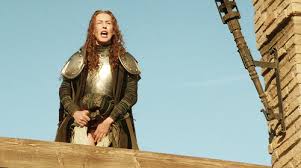 In 1488, her husband was murdered and their castle of Forli was under siege. Her children had fallen into the hands of the enemy, the Orsi family, and they in true Italian Renaissance style, threatened to kill the kids if Caterina did not surrender. According to one account, she taunted her foes, exposed her genital, and shouted “Fatelo, se volete: impiccateli pure davanti a me … qui ho quanto basta per farne altri!” (“Do it, if you want to: hang them even in front of me … here I have what’s necessary to make others!”) The Orsis were over-awed and her children were spared.
Caterina was no saint. She ordered murders, dealt with Machiavelli, and went on to endure much more — siege, treason, the murder of yet another husband, rape, and dungeons. She deserves to be better remembered than she is. Those interested should read The Tigress of Forli by Elizabeth Lev.

The Seven Sleepers of Ephesus
Visitors to the magnificent ruins of Ephesus often take time to visit the ancient city’s other religious sites, particularly one of the number of houses each purporting to be the last domicile of the Virgin Mary. They might also drop by a fenced-off hole where, it is said, in the third century seven Christian youths either sought refuge from persecution or were deliberately walled in on the order of pagan officials. These young men then fell into a miraculous sleep from which they only awakened over a century later, by which time the Roman Empire had converted to Christianity. They were able to tell their story to the local bishop before dying. A church was built over the site and locals revered the godly youths. It is said their remains were taken to a church in France.

1292 Tough love
 With Father’s Day in the recent past, it is time to consider Francis Bacon’s observation that he who has a wife and children “hath given hostages to fortune; for they are impediments to great enterprises, either of virtue or mischief.”
In the 13th century a welter of kingdoms in Spain, both Muslim and Christian, were at war with each other. King Sancho IV of Castile had taken the castle of Tarifa (at the southern tip of the Iberian peninsula) from the Moors and placed its command in the hands of Don Alonso Perez de Guzman who moved into the fortress with his family, all except his son who was in care of the king’s brother John.
John was a bit of weasel who had already rebelled against his brother and been forgiven but in 12921 he turned again on the king. This time he called in Muslim troops from North Africa and besieged Tarifa. John believed that he had, in the son of Don Alonso, a key to an easy surrender of the castle. He had used the threat to kill a child hostage before to great effect and so, showing the bound child to the defenders, shouted “Alonso Perez de Guzman! Know that unless you yield this stronghold to me immediately, you shall behold the death of your own son at my hand!”
Looking down at the prince, the besiegers, and his weeping son, Alonso replied, “I did not beget a son to be made use of against my country, but that he should serve her against her foes. Should Don Juan put him to death, he will but confer honour on me, true life on my son, and on himself eternal shame in this world and everlasting wrath after death. So far am I from yielding this place or betraying my trust, that in case you should need a weapon for your cruel purpose, here is my own knife!” And he threw down his dagger at John’s feet.
John promptly picked up the knife and cut the boy’s throat. His Berber allies were disgusted and eventually the siege was abandoned. Prince John became a pariah and could find no refuge in Christian Spain, living in exile in Muslim Granada.
Don Alozonzo was heaped with honours by his king and his descendants became the Dukes of Medina-Sidonia, the greatest house of Spanish nobility.