June 25

Home / Uncategorized / June 25

Even more last words in history

“I have offended God and mankind because my work did not reach the quality it should have.” – Leonardo da Vinci, 2 May 1519

“I desire to go to hell, and not to heaven. In the former place I shall enjoy the company of popes, kings, and princes, while in the latter are only beggars, monks, hermits, and apostles.” – Niccolò Machiavelli, 21 June 1527


“All my possessions for a moment of time.” – Elizabeth I, 24 March 1603

“Oh, would to God I had never reigned! Oh, that those years I have spent in my kingdom I had lived a solitary life in the wilderness! Oh, that I had lived alone with God! How much more secure should I now have died! With how much more confidence should I have gone to the throne of God! What doth all my glory profit, but that I have so much the more torment in my death?” – Philip III of Spain, 31 March 1621

I would never have married had I known that my time would be so brief. If I had known that, I would not have taken upon myself double tears.” – Alexis of Russia, 8 February 1676. For his two marriages Alexis held a Bachelorette-type competition, something that Byzantine emperors had occasionally done. Out of a hundred or so daughters of nobility, Alexis gave a handkerchief and ring to a young woman not favoured by his advisors. They diagnosed the poor girl with epilepsy and hustled her and her family off to Siberia. 

“I, John Brown, am now quite certain that the crimes of this guilty land will never be purged away but with Blood. I had, as I now think, vainly flattered myself that without very much bloodshed it might be done.” — John Brown, 2 December 1859

June 24

Today is the feast day of St John the Baptist, or St Jean Baptiste Day, the fête national in Québec. John, for those not hep to the New Testament story, was kin to Jesus and a prophet who preached repentance and baptized the penitent in the Jordan River. He is mentioned in the first chapter of the Gospel of John (no relation): 

In the beginning was the Word, and the Word was with God, and the Word was God. The same was in the beginning with God. All things were made by him; and without him was not any thing made that was made. In him was life; and the life was the light of men.And the light shineth in darkness; and the darkness comprehended it not.

There was a man sent from God, whose name was John. The same came for a witness, to bear witness of the Light, that all men through him might believe. He was not that Light, but was sent to bear witness of that Light.

 That was the true Light, which lighteth every man that cometh into the world. He was in the world, and the world was made by him, and the world knew him not. He came unto his own, and his own received him not. But as many as received him, to them gave he power to become the sons of God, even to them that believe on his name: Which were born, not of blood, nor of the will of the flesh, nor of the will of man, but of God. And the Word was made flesh, and dwelt among us, (and we beheld his glory, the glory as of the only begotten of the Father,) full of grace and truth.

For those who would like to hear those words in Old English, here you go:

June 23

Home / Today in History / June 23

1917 A very interesting game of baseball

On June 23, 1917 the Boston Red Sox were hosting the Washington Senators at Fenway Park. While Boston had an enviable recent record, having won the World Series in 1915 and 1916, their guests were less successful, the butt of the joke “Washington: First in war, first in peace, and last in the American League”.

On the mound for the Bosox was Babe Ruth. He gave up a walk on four pitches to the first batter, which provoked him into a confrontation with the umpire Brick Owens who had a lengthy history of encounters with enraged players and fans. Ruth politely contended that the vision of the irascible overseer was somehow deficient on this occasion (his exact words were “Why don’t you open your god-damned eyes?”) and Owens promptly excused the Babe from further participation in the contest. On his way to the showers, the Bambino responded by punching the cantankerous arbiter. The Crimson Hose were then obliged to call for a replacement. Manager Bill Carrigan’s gaze fell upon Ernie Shore, no slouch as a hurler of the horsehide orb, who was allowed only five warm-up pitches and stood upon the hill almost cold. What followed was major league history.

Shore, “the Carolina Professor” (he taught mathematics in the off-season), eyed Ray Morgan, the Griffsters’ runner at first base; Morgan eyed Shore, and on the latter’s first pitch headed toward second base where he was ignominiously thrown out. The next 26 batters were set down in order by Shore with the last out being served up by a Washington pitcher who (it is shameful to recall) attempted a bunt, thus violating the Unwritten Rule against late-inning bunts in a potential no-hitter.

At the time Shore was credited with a perfect game but the statisticians now consider the game to be a shared no-hitter.


June 22

Home / Uncategorized / June 22

Still interested in famous last words? Here are some more.

“You urge me in vain. I am not the man to provide Christian flesh for pagan teeth to devour, and it would be so acting if I delivered unto you that which the poor have laid by for their subsistence.”
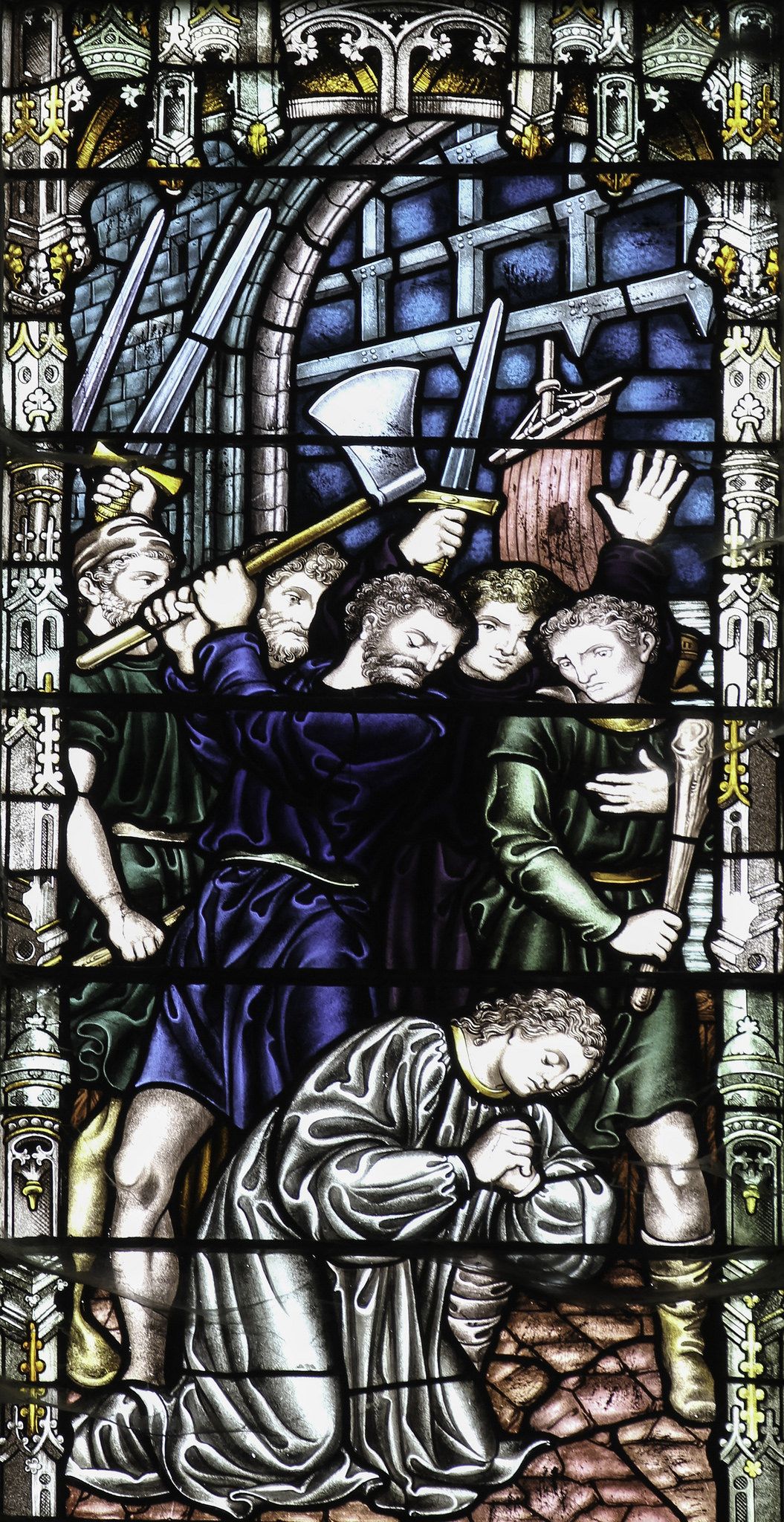
— Ælfheah of Canterbury, (aka AlphegeArchbishop of Canterbury (19 April 1012), refusing to pay ransom before being killed in the hideous “blood eagle” fashion by his Danish captors. He was the first Archbishop of Canterbury to be martyred. Three more would follow in the next six centuries.

“I have loved justice and hated iniquity; therefore I die in exile.”
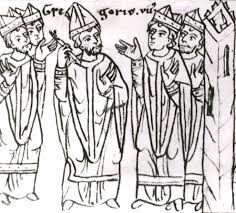
— Pope Gregory VII (25 May 1085), in exile in Salerno due to his conflicts with Henry IV, Holy Roman Emperor. One of the more quarrelsome popes of the Middle Ages, he excommunicated the Emperor Henry three times, waged war with the help of the rapacious Normans, and was driven from Rome by an angry populace.

“Pope Clement, Chevalier Guillaume de Nogaret, King Philip! I summon you to the Tribunal of Heaven before the year is out!” — Jacques de Molay, last Grand Master of the Knights Templar (11 or 18 March 1314), before being burned at the stake. This famous curse on the trio who had plotted the demise and plunder of the Templar order had great effect: all three died within the year.

“What have I done, or my children, that I should meet such a fate? And from your hands, too, you who have met with friendship and kindness from my people who have received nothing but benefits from my hands.”— Atahualpa, last Sapa Inca of the Inca Empire (26 July 1533), prior to execution by strangling. The Incans were a nasty bunch of human-sacrificing imperialist oppressors but the Spanish conquistadores led by the loathsome Francisco Pizarro who ended their domination were just as bad.

“All right then, I’ll say it. Dante makes me sick.” — Lope de Vega, Spanish playwright, the equivalent of Shakespeare in Hispanic culture, (27 August 1635). In the end, everyone is a critic.

June 20

Home / Today in History / June 20

More famous last words

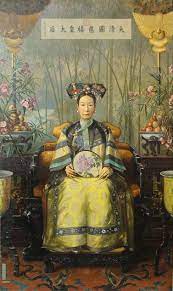
“Never again allow a woman to hold the supreme power in the State… [and] be careful not to allow eunuchs to meddle in government affairs.”

— Empress Dowager Cixi, de facto ruler of China, 1908. Known in the West as the Dragon Lady, she was a powerful force for trying to keep modernization out of her country.

“Pull up the shades; I don’t want to go home in the dark.” — William Henry Porter (aka O. Henry), American writer (5 June 1910), to a hospital nurse.  

“But the peasants…how do the peasants die?”
— Leo Tolstoy, Russian novelist 20 November, 1910), to a station master in whose home he died. 

“My love of God is greater than my fear of death.”
— Cecil Pugh, GC, MA, Congregational Church minister and RAF chaplain (5 July 1941), asking to be lowered into the hold of the sinking SS Anselm, where injured airmen were trapped. Pugh then prayed with the men until the ship sank. He was the only clergyman to be awarded the George Cross.

“I have lost my mind by spells and I do not dare think what I may do in those spells. May God forgive me and I hope everyone else will forgive me even if they cannot understand. My position is too awful to endure and nobody realizes it. What an end to a life in which I tried always to do my best.”

— Lucy Maud Montgomery OBE, Canadian author (24 April 1942); conclusion of note found on her bedside table after her death. It may or may not have been a suicide note. A sad way to end for the author of Anne of Green Gables.

“Remember, Honey, don’t forget what I told you. Put in my coffin a deck of cards, a mashie niblick, and a pretty blonde.” — Chico Marx, American actor and comedian (11 October 1961), giving his wife Mary humorous instructions for his funeral. A mashie niblick was a golf club, equivalent to a 6 iron.

June 19

Juliana Falconieri, a very, very delicate saint

According to Butler’s Lives of the Saints:

Juliana Falconieri was born in answer to prayer, in 1270. Her father built the splendid church of the Annunziata in Florence, while her uncle, Blessed Alexius, became one of the founders of the Servite Order. Under his care Juliana grew up, as he said, more like an angel than a human being. Such was her modesty that she never used a mirror or gazed upon the face of a man during her whole life. The mere mention of sin made her shudder and tremble, and once hearing a scandal related she fell into a dead swoon. Her devotion to the sorrows of Our Lady drew her to the Servants of Mary; and, at the age of fourteen, she refused an offer of marriage, and received the habit from St. Philip Benizi himself. Her sanctity attracted many novices, for whose direction she was bidden to draw up a rule, and thus with reluctance she became foundress of the “Mantellate.” She was with her children as their servant rather than their mistress, while outside her convent she led a life of apostolic charity, converting sinners, reconciling enemies, and healing the sick by sucking with her own lips their ulcerous sores. She was sometimes rapt for whole days in ecstasy, and her prayers saved the Servite Order when it was in danger of being suppressed. She was visited in her last hour by angels in the form of white doves, and Jesus Himself, as a beautiful child, crowned her with a garland of flowers. She wasted away through a disease of the stomach, which prevented her taking food. She bore her silent agony with constant cheerfulness, grieving only for the privation of Holy Communion. At last, when, in her seventieth year, she had sunk to the point of death, she begged to be allowed once more to see and adore the Blessed Sacrament. It was brought to her cell, and reverently laid on a corporal, which was placed over her heart. At this moment she expired, and the Sacred Host disappeared. After her death the form of the Host was found stamped upon her heart in the exact spot over which the Blessed Sacrament had been placed. Juliana died A. D. 1340.

Juliana’s relics repose in Florence’s Church of San Annunziata.

June 18

Home / Uncategorized / June 18

Time to consider some last words of famous folk in history.

“Draw thy sword, and slay me, that men say not of me, A women slew him.” Abimelech, king of Schechem, wounded by a stone thrown by a woman during the siege of Thebez, 12th century BC

“Heaven has turned against me. No wise ruler arises, and no one in the Empire wishes to make me his teacher. The hour of my death has come.” – Confucius, 479 BC. The Chinese sage and philosopher was, like Plato, often asked to consult on political matters and suggest reforms but, like Plato, saw few of his suggestions implemented.


Acta est fabula, plaudite.”  “Have I played the part well? Then applaud, as I exit.” Emperor Augustus, 14 AD

Seventeen centuries later, Samuel Johnson made this comment, alluding to the last words of Augustus:

A little more than nothing is as much as can be expected from a being who, with respect to the multitudes about him, is himself little more than nothing. Every man is obliged by the Supreme Master of the universe to improve all the opportunities of good which are afforded him, and to keep in continual activity such abilities as are bestowed upon him. But he has no reason to repine, though his abilities are small and his opportunities are few. He that has improved the virtue, or advanced the happiness, of one fellow-creature; he that has ascertained a single moral proposition, or added one useful experiment to natural knowledge, may be contented with his own performance; and, with respect to mortals like himself, may demand, like Augustus, to be dismissed at his departure with applause. 

“Vicisti, Galiaee.” “And yet Thou hast conquered, O Galilean!”

Julian the Apostate, Roman emperor (26 June 363 CE), mortally wounded in battle in battle against the Persians. Christian legend says that he was stabbed in the midst of the battle by the ghost of St. Longinus, the centurion who had supervised the execution of Jesus. His alleged last words were meant to acknowledge the triumph of Christ over Julian’s paganism.

I have now reigned above fifty years in victory or peace; beloved by my subjects, dreaded by my enemies, and respected by my allies. Riches and honours, power and pleasure, have waited on my call, nor does any earthly blessing appear to have been wanting to my felicity. In this situation, I have diligently numbered the days of pure and genuine happiness which have fallen to my lot: they amount to fourteen:—O man! place not thy confidence in this present world!

Abd al-Rahman III, Caliph of Córdoba, 961 was the founder of a new caliphate in Andalusia. He was a very successful politician and general, the scourge of the Christian kingdoms in Spain.

June 17

Joseph of Cupertino, the levitating saint

Giuseppe Maria Desa (1603-63) was a very unpromising recruit to the Catholic clergy in seventeenth-century Italy. He was born to poor parents in a garden shed because his father had been forced to sell their house to settle debts.

As a young shoemaker he tried a number of times to join a monastic order but was rejected because of his low intelligence, clumsiness, and frequents fits of temper and bizarre ecstasy. He served as a helper in the tables of an abbey of Franciscan Conventuals before he was admitted to the order and becoming a priest. Joseph soon attracted attention by levitating during the Mass and by falling into trances at the sound of church bells or hearing a psalm – phenomena that convinced the locals that he was saintly. These levitations had been publicly witnessed — such as when he placed a 36-foot cross atop a church — and attracted amazement from crowds of believers, and suspicion from the Inquisition that he was dabbling in the diabolical arts. His superiors isolated Joseph from the public for years and he died in seclusion. For his patience and humility he was canonized in 1763. He has been declared the patron saint of air travellers, pilots, astronauts, the mentally handicapped, test takers and poor students.

June 16

Joseph Butler: “Every thing is what it is, and not another thing.”

On this day Anglican churches honour the memory of Bishop Joseph Butler (1692-1752), controversialist and philosopher. Born a Presbyterian and thus barred from entering a university or the learned professions, Butler converted to the Church of England in his early twenties and became an Anglican priest. With the help of prominent patrons he rose through a series of lucrative appointments to become the Queen’s chaplain and eventually bishop of Bristol and Durham.

Today Butler is chiefly known as a philosopher, having taken on English heavyweights such as Thomas Hobbes (in his 1729 Fifteen Sermons Preached at the Rolls Chapel) and John Locke (in his 1736 Analogy of Religion) as well as the proponents of Deism, then very popular amongst English academics. The Internet Encyclopedia of Philosophy tells us

Overall, Butler’s philosophy is largely defensive. His general strategy is to accept the received systems of morality and religion and, then, defend them against those who think that such systems can be refuted or disregarded. Butler ultimately attempts to naturalize morality and religion, though not in an overly reductive way, by showing that they are essential components of nature and common life. He argues that nature is a moral system to which humans are adapted via conscience. Thus, in denying morality, Butler takes his opponents to be denying our very nature, which is untenable. Given this conception of nature as a moral system and certain proofs of God’s existence, Butler is then in a position to defend religion by addressing objections to it, such as the problem of evil. 

June 15

Home / Uncategorized / June 15

And now for some really good examples of personal vituperation.

Two British public figures slugged it out early in the 21st century. Christopher Hitchens, a witty commentator known for his aggressive atheism and flight from far-left politics to a position which supported the American invasion of Iraq, faced off against Scottish Member of Parliament George Galloway, who courted Muslim voters and backed the Syrian Assad regime. Neither let courtesy get in the way during their debates and writings.

A drink-soaked former Trotskyist popinjay. – George Galloway on Christopher Hitchens

Ba’athist, short-arse, sub-Leninist, Eastend carpet-bagger. – Christopher Hitchens on George Galloway

Made natural history by metamorphosing from a butterfly to a slug. – George Galloway on Christopher Hitchens

How unwise and incautious it is for such a hideous person to resort to personal remarks. Unkind nature, which could have made a perfectly good butt out of his face, has spoiled the whole effect by taking an asshole and studding it with ill- brushed fangs. – Christopher Hitchens on George Galloway

Ready to fight to the last drop of other people’s blood. – George Galloway on Christopher Hitchens

This is not just a matter of which of us can be the rudest, because I already conceded that to Mr Galloway. Or which of us can be the most cerebral, because he already conceded that to me. –Christopher Hitchens on George Galloway