May 14

1878

America’s last witchcraft trial

Daniel Spofford

It was, appropriately enough, in Salem, Massachusetts that what came to be known as the last American witchcraft trial took place.

Lucretia Brown was a 50-year old spinster, who had been an invalid since she injured her spine in a childhood accident, when she  became a disciple of  Mary Baker Eddy. She became convinced that Christian Science had healed her but when she suffered a “relapse” in 1875, Mrs. Eddy convinced her that Daniel Spofford of Newburyport, whom Mrs. Eddy had recently excommunicated for “immorality”, was exercising mesmeric powers upon her. Eddy’s term for these powers was “Malicious Animal Magnetism”.

Mrs. Eddy believed that Spofford was an enemy of her church and tried unsuccessfully to publish an attack against him in papers throughout the county. She directed twelve of her students to spend two hours each every day around the clock in concentrated thought against Mr. Spofford to prevent him from doing further harm to her patients. She had her lawyer in Lynn draw up a bill of complaint in Lucretia Brown’s name, setting forth the injuries that Spofford had supposedly inflicted and petitioning the court to restrain him from exercising his powers against her. The text stated that “the defendant practices the art of mesmerism and by his said art and the power of his mind influences and controls the minds and bodies of other persons for the purpose of injuring the persons and property and social relations of others”.

Mrs Eddy’s attorney refused to argue the case in court, so she ordered her student Edward Arens to do so and twenty of her followers to stand as witnesses. On June 3, 1875 they assembled at the railway station in Lynn for the train to Salem. The Boston Globe reported that one of the appointed witnesses approached Mrs. Eddy to complain that he knew nothing whatever about the case and would not know what to say, whereupon she assured him that he would be told what to say. At the courthouse in Salem, nearly two centuries after the witchcraft hysteria, the last charge of witchcraft in this country was brought to trial. Mr. Spofford did not bother to appear. When Mr. Arens rose before Judge Horace Gray and presented the bill of complaint, Mr. Spofford’s attorney Mr. Noyes objected. Judge Gray declared that it was not within the power of the Court to control Mr. Spofford’s mind, even if he were to be jailed. Mrs Eddy was not given any opportunity to argue that disease could be the work of mesmeric powers, and the case was dismissed due to “defects in the writ.”

Lucretia Brown lived out her life still convinced of her Christian Science beliefs, dying in 1883 of pneumonia after refusing medical care.

May 14

1878

America’s last witchcraft trial

It was, appropriately enough, in Salem, Massachusetts that what came to be known as the last American witchcraft trial took place.

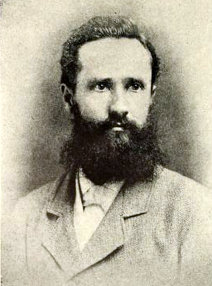
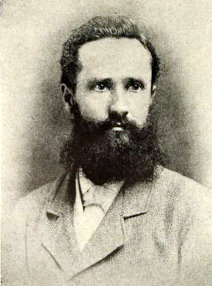
Lucretia Brown was a 50-year old spinster, who had been an invalid since she injured her spine in a childhood accident, when she  became a disciple of  Mary Baker Eddy. She became convinced that Christian Science had healed her but, when she suffered a “relapse” in 1875, Mrs. Eddy convinced her that Daniel Spofford of Newburyport (pictured above), whom Mrs. Eddy had recently excommunicated for “immorality”, was exercising mesmeric powers upon her. Eddy’s term for these powers was “Malicious Animal Magnetism”.

Mrs. Eddy believed that Spofford was an enemy of her church and tried unsuccessfully to publish an attack against him in papers throughout the county. She directed twelve of her students to spend two hours each every day around the clock in concentrated thought against Mr. Spofford to prevent him from doing further harm to her patients. She had her lawyer in Lynn draw up a bill of complaint in Lucretia Brown’s name, setting forth the injuries that Spofford had supposedly inflicted and petitioning the court to restrain him from exercising his powers against her. The text stated that “the defendant practices the art of mesmerism and by his said art and the power of his mind influences and controls the minds and bodies of other persons for the purpose of injuring the persons and property and social relations of others”.

Mrs Eddy’s attorney refused to argue the case in court, so she ordered her student Edward Arens to do so and twenty of her followers to stand as witnesses. On June 3, 1875 they assembled at the railway station in Lynn for the train to Salem. The Boston Globe reported that one of the appointed witnesses approached Mrs. Eddy to complain that he knew nothing whatever about the case and would not know what to say, whereupon she assured him that he would be told what to say. At the courthouse in Salem, nearly two centuries after the witchcraft hysteria, the last charge of witchcraft in this country was brought to trial. Mr. Spofford did not bother to appear. When Mr. Arens rose before Judge Horace Gray and presented the bill of complaint, Mr. Spofford’s attorney, Mr. Noyes, objected. Judge Gray declared that it was not within the power of the Court to control Mr. Spofford’s mind, even if he were to be jailed. Mrs Eddy was not given any opportunity to argue that disease could be the work of mesmeric powers, and the case was dismissed due to “defects in the writ.”

Lucretia Brown lived out her life still convinced of her Christian Science beliefs, dying in 1883 of pneumonia after refusing medical care.

May 13

1619

The execution of a Dutch patriot

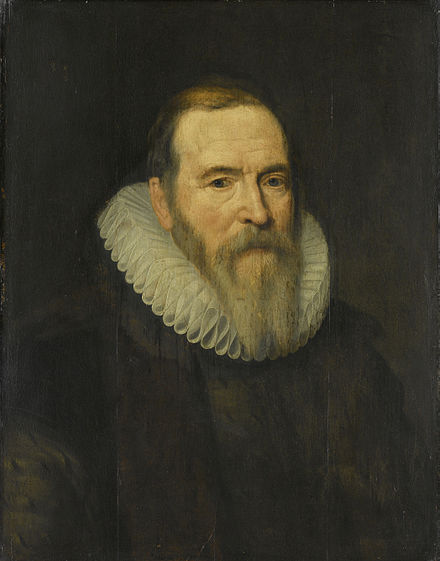
Johan van Oldenbarneveldt (1547-1619) was a Dutch lawyer who took part in the resistance to Spanish occupation, the so-called 60 Years’ War. He was a prominent politician who stood up for the rights of the province of Holland and those adhering to the anti-Calvinist branch of Protestantism known as Arminianism. Both of these brought him into conflict with Maurice of Nassau, leader of the Orange faction. In 1618 Oldenbarneveldt was arrested and charged with treason; the trial was infamous for its unfairness, Chamber’s Book of Days was still angry about it 200 years later:

His name is usually associated with ideas of national ingratitude. Another is evoked by it, that there is no party or body of men safe by their professions of liberal principles, or even their professed support of liberal forms of government, from the occasional perpetration of acts of the vilest tyranny and oppression. After William of Orange, the Netherlands owed their emancipation from the Spanish yoke to the advocate, Johan Van Olden Barneveldt. He it mainly was who obtained for his country a footing among the powers of Europe. As its chief civil officer, or advocate-general, he gained for it peace and prosperity, freed it from debt, restored its integrity by gaining back the towns which had been surrendered to England as caution for a loan, and extorted from Spain the recognition of its independence. It owed nearly everything to him. Nor could it be shewn that he ever was otherwise than an upright and disinterested administrator. He had, however, to oppose another and a dangerous benefactor of Holland in Prince Maurice of Orange. A struggle between the civil and the military powers took place.

There was at the same time a struggle between the Calvinists and the Arminians. In British history, the former religious body has been associated with the cause of civil liberty. The history of the Netherlands is enough to shew that this was from no inherent or necessary affinity between liberty and the Genevan church. Barneveldt, who had embraced the tenets of Armin, contended that there should be no predominant sect in Holland; he desired toleration for all, even for the Catholics. The Calvinists, to secure their ascendancy, united themselves with Prince Maurice, who, after all, was not of their belief. By these combined influences, the sage and patriotic Barneveldt was overwhelmed. After a trial, which was a mockery of justice, he was condemned to death; and this punishment was actually inflicted by decapitation, at the Hague, on the 13th of May 1619, when Barneveldt was seventy-two years of age.

May 12

Home / Uncategorized / May 12

1956 The birth of an animated legend

According to an episode in season 4 of The Simpsons, Homer Jay Simpson was born on this date in 1956. His marriage to Marge Bouvier, his siring of three children and his employment at the Springfield Nuclear Power Plant are chronicled in the longest-running animated sitcom in television history.

Here are a few of Homer’s priceless observations:

“To alcohol! The cause of, and solution to, all of life’s problems.”

“Weaseling out of things is important to learn; it’s what separates us from the animals … except the weasel.”

“I saw this in a movie about a bus that had to SPEED around the city, keeping its SPEED over fifty, and if its SPEED dropped, the bus would explode! I think it was called The Bus That Couldn’t Slow Down.”

“Marge, it takes two to lie. One to lie and one to listen.”

“You tried your best and you failed miserably. The lesson is, never try.”

“Kids, just because I don’t care doesn’t mean I’m not listening.”

“I wish God were alive to see this.”

“I want to share something with you: The three little sentences that will get you through life. Number 1: Cover for me. Number 2: Oh, good idea, Boss! Number 3: It was like that when I got here.”

“Sleeping bags on the floor, a roaring fire. It’ll be just like the time they kicked me out of the sporting goods store.”

May 11

The Ice Saints

A saintly collective whose festal days fall during the “blackthorn winter”.

The “Ice Saints” or “Frost Saints” is a name given to St. Mamertus, St. Pancras and St. Servatius  in European folklore. They are so named because their feast days fall on the days of May 11, May 12, and May 13 respectively — a period that often brought a brief spell of colder weather in many years, including the last nightly frosts of the spring, in the Northern Hemisphere when the Julian Calendar was in effect. The introduction of the Gregorian Calendar in 1582 involved skipping 10 days in the calendar, so that the equivalent days from the climatic point of view became May 22–25. For centuries farmers and gardeners were guided in their work by this knowledge. Of them Rabelais said: “Ces saincts passent pour saincts gresleurs, geleurs, et gateurs du bourgeon.”

St. Mamertus is not counted amongst the Ice Saints in certain countries (Southern Germany, Austria, Northern Italy, Czech Republic, etc.), whereas St. Boniface of Tarsus  belongs to them in other countries (Flanders, northern Italy, Czech Republic etc.) as well; St. Boniface’s feast day falling on May 14. , St. Sophia, nicknamed Cold Sophia (German kalte Sophie) on May 15 can be added in Germany, Alsace (France), Poland, etc. In Slovenia, Sophia is associated with rain and is nicknamed poscana Zofka “pissing Sophie”.

In Poland and the Czech Republic, the Ice Saints are Saints Pancras, Servatus and Boniface of Tarsus.  (i.e., May 12 to May 14). To the Poles, the trio are known collectively as zimni ogrodnicy (cold gardeners), and are followed by zimna Zośka (cold Sophias) on the feast day of St.Sophia which falls on May 15. In Czech, the three saints are collectively referred to as “ledoví muži” (ice-men or icy men), and Sophia is known as “Žofie, ledová žena” (Sophia, the ice-woman).

In Sweden the German legend of the ice saints has resulted in the belief that there are special “iron nights,” especially in the middle of June, which are susceptible to frost. The term “iron nights” (järnnätter) has probably arisen through a mistranslation of German sources, where the term “Eismänner” (ice men) was read as “Eisenmänner” (iron men) and their nights then termed “iron nights,” which then became shifted from May to June.

May 10

Home / Uncategorized / May 10
An American poster published in the Philippines

On May 10, 1915, in the tenth month of World War I, the Times of London published the first account of an Allied soldier crucified by the Germans. The article entitled “Torture of a Canadian Officer” said that its Paris correspondent had heard from front-line troops that they had recovered the body of a Canadian captain nailed to a wall by bayonets through his hands, feet, and throat, and riddled with bullets.

Questions were asked in the House of Commons about this incident and stories spread with different details — it wasn’t a captain, it was a sergeant; it wasn’t a single soldier, it was two, then three; the victim wasn’t Canadian, he was British, etc. Details were hard to pin down but the alleged incident was great fuel for anti-German propaganda, becoming the stuff of legend, posters, movies, and widespread public outrage.

In 1918, the British war artist Francis Derwent Wood created a sculpture entitled “Canadian Golgotha” showing a Christ-like crucified soldier surrounded by mocking Germans, but before it could be exhibited after the war, the German government demanded documentary proof of the atrocity and the art was never shown until the 1990s.

Over the years, the story came to be doubted and put down to war-time rumour and exaggeration but the latest research suggests that the tale is true and that the victim was Sergeant Harry Band of the Central Ontario Regiment, who went missing in action in late April near Ypres.

May 9

St Christopher

In the wake of the Second Vatican Church Council in the 1960s a number of popular saints, whose historical claims were shaky, had their status downgraded. They were removed from the universal liturgical calendar though local devotion to some of them was still permissible. Among those named in this cull were St Nicholas, St Catherine of Alexandria and St Christopher, who is celebrated on this day by the Eastern Church.

According to legend, Christopher (literally “Christ-bearer”) was a giant who announced that wished to serve the greatest king. He placed himself under a local monarch but noticed that he crossed himself at the mention of the devil and concluded that the devil must be greater. A bandit chief proclaimed himself the very devil and Christopher served him until he noticed that the outlaw avoided a roadside cross, so he sought out Christ. He was converted by a Christian hermit who told him that he could serve Christ by helping travellers ford a dangerous river. The medieval hagiography The Golden Legend continues the story: 

And in a time, as he slept in his lodge, he heard the voice of a child which called him and said: Christopher, come out and bear me over. Then he awoke and went out, but he found no man. And when he was again in his house, he heard the same voice and he ran out and found nobody. The third time he was called and came thither, and found a child beside the rivage of the river, which prayed him goodly to bear him over the water. And then Christopher lift up the child on his shoulders, and took his staff, and entered into the river for to pass. And the water of the river arose and swelled more and more: and the child was heavy as lead, and alway as he went farther the water increased and grew more, and the child more and more waxed heavy, insomuch that Christopher had great anguish and was afeard to be drowned. And when he was escaped with great pain, and passed the water, and set the child aground, he said to the child: Child, thou hast put me in great peril; thou weighest almost as I had all the world upon me, I might bear no greater burden. And the child answered: Christopher, marvel thee nothing, for thou hast not only borne all the world upon thee, but thou hast borne him that created and made all the world, upon thy shoulders. I am Jesu Christ the king, to whom thou servest in this work. And because that thou know that I say to be the truth, set thy staff in the earth by thy house, and thou shalt see to-morn that it shall bear flowers and fruit, and anon he vanished from his eyes. And then Christopher set his staff in the earth, and when he arose on the morn, he found his staff like a palmier bearing flowers, leaves and dates.

Christopher is then said to have gone to Lycia in what is now southern Turkey where he converted many before he was martyred, supposedly in the mid-third century persecution by the emperor Decius. Many today still wear St Christopher medals to keep them safe when travelling.

May 8

1945  A very busy day

V-E Day

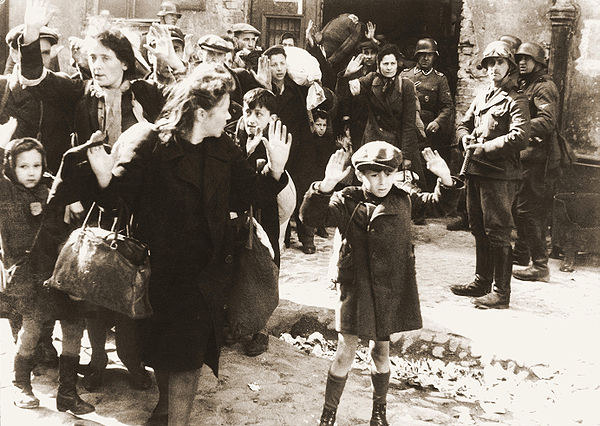
Victory in Europe Day. In the ruins of conquered Berlin, German Field-Marshal Wilhelm Keitl signed the document to “surrender unconditionally to the Supreme Commander, Allied Expeditionary Force and simultaneously to the Supreme High Command of the Red Army all forces on land, at sea, and in the air who are at this date under German control.” This officially ended the European phase of the Second World War, though sporadic fighting continued for a few days.

Prague Uprising

One of those places where fighting continued was in Prague, the capital of Czecho-Slovakia, where citizens had risen up against the occupying German forces. Believing that American and Russian armies were near, the Czech partisans began attacking German positions in the city on March 5. Several days of heavy fighting ensued, including tank battles and air attacks, before an agreement allowed the German forces to slip westward to avoid surrendering to the Soviets.

Sétif Massacre

In the French colony of Algeria, during celebrations of the war’s end, fighting broke out between pro-independence natives and French colons (settlers) resulting in the massacre of over 100 French civilians. The military took revenge against Algerian villages believed to be involved and conducted a series of atrocities that resulted in thousands of deaths, souring relations between the French and their Arab and Berber subjects.

Halifax Riot

When news of the end of the war in Europe reached Halifax on May 7, the city was swollen with the presence of over 25,000 servicemen anxious to celebrate. The commanding admiral, Leonard W. Murray, against the advice of his officers, unwisely allowed 9,000 sailors to go ashore, asking them to “be joyful without being destructive or distasteful.” The men found there were no places they could legally drink and began a riot in which liquor stores were looted, shops were vandalized and robbed, streetcars were overturned and burnt and the police attacked. The next morning, the clueless Murray allowed another 9,500 men shore leave with a similar result. Finally, aware of the disorder, the military declared a curfew and herded men back into their barracks. The damage was three men dead (two from alcohol poisoning, and one a possible murder), 363 arrested, 654 businesses damaged and 207 establishments looted.

May 6

1536

Henry VIII orders the English Bible

Throughout the medieval period one consistent call from church reformers was for Scripture in the vernacular. In the 1300s the followers of the heretic John Wycliff were the first to translate the Bible into English, though they never issued a complete version and none existed in other than handwritten form. The principal European Bible was called the Vulgate, a Latin translation done around 400 by St Jerome. Though the Vulgate’s weaknesses were known to church officials, it was felt desirable that the Bible not be translated into local languages so as to keep a clerical monopoly on interpretation. Nonetheless, some vernacular versions were tolerated.

In the sixteenth century, Christian humanists expressed a desire to examine Scripture in its original languages. The breakthrough was Erasmus’s 1516 edition of a Greek New Testament which encouraged others to translate this, and not the Vulgate, into common tongues. This made vernacular Scripture a dangerous tool in the hands of reformers, as was the case with Martin Luther’s 1521 New Testament in German, and made the English Church turn its face against translation. Matthew Tyndale, for example, was executed in 1536 for having produced an English Bible.

Henry VIII’s decision to withdraw the Church of England from papal jurisdiction made it more likely that he and his advisers would listen to clerical demands for an English translation. In 1536, Henry’s chief minister, Thomas Cromwell, ordered that every church in the country possess an English Bible by August 1, 1537 — though there was yet no such book that could legally be procured. In the next two years two versions appeared. The 1537 Matthew Bible was a combination of work done by Tyndale (the New Testament and parts of the Old) and by Myles Coverdale (a less respectable completion of the Old Testament.) In 1538 the Great Bible, mostly the work of Tyndale, was mandated (its title page contains a portrait of Henry VIII distributing the “Word of God” amid many cries of “God Save the King.”) Cromwell ordered priests to possess “one book of the bible of the largest volume in English, and the same set up in some convenient place within the said church that ye have care of, whereas your parishioners may most commodiously resort to the same and read it.” This remained the standard English Bible until the Bishops’ Bible of 1568.

Tyndale’s work continued to be used by later English translators and it is estimated that the King James Version of 1611 relied for 90% of its text on the earlier version.

May 5

553

The Second Council of Constantinople

There was nothing that Christians of the East liked better than arguing about the nature of Christ and by the 500s Christianity had developed three great strains of thinking on the subject. All agreed that our Lord possessed two natures — human and divine — but there was disagreement as to the relationship and balance. In Egypt and the Levant, the Monophysite position predominated: that the divine nature of Christ almost obliterated the human aspect. In Persia and middle Asia, Christians of the Nestorian variety thrived; they stressed the human side of Christ’s nature and denied that Mary could be called “Theotokos” or “God Bearer”. In the West and Asia Minor, the Chalcedonians believed in a “hypostatic union” where the human and the divine coexisted simultaneously: Jesus Christ, one Person, fully God and fully man.

The Second Council of Constantinople was called at the urging of the Emperor Justinian who hoped that a condemnation of some earlier writings tainted with Nestorianism would help heal the gap between Monophysites and Chalcedonians. In fact, division was exacerbated by the meeting. The pope objected to the fact that the Council had been called without his authorization and he had doubts that the writings in question were really all that heretical. Western bishops found themselves unable to debate intelligently because the knowledge of Greek had largely disappeared among western churchmen. The result was further schism, more excommunications and no reconciliation.

The failure of Constantinople II was to lead to further theological hair-splitting such as monoenergism and monothelitism — Christ had two natures but only one energy or one will. These two would fail to find common ground.