May 4

1493

Pope Alexander VI divides the world

By the late 15th century, European marine architecture had advanced to the point that long ocean-going voyages were possible. The nation states on the Atlantic coast invested in exploration whose purpose was to find a sea-route to Asia and its trade riches. The country that achieved this might thus cut out Mediterranean middle-men and avoid dealing with hostile Islamic powers. Portugal was first to take up this challenge and a series of expeditions down the coast of Africa in the 1480s and 1490s would eventually find a way to round the southern cape and reach India. At the same time Castile, the leading Spanish power, financed Christopher Columbus’s attempt to reach Asia by a western route, a serendipitous blunder that ended up in the discovery of the Americas.

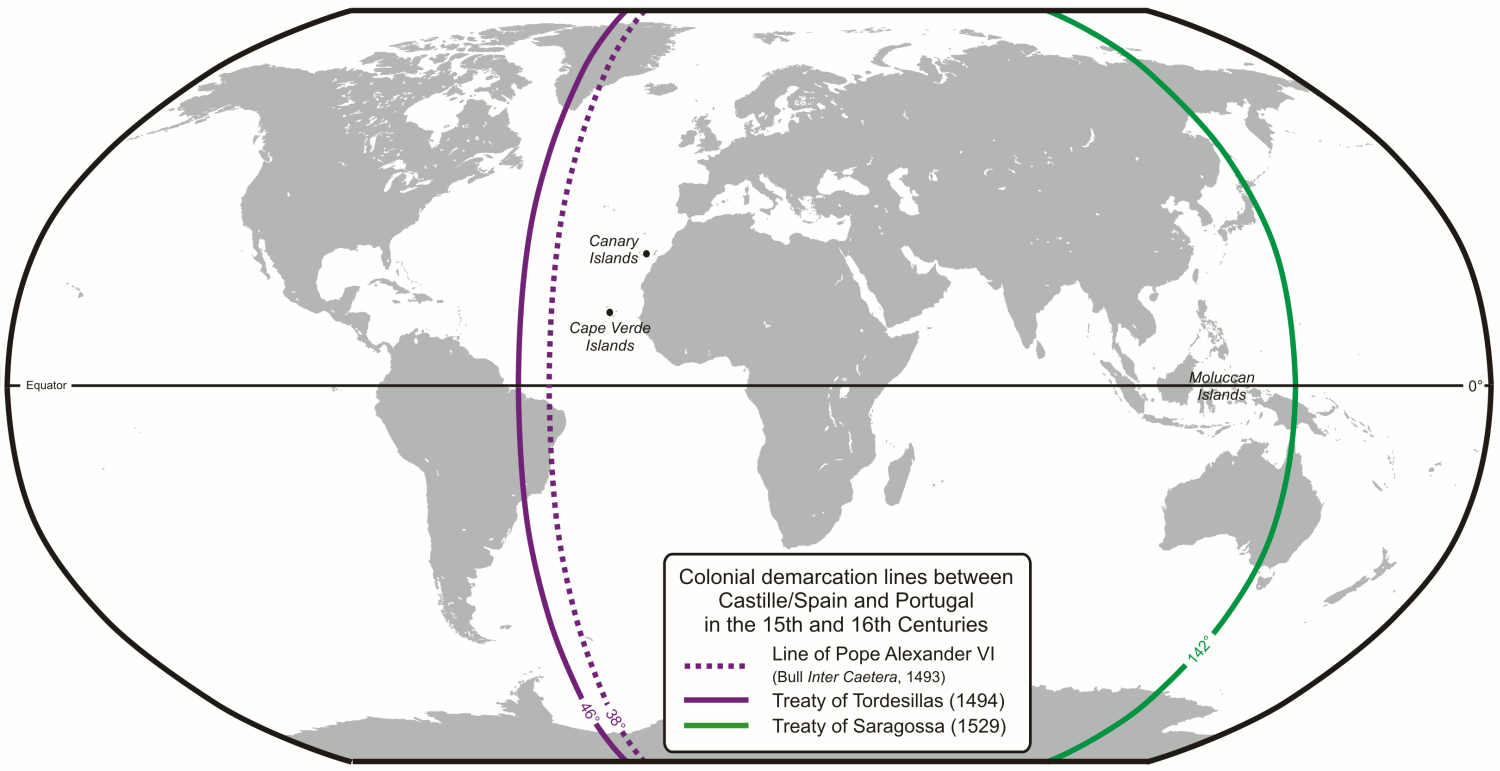
In order to prevent rival claims to new territories from disturbing the peace of nations, Pope Alexander VI, a Spaniard, issued the 1493 bull Inter cetera which bolstered Spanish claims:

Among other works well pleasing to the Divine Majesty and cherished of our heart, this assuredly ranks highest, that in our times especially the Catholic faith and the Christian religion be exalted and be everywhere increased and spread, that the health of souls be cared for and that barbarous nations be overthrown and brought to the faith itself. …[W]e … assign to you and your heirs and successors, kings of Castile and Leon, … all islands and mainlands found and to be found, discovered and to be discovered towards the west and south, by drawing and establishing a line from … the north, …to …the south, … the said line to be distant one hundred leagues towards the west and south from any of the islands commonly known as the Azores and Cape Verde.

The Portuguese were unhappy with this rather vague division of the globe and saw that it precluded their hopes of claiming rights in India. They secured their future by negotiating the 1494 Treaty of Tordesillas with Spain. This agreement, which ignored the papal bull, drew a north-south line down the Atlantic, giving Portugal territory to the east and Spain the lands to the west. More papal decrees and treaties would be necessary before an agreement in 1529 solved most of the Spanish-Portuguese bickering. Other European nations tended to ignore these rulings altogether and, of course, native states of the Americas, Africa and Asia were given no say in the matter.

May 3

1469

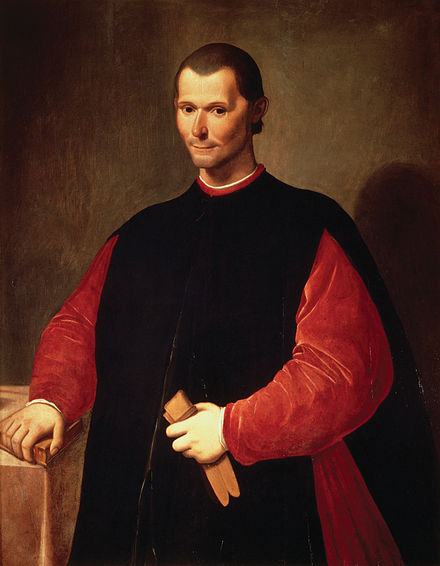
Birth of Niccolò Machiavelli

Niccolò Machiavelli (1469-1527) was a Florentine politician and writer whose name has become synonymous with the publication of the deeply-cynical The Prince but who had a much more interesting career than merely writing a tract on a conscience-free approach to public life. Of him, Chamber’s Book of Days says:

Machiavelli was born, in Florence, in 1469, of an ancient, but not wealthy family. He received a liberal education, and in his 29th year he was appointed secretary to the Ten, or committee of foreign affairs for the Florentine Republic. His abilities and penetration they quickly discerned, and despatched him from time to time on various and arduous diplomatic missions to the courts and camps of doubtful allies and often enemies. The Florentines were rich and weak, and the envy of the poor and strong; and to save themselves from sack and ruin, they had to trim adroitly between France, Spain, Germany, and neighbouring Italian powers. Machiavelli proved an admirable instrument in such difficult business; and his despatches to Florence, describing his own tactics and those of his opponents, are often as fascinating as a romance, while furnishing authentic pictures of the remorseless cruelty and deceit of the statesmen of his age.

In 1512 the brothers Giuliano and Giovanni de Medici, with the help of Spanish soldiers, re-entered Florence, from which. their family had been expelled in 1494, overthrew the government, and seized the reins of power. Machiavelli lost his place, and was shortly after thrown into prison, and tortured, on the charge of conspiring against the new regime. In the meanwhile Giovanni was elected Pope by the name of Leo X; and knowing the Medicean love of literature, Machiavelli addressed a sonnet from his dungeon to Giuliano, half sad, half humorous, relating his sufferings, his torture, his annoyance in hearing the screams of the other prisoners, and the threats he had of being hanged. In the end a pardon was sent from Rome by Leo X, to all concerned in the plot, but not until two of Machiavelli’s comrades had been executed.

Machiavelli now retired for several years to his country-house at San Casciano, about eight miles from Florence, and spent his days in literary pursuits. His exile from public life was not willing, and he longed to be useful to the Medici. Writing to his friend Vettori at Rome, 10th December, 1513, he says, ‘I wish that these Signori Medici would employ me, were it only in rolling a stone. They ought not to doubt my fidelity. My poverty is a testimony to it.’ In order to prove to them ‘that he had not spent the fifteen years in which he had studied the art of government in sleeping or playing,’ he commenced writing The Prince, the book which has clothed his name with obloquy. It was not written for publication, but for the private study of the Medici, to commend himself to them by proving how thoroughly he was master of the art and craft of Italian statesmanship.

About 1519 the Medici received him into favour, and drew him out of his obscurity. Leo X employed him to draw up a new constitution for Florence, and his eminent diplomatic skill was brought into play in a variety of missions. Returning to Florence, after having acted as spy on the Emperor Charles V’s movements during his descent upon Italy, he took ill, and doctoring himself, grew worse, and died on the 22nd of June, 1527, aged fifty-eight. He left five children, with little or no fortune. He was buried in the church of Santa Croce, where, in 1787, Earl Cowper erected a monument to his memory.

The Prince was not published until 1532, five years after Machiavelli’s death, when it was printed at Rome with the sanction of Pope Clement VII; but some years later the Council of Trent pronounced it ‘an accursed book.’ The Prince is a code of policy for one who rules in a State where he has many enemies; the case, for instance, of the Medici in Florence. In its elaboration, Machiavelli makes no account of morality, probably unconscious of the principles and scruples we designate by that name, and displays a deep and subtle acquaintance with human nature. He advises a sovereign to make himself feared, but not hated; and in cases of treason to punish with death rather than confiscation, ‘for men will sooner forget the execution of their father than the loss of their patrimony.’

There are two ways of ruling, one by the laws and the other by force: ‘the first is for men, the second for beasts;’ but as the first is not always sufficient, cient, one must resort at times to the other, ‘and adopt the ways of the lion and the fox.’ The chapter in which he discusses, ‘in what manner ought a prince to keep faith?’ has been most severely condemned. He begins by observing, that everybody knows how praiseworthy it is for a prince to keep his faith, and practise no deceit; but yet, he adds, we have seen in our own day how princes have prospered who have broken their faith, and artfully deceived their rivals. If all men were good, faith need never be broken; but as they are bad, and will cheat you, there is nothing left but to cheat them when necessary. He then cites the example of Pope Alexander VI as one who took in everybody by his promises, and broke them without hesitation when he thought they interfered with his ends.

It can hardly excite wonder, that a manual of statesmanship written in such a strain should have excited horror and indignation throughout Europe. Different theories have been put forth concerning The Prince by writers to whom the open profession of such deceitful tactics has seemed incredible. Some have imagined, that Machiavelli must have been writing in irony, or with the purpose of rendering the Medici hateful, or of luring them to destruction. The simpler view is the true one: namely, that he wrote The Prince to prove to the Medici what a capable man was resting idly at their service. In holding this opinion, we must not think of Machiavelli as a sinner above others. He did no more than transcribe the practice of the ablest statesmen of his time into luminous and forcible language. Our feelings of repugnance at his teaching would have been incomprehensible, idiotic, or laughable to them. If they saw any fault in Machiavelli’ s book, it would be in its free exposure of the secrets of statecraft.

Unquestionably, much of the odium which gathered round the name of Machiavelli arose from that cause. His posthumous treatise was conveniently denounced for its immorality by men whose true aversion to it sprang from its exposure of their arts. The Italians, refined and defenceless in the midst of barbarian covetousness and power, had many plausible excuses for Machiavellian policy; but every reader of history knows, that Spanish, German, French, and English statesmen never hesitated to act out the maxims of The Prince when occasion seemed expedient. If Machiavelli differed from his contemporaries, it was for the better. Throughout The Prince there flows a hearty and enlightened zeal for civilization, and a patriotic interest in the welfare of Italy. He was clearly a man of benevolent and honourable aims, but without any adequate idea of the wrongfulness of compassing the best ends by evil means. The great truth, which our own age is only beginning to incorporate into statesmanship, that there is no policy, in the long run, like honesty, was far beyond the range of vision of the rulers and diplomatists of the 15th and 16th centuries.

Machiavelli was a writer of singularly nervous and concise Italian. As a dramatist he takes high rank. His comedy of Mandragola is spoken of by Lord Macaulay as superior to the best of Goldoni, and inferior only to the best of Molière. It was performed at Florence with great success and Leo X admired it so much, that he had it played before him at Rome. He also wrote a History of Florence, which is a lively and graphic narrative, and an Art of War, which won the praise of so competent a judge as Frederick the Great of Prussia. These and other of his works form eight and ten volumes octavo in the collected editions.
May 2

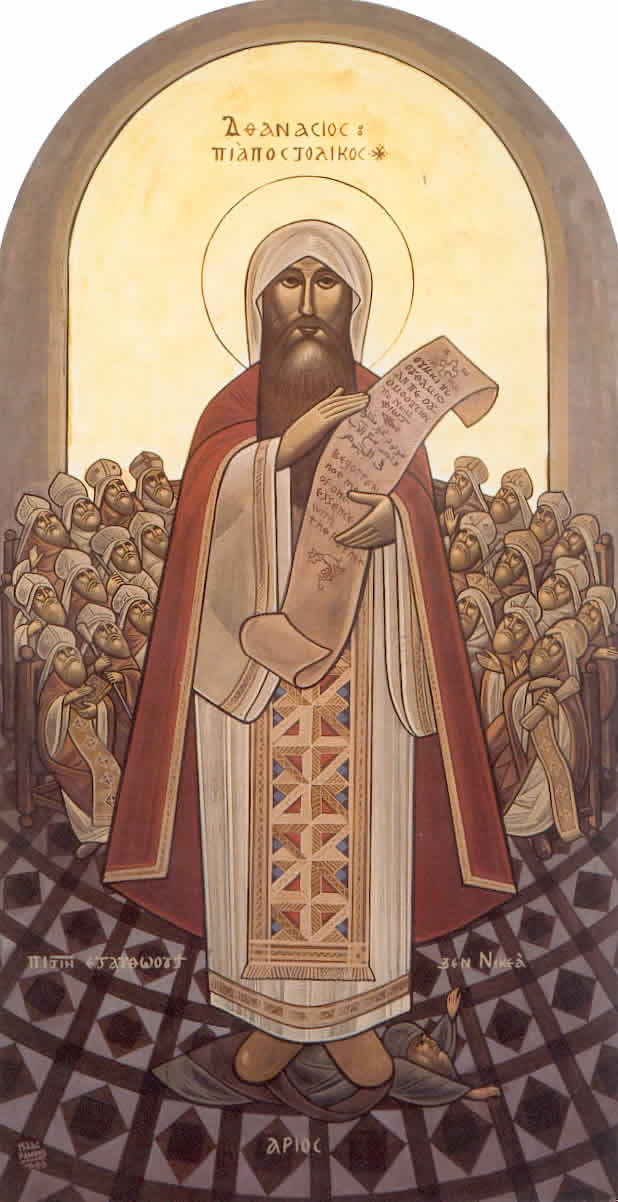
St Athanasius of Alexandria

Few prelates have had such a tumultuous career as Athanasius (296-373) or such a roller-coaster career arc. He was born into a prosperous Egyptian family and seems to have spoken and written in both Greek, the cultural language of the Roman Empire, and the local Coptic. Alexandria was a rich city and one of the cultural capitals of the civilized word with a reputation for its schools of philosophy.

Athanasius’s life in the church (he became a deacon and a priest in his early 20s) would be spent in the midst of the great Christological debates of the fourth century. Though Christians had since the earliest days of the Church regarded Jesus as divine, his exact relationship to God the Father had never been exactly determined. One view, which had considerable support in Alexandria and the Middle East, was that Jesus was a subordinate creation of God. The advancement of this view by the Egyptian priest Arius caused controversy in the wider Christian community and led to the Emperor Constantine in 325 summoning the First Ecumenical Council to Nicaea to rule on the question. Athanasius attended and took an anti-Arian stance which the Council strongly affirmed. When he became Patriarch of Alexandria in 328, Athanasius found himself opposed by number of prominent eastern bishops who continued to back Arius. They conspired against him and brought a number of preposterous charges which got a hearing in Constantinople. In 335 Athanasius was deposed from his see and exiled to Trier in Gaul. He returned to Alexandria after the death of Constantine, who was succeeded by his three sons who split the empire among themselves.

The emperor Constantius, whose territory included Alexandria, ordered Athanasius evicted once more but the bishop found refuge with Constans, the imperial brother ruling the West, including Rome. He stayed in the West gathering support for his anti-Arian theology for over 7 years until he was allowed to return to Alexandria in 346. Ten years later, however, Constantius, even more an Arian than ever, ordered the arrest of the patriarch who fled up the Nile into exile again, though he continued to write vigorously in opposition to subordinationist Christology.

The death of Constantius in 361 allowed Athanasius to regain his position but it brought to power Julian the Apostate, the last pagan emperor of Rome, no friend of Christianity. Julian, of course, ordered him into exile once more. Athanasius was reinstated at the death of Julian by Jovian, a Christian emperor, but was exiled for the fifth and last time by the emperor Valens, an Arian. Valens eventually relented and Athanasius once more assumed the patriarchate until his death in 373. The statement of belief called the Athanasian Creed was not, in fact, one of his works but seems to have appeared a century later.

May 1

1945

Mass suicide in Germany

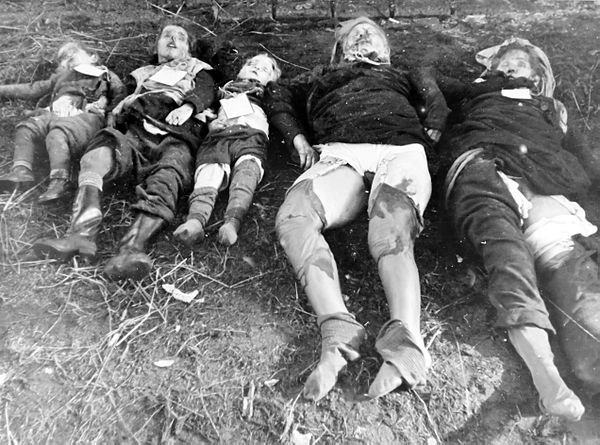
By 1945 German civilians were well aware of the atrocities that their army had committed on the Eastern Front and the revenge that was being taken by the Soviets as they pressed toward Berlin. The media run by Nazi propaganda minister Goebbels stressed the inhuman waves of arson, rape and murder carried out by the Red Army, causing millions of refugees to flee west. Another consequence was the phenomenon of mass suicides, either in anticipation of Russian occupation, or after having suffered brutal treatment at the hands of Russian troops. One remarkable case of this took place on May 1, 1945, in Demmin, the day that Berlin was captured and the hammer and sickle flag was waved over the German chancellery.

On April 30 the Red Army reached the outskirts of Demmin, a town full of refugees from the east. Nazi officials and the police had fled and a large white banner flew from the church steeple signalled a willingness to surrender. Three emissaries from the Red Army approached with a promise of easy treatment but they were gunned down by Nazi diehards, and fanatic Hitler Youth continued to snipe at advancing Russian units. The retreating German army had dynamited the bridges as they went, leaving the townsfolk with no routes of escape and a vengeful enemy pouring in. The result was three days of ceaseless rape and looting while 80% of Demmin was burnt to the ground.

These horrors prompted panic and a rash of collective suicides. Whole families killed themselves with poison, gunshot, drowning or hanging. With the death toll placed at anywhere from 900 to 2,000 it was the largest recorded mass suicide in Germany.

April 30

Home / Today in History / April 30

535

Murder of Amalasuntha

One of the tragedies surrounding the fall of the Roman Empire in the West is the fact that it needn’t have been so catastrophic. The Ostrogoths who had invaded Italy and deposed the last of the western emperors in 476 were anxious to keep their territory peaceful and functioning — otherwise how could the population support their Germanic occupiers in the manner to which they would like to become accustomed? Under their king Theoderic (454-526), the trappings of civilization were maintained; using Roman administrators, they collected taxes, dredged the harbours, maintained trade, and kept the roads clear of bandits. Libraries were open, Christian worship (both Catholic and Arian) proceeded unmolested. However, in his last years, Theoderic lost faith in his Roman ruling class and executed a number of them for conspiring with the Eastern Roman empire in Constantinople.

Had Theoderic died with an adult male heir, things might yet have continued in a peaceful manner, but his only surviving child was a daughter Amalasuntha (495-535) and so the crown went to her ten-year-old son Athalaric, for whom she served as regent. Amalasuntha seems to have been well-educated in the traditional Roman manner, speaking Gothic, Latin and Greek, and she was certainly a friend both of her Roman administrative class and the eastern empire: a fact that vexed some traditionalist Gothic nobles. When her son died in 534, she shared her reign with her cousin Theodahad, believing that a male of the warrior class would lend her regime some authority. It was a fatal mistake — Thedodahad exiled Amalasuntha and had her murdered in her bath. This prompted a struggle for the crown; in the ensuing civil strife Theodahad was himself killed but, more importantly, the eastern empire was given an excuse to intervene.

The ensuing Gothic wars that began with the invasion of an eastern army under Belisarius went on for over twenty years and ended in Italy being ravaged in a worse fashion than the barbarian incursions had produced. The weakened Gothic and eastern forces were finally in no state to resist yet another wave of barbarians, the Lombards, who further devasted the peninsula.

April 29

1946

Father Divine marries Sweet Angel

Despite certain ambiguities of character, the self-appointed Father Divine was undoubtedly both charismatic and clever and prospered in one of the few leadership roles open to black males in early twentieth-century America. Divine’s theology blended various Christian traditions with a belief in positive thinking in ways that foreshadowed a number of contemporary New Age spiritual trends; and his career demonstrated how a promise of religious salvation, political progress and the philanthropic provision of basic social services can attract a large following in times of racial and economic turmoil. From obscure and humble origins Father Divine fashioned himself into a cult leader of god-like pretensions and created a controversial church whose beliefs fascinated America throughout the 1930s and 1940s.

There are a number of competing versions of the history of his early life; sources conflict as to his birthdate — variously noted as between 1874 and 1882 — but the most plausible account is that Divine was born George Baker to ex-slave parents in a Maryland African-American ghetto in about 1880. By the early years of the twentieth century he was traveling with a wandering evangelist who styled himself Father Jehovia, while the young Baker called himself the Messenger. After some years of preaching together they parted, and Baker began to refer himself as Major Jealous Devine and to proclaim himself as God. With a small band of followers in tow, he moved to New York where he changed his name yet again to Father Divine.

By 1919 he had obtained a base for his new Universal Peace Mission Movement in Sayville, Long Island, where his preaching initially attracted a mainly black audience. The years following World War I had seen a massive migration of southern African Americans to northern industrial cities, and Divine’s message of self-respect and racial equality drew an increasingly large following. The Universal Peace Mission mandated celibacy and modesty and shunned improvidence and debt, but it was its provision of employment, cheap lodgings, and inexpensive food to its adherents during the Great Depression that brought thousands of worshippers, white as well as black, flocking to Sayville. The influx aroused the ire of local residents whose complaints resulted in Father Divine’s arrest. He was charged with disturbing the peace, convicted in 1932, and sentenced to a year in jail. The court proceedings brought Divine widespread notoriety when, two days after sentencing him, the judge suffered a fatal heart attack. From his prison cell, the self-styled “God” proclaimed “I hated to do it” — a remark that, trumpeted by the media, confirmed their leader’s claims to divine status among his followers.

Moving the mission’s headquarters to Harlem, Divine continued to attract national attention on two fronts: by his lavish lifestyle and rumours of his sexual adventures, and by the progressive social ideas his believers practiced. The Mission’s services were scrupulously integrated racially, and the movement led the way in pressing for anti-lynching laws and for public facilities to be open to all races. In a time of economic disaster it rejected relief and welfare and bought hotels, which it termed “heavens,” where its members could live modest, mutually supportive lives free of alcohol, tobacco and reliance on credit.

In 1946 Divine was again in the headlines when he married one of his young followers, a white Canadian woman named Edna Rose Ritchings, also known as Sweet Angel. By the 1950s, however, he was in deteriorating health. His public profile dwindled alongside the importance of his movement as other, less outrageous, African-American leaders rose to prominence. Father Divine died in 1965 at his Philadelphia estate, where his wife, known as Mother Divine, presided over the remains of the Universal Peace Mission Movement until her death in 2017.

April 28

Home / Today in History / April 28

1944 

Operation Tiger Disaster

In preparation for D-Day, the western Allies’ invasion of Nazi-occupied Europe, tens of thousands of troops had to be trained in amphibious assaults. Previous attacks launched from the sea had often proved to be catastrophic: at Gallipoli in 1915 the British forces struggled to get off the beach; at Dieppe in 1942, Canadian raiders showed how difficult it was to assault a port; in 1943 during the invasion of Sicily American paratroopers were dropped into the Mediterranean far from land. Planners for the Normandy landings were intent on applying these lessons to the forces that would be landed on June 6.

In April 1944 a massive landing exercise, dubbed Operation Tiger, took place on the south coast of England. It proved to be almost as deadly as the invasion itself. On April 27, poor coordination between American and British units resulted in “friendly fire” falling on troops as they hit the beaches. Hundreds were killed. The next day, German E-boats, fast attack craft (shown above), attacked Allied landing ships sailing to Operation Tiger in the English Channel. One of the two British destroyers that were to be escorting the helpless LSTs had already collided with one of them and returned to port for repairs but, again, bad communication with American forces meant that no replacement had been sent.

The E-boats had a field day: two LSTs were torpedoed and sunk and one was set on fire; another was damaged by — you guessed it — “friendly fire”. Altogether 749 American soldiers and sailors were killed in that encounter. By contrast, the actual D-Day casualty total for the American landing on Utah Beach was only 197 dead.

April 27

Home / Today in History / April 27

1913

Birth of Lutz Long

Lutz Long (1913-43) was a German athlete, famous for his actions at the 1936 Berlin Olympic Games. Long was the German long-jump champion and the holder of the European record but his opponent in Berlin was slated to be the legendary multidiscipline runner and jumper from the United States, Jesse Owens. Owens held the world record not only for the long jump but also for the 100-yard dash, the 220-yard sprint and the 220-yard low hurdles.

When Owens and Long met on August 4, 1936, Owens had just won the gold in the 100 metres but Long had just set the Olympic record in the long jump and qualified for the final. Owens stared disaster in the face by fouling out in his first two attempts, leaving him a single try to qualify. At this point he was approached by Long who told him that he could easily make the final round by making his take-off from several inches in front of the board and avoid the risk of fouling. Owens took his advice and went on to defeat Long, who won the silver medal. Owens was always grateful for that piece of sportsmanship and stated:  “It took a lot of courage for him to befriend me in front of Hitler … You can melt down all the medals and cups I have and they wouldn’t be a plating on the twenty-four karat friendship that I felt for Luz Long at that moment”.

Long served in the Wehrmacht artillery during the Second World War and was killed in the battle for Sicily. After the war Owens maintained his friendship with Long’s family and served as best man at his son’s wedding.

April 26

1478

Murder at Easter Mass

The Medici family, led by Lorenzo the Magnificent, were the de facto rulers of Renaissance Florence but they had powerful enemies. Inside the city they were envied by the old-money Pazzi clan of rich bankers, and outside the city they were despised by the Pope, Sixtus IV (after whom the Sistine Chapel is named.) The Medici had frustrated the pope’s plan to place one of his nephews on the throne of a city near Florence so Sixtus turned to the Pazzi to gain revenge. He took away valuable papal monopolies from the Medici that hurt them financially, and conspired to murder Lorenzo and his brother and invade Florence with an army of mercenaries.

Various plots were hatched, including poisoning the brothers, but it was finally decided that the best place to get at the victims, unarmed and together, would be at Easter Mass. A professional assassin was hired for the task but he recoiled when told that the murder was to take place at the elevation of the Host during communion. He refused the job, claiming that such a deed in the face of Christ would merit eternal damnation, so the killing was assigned to priests and members of the Pazzi family.

With the Medici brothers in the front row and the conspirators behind them, the murderers waited until the ringing of the bell that signifies the climax of the Mass. Then they leapt upon Lorenzo and brother Giuliano. The latter was killed instantly but Lorenzo was only wounded, his heavy scarf and cloak protecting him from the knife of the priest who attacked him. While Lorenzo was whisked away to safety, the Pazzi clan attempted to seize the city hall and its arsenal, and ran through the streets crying “Liberty!”, hoping to raise a popular rebellion. They were met with resistance by Medici supporters who shouted their own battle cry and turned on the conspirators who found they had almost no support. The mob exacted summary justice on the Pazzi family. The Archbishop of Pisa, one of the plotters, was hanged, in his full ecclesiastical garb, from the balcony of the city hall along with other leaders of the conspiracy. Pazzi mansions were looted while their followers were dragged through the streets and murdered.

Rather than be embarrassed that the head of the Catholic Church had conspired with archbishops and priests to commit a murder during the most sacred moment in the Christian calendar, the papacy expressed outrage that clergy had been killed in the retaliation and declared war on Lorenzo de Medici, a crisis which he was able to weather. A final ironical note: Guiliano’s mistress at the time of his death was pregnant. The posthumous illegitimate child was raised by the Medici clan and grew up to be Pope Clement VII.

April 25

St Mark’s Day

April 25 honours the writer of the third Gospel. The fourth-century Christian historian Eusebius, using much earlier records, says of him:  And so greatly did the splendor of piety illumine the minds of Peter’s hearers that they were not satisfied with hearing once only, and were not content with the unwritten teaching of the divine Gospel, but with all sorts of entreaties they besought Mark, a follower of Peter, and the one whose Gospel is extant, that he would leave them a written monument of the doctrine which had been orally communicated to them. Nor did they cease until they had prevailed with the man, and had thus become the occasion of the written Gospel which bears the name of Mark. . . And they say that this Mark was the first that was sent to Egypt, and that he proclaimed the Gospel which he had written, and first established churches in Alexandria. (Eccl. Hist. II, 15-16)

But who was Mark? Tradition links him to “John Mark”, the cousin of Barnabas, mentioned in the books of Acts, Timothy, Philemon and Colossians. He seems to have been a Jewish Christian who served in Paul’s missions for a time, was with Peter in Rome, and then went to Egypt becoming the first bishop of the African church in Alexandria. For a very long time Mark’s Gospel was seen merely as a summary of Matthew, but most scholars now agree that Mark’s was the first Gospel to be written and place the date of writing some time after the fall of Jerusalem in 70 AD, though others date it from the 60s. The latter argue that Mark was writing for an audience of Roman Christians, then undergoing the persecution of Nero. We have no reliable account of his death but the Coptic Church claims that he was martyred in Alexandria by outraged pagans.

In the 7th century Egypt was overrun by Arab invaders and the native Christians placed under religious restrictions, largely cut off from western and Byzantine Christendom. In 828 Venetian merchants are said to have smuggled the relics of St Mark out of Alexandria and taken them to Venice where the basilica of San Marco was built to house them. (Coptic Christians assert, however, that the head of St Mark remains in Alexandria.)

Each of the Gospellers has been traditionally denoted by a particular figure, derived from visions recorded in the Book of Ezekiel and Revelation: Luke by an ox; John by an eagle; Matthew by a man; and Mark by a lion. The Lion of St Mark remains the emblem of Venice, on its flag and atop a pillar in the Piazzetta beside the Doge’s Palace.