August 18

Home / Today in History / August 18

1940

The Hardest Day

By the summer of 1940 Hitler and his allies controlled all of western and central Europe. Britain stood alone against complete Nazi victory, but its army had retreated from France leaving all its weaponry and transport behind; the only fully-equipped force was a single Canadian division. Should German troops land in Britain, there was little to stop them occupying the whole of the island. Operation Sea-Lion was the German plan to cross the English Channel but first it had to clear the waters of the Royal Navy and the skies of the Royal Air Force.

The Luftwaffe outnumbered the RAF and its veteran fliers had gained experience and confidence in crushing the airforces of Poland France. The German General Staff believed that by attacking English air bases they could force the RAF into battle and destroy its supply of fighter and pilots. Without air cover the British would either be forced to negotiate or stand open to invasion. The attacks began in June, with Hitler demanding a resolution of the situation by mid-August. The Heinkels, Dorniers, Stukas, and Messerschmitts were met by Hurricanes, Spitfires and Defiants over southern England and the Channel.

August 18 is known as the Hardest Day because on this date because the Germans concentrated their attack on a few important bases and the resulting air battles claimed more aircraft and lives than any other single day. Both sides at the time underestimated their losses and exaggerated the damage inflicted on their enemy but it appears that the RAF lost 34 fighter craft and 21 pilots killed or seriously wounded. The Luftwaffe lost 70 planes with 90 crewmen killed and 40 captured. The result was a stategic draw. One historian’s verdict was:

The laurels for the day’s action went to the defenders. The aim of the Luftwaffe was to wear down the Fighter Command without suffering excessive losses in the process, and in this it had failed. It cost the attackers five aircrew killed, wounded, or taken prisoner, for each British pilot casualty. In terms of aircraft, it had cost the Luftwaffe five bombers and fighters for every three Spitfires and Hurricanes destroyed in the air or on the ground. If the battle continued at this rate the Luftwaffe would wreck Fighter Command, but it would come close to wrecking itself in the process

August 16

Home / Today in History / August 16

A date of considerable turmoil

1812

The Fall of Fort Detroit

Sir, The force at my disposal authorizes me to require of you the immediate surrender of Fort Detroit. It is far from my inclination to join in a war of extermination, but you must be aware that the numerous body of Indians, who have attached themselves to my troops, will be beyond my control the moment the contest commences.

So said British General Sir Isaac Brock to the American commander, Governor William Hull. Hull, equally politely, refused to surrender:

Sir, I have received your letter of this date. I have no other reply to make, than to inform you that I am prepared to meet any force which may be at your disposal, and any consequences, which may result from any exertion of it you may think proper to make.

In the end, however, Hull yielded without firing a shot.


1819

The Peterloo Massacre

An open-air Manchester gathering to demand political and economic reform in England is attacked by cavalry of the local authorities. 15 were killed and hundreds wounded; it became a symbol of the difficulties in the struggle for fuller democracy.

1929

Palestine Massacres

Arab resentment over increasing Jewish immigration sparked tension on the Temple Mount where Muslims and Jews worship. These eventually escalated into rioting and then into full-scale atrocities in which 133 Jews were killed along with 110 Arabs.

August 14

Home / Today in History / August 14

1821

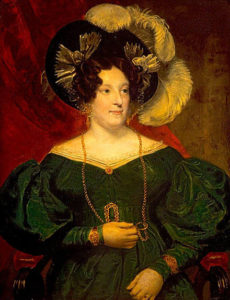
London riots over the body of Caroline of Brunswick

Caroline Amelia Elizabeth of Brunswick-Wolfenbütte (1768-1821) was a German princess who married George, Prince of Wales in 1795 and became Queen of England when her husband ascended the throne of England as George IV. George, ruling his country as Prince Regent during the madness of his father George III, was not a popular figure. He was perpetually in debt, had secretly (and illegally) married a Catholic woman, and was despised by the populace for his incompetence and arrogance. Consequently, when George openly shunned his wife for being fat and vulgar, she became a favourite of the lower classes of London. After the birth in 1796 of their daughter Charlotte, George had little to do with his wife and restricted her access to their child. In 1806 he appointed a commission to investigate rumours that she had taken a lover and produced an illegitimate offspring; she was found to be innocent and her popularity grew. Since she could not obtain a divorce from the Prince, she moved to Italy, where more rumours originated claiming that she was having an affair with one of her servants. George tried to get Parliament to pass a bill divorcing her for adultery but public sentiment forced the bill to be dropped. She returned to England after the death of her child but was still persona non grata at court. When George III died, she was forbidden to attend her husband’s coronation. She died soon after and the removal of her body to her homeland where she wished to be buried prompted the following disturbances, recounted by a contemporary observer.

Tuesday, the 14th August 1821, presented a singular scene of commotion in London. That day had been fixed by the authorities for the removal of the remains of Queen Caroline from Brandenburgh House, where she had expired a week previously, to Harwich, for the purpose of embarking them there for the continent, in terms of the instructions contained in her own will, which directed that her body should be deposited among those of her ancestors at Brunswick. A military guard had been provided by government for the funeral cortege; but, with the view of avoiding as much as possible, in the circumstances, any popular demonstrations, it was resolved that the procession should not pass through the city, a determination which gave the greatest offence both to the queen’s executors and a large portion of the community at large. According to the prescribed route, the procession was to go from Hammersmith, through Kensington, into the Uxbridge Road, then down the Edgeware Road, into the New Road; along the City Road, Old Street, and Mile-end to Romford; and thence through Chelmsford and Colchester to Harwich.

On the appointed day, an immense crowd congregated about Hammersmith, though the rain was falling in torrents. On the funeral reaching the gravel-pits at Kensington, and proceeding to turn off to the left, the way was blocked up with carts and wagons, to prevent further advance towards the Uxbridge Road, and the procession, after halting for an hour and a half, was compelled to move on towards London. Arriving at Kensington Gate, an attempt was made by the head of the police force, Sir R. Baker, with a detachment of Life Guards, to force open the park-gates, but in vain, the crowd, which had already given way to many hostile demonstrations, shouting loudly all the while: ‘To the City—to the City!’ Hyde Park Corner being reached, the gate there was found barricaded, and the procession moved up Park Lane, but was shortly met by similar obstructions. It then returned to the Corner, where the soldiers had, in the meantime, succeeded in clearing an entrance, and made its way through Hyde Park. On reaching Cumberland Gate, this was found closed, and a furious conflict ensued with the mob, who hurled at the troops the stones of the park-wall, which had been thrown down by the pressure of the crowd.

Many of the soldiers were severely hurt, and their comrades were provoked to use their firearms, by which two persons were killed and several wounded. After some further clearing away of obstructions, the procession moved down the Edgeware and along the New Roads till it reached the Tottenham Court Road, where the mob made so determined a stand against it proceeding further in the prescribed direction, that Sir R. Baker deemed it most advisable to turn the cortege down the Tottenham Court Road, and thence by Drury Lane through the Strand and the City. So resolute was the popular determination to compel the procession to traverse the city, that every street, including Holborn, through which a detour could have been made to reach the New Road or the City Road, was carefully blocked up and rendered impassable.

Having emerged from the City, the funeral train proceeded quietly on its way to Chelmsford, where it arrived at two o’clock on the following morning. From Chelmsford it proceeded to Colchester, and thence to Harwich, where it embarked for the continent on the evening of the 16th. The remains reached Brunswick on the 24th, and were deposited the following day in the cathedral, in the vault of the ducal family. An inscription had been directed by the deceased to be placed on her coffin in the following terms ‘Here lies Caroline of Brunswick, the injured Queen of England,’ but the British authorities refused to allow this to be done. While the coffin, however, was lying at Chelmsford, on its way to the coast, the queen’s executors affixed to it an engraved plate with the obnoxious title, but it was discovered, and removed by the authorities in charge, notwithstanding a vehement protest from the other party. Thus closed the tomb on this unfortunate queen, whom, even after death, the storms which had visited her so fiercely while in life, did not cease to pursue.

August 9

Home / Today in History / August 9

1974

Richard Nixon resigns

It’s never the crime, it’s the cover-up. That’s the lesson imparted by the saga of Richard Nixon and the Watergate Hotel break-in, a tangled tale that led to the only resignation of an American President.

Nixon had a long career of public service. After serving in the Navy during World War II, he was elected as a congressman from California in 1946 and gained a reputation as a fervent anti-Communist. His part in the unmasking of former State department advisor Alger Hiss as a Communist agent won him national fame, vaulting him to a Senate victory, and then prompting Dwight Eisenhower to chose him as his vice-presidential running mate in the 1952 election. In 1960 he failed to beat John Kennedy in the presidential election and failed as well in 1962 an attempt to be California governor, afterwards telling reporters they wouldn’t have “Nixon to kick around anymore”. Nixon was able to take advantage of the disenchantment of voters with the Vietnam war and the Democrats, beating Hubert Humphrey in a 1968 presidential campaign. He was re-elected in 1972 but that’s when the wheels began to fall off the wagon.

The 1972 election was marked by a number of disgraceful political tricks and malpractice. Among these was an attempted break-in at the Democratic Party headquarters in Washington’s Watergate Hotel. The perpetrators were easily detected and reporters were able to link them to certain figures in the White House and Nixon’s re-election campaign. The question then was: did the President know about this shabby scheme? Nixon denied it, but to everyone’s astonishment it was revealed that conversations in the presidential mansion were routinely tape-recorded. As the nation watched, Nixon’s legal team fought against disclosing the tapes; Nixon sacked the Watergate Special Counsel. At last the Supreme Court ruled that the tapes had to be disclosed and a smoking gun was revealed — Nixon had known about the cover-up and deceived the nation. Rather than face impeachment, he resigned and returned to private life.

Historians are still uncertain about how to weigh Nixon’s legacy. He was certainly a productive president: he brought forth environmental protections, opened up to Red China, negotiated missile reduction with the USSR, pulled troops out of Vietnam and ended military conscription, but his secretive, driven personality and his perceived deviousness won him no friends.

August 7

Home / Today in History / August 7

1560

Birth of the Blood Countess

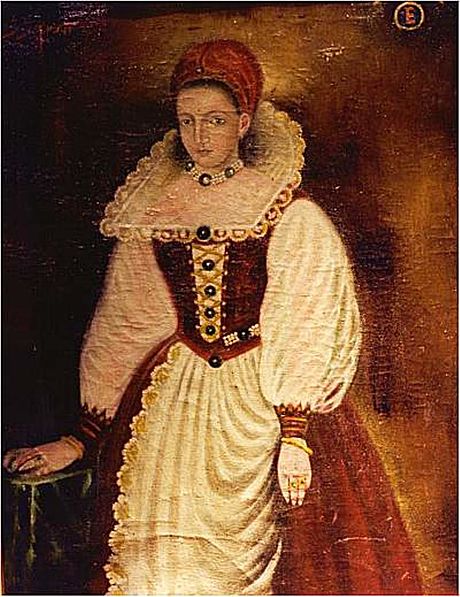
Countess Elizabeth Báthory de Ecsed (1560-1614) has the infamous reputation of being the world’s most prolific female serial killer. Legend has placed the number of her victims in the hundreds.

Elizabeth was a noblewoman of the Holy Roman Empire, owning lands in what is now Hungary and Romania, dangerous border territory at a time when the Empire was at war with the Ottoman Turks. It was said that while in her early teens she took a low-class lover and had a child by him; the poor fellow was castrated and fed to the dogs. She married another aristocrat a few years later and produced four children. She was known to be well-educated, beautiful, multilingual and a competent administrator of estates while her husband was absent in the wars; she was also known to have been less than scrupulous as a monogamist and entertained lovers while her husband was away.

Around the year 1600 rumours began to spread about the horrible fate of young girls who had been lured to her castle on the pretext of employment and who were never seen alive again. She was denounced by a Lutheran minister and the imperial government reluctantly agreed in 1610 to investigate the scandal. At her trial, 300 witnesses were heard; they accused her and her servant accomplices of torture, murder, and drinking the blood of virgins. The servants were executed and the countess was locked in a windowless room until her death.

Modern pop culture has made much of her. Her castle is a tourist attraction; locals make wine with her picture on the label; movies and books have played up the lurid sado-sexual aspects of her life (see below). Some historians believe she was the victim of a conspiracy and doubt her guilt. Where’s the fun in that?

August 4

Home / Today in History / August 4

1892

The Borden Murders

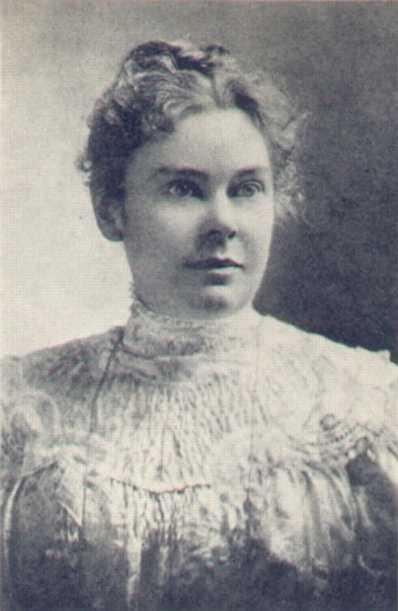
“Lizzie Borden took an axe/ And gave her mother 40 whacks./ When she saw what she had done,/ She gave her father forty-one.” On the morning of August 4, 1892 business man Andrew Borden of Falls River, Massachusetts and his second wife Abby were murdered by multiple blows of a hatchet. Popular opinion always held that the murder weapon was wielded by Lizzie, Borden’s 22-year old spinster daughter, who discovered the body of her father.

Lizzie’s explanation of where she had been and what she was doing that morning were confused and contradictory, and her attitude aroused the suspicions of the police. She was seen destroying a dress that she claimed had been stained by paint; her answers and demeanour at the inquest led to her being charged with murder in December of that year. The trial during the following summer attracted national interest, especially after Lizzie was acquitted by the jury after a mere 90 minutes of deliberation. No one else was ever tried for the crime.

For the rest of their lives Lizzie and her sister Emma were the subjects of lurid fascination. Shunned by the good citizens of Fall River, they nonetheless remained in the town, living together for years and never marrying. In 1905 the sisters quarrelled and never reconciled. They both died in 1927 and were buried side by side.

Numerous movies, plays, and stories have been written about the murders, many suggesting possible solutions to the mystery. The best of them is a 1976 tv movie The Legend of Lizzie Borden, starring Elizabeth McGovern, and a wonderful short story by Avram Davidson entitled “The Deed of the Deft-Footed Dragon”.

July 28

Home / Today in History / July 28

1794

The revolution eats its own children

It is an immutable law that revolutions are never carried out by a single group, but by a collection of various factions, each with a different goal other than simply overthrowing the existing order. It is also inevitable that revolutions become increasingly more radical, and, as they do so, they consume not just defenders of the old regime but also many of those who took a rebellious part in earlier stages of the struggle. Moderates find themselves targeted as enemies of the revolution and are repressed or killed. This radicalization will continue until eventually it becomes too oppressive and is brought to an end, exterminating the extremists, and taking a step backward.

So it was with the French Revolution. It began in the spring of 1789 with an alliance of middle-class reformers, working-class mobs, intellectuals, lawyers, and progressive clergy and nobles. Before the end of the year it had ended feudalism and aristocratic privilege, achieved a constitutional monarchy, and tamed the Catholic Church. This was not enough for many revolutionaries, however. By 1792 it had abolished the monarchy and created a republic; it had executed the royal family; it had turned anti-religious and explicitly anti-Christian; thousands of refugees had fled to Britain and neighbouring countries on the Continent. By 1793, France was at war with European monarchies as its leaders turned to Terror as an instrument of state policy.

In the words of Maximilien Robespierre, a leading Jacobin radical:

If virtue be the spring of a popular government in times of peace, the spring of that government during a revolution is virtue combined with terror: virtue, without which terror is destructive; terror, without which virtue is impotent. Terror is only justice prompt, severe and inflexible; it is then an emanation of virtue; it is less a distinct principle than a natural consequence of the general principle of democracy, applied to the most pressing wants of the country … The government in a revolution is the despotism of liberty against tyranny.

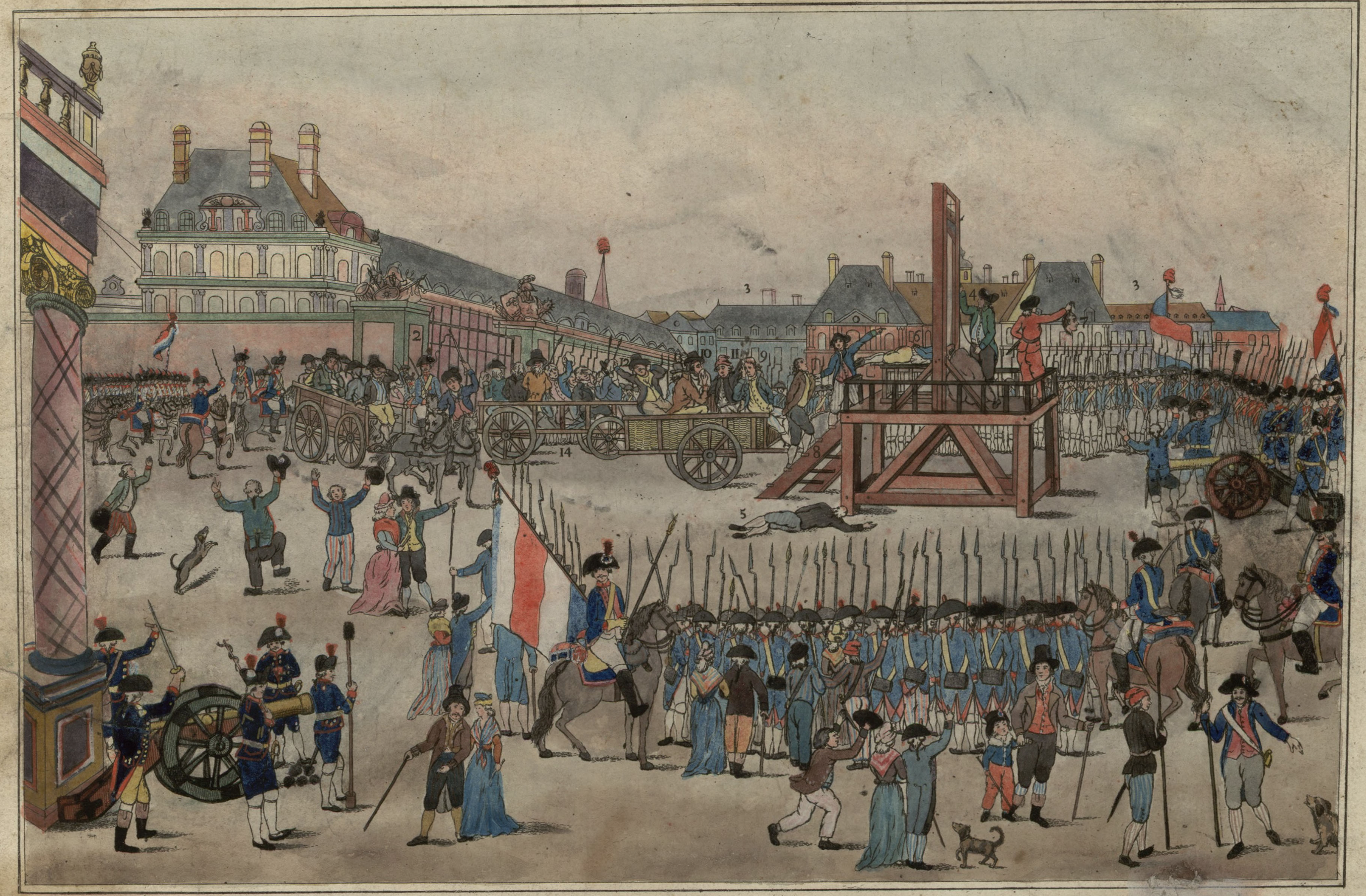
Victims of the Terror included prisoners in jails torn to pieces by mobs, boatloads of captives fired on by cannons, but mostly those who went in a stream to the execution machine set up the squares of most French cities. Nuns, priests, bourgeois, and former revolutionaries were beheaded by the guillotine after the flimsiest of trials. In 1794 a new law brought in by Robespierre and Antoine St-Just required the arrest of anyone on whom the slightest suspicion fell: “For a citizen to become suspect it is sufficient that rumour accuses him”. The new regulations denied the accused the right to counsel or any witnesses on their behalf; the only verdicts were acquittal or death. This new law also removed the immunity of Convention members from summary arrest, thus causing many politicians to feel threatened by the new system and by Robespierre and St-Just in particular. On July 27 (9 Thermidor on the new calendar) the Convention ordered the arrest of Robespierre and his clique. He attempted to commit suicide by shooting himself in the head with a pistol, but only succeeded in blowing off his jaw, causing him extreme pain. The next day, Robespierre, St-Just and 15 other radicals were guillotined without trial. With this so-called “Thermidorean Reaction” the Revolution became more conservative and less frightening.

July 24

Home / Today in History / July 24

1967

“Vive le Québec Libre”

Every nation has things it does well, and those things it has proven incapable of doing. England, for example, excels at producing talented actors; its cuisine is execrable. Germany gives birth to wonderful musical composers, but it can’t keep its hands off its neighbours’ territory. Canada exports brilliant comedians but our best Shakespearean actor is William Shatner. And there is France — the land of great cheeses, gorgeous actresses, splendid 19th-century novelists, and baguettes — but it cannot follow an ethical foreign policy. The treachery of the French government is legendary. The examples of cooperation with Islamic pirates in the 16th century, Napoleon’s invasion of Russia, the abandonment of Emperor Maximilian in Mexico, Marshal Pétain and Vichy, and the sabotage of The Rainbow Warrior give but a taste of the complete absence of gratitude or principle exhibited by the Quai d’Orsay.

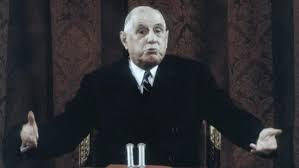
In 1967 Canada celebrated the centenary of its independence, put on the stirring Expo 67 in Montreal, and invited world leaders to pay us a visit. Among those who came was President Charles de Gaulle of France. De Gaulle ignored diplomatic protocol which mandates flying directly to the nation’s capital; instead he arrived in Quebec City on board the French warship Colbert, named after the minister of Louis XIV whose policies saved New France in the 1600s. He then drove to Montreal where he gave a speech, the heart of which was his observation that his reception along the route reminded him of the liberation of France in 1944. He concluded by uttering the infamous phrase: Vive Montréal! Vive le Québec! Vive le Québec libre! Vive, vive, vive le Canada français! Et vive la France!” This backing of Quebec independence was a calculated blow which de Gaulle had planned. Speaking of himself in the third person, he had told an aide, “Of course, like many others I could have got away with a few polite remarks or diplomatic acrobatics, but when one is General De Gaulle, one does not have recourse to such expedients. What I did, I had to do it.”

The mild-mannered Canadian Prime Minister Lester Pearson furiously announced, “The people of Canada are free. Every province in Canada is free. Canadians do not need to be liberated. Indeed, many thousands of Canadians gave their lives in two world wars in the liberation of France and other European countries.” De Gaulle did not bother to continue his trip and flew home pleased with his attack on the sovereignty of an ally.

The bodies of 47,500 Canadian servicemen are buried in France where they died fighting for French liberty.

Murder of the Romanovs

Home / Today in History / Murder of the Romanovs

Anyone who has a soft spot in his heart for V.I. Lenin must overlook the man’s bloodthirsty nature and the cruelty of his followers. Revolutionaries  don’t mind breaking a lot of innocent eggs to get to that utopian omelette they are always prophesying.

One such example of Bolshevik psychopathy is the murder  of the deposed Tsar and his family on the night of July 16/17, 1918.

Tsar Nicholas II had abdicated early in 1917 in the February revolution which produced the first Russian democratic government. He and his family — wife, four daughters, and a son — were held under house arrest at first and were treated decently, but when Lenin’s Communists seized power they were moved to Yekaterinburg in central Russia and confined under harsher circumstances.

The Russian civil war that pitted Whites against Reds complicated matters. In July 1918, Bolshevik forces in Yekaterinburg grew alarmed at the approach of anti-Communist forces and decided to kill the Romanovs lest they be rescued. They were taken to the basement of the house and brutally shot, bayoneted, and clubbed to death, along with four of their servants who had elected to accompany them in their imprisonment. The bodies were then disfigured and hidden in a nearby mineshaft and forest.

Lenin’s government announced the death of Nicholas but continued for years to insist that the rest of the family was alive. The mystery of their disappearance allowed all sorts of imposters to claim that they were a missing princess or prince. 

Though Lenin accepted ultimate responsibility for the murders, historians still debate whether he gave the order or merely acquiesced in the actions taken by local Bolsheviks.

The bodies of Nicholas, his wife, and three daughters were recovered secretly during the communist era and only revealed after the Party’s downfall. Only later were the bodies of the boy and one of his sisters found in a different location — these remains have not been authenticated to the satisfaction of the Orthodox Church and remain in a vault. As of 2018, splendid tombs house the other bodies in the church of the Sts Peter and Paul Fortress in Leningrad.

The royal family and their servants have been canonized by the Orthodox Church, not as martyrs but as “passion bearers”.

July 21

Home / Today in History / July 21

1944

The execution of anti-Hitler conspirators

On July 20, 1944, German military officers disenchanted with the rule of Adolf Hitler attempted to assassinate the Führer in his command post called the Wolf’s Lair. The plan was to place a bomb in a briefcase next to Hitler while he was in the map room, and then, after the explosion, to rally elements in the army, intelligence services and secret police to the plotters’ cause. They hoped that with Hitler out of the way they could negotiate a truce with the Allies on the Western Front and continue the war against the Red Army in eastern Europe. One of Hitler’s aides, the decorated hero Claus von Stauffenberg, placed the bomb and left the bunker; the briefcase was accidentally nudged by an onlooker farther under the heavy oak table which permitted Hitler to be only slightly wounded after the device exploded. Stauffenberg, however, was under the impression that Hitler and been killed and flew back to Berlin to take part in the expected coup. When the news of Hitler’s survival was announced, those officers high up in the plot arrested the lower-ranked conspirators, and executed them on the morning of July 21. Stauffenberg was among those shot.

He was among the lucky ones. 7,000 more suspects were arrested and almost 5,000 of these were executed, some by slow strangulation — filmed for the watching pleasure of Hitler and his inner circle. Among those garroted, revived, and strangled again and again was Claus von Stauffenberg’s brother; General Erwin Rommel was forced to commit suicide for his peripheral part in the plot.