September 4

Home / Today in History / September 4

1928 Birth of the First Darrin

Richard “Dick” York was an Indiana lad who became a juvenile radio and film star in the 1940s. He appeared in numerous productions including Inherit the Wind, The Twilight Zone, and The Untouchables before winning television immortality as Darrin Stevens in Bewitched. For five seasons, starting in 1964, he played the hapless mortal suburban husband alongside the gorgeous Elizabeth Montgomery as his witch wife Samantha and the less than gorgeous Agnes Moorhead as his irritating mother-in-law Endora.

In 1959 while filming the western They Came to Cordura with Gary Cooper and Rita Hayworth, York had suffered a permanent and painful back injury, which he treated with ever-higher doses of prescription painkillers. York lived with the pain during the production of the first few seasons of Bewitched with the studio building him a slanted wall that he could lean against between takes but by the fourth season he could scarcely stand and had to be filmed seated or in bed. During filming in 1969 he collapsed and decided that he could no longer continue. He was replaced by Dick Sargent (always known as “the second Darrin”).

York battled pain, addiction, and emphysema, managing a brief comeback in 1983 and establishing Acting for Life, a charity for the homeless. He died in 1992.

September 3

Home / Uncategorized / September 3

1879 The Assault on the Kabul Residency

Given the current brouhaha in Afghanistan it may be worthwhile to consider the events taking place in Kabul on this date in 1879.

The British Raj never felt secure in its hold on northwest India unless it had made a satisfactory arrangement in Afghanistan from which, for uncounted centuries, tribal raiders had emerged to feast on their peaceful neighbours. The East India Company and its armies made numerous forays into the country, some successful, some disastrous. In 1842 a 16,000 man army under General Elphinstone was massacred in the first Retreat from Kabul. Bribery was often a more effective to buy peace on the border.

In 1879 an Anglo-Indian army took Kabul and won humiliating concessions in the Treaty of Gandamak. The British established a “residency”, effectively an embassy in the capital, headed by Sir Louis Cavagnari and guarded by 75 members of the Corps of Guides, a regiment of Indian Muslims. This was a small force meant to show trust in the Afghan leader Amir Yakub Khan and not provoke the locals.

Unfortunately, a mutinous unit of the Afghan army demanded its overdue back pay and when the Amir couldn’t come up with it they decided to insist that the British provide the cash. When this was not forthcoming, they attacked the residency with cannons and overwhelming force. Eventually all of the British officers were killed, including Lt. Walter Hamilton (pictured above) who died covering the withdrawal of some of his men. The Afghans offered to spare the Muslim Guides but they refused to surrender and were duly wiped out. 

The attack prompted the British to invade again. They retook Kabul, exiled Yakub Khan, and executed 100 Afghans for their part in the attack on the residency. Posthumous awards were made to Lt. Hamilton and the entire Guides unit.


September 2

Home / Today in History / September 2

A great day for decisive battles.

31 BC Battle of Actium

After the assassination of Julius Caesar in 44 BC, the Roman world came to be divided between the forces of Caesar’s nephew Octavian (later Augustus Caesar) and Caesar’s right-hand man, Marc Antony. Antony had taken up Caesar’s old mistress Cleopatra and become ruler of Egypt and the Middle East.  Octavian feared that Antony had ambitions to seize all of the Roman empire and confronted him in a naval battle off the coast of Greece. When the Egyptian fleet abandoned Antony, the battle was lost. Antony and Cleopatra were soon to commit suicide and leave Octavian as unchallenged emperor.

1870 Battle of Sedan

Napoleon III, the incompetent nephew of the great Napoleon Bonaparte, was foolishly goaded into a war with the German military powerhouse Prussia and was soundly beaten in the Franco-Prussian War. At the Battle of Sedan Napoleon III was captured (he is pictured above sitting with the German Chancellor Bismarck), his Second Empire government collapsed, and Prussia dictated harsh terms for peace. The French resentment over this defeat and the peace treaty helped lead to World War I.

1898 Battle of Omdurman

In the 1880s a Muslim prophet, Muhammad Ahmad, styled himself the Mahdi, a Messiah-like figure whom many Muslims believe is to rule on earth before the Final Judgement. The Mahdi drove the British and Egyptians out of the Sudan in 1885, killed General Gordon, the British governor, and set up a fundamentalist state. In 1898 an Anglo-Egyptian army, accompanied by gunboats and Canadian voyageurs, marched up the Nile to confront the Mahdi’s successor, the Khalifa, at Omdurman (near present-day Khartoum). The Mahdists greatly outnumbered the invaders but the British were much more heavily armed, equipped with machine-guns and heavy artillery. The effect of modern weaponry was devastating on the Sudanese spearman and cavalry. One observer noted: “They could never get near and they refused to hold back. … It was not a battle but an execution. … The bodies were not in heaps—bodies hardly ever are; but they spread evenly over acres and acres. Some lay very composedly with their slippers placed under their heads for a last pillow; some knelt, cut short in the middle of a last prayer. Others were torn to pieces.” Winston Churchill was present at the battle and took part in the cavalry charge depicted above. The Mahdists suffered 10,000 dead while the British lost 42 men.

September 1

Home / Today in Church History / September 1


256 The Synod of Carthage reaffirms earlier African church council position that Christians baptised by the breakaway Novatian sect had to be rebaptised if they rejoined the Catholic church. This was defended by Cyprian (c. 200-58), bishop of Carthage but Pope Stephen mandated the reacceptance of the lapsed without a second baptism, causing severe tension between the papacy and the African church. Two years later Cyprian would be martyred when the Roman government renewed its persecution of Christians; he was canonized with his feast day September 16.

710 death of St Giles, one of 14 Holy Helpers. Giles (650-710) was a hermit in the south of France around whom legends of miracles and piety grew. In art he is depicted with a deer and a wound from an arrow. He is the patron saint of cripples, breast cancer, Edinburgh and the outcast. The 14 Holy Helpers are a group of saints whose intercession is deemed to be efficacious for certain diseases. Their cult seems to have sprung up in reaction to the Black death of the fourteenth century.

1159 Death of Pope Hadrian (or Adrian) IV, the only Englishman ever elevated to the papacy. Born Nicholas Breakspear c. 1100, he acquired a reputation as a reformer and administrator before his election. He is best known for placing the city of Rome under the interdict (a kind of mass excommunication) in order to drive out the rebel Arnold of Brescia and for granting the English king Henry II the lordship of Ireland, for which the Irish have never forgiven him.

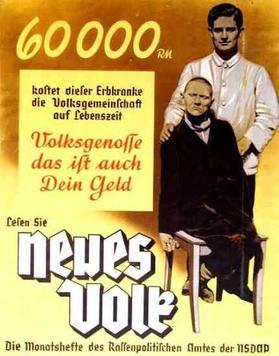
1939 Hitler begins the T-4 Euthanasia program. One of the reasons that fascists like Adolf Hitler and Benito Mussolini despised Christianity was that it loves the weak and helpless. Fascism is a philosophy for the strong and ruthless; that which can be destroyed must be destroyed. The Nazi eugenics policy moved from encouraging the mating of healthy Aryan youth to eliminating the chronically ill, mentally disabled, patients with incurable diseases and mental illnesses. Before the end of the war at least 70,000 Germans were euthanized through this policy.

August 31

Home / Today in History / August 31

1997

The death of Princess Diana

By 1997, the life of Diana, Princess of Wales and ex-wife of the heir to the British throne, was a soap-opera nightmare. Her marriage had collapsed under the weight of mutual infidelity — Charles had taken up with an old mistress Camilla Parker-Bowles, and Diana conducted a series of affairs with her bodyguard, a polo-playing soldier, a rugby player, a Canadian rock star, a Pakistani heart surgeon and, lastly, Egyptian-born playboy Emad El-Din Mohamed Abdel Mena’em “Dodi” Fayed, whose father owned Harrod’s department store and Fulham soccer team. Diana was a psychological mess, bulimic, depressive, self-harming, and manipulative, carrying an enormous grudge against her ex-husband whom she accused of plotting her death in a car crash that would be made to look accidental.

What she saw in Dodi Fayed remains a mystery, though some say his Muslim religion was a factor — supposedly it would outrage the Royal Family. Dodi was in every way a lightweight, scarcely employable and a connoisseur of American models, one of whom he had married, another of whom he had dumped for Diana, but his family fortune was clearly not a barrier to romance. In August 1997 the couple spent six days on his yacht in the Mediterranean and then flew from Corsica to Paris where they stayed at the Ritz Hotel, owned by Dodi’s father. In the early hours of August 31, while a decoy car attempted to lure away journalists, Diana and Dodi entered a Mercedes limo driven by Ritz head of security Henri Paul and accompanied by a Fayed family guard. Chased by paparazzi, the limo entered the Place de l’Alma tunnel at a high rate of speed and crashed. Paul and Dodi died immediately, Diana expired from massive internal injuries a few hours later in hospital. The only survivor, bodyguard Trevor-Rees Jones, was severely injured and spent a month in hospital recuperating. His face was reconstructed using family photographs as a guide and held together with 150 pieces of titanium.

Controversy continued to dog the dead princess. As Britain mourned in spectacular fashion, rumours spread of the limo being struck from behind by a white Fiat which then sped off, never to be seen again. Others spoke of an assassination of the lovers by British intelligence services at the behest of the Royal Family — a view that Dodi’s father clung to. The driver Henri Paul was found to have been intoxicated and no one in the car was wearing seat belts.

August 30

526

Death of an Arian king

The last Roman emperor in the West was deposed in 476 by a barbarian warlord named Odoacer who sent the imperial regalia to the Eastern emperor at Constantinople and who pretended to rule Italy on his behalf. The German tribes who had poured into and overrun the West in the 400s had no desire to end Roman civilization, only to be parasites on it. As the West was divided into petty kingdoms by the various barbarian groups, it often served their rulers’ interest to be seen by the conquered populace as viceroys of the empire and continuers of civilization. Other barbarian princes served as generals in a Roman army, fighting against other Germans.

One such Ostrogothic lord was Theoderic (b. 454) who had been a political hostage in Constantinople and had soldiered for the eastern emperor. In 489 Emperor Zeno sent him against Odoacer who had been conspiring with his enemies. Odoacer was defeated and forced to accept Theoderic as co-ruler but, at the banquet to celebrate this pact, Theoderic murdered him and assumed sole rulership of Italy, still maintaining the fiction that he was governing on behalf of the Empire. The coin above shows Theoderic in a Roman cloak and armour but with an unmistakably barbarian moustache.

From his capital in Ravenna in northeastern Italy, Theoderic ruled the peninsula well in what was, essentially, a protection racket. In return for a third of the wealth, his Ostrogoths kept the peace, put down banditry, and deterred other barbarian incursions. The illiterate Goths could not run the machinery of government and civilization themselves; for that they relied on the old Roman senatorial elite. They ran his civil service, collected his taxes, made sure the harbours were dredged and the roads maintained. Though Theoderic and his tribe were Arian Christians, unlike the majority of the populace which was Catholic, the alliance between Germans and Romans operated smoothly for years. The inhabitants of Italy were at least as well off as they had been under the later western emperors. However, in his old age Theoderic began to suspect (and he may have been right) that his Roman civil service was seeking to undermine him and bring in the rule of Constantinople. He arrested his chief minister Boethius and had him murdered in prison. (It was during his time in the dungeon that Boethius wrote his masterwork The Consolation of Philosophy). His policy of religious toleration also eroded in his last years as he tried to cement alliances with other Arian tribes and secure the succession for his family.

Tragically, it all crumbled at his death in 526. His heir, an infant grandson, was not accepted by his warrior class and civil war broke out among the Ostrogoths. Emperor Justinian in Constantinople used this as an excuse to intervene and roll back a century of barbarian occupation of the West. The resulting Gothic Wars devastated Italy and virtually destroyed civilization there, leaving it prey for the next wave of barbarians, the Lombards.

Had been Theoderic’s successor been able to continue his policies, the Dark Ages that followed might not have been so dark.

August 29

Home / Today in History / August 29

1657 Death of a bold pamphleteer

John Lilburne was born in 1614 to an English family of the squirearchy. In the turbulent 1630s when the rule of Charles I was growing odious to many, Lilburne adopted a number of radical stances and, at one point, had to flee to the safety of Holland. In 1637 he was whipped, pilloried, and jailed in chains for publishing a tract without the approval of the Stationer’s Company, which governed legal printing. He began to style himself “Freeborn John” and got into more trouble for opposing the Church of England.

When the Civil War broke out, Lilburne fought for the forces of Parliament and rose to the rank of lieutenant-colonel. He was captured by the king’s army after the Battle of Brentford but, when exchanged for a royalist officer, he rejoined his regiment where he was wounded and suffered the los of his property.

A man of high principle, he quarrelled with his superior officers, refused to sign the Solemn League and Covenant, and disputed with fellow radical William Prynne on the question of freedom of religion. His supporters came to be known as Levellers because of the social equality they demanded. He asserted that Englishmen had “freeborn rights” granted by God, and that the Parliamentarian rule was even more tyrannical than that of the king. Lilburne was imprisoned, this time by the Parliamentary government, but was acquitted of a charge of high treason. Finally in 1652 his disputatious wrangling resulted in a forced exile from England.

When Lilburne returned without permission from Holland he was imprisoned again, tried again, and again acquitted. Nonetheless, the Puritan government considered him such a nuisance that he was kept in jail regardless of habeas corpus. In 1656 he was allowed out on parole, having convinced the authorities that his conversion to Quakerism meant that he was no longer a menace. He died the next year and was buried in the churchyard next to Bedlam.

August 28

Home / Today in History / August 28

1859 Death of Leigh Hunt

Leigh Hunt (1784-1859) is mostly a footnote these days in the history of 19th-century English literature, but there was a time in which he was well-regarded. Historians of Christmas remember him as the author of remarks on “The Inexhaustibility of the Subject of Christmas”, others for his poem in which he boasts “Jenny kissed me”, some for his being the inspiration for the character of Harold Skimpole in Bleak House, but he is most noteworthy as being a companion of Byron and Shelley.

In 1813 Hunt was imprisoned for some harsh words about the Prince Regent (later George IV). Hunt objected to the grossly flattering image that other journalists were painting of the prince and penned a much more honest account of that bloated worthy. This is what cancel culture of the Regency period would give you two years in jail for:

What person, unacquainted with the true state of the case, would imagine, in reading these astounding eulogies, that this ‘ glory of the people’ was the subject of millions of shrugs and reproaches? —that this ‘protector of the arts’ had named a wretched foreigner his historical painter, in disparagement or in ignorance of the merits of his own countrymen? — that this ‘Mecaenas of the age’ patronised not a single deserving writer?—that this ‘breather of eloquence’ could not say a few decent extempore words, if we are to judge, at least, from what he said to his regiment on its embarkation for Portugal?—that this ‘conqueror of hearts’ was the disappointer of hopes?—that this ‘ exciter of desire’ [bravo! Messieurs of the Post!] — this ‘Adonis in loveliness’ was a corpulent man of fifty? in short, this delightful, blissful, wise, pleasurable, honourable, virtuous, true, and immortal prince, was a violator of his word, a libertine, over head and ears in disgrace, a despiser of domestic ties, the companion of gamblers and demireps, a man who has just closed half a century without one single claim on the gratitude of his country, or the respect of posterity?

August 27

St Monica

Few saints’ lives are as intertwined with that of their mother as was Saint Augustine of Hippo’s and his mother Monica’s.

Monica was born in present day Algeria during the fourth century of Berber stock and married the Roman official Patricius, by whom she had at least three children, two boys and a girl. Though she was raised a Christian, her husband was a pagan and forbade his children the baptism she wished to arrange for them. (Notwithstanding the objections of Patricius she made sure that her offspring were educated in her faith.) Her son Augustine was highly intelligent but lazy and broke her heart by adopting the dualist Manichean creed in his late teens during his studies in rhetoric in Carthage. Monica refused to see Augustine for a time after this though she continued to pray for his conversion. Her disapproval of his beloved concubine and her monumental expectations of him were too much for the young man and he departed in secret for Italy to set up as a rhetorician. Doggedly she followed him, first to Rome and then to Milan where Augustine finally became a Christian and was baptized by St Ambrose, much to Monica’s joy. Their plan was to return to Africa. In the seaport of Ostia as they awaited a ship,  Augustine and his mother sat at a window conversing of the life of the blessed; she turned to him and said, “Son, there is nothing now I care for in this life. What I shall now do or why I am here, I know not. The one reason I had for wishing to linger in this life a little longer was that I might see you a Catholic Christian before I died. This has God granted me superabundantly in seeing you reject earthly happiness to become His servant. What do I here?” A few days afterwards she had an attack of fever, and died in the year 387. (Her remains were later removed to Rome.)

Her tombstone reads: “Here the most virtuous mother of a young man set her ashes, a second light to your merits, Augustine. As a priest, serving the heavenly laws of peace, you taught the people entrusted to you with your character. A glory greater than the praise of your accomplishments crowns you both – Mother of the Virtues, more fortunate because of her offspring.” She is the patron saint of difficult marriages, disappointing children, victims of adultery or unfaithfulness, victims of (verbal) abuse, housewives, alcoholics (Monica herself had been a heavy drinker) and conversion of relatives, plus the city of Santa Monica in California.

August 26

Home / Today in History / August 26

2009

Jaycee Dugard is rescued

On June 10, 1991 eleven-year-old Jaycee Dugard was walking to school in South Lake Tahoe, California when she was approached by two strangers in a grey mid-size car. One knocked her down with a bolt from a taser gun and placed her in his car which then drove off. This abduction was witnessed by several other children and her stepfather who vainly tried to pursue the car on his mountain bike.

Jaycee’s kidnappers were convicted rapist Philip Garrido and his wife Nancy who took her to their property and locked her in a shed. For the next eighteen years she was repeatedly raped and abused, bearing Garrido two daughters, forbidden from receiving any medical care and threatened with death. She was forbidden to use her real name, told to treat Nancy as her mother, and to tell her children that she was their older sister. After a time she was allowed out to work in Garrido’s print shop. Neighbours tried to alert police to the strange goings-on behind the 8-foot-high fence at the Garrido household but no action was taken.

Garrido was quite insane. He was convinced that he could control sound with his mind and that he had developed a method to cure sexual urges. He visited the FBI to inform them of his discoveries and in August, 2009 went to the University of California at Berkeley trying to book a space to announce his program; he was accompanied by his two daughters. Their appearance and Garrido’s strangeness aroused the suspicions of officials there who learned that he was wanted for parole violations. The police were informed and when Garrido appeared at the parole office, this time with Jaycee and the girls, officers quizzed the young woman who insisted that her name was Alissa and that she was a battered wife from Minnesota, fleeing an abusive husband. Only after Garrido confessed to kidnapping and raping her did Jaycee, clearly a victim of Stockholm Syndrome, admit to her true identity.

Jaycee and her children were released to her mother and began trying to rebuild their lives. She wrote two books about her experience, A Stolen Life: A Memoir, and Freedom: My Book of Firsts. Phillip Garrido was sentenced to 431 years to life imprisonment; Nancy received 36 years to life imprisonment.