January 23

Home / Today in History / January 23

January 23 produced a fair number of human entrances and exits.

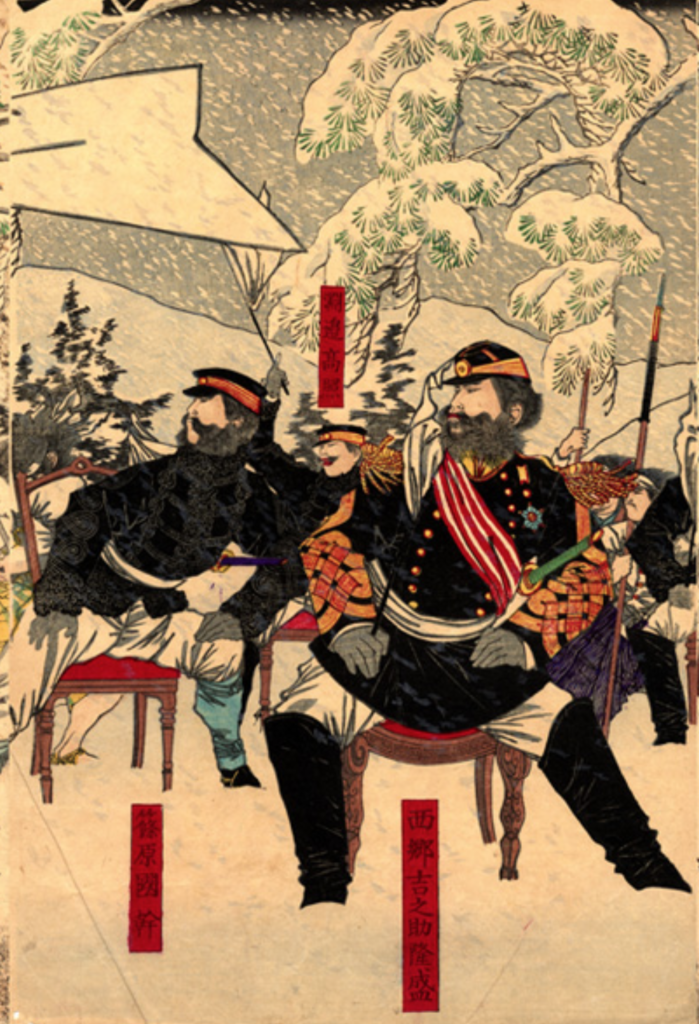
On this date in 1828, Saigo Takamori, aka “the last samurai” was born. Saigo led an army of sword-wielding samurai against the new Japanese imperial government that favoured opening up the country to foreign, modern innovations. He committed suicide after losing the Battle of Shiroyama in 1877.

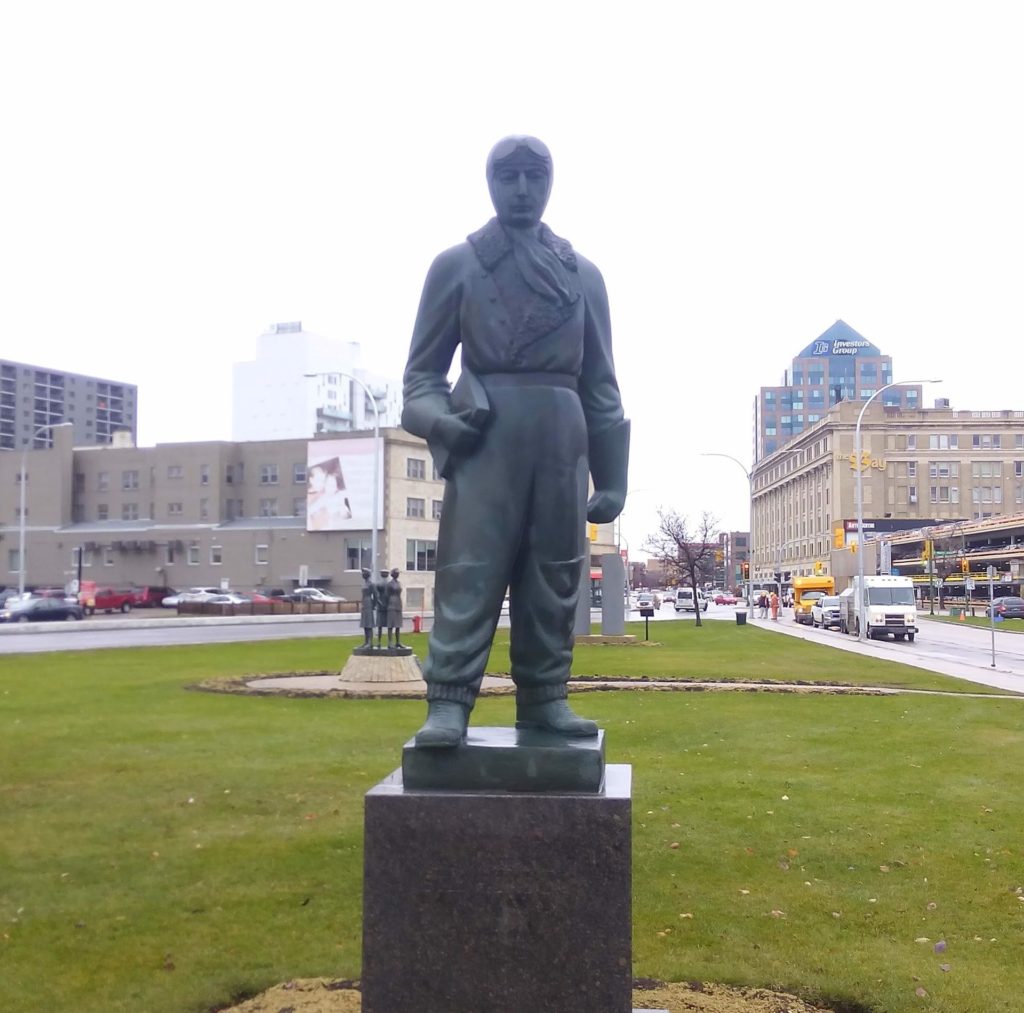
This is also the birthday of Winnipeg-born William Stephenson, perhaps the most influential Canadian ever to have lived, outside of Frederick Banting, the inventor of insulin. World War I flying ace, failed hardware salesman, and spy extraordinaire, his efforts helped bring the neutral USA into World War II, uncover Nazi spy rings, and direct much of British wartime intelligence. He is said to be the model for Ian Fleming’s James Bond, 007.


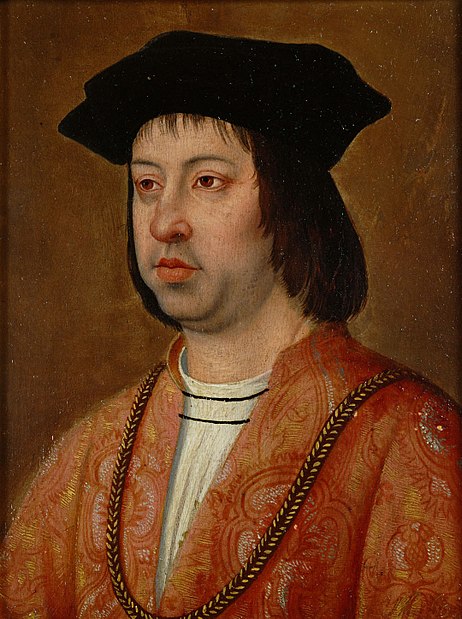
Checking out on this date in 1516 was Ferdinand II, “the Catholic”, of Aragon. Husband of Isabella of Castile, Ferdinand united Spain, oversaw the creation of a world-wide empire, added the Kingdom of Naples to his holdings, and ordered the expulsion of Spain’s Jews.

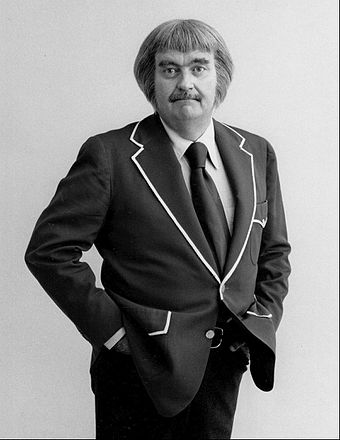
Saying farewell on this date in 2004 was Bob Keeshan, aka Captain Kangaroo and the original Clarabell the Clown on Howdy Doody. He served as the grandfatherly Captain from 1955 to 1984.

January 22

jan_van_leiden_by_aldegrever

1536

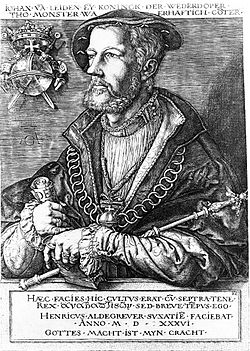
The execution of an Anabaptist king.

Jan of Leiden (1509-36) was a tailor’s apprentice from the Dutch city of Leiden. In 1535 he joined the millennial Anabaptists who had taken over Münster in Westphalia. When the leader of these radicals was killed in a quixotic battle Jan replaced him as King. He ruled the besieged city with an iron fist, decreeing community of goods and polygamy. It is said that he took 21 wives and executed one prospective bride with his own sword for the crime of not wishing to marry him. When the forces of the Catholic bishop finally broke into the city, Jan was captured and on this day in 1536 taken into the public square where he was tortured to death along with two of his aides. Their bodies were placed in iron cages on hoisted to the top of a church tower where they remained for decades as a warning to would-be rebels against the established order. The cages became a sort of symbol of the city and remain to be seen to this day.

January 21

Home / Today in History / January 21

230px-vezina19221924

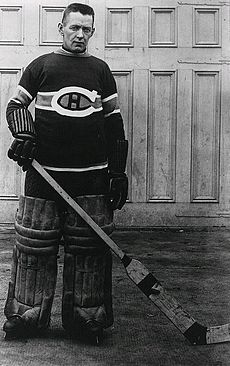
1887 Birth of the “Chicoutimi Cucumber”

Georges Vézina was the greatest hockey goalie of his generation. Growing up poor, he did not play on skates until he was sixteen and went unrecognized by scouts because his community was in remote northern Quebec. It was not until 1910 when Georges was already 23 that he came to the attention of the Montreal Canadiens who were beaten by Vézina’s Chicoutimi squad. He eventually accepted a contract from the impressed Canadiens and in his rookie season lead the league in fewest goals allowed, a feat he would repeat another 6 times.

In 1916 Vézina and the Canadiens played the champions of the Pacific Coast League, the Portland Rosebuds, for the Stanley Cup, which they won 3 games to two. In honour of this triumph Vézina named his newborn son Marcel Stanley. The “Chicoutimi Cucumber”, so-named because of his coolness in the net, would win another Stanley Cup and play stellar goal until the first game of the 1925-26 season when he collapsed on the ice. He died shortly thereafter of tuberculosis.

When the Hockey Hall of Fame held its inaugural vote in 1945, Vézina was one of 9 players selected. The NHL trophy for best goal-tender is named after him.

January 20

Home / Today in History / January 20

1942 The Wannsee Conference

The National Socialist government of Adolf Hitler had always followed an anti-Jewish policy consistent with the Nazi belief that the world was engaged in a racial war for purity of  blood. On first taking office, Hitler encouraged German Jews to flee the country by barring them from a number of professions, stripping them of their citizenship, and passing a series of discriminatory laws. The possibility of moving the Jewish population to Madagascar or Palestine was discussed. Later, Jews were banned from emigrating and, when World War II broke out in September 1939, their fate became even more precarious. The occupation of Poland brought millions more Jews under Nazi control and even more fell under their sway with the invasion of the Soviet Union in June 1941. By then a policy of extermination was clearly in place, with German forces murdering tens of thousands of Jews as their armies advanced.

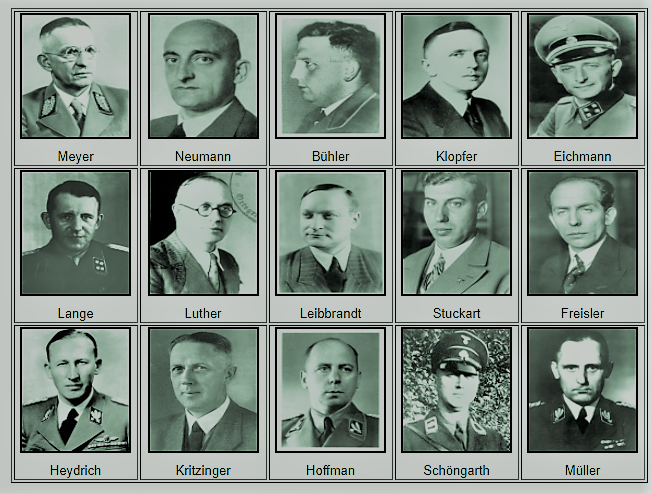
But all of this killing was ad hoc, locally organized, and brutally personal. In January 1942, a meeting of high-ranking SS and government officials took place in a mansion in the Berlin suburb of Wannsee. It met to agree on a Final Solution to the Jewish Problem with a definition of who qualified as racially unfit, the mass deportation of Jews to eastern camps, their extermination (either through immediate execution or being worked to death) and which areas would be given priority in racial cleansing. Within 90 minutes these men had decided on policies that would bring death to millions.

Of those attending, few escaped punishment. The conference leader Reinhard Heydrich was assassinated by Czech partisans; Judge Roland Freisler was killed in an Allied bombing raid; Josef Bühler was executed by the Polish government; Alfred Meyer committed suicide; Rudolf Lange died in battle; Karl Schöngarth was executed by the British; Heinrich Müller disappeared in the last days of the war; Otto Hofmann was sentenced to 25 years in jail; while Georg Leibbrandt and several of the smaller fry were arrested and released. Adolf Eichmann escaped to Argentina, where he was kidnapped by Israeli agents, put on trial in Jerusalem and executed.


January 19

Home / Today in History / January 19

The first Zeppelin raid on Britain

A morale-boosting British poster of World War I

The German Empire had a bad reputation for ruthlessness before it entered World War I in 1914. Kaiser Wilhelm II had urged German troops dispatched to quell the Boxer Rebellion in China to behave as the Huns had 1500 years earlier and German colonialism in Africa was marked by atrocities amounting to genocide. During World War I that nation won an even worse name by its treatment of Belgian civilians and by pioneering new and nasty methods of warfare.

The first of these deadly innovations was aerial bombardment of enemy cities. Air raids on Antwerp and Paris began in the early months of the war and, though these were primitive and ineffectual, they marked a willingness to kill civilians in order to weaken Allied resolve. They were also violations of the Hague convention on the rules of war which forbade the shelling of undefended towns.

On the night of January 19, 1915 the first attack by airships was made on Great Britain. The Kaiser had initially banned bombing London because of the presence of his royal cousins, so the dirigibles dropped their loads on the seaside towns of Great Yarmouth, Sheringham, and King’s Lynn, killing four and wounding 16. Later imperial orders allowed Zeppelins to attack the capital.

These raids shocked the civilized world; the 500 deaths the balloons caused over the course of the whole war seemed somehow more horrid than the loss of 10,000 soldiers in a single afternoon on the Somme. For Germans, however, it was the subject of a merry song:

Zeppelin, flieg,     Fly Zeppelin,

Hilf uns in Krieg,     Help us in war,

Fliege nach England,     Fly to England,

England wird abgebrannt,     England will burn,

Zeppelin, flieg!     Fly Zeppelin!

Other military novelties pioneered by the Germans included the use of poison gas and unrestricted submarine warfare which resulted in the sinking of the unarmed liner Lusitania, which had sailed from New York, off the coast of Ireland killing 1,198 civilians. All three of these moves occurred within weeks of each other in 1915 and changed the shape of war, for the worse, for ever.

Though the world protested these atrocities — anti-German rioting in Victoria B.C. was so bad that the city had to be placed under martial law — the Kaiser was delighted when von Falkenhayn told him the results of the first poison gas attack. He embraced the general three times and promised pink champagne.

January 18

Home / Today in History / January 18

william_price_the_druid

1884 The cremation of Jesus Christ

Every society has taboos surrounding the treatment of the bodies of the dead. Herodotus, in making his point on the strength of national customs, spoke of an experiment by Persian king Darius:

He called together some Greeks who were present and asked them how much money they would wish to be paid to devour the corpses of their fathers – to which the Greeks replied that no amount of money would suffice for that. Next, Darius summoned some Indians called Callantians, who do eat their parents, and asked them in the presence of the Greeks (who were able to follow what was being said by means of an interpreter) how much money it would take to buy their consent to the cremation of their dead fathers – at which the Callantians cried out in horror and told him that his words were a desecration of silence.

For centuries, the predominant custom in Christian lands was the interment of the dead. The Catholic Church had opposed the practice of cremation as being offensive to the notion of the physical resurrection and this belief was maintained by most Protestant denominations. In 1884 the eccentric Welsh physician and neo-Druid William Price (1800-1893) cremated the body of his son Jesus Christ Price and was arrested for this shocking deed. He was acquitted after showing that there was no law banning the practice, a decision that led to the 1902 Cremation Act.

Today in History: January 17

Home / Today in History / Today in History: January 17

220px-anthonis_van_dyck_005

395 A bad day for the Roman Empire

The death of the Roman emperor Theodosius I (347-395) meant the permanent separation of the eastern and western halves of the realm and his succession by a pair of nitwit sons unable to deal with the barbarian incursions.

Theodosius was a general and politician who emerged as emperor out of the civil wars that followed the death of Valens, who had died in 378 battling the Visigoths. His reign was extremely consequential. On the positive side he summoned the First Council of Constantinople which established Trinitarian orthodoxy; he suppressed pagan sacrifices, gladiatorial battles, child slavery, and the Olympic Games. His massacre of civilians in Thessalonika led to his excommunication by Ambrose, Bishop of Milan. Theodosius was forced (above) to repent and beg forgiveness before being allowed the sacraments, an act which clergy over the centuries used as an example of the supremacy of the Church over the State.

His death in 395 led to the empire being split between incompetent sons, Honorius in the West and Arcadius in the East.

January 16

Home / Today in History / January 16

screen-shot-2017-01-04-at-12-58-24-pm

1920 The Prohibition Era begins in the United States

The American struggle against the evils of the alcohol trade was a long and hard one, waged at first largely by women who were seen as the chief victims of drunkenness. The Women’s Christian Temperance Union (WCTU) and the Anti-Saloon League did much in the 19th and early 20th centuries to bring the issue before the public. Kansas became the first dry state with an amendment to its constitution in 1881 but the movement aroused deep opposition along ethnic, political and religious lines. Protestants tended to be for prohibition and Catholics (and Episcopalians) against; the labour movement, smaller cities and Progressive reformers were for it, and the bigger cities and establishment politicians were against.

The Eighteenth Amendment to the American Constitution was passed by Congress in late 1917 and had to be ratified by 3/4 of the states for it to come into effect. This ratification occurred in January 1919 and took effect a year later. The federal Volstead Act was passed to outline methods of enforcing the ban on the manufacture, importation and sale of alcohol (though consumption remained legal).

The benefits of Prohibition were as predicted — dramatic decreases in alcoholism, industrial accidents, cirrhosis of the liver, drunken family abuse — but it also produced a nation of scoff-laws who resisted the alcohol ban. There were also negative impacts on the agricultural economy, a drop in tax revenue, and a benefit to criminal gangs who continued the illicit trade in booze. Franklin Roosevelt was elected in 1932 on a platform of abolishing Prohibition and this was accomplished in December, 1933 with the Twenty-First Amendment.

January 15

Home / Today in History / January 15

0102011772300-227x300

1919 The murders of Rosa Luxemburg and Karl Liebknecht

The collapse of the armies of the German Empire in November, 1918 led to the end of Word War I and the beginning of a period of chaos and instability in Germany. The Kaiser, Wilhelm II, abdicated and fled to Holland; a new national republic dominated by Social Democrats had been announced in Berlin; and numerous uprisings on the left and right sought to impose a new order on the country.

Marxist lawyer Karl Liebknecht (1871-1919) had declared a Free Socialist Republic, founded the Spartakasbund (the origins of the Communist Party of Germany, the KPD) and plotted how to achieve power in the anarchic few months after the war’s end. With his associate Rosa Luxemburg (1871-1919) he participated in an ill-fated revolution of Spartacists which was crushed by right-wing militia groups, the Freikorps. Luxemburg and Liebknecht were arrested, tortured and murdered but became martyrs of the Left. Their opposition to Leninism was overlooked by later Communists in East Germany (the DDR) who venerated the slain pair in numerous ways.

images

January 14

Home / Today in History / January 14

flag_of_georgia

2004

Georgia adopts the “Five-Cross” flag

Georgia was one of the first nations to adopt Christianity and has fought hard over the centuries to maintain the faith despite the efforts of hostile neighbours. In the fifth century their armies were led by a white flag with a red St George’s cross (identical to England’s national banner). In the Middle Ages, supposedly in the reign of Giorgi V “the Magnificent” (1286-1346) who drove out Mongol overlords, four Jerusalem crosses were added. This flag was forgotten when Georgia became a Russian province and then a Soviet republic. After the collapse of the USSR, a newly-independent Georgia chose a drab tricolour flag briefly used after World War I but finally decided on the five crosses as a symbol of the nation’s long Christian tradition.