August 24

Home / Today in History / August 24

410  Visigoths sack Rome

After decades of wandering through the Roman empire looking for a place to settle, battling other barbarians at times, at other times fighting Roman armies, the Visigothic horde under its king Alaric trudged down the Italian peninsula in the summer of 410. The bribes, diplomacy and military force that had kept Alaric at bay were now absent; he had besieged Rome twice before and now that his extortionate demands were being rebuffed by the Emperor Honorius (safe in Ravenna) he meant to take and loot Rome.

By  this time, Rome was no longer a politically important city; the capital of the West was in Ravenna, the East was governed from Constantinople. It had been bled dry of its wealth by earlier barbarian threats, but it was still a large and prosperous town that Alaric was intent on plundering. On August 24 his troops entered the city and subjected it to a thorough but not atrocious sack. The Visigoths were by this time Christians (though of the Arian variety, now out of fashion in Rome) and they allowed some churches to be used as sanctuary. Nevertheless, there was the usual murder, rape, pillaging and slave-taking before Alaric called a halt and his forces withdrew.

Rome, in physical terms, would undergo worse treatment by invaders. In 455, the Vandals would launch a much more harmful attack; in 846, 11,000 Arab raiders looted St Peter’s Basilica;  in 1527, German troops, many of them Lutherans, sacked Rome in what was probably the most destructive attack the city ever endured. But the psychological effect of the 410 Fall of Rome was enormous. It was, said St Jerome, as if “the whole world had died in one city.” It appalled the ancient world and led many to blame the adoption of Christianity for the destruction. This charge summoned forth St Augustine’s epic The City of God which not only rebutted such accusations but laid forth a Christian scheme for understanding all of history.

In the long run the 410 attack would be overshadowed by the fall of the entire Roman empire in the West. In 476, a barbarian general took the imperial crown from the last emperor and sent the boy home.

August 23

1572  The St Bartholomew’s Day Massacre

Calvinist Protestantism had been very successful in converting many Frenchmen in the middle of the sixteenth century, particularly among the middle class and nobility. Attempts to outlaw the sect or repress it militarily had led to civil war. In 1572 the country was divided amongst Calvinists, ultra-Catholics, and the party of moderate Catholics led by the royal family. Catherine de Medici, the Queen Mother, had arranged a marriage between her daughter Margot (or Marguerite) and the leading young Protestant, Henry of Navarre, a union which was meant to cement a religious peace. The wedding was to take place on August 18th and to Paris came all the leading Calvinists: their military leaders, clerics, nobility and intellectuals.

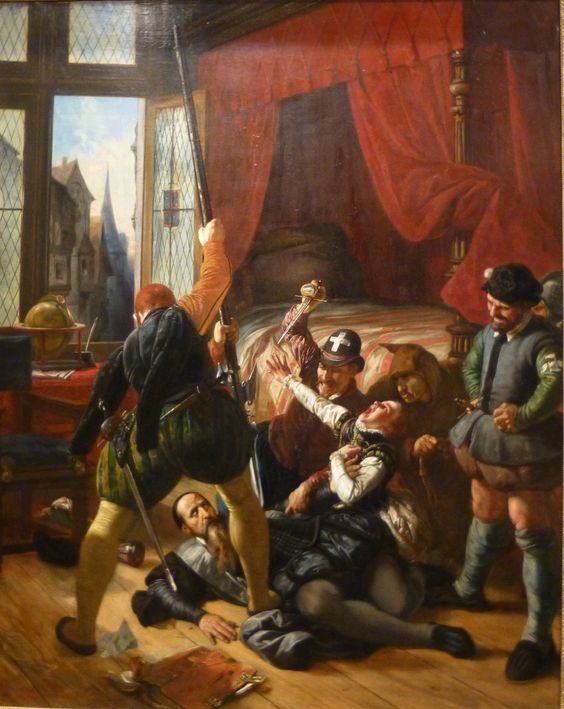
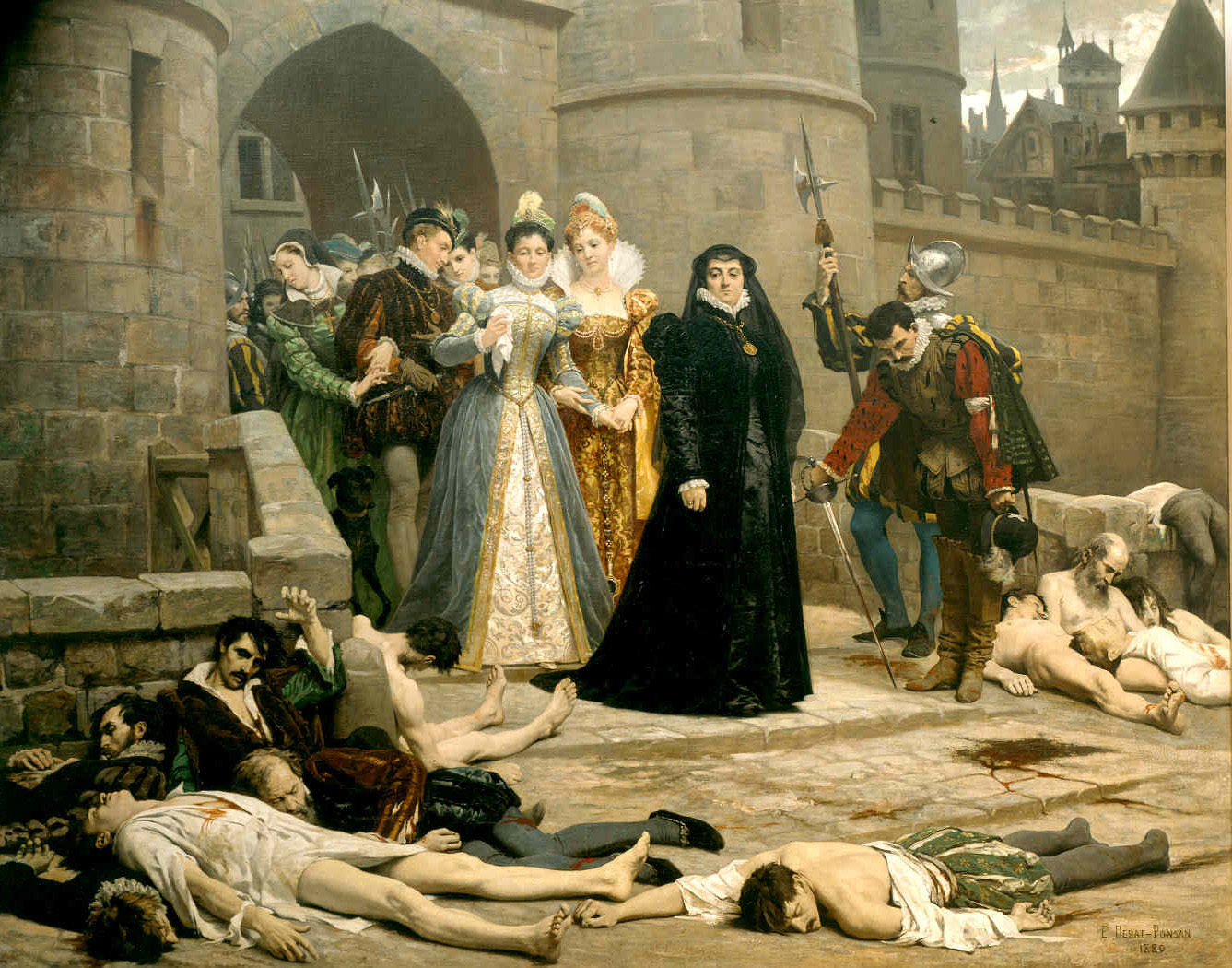
Opposing the marriage was the hard-line Catholic (and cousin to the royal family), Henry, Duke of Guise, who blamed the Protestants, and especially their military chief Admiral Gaspard de Coligny, for the death in battle of his father. Guise convinced the weak-minded young king Charles IX that the religious stand-off in France could be solved by decapitating the Protestant party. All their leaders were in the capital; simply lock the gates, rid the city of its heretics and France would be whole again. So, on August 22 an assassination attempt was made on Coligny’s life; he was hit by a bullet and seriously wounded, but survived. The next night the Queen Mother (seen below viewing the results of her policy) met with her Council and gave the order. The church bells rang to signal the attack. Led by the Swiss Guards, armed men seized and murdered Coligny (pictured above) and most of the Protestant nobility; Catholic inhabitants of Paris seized the moment to conduct a general massacre of their heretic neighbours. The bridegroom, Henry of Navarre, was spared on condition he convert to Catholicism. The atrocities continued for several days and spread to the French provinces. Tens of thousands were murdered; Pope Gregory XIII exulted at the slaughter which he equated with the defeat of the Turkish fleet at Lepanto the year before.

Naturally, the French religious civil war was reignited and peace came to Paris only decades later when Henry of Navarre, who had escaped and converted back to Protestantism, converted once again Catholicism and became Henry IV.

August 22

Home / Today in History / August 22

Firsts and Lasts

1485 Last of the Plantagenet kings

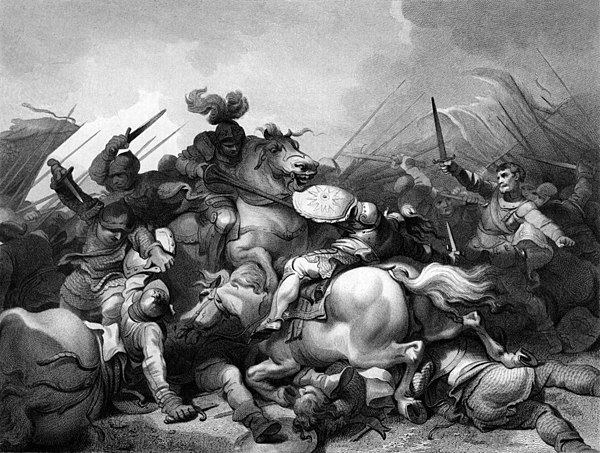
At the Battle of Bosworth usurper Henry Tudor defeats Richard III who is killed, ending the Plantagenet dynasty whose branches of York and Lancaster had been fighting the Wars of the Roses. Tudor becomes Henry VII.

1642 First day of the English Civil War

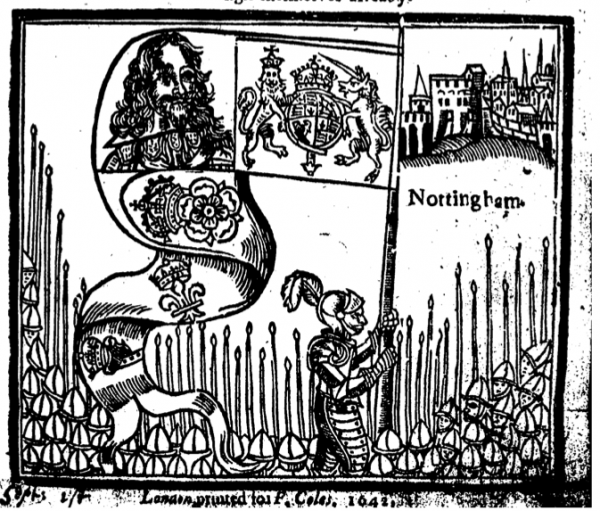
Charles I, involved in years of quarrelling with Parliament, raises his royal standard at Nottingham signifying that he was at war with his opponents. Seven years later he will be beheaded by his Parliamentary captors.

1831 Nat Turner’s first victim

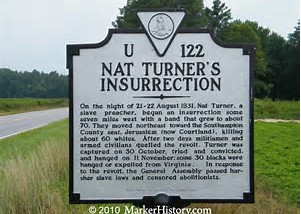
Slave Nat Turner began his rebellion with an order to “kill the white people”. His rebels in Virgina murdered 60 whites before they were quelled after two days, leading to murderous reprisals against southern blacks. Turner was executed in November.

1953 Devil’s Island closes

The French government had operated a penal colony in their Guiana colony since 1852. Devil’s Island was known for its harsh conditions and tropical diseases; its most famous prisoner was the falsely-accused Captain Alfred Dreyfus. Few convicts ever returned to France; fewer escaped. The last prison was closed after severe public criticism. The island now houses part of the French space program.

1989 First pitcher to 5,000 K

Nolan Ryan, who played for the New York Mets, California Angels, Houston Astros and Texas Rangers, holds a number of baseball records: the only pitcher with 7 no-hitters, the only player to last 27 seasons, the fewest hits allowed per inning, and the leader in strikeouts. On this date in 1989 he struck out Ricky Henderson of the Oakland A’s to become the first pitcher to strike out 5,000 batters. He would go on to strike out another 714 before retiring in 1993.

August 21

Petitionary Prayer

Paul Johnson, famous English writer and convert to Catholicism, noted that “Origen, following the Stoics, laid down that only spiritual benefits should be sought in prayer. Pelagius, following the Platonists, contradicted him: ‘You cannot pray for virtue.’ Surely St Augustine got it right: ‘It is proper to pray for anything which may be lawfully desired.’” Consider then the prayer attributed to Mr M. Ward, a successful pill-manufacturer of the 18th century:

‘O Lord, thou knowest that I have nine houses in the city of London, and likewise that I have lately purchased an estate in fee-simple in the county of Essex. Lord, I beseech Thee to preserve the two counties of Essex and Middlesex from fires and earthquakes; and as I have a mortgage in Hertfordshire, I beg Thee likewise to have an eye of compassion on that county. And, Lord, for the rest of the counties, Thou mayest deal with them as Thou art pleased.

O Lord, enable the Bank to answer all their bills, and make all my debtors good men. Give a prosperous voyage and return to the Mermaid sloop, which I have insured; and Lord, Thou hast said, “That the days of the wicked are short,” and I trust Thou wilt not forget Thy promises, having purchased an estate in reversion of Sir J. P., a profligate young man. Lord, keep our fund from sinking; and if it be Thy will, let there be no sinking fund. Keep my son Caleb out of evil company, and from gaming-houses. And sanctify, O Lord, this night to me, by preserving me from thieves and fire, and make my servant honest and careful, whilst I, Thy servant, lie down in Thee, O Lord. Amen.’

You may be interested to learn what it was that Paul Johnson prayed for:  “I pray for the return of England to the Holy Mother Church, for the end of pop music and TV, for the destruction of Modern Art, Picassoism and all that rubbish, the demolition of Tate Modern (though I’m not sure that is lawful), the collapse of militant Islam, the freeing of China, North Korea and Cuba, and the rescue of England from vulgarity and the European Union.”

August 20

St Zacchaeus

Now a man there [Jericho] named Zacchaeus, who was a chief tax collector and also a wealthy man, was seeking to see who Jesus was; but he could not see him because of the crowd, for he was short in stature. So he ran ahead and climbed a sycamore tree in order to see Jesus, who was about to pass that way. When he reached the place, Jesus looked up and said to him, “Zacchaeus, come down quickly, for today I must stay at your house.” And he came down quickly and received him with joy. When they all saw this, they began to grumble, saying, “He has gone to stay at the house of a sinner.” But Zacchaeus stood there and said to the Lord, “Behold, half of my possessions, Lord, I shall give to the poor, and if I have extorted anything from anyone I shall repay it four times over.” And Jesus said to him, “Today salvation has come to this house because this man too is a descendant of Abraham. For the Son of Man has come to seek and to save what was lost.” – Luke 19:2-10

In the absence of a large and honest civil service, many pre-modern states found that a cheap way of raising revenue was “tax-farming”. Under this system, private contractors, called publicani, would pay to the government a sum equivalent to the amount of tax money desired from a particular area and would, in return, be granted the right to extort from the population enough money to recoup their outlay and make a healthy profit. Men like Zacchaeus were highly unpopular with their neighbours and little wonder that the invitation of Jesus would cause grumbling.

After this brief appearance in the Gospels, Zacchaeus fades from the official record but not from Christian legend where several competing stories continue to follow his career. In one of these accounts he is surnamed Matthias and becomes the apostle chosen by lot to replace Judas and ends up as the first bishop of Caesarea. In another he marries Veronica, the woman who wiped the face of Jesus on his way to the Crucifixion. They are said to travel to France where he founds a monastery.

Zacchaeus has become the patron saint of inn-keepers, because of the similarity in names between publican (owner of a pub) and publicani.

August 19

Home / Today in History / August 19

1561 Mary, Queen of Scots returns to Scotland

“It cam wi’ a lass and it will gang wi’ a lass!” Such was the prophecy supposedly made by King James V of Scotland at the birth of his only child, Mary, in 1542. The Stuart dynasty had originated in the marriage of a Bruce daughter to a Stuart male and the king seemed to fear that his line would end with his daughter. It was not an accurate prophecy but his daughter did live a tumultuous and, in the end, tragic life.

Mary was half-French; her mother was Marie de Guise, a member of an ultra-Catholic royal clique. To keep Mary safe from the clutches of Henry VIII who wished to force a marriage with his son Edward, the child was whisked away to France where she was raised as a Renaissance princess. She was married to Prince Francis, heir to the throne, and in 1559 when he became French king she became Queen of both France and Scotland. Perhaps, just as important was her claim to be the true Queen of England — she was the grand-daughter of Henry VIII’s sister and after 1558 the ruler, Elizabeth, was a Protestant.

Her reign in France was short-lived because Francis, always sickly, died in late 1560 of a brain infection. The French packed her off the next year to Scotland where she could be useful to them as an anti-English ally. Mary was, however, politically maladroit and totally unprepared for the backwardness and political violence she discovered in her home country. Much of the ruling class had become Protestant and would not submit to a woman who was more French than Scottish and a Catholic to boot. Intrigue, murder, religious strife and sexual hijinks would mark her years in power.


August 18

Home / Uncategorized / August 18

1750 Birth of Antonio Salieri

The 1984 movie Amadeus is a wonderful piece of cinema if you don’t care a fig for historical truth. It is sumptuously staged and brilliantly acted and, best of all, it is full of the wonderful music of Wolfgang Mozart, one of God’s kindest gifts to humanity. Unfortunately, its plot slanders the reputation of a very able and innovative composer and conductor, (and, apparently, a rather decent guy) Antonio Salieri (1750-1825).

Salieri was an Italian who spent most of his professional life serving the Austrian Habsburgs, especially the enlightened despot Joseph II, a noted musical aficionado. His operas were performed all over Europe; his influence on the genre was considerable. He was the imperial Kappelmeister and was the teacher of Beethoven, Liszt, and Schubert, yet the fictional musings of Alexander Pushkin and Peter Shaffer had made his life a metaphor for jealousy and mediocrity. In fact, Salieri and Mozart had no poisonous relationship and, if anything, Salieri was a supporter of his younger colleague. For a revisionist look that seeks to restore his personal and musical reputation, read Alexander Ross’s “Antonio Salieri’s Revenge”: https://www.newyorker.com/magazine/2019/06/03/antonio-salieris-revenge.

A portrait of Salieri, c. 1815
F. Murray Abraham as Salieri in Amadeus

August 17

Home / Today in History / August 17

A good date for things blowing up

1863 Union forces bombard Fort Sumter

The Confederate attack on Fort Sumter in 1861 marked the beginning of the American Civil War. In 1863 Union forces returned to Charleston harbour but failed in numerous attempts to destroy or capture the fort which remained in Southern hands until 1865.

1943 The Schweinfurt Raid

In an attempt to disable the German aircraft industry, the Royal Air Force and the United States Army Air Force launched massive attacks on Schweinfurt and Magdeburg. The simultaneous raid was designed to disperse Luftwaffe fighter attacks but bad timing and lack of fighter protection made the  raid a disaster. 60 bombers and their crews were lost plus several of their escorts. The folly of long-range penetration without fighter coverage persisted until another raid on Schweinfurt later in the year proved even more catastrophic.

1958 Failure of Pioneer 0

The Space Race between the USA and the USSR was just getting started and rocket technology was still unreliable when an ambitious unmanned lunar expedition was launched. The Pioneer craft was to go into orbit around the moon with a camera and various instruments but less than four minutes into the flight the Thor rocket carrying the payload exploded.

2005 Terror bombing in Bangladesh

Inspired by the success of the Islamic jihad in Afghanistan, the Jagrata Muslim Janata Bangladesh (the Awakened Muslim Masses of Bangladesh) and the Jamaat-ul-Mujahideen (the Assembly of Holy Warriors) combined forces in 2005 to set off 500 bombs all across Bangladesh. The groups wish to replace the secular state with a sharia-ruled government and force stricter observance of Islam. Though leaders of the groups were tried and executed, fundamentalist violence continues to plague the country.

August 16

St Hyacinth (and his perogi)

A remarkably active saint of the thirteenth century, known as the “Apostle of the North”. Butler’s Book of Saints tell us

Hyacinth, the glorious apostle of Poland and Russia, was born of noble parents in Poland, about the year 1185. In 1218, being already Canon of Cracow, he accompanied his uncle, the bishop of that place, to Rome. There he met St. Dominic, and received the habit of the Friar Preachers from the patriarch himself, of whom he became a living copy. So wonderful was his progress in virtue that within a year Dominic sent him to preach and plant the Order in Poland, where he founded two houses. His apostolic journeys extended over numerous regions. Austria, Bohemia, Livonia, the shores of the Black Sea, Tartary, and Northern China on the east, and Sweden and Norway to the west, were evangelized by him, and he is said to have visited Scotland. Everywhere multitudes were converted, churches and convents were built; one hundred and twenty thousand pagans and infidels were baptized by his hands. He worked numerous miracles, and at Cracow raised a dead youth to life. He had inherited from St. Dominic a most filial confidence in the Mother of God; to her he ascribed his success, and to her aid he looked for his salvation. When St. Hyacinth was at Kiev the Tartars sacked the town, but it was only as he finished Mass that the Saint heard of the danger. Without waiting to unvest, he took the ciborium in his hands, and was leaving the church. As he passed by an image of Mary a voice said: “Hyacinth, my son, why dust thou leave me behind? Take me with thee, and leave me not to mine enemies.” The statue was of heavy alabaster, but when Hyacinth took it in his arms it was light as a reed. With the Blessed Sacrament and the image he came to the river Dnieper, and walked dry-shod over the surface of the waters. On the eve of the Assumption he was warned of his coming death. In spite of a wasting fever, he celebrated Mass on the feast, and communicated as a dying man. He was anointed at the foot of the altar, and died the same day, 1257.

In Spanish, Hyacinth is known as San Jacinto, and in Poland an expression of surprise is “Święty Jacek z pierogami!” —“ St. Hyacinth and his perogi!” He is the patron saint of Lithuania and of those in danger of drowning.

August 15

Home / Today in History / August 15

1975 Assassination of Bangladesh’s founder

In the early hours of August 15, 1975 detachments of the Bangladesh Army roared through Dhaka as part of a military coup. Some were stationed to prevent possible opposition, others were bent on assassinating government figures. One unit backed by tanks attacked the presidential palace and murdered the country’s Prime Minister, Sheikh Mujibur Rahman, and members of his family. A junta of army officers was installed to rule the country.

Mujib, as he was called, had been the leading figure in obtaining his country’s independence. In 1947 the territories of British India were partitioned into a Hindu-majority India and two Muslim-dominated areas dubbed East and West Pakistan. The latter were separated by a thousand miles, and different cultures and languages. The West dominated the government and declared Urdu to be the official language despite the fact that the easterners largely spoke Bengali. Resentment against this enforced inferiority resulted in a 1971 rebellion in the east. Mujib, who had called for civil disobedience and resistance, was taken prisoner and the West Pakistani army tried to suppress the rising with enormous brutality including a campaign of rape; millions were displaced, 300,000 were said to have been killed and 200,000 women raped. The actions against women were allegedly supported by Muslim religious leaders, who declared that Bengali women were gonimoter maal (public property). This prompted Indian intervention and the result was a nasty war, ending in the independence of the east in a new state known as Pakistan. Mujib was released and returned home in 1972 to become the country’s first president.

Though Bangladesh was now independent, unrest continued. The country was devastated by the civil war, left-wing rebels wanted to impose communism, and Muslim fundamentalists objected to Mujib’s secular approach. Corruption was endemic, and was blamed for the famine conditions in many parts of the country. Mujib attempted to centralize power in himself with a new constitution that banned all political parties but his own; his paramilitary forces committed numerous atrocities. The situation was ripe for a coup.

After Mujib’s murder, the military junta ruled for a time before it too was overthrown. Bangladesh has suffered from political instability ever since, though at the present time the government is democratic and headed by Mujib’s daughter, Sheikh Hasina.