February 11

Home / Today in History / February 11

grant_a_douglas_tyson_576

1990

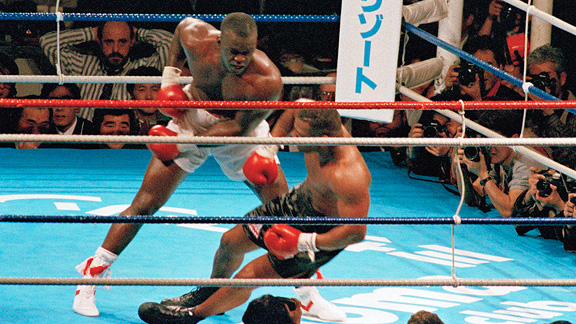
Down goes Tyson

The most ferocious of all heavyweight boxing champions was Mike Tyson, who was also the youngest man to win the world title. He was fast and a tremendously hard hitter. It also helped that he was insane, a wife abuser, convicted rapist, an ear biter and capable of threatening to eat an opponent’s children. The sight of him charging across the ring in the first round was enough to cause faint hearts and trembling knees in those he faced.

In February 1990 he was at the peak of his form, with a 37-0 record, almost all by knockouts early in the fight. He had defeated creditable foes such as Larry Holmes, Trevor Berbick, James “Bonecrusher” Smith, and Michael Spinks.  His opponent in Tokyo was the little-regarded Buster Douglas, 29-4-1, who deemed to be a mere warm-up for a match later in the year with Evander Holyfield. Only one Las Vegas casino would even take a bet on the fight and the single one to do so offered odds of 42-1.

But from the beginning it was clear that Douglas had no fear of Tyson and refused to be bullied. His jab, with a 12-inch reach advantage, kept the shorter Tyson at bay and by the fifth round had created a dangerous lump above the champion’s left eye. Tyson seemed to believe he could end the fight with a single blow and was willing to trade punches, a tactic that seemed to work in the 8th round when he felled Douglas with an uppercut. Taking advantage of what seemed to be a long count, Douglas was able to regain his feet. Tyson’s aggression was reawoken, but to no avail. In the ninth and tenth rounds Douglas battered him into submission, finally knocking Tyson off his feet for the first time in his career. The dazed champion could not beat the count and Buster Douglas was declared the winner of what was called the most amazing upset in boxing history.

Alas for Douglas. He declined a rematch with Tyson and elected to fight up-and-coming Evander Holyfield. During his nine-month reign he had let himself get fat and lazy and was knocked out in the third round. His career was over but his fight with Tyson is part of boxing history.
February 8

Home / Today in History / February 8

th

1945

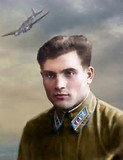
Daring escape from Peenemünde

In July 1944 Soviet pilot Mikhail Devyatayev was shot down over Poland and made a prisoner of war by the Germans. He was held in a series of concentration camps (Nazis treated Soviet prisoners much more harshly than those captured on the Western Front) and was eventually sent as a slave labourer to the missile site at Peenemünde, on an island in the Baltic. There Germany developed the V-1 and V-2 missiles that were used against Britain late in the war and where conditions for the slaves were brutal.

Devyatayev was determined to escape and convinced other Russian prisoners to join his plan. On February 8, 1945 ten captives overpowered their guards and made for the airfield where the camp commandant had landed his Heinkel bomber. Devyatayev piloted the craft back to Soviet territory despite Luftwaffe attempts to shoot him down and fire from Soviet air defences.

The daring prisoners were not, however, treated as heroes. The paranoid Soviet authorities were scornful of their story. Devyatayev was thrown in jail (a common fate for returned prisoners, especially officers) and the others were posted to penal battalions where they were assigned the most dangerous duties and from which only a battle wound could release them. Five of them died before the war ended. As a “criminal” Devyatayev had a miserable post-war existence until 1957 when he was finally cleared on the testimony of rocket scientists who affirmed that his information about the German programs was correct. He was then rehabilitated and given military decorations.

February 7

Home / Today in History / February 7

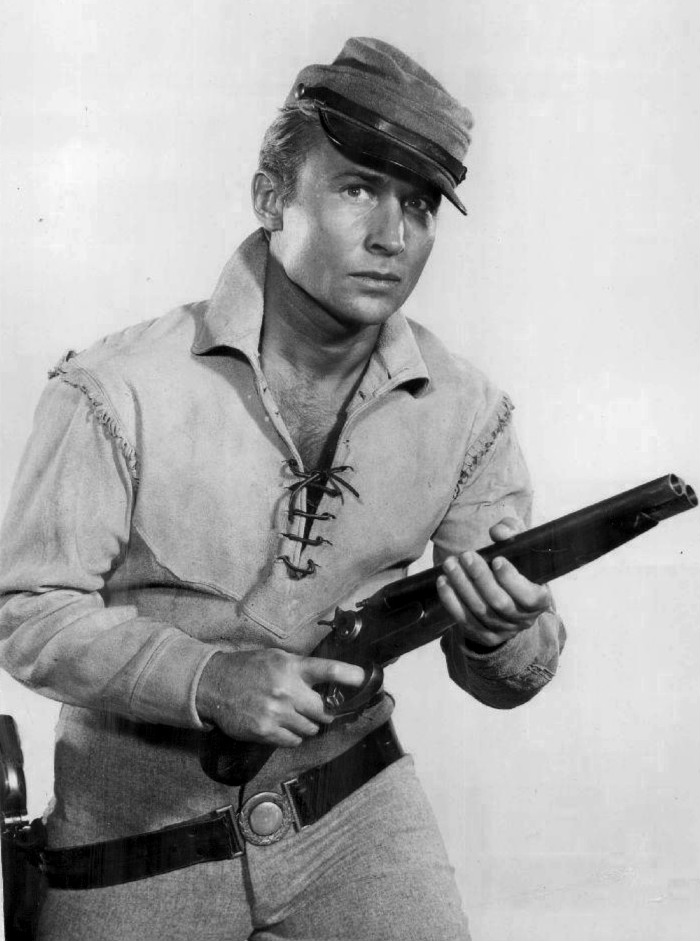
Nick_Adams_The_Rebel_1959

1968

Death of The Rebel

There was a day when every self-respecting tv series had a catchy theme song, particularly westerns. To this day I sing the lyrics of the Disney oater “Texas John Slaughter” — “Texas John Slaughter made ’em do what they oughter/ And if they didn’t they died.”  And how about Bonanza? “We chased lady luck, ’til we finally struck Bonanza!/ With a gun and a rope and a hat full of hope, planted a family tree. /We got hold of a pot full of gold, Bonanza!”One of the catchiest of these ditties was the theme for “The Rebel” 

Johnny Yuma, was a rebel, 
He roamed, through the west. 
And Johnny Yuma, was a rebel, 
He wandered alone. 

He got fightin’ mad, 
This rebel lad, 
He packed his star as he wandered far 
Where the only law was a hook and a draw, the rebel. 

On this day in 1968 died Nick Adams, the eponymous rebel who, as you may have heard, roamed through the west. Adams was a relentlessly self-promoting actor known for such classics as Invasion of Astro-Monster and Frankenstein Conquers the World before landing the lead role in The Rebel which ran from 1959-1961. His death was the result of a drug overdose.

February 4

Home / Today in History / February 4

iur

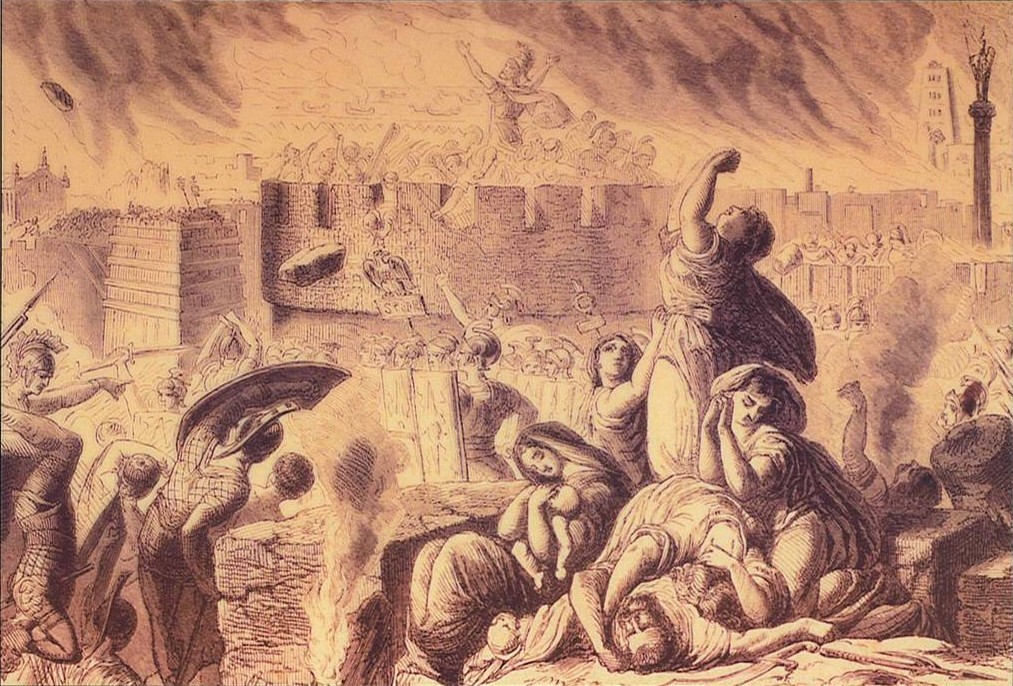
1985 End of the Third Punic War

The Punic Wars were waged between Carthage (a Phoenician-founded city, thus the name “Punic) and the Roman Republic in the third and second centuries B.C. Both were aggressive, bloody, expanding empires and it appeared that only one of them would survive to dominate the Mediterranean world.

The First Punic War (246-241 BC) was fought over control of the rich island of Sicily. The Romans were victorious and Carthage then turned its eyes toward dominating the Iberian peninsula. The Second Punic War (218-201 BC) began with the invasion of Italy by a Carthaginian army from Spain led by Hannibal. Though he was never defeated on Italian soil, Hannibal never succeeded in either taking Rome or causing Rome’s alliances to fall apart. When Roman forces landed near Carthage, Hannibal was called home to defend the city. He suffered his only defeat at the Battle of Zama and the Carthaginian empire was reduced to a small area of North Africa.

The revival of Carthage over the next fifty years led some Roman politicians to call for the final extinction of their rival. “Cartago delenda est!” — Carthage must be destroyed — became the watchword. In 146 BC, Carthage was overrun by Roman troops after a lengthy siege, the city was burnt to the ground and its inhabitants were sold into slavery.

In 1985 the mayor of Rome and the honorary mayor of Carthage met to put an end to bad feelings, signing a symbolic friendship and collaboration pact in a ceremony at the ruins of ancient Carthage outside Tunis.

February 1

Home / Today in History / February 1

1981Underarm

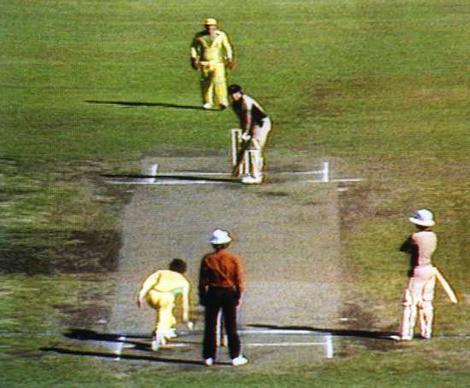
1981 Australia’s shame: the underarm bowling affair

Australians have a reputation as ruthless athletic competitors. Cricket is a sport which prides itself on gentlemanly behaviour. Sometimes these two impulses collide, as in the case of the infamous end to a one-day international match between Australia and New Zealand.

One ball remained to be bowled with Australia leading, but should the New Zealand batter, Brian McKechnie, hit it in the air out of the field of play, he would score six runs and New Zealand would win. In order to make that strike impossible, Australian captain Greg Chappell instructed the bowler, his brother Trevor, to roll the ball underhand along the ground. This was entirely legal but very much not “in the spirit of the game”.

As Trevor Chappell bowled, his other brother Ian, in the commentary box reporting on the game, cried out “No, Greg, no, you can’t do that!” Richie Benaud, a famed Australian cricketer and former captain, was commentating on television and instantly voiced his dismay. He called it  “disgraceful” and said it was “one of the worst things I have ever seen done on a cricket field.” The New Zealand Prime Minister was no less heated.  He said Chappell’s decision “an act of true cowardice” and he considered it appropriate that the Australian team were wearing yellow. Even the Australian Prime Minister said it was against the traditions of the sport.

Greg Chappell soon regretted his actions and blamed it on fatigue. Thirty-nine years later the incident is still remembered and considered a black day in Australian sporting history. And that’s why I love cricket.

January 31

Home / Today in History / January 31

220px-TrotskyAtThePolishFront-1919

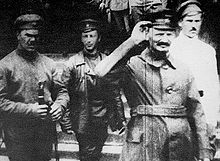
1929 Leon Trotsky is expelled from the Soviet Union

Lev Davidovich Bronstein (1879-1940), better known to the world by the name he borrowed from one of his prison guards, “Leon Trotsky”, was a highly-influential thinker and activist during the Russian Revolution.

Trotsky became a Marxist and involved in radical politics in his late teens. He spent years in political prisons and was exiled to Siberia where he became convinced that revolution was necessary in the Russian Empire. He escaped from Siberia in 1902 and moved to London where he joined himself to the Russian Communist Party whose leadership had gone either underground or into exile. Trotsky sided with the Menshevik minority against V.I. Lenin’s Bolsheviks who wanted a small conspiratorial party to guide the workers into rebellion.

Trotsky returned home to play a large role in the unsuccessful 1905 Revolution and helped form the first “soviets” but he was arrested and sentenced again to Siberian imprisonment. Again, he escaped and again fled to England and then to Austria where he edited the Pravda newspaper.

When World War I broke out, Trotsky was forced into a series of moves, from France, to Spain, to the U.S., to a prison camp in Canada, and finally back to Russia in 1917 where he found that the Romanov dynasty had been overthrown and a provisional democratic government was in power. He joined with Lenin and the Bolsheviks in bringing down that democracy; in the Civil War which followed he achieved fame and party  prominence by forming the Red Army and achieving a victory that resulted in the formation of the Union of Soviet Socialist Republics. He was an architect of the Red Terror and its wartime atrocities.

Trotsky’s rapid rise made him enemies in high places. After the death of Lenin, he was constantly outmaneuvered in party politics by Joseph Stalin who was more concerned with building “Socialism in One Country” than Trotsky’s insistence that the Communist revolution had to be spread internationally. In 1929 Trotsky was expelled to Turkey. He would live out the rest of his life in exile, fulminating against Stalinism and forming a Trotskyist opposition movement. Stalin would systematically murder his family and supporters inside the USSR and send hit squads out to assassinate him. One finally succeeded: in 1940 Trotsky was murdered in his Mexican refuge.

January 30

Home / Today in History / January 30

Chushingura.47ronin.attackingthehouseofkira.print.kunisada.i.01.obverse.refshot

1703

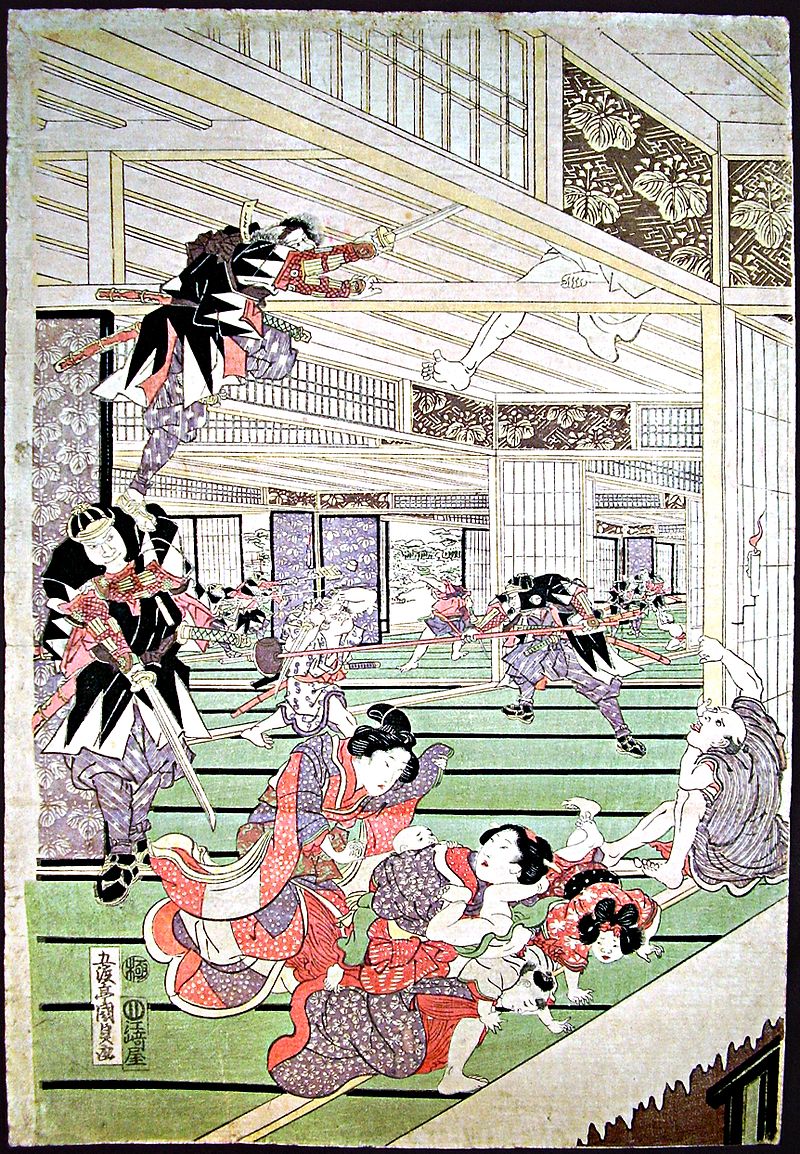
The 47 Ronin avenge their master

The era of the Tokugawa Shogunate in Japan which spanned 250 years from the early 1600s was a time of rigid social distinctions and iron-clad custom. Sometimes strong moral impulses clashed and produced epic stories such as that of the 47 Ronin which intrigues even today.

The story begins with a dispute between a rural daimyo (feudal lord) named Asano and a high-ranking official of the shogunate, Kira Kozuke-no-Suke Yoshinaka. Kira, angry because he had not been sufficiently bribed, offended Asano, provoking the daimyo into attacking his superior with a knife. This was a serious matter as it occurred on the grounds of the ruler’s palace: Asano was ordered to kill himself; his holdings were to be seized, his family disgraced, and his retainers were to be made “ronin” – outcasts, masterless men. Moreover, the government ruled that no revenge was to be taken against Kira for having started this catastrophe.

Dozens of Asano’s men, however, vowed to avenge their master as their samurai code demanded, but they knew that Kira would be watching for such a move. Therefore, they split up and appeared to accept their fate; they took regular employment, knowing that they would be regarded as spiritless and cowardly for doing so. Their leader Oishi, acted particularly boorishly, becoming a drunkard and consorting with prostitutes, reviled by those who knew him for being such a loser.

When almost two years had passed, and Kira’s guard was relaxed, the ronin reconvened with a plan to attack their enemy’s castle. They had gathered arms in secret and obtained plans of the fortifications; on the night of January 30, 1703 in the middle of a snow storm, the 47 samurai stormed the castle from the front and rear. The immediate neighbours had been alerted that what was taking place was legitimate vengeance so that they would not interfere. Once inside, the attackers went from room to room, searching for Kira and killing those who opposed them. Kira was located hiding in a woodshed. He refused to kill himself so Oishi cut off his head and the ronin left to turn themselves over to the authorities, after first laying Kira’s head on their master’s tomb.

Their actions placed the government in a moral quandary. On the one hand, they had broken the shogun’s command that no revenge should be taken; on the other hand they had honourably avenged their master as samurai should. Moreover, the ronins’ deed was widely approved of by those who had learned of it. The solution: instead of being executed, the ronin would be given the opportunity to ritually kill themselves. Their graves immediately became the site of pilgrimage and respect and their story has been celebrated in art, drama, literature and film ever since.

January 29

Home / Today in History / January 29

1936

First elections to the Baseball of Fame

These are the five members of the Hall’s first class:

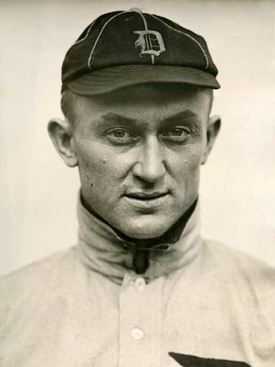
1913_Ty_Cobb_portrait_photo

Ty Cobb, centre field, Detroit Tigers, the “Georgia Peach”, notoriously aggressive player. Averaged .367, 4,191 hits, 117 HR (“dead ball” era), 1,938 RBI, 897 stolen bases.

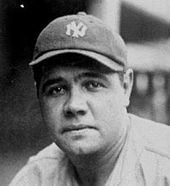
170px-Babe_Ruth

Babe Ruth, right field, New York Yankees; the “Bambino”, the “Sultan of Swat”; began as an excellent pitcher for the Red Sox, twice won 23 games, a 94-46 record with 2.28 ERA. Legendary home run hitter, .342 average, 2,873 hits, 714 HR, 2,213 RBI.

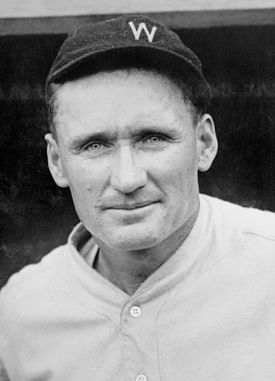
275px-Walter_Johnson_1924

Walter Johnson, pitcher, Washington Senators, the “Big Train”. 417-279, 2.17 ERA, 3,508 strike-outs, 110 shut-outs.

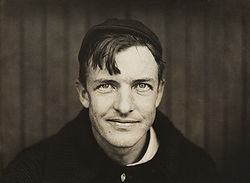
250px-Christy_Mathewson2

Christy Mathewson, pitcher, New York Giants; the “Christian Gentleman” who never pitched on Sunday. 373-188 record, 2.13 ERA, 2,502 strike-outs.

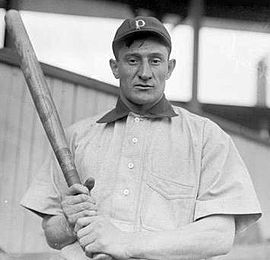
Honus_Wagner_(crop)

Honus Wagner, shortstop, Pittsburgh Pirates; the “Flying Dutchman”, the greatest fielder of his generation and a superb base runner and hitter. Batted .329, with 3, 430 hits, 101 home runs (in the “dead ball” era), 1,732 RBI, and 722 stolen bases.

January 28

Home / Today in History / January 28

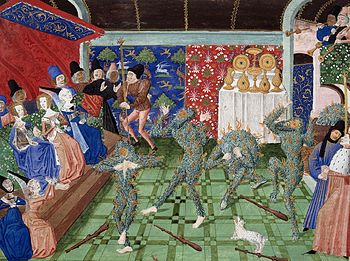
350px-Le_Bal_des_Ardents

1393

Bal des ardente; The Dance of the Burning Men

Charles VI of France (1368-1422) was nicknamed “The Well-Beloved” but he had other names as well, such as “Charles the Mad”. In 1392, while on a military expedition, Charles suddenly went berserk, striking out at his attendants, killing four of his knights and pages before he was overcome and sank into a coma. For years after he would claim he was St George or that he was made of glass, that people were trying to kill him; he refused to bathe or change his clothes for months. He was removed from power and, on his doctor’s advice, kept constantly amused.

On January 28, 1393 his wife, Isabelle of Bavaria, held a masque for the king’s entertainment. Charles and six of his nobles were clothed as Wild Men of the Forest with shaggy costumes made of highly inflammable material. Careful instruction was given that there be no torches about as the men whirled, roared and capered. Midway though this performance, the king’s brother Louis, Duke of Orleans, entered, drunk and holding a torch. He either maliciously threw the flaming brand at the dancers or carelessly used it to peer closely at the dancers, but in any event, the Wild Men caught fire. The king was seized by his aunt who smothered the flames with her voluminous gown, another threw himself into a vat of wine, but the five others perished hideously.

This tragedy did much to discredit the court, especially the Duke of Orleans who was forced into a humiliating public procession of confession.

January 25

Home / Today in History / January 25

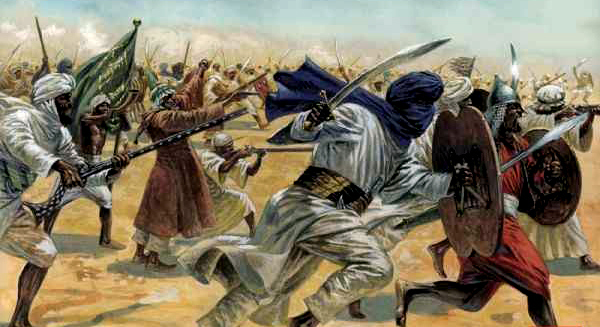
muslim-warriors

750 Battle of the Zab River

After the death of Muhammed in 632, the Islamic world was ruled by a series of caliphs, or successors, in whom were invested both secular and religious power. In 661 the governor of Syria, Muawiyah, declared himself caliph and established a dynasty, the Umayyads, who ruled from Damascus. The Umayyads continued the Islamic project of conquest, pressing east into central Asia and into Europe, conquering Spain, creating an empire that contains almost 30% of the world’s population and millions of square miles.

By 750 the dynasty had grown corrupt and unpopular; its provincial governors were rebellious and felt little loyalty to the regime in Syria. A faction, the Abbasids who claimed descent from the family of Muhammed, led an uprising and at the Battle of the Zab River in what is now Iraq, defeated the Umayyad army. A new dynasty was established with its capital in Baghdad and remaining members of the previous regime were hunted down and killed. One Umayyad prince, however, survived and made his way to Spain where his followers would establish a rival caliphate at Cordoba.

Culturally the Abbasid rule was the high point of Islamic civilization. Its destruction in 1250 by the Mongols led to an intellectual and artistic decline in the Islamic world.