August 7

Home / Today in History / August 7

1560

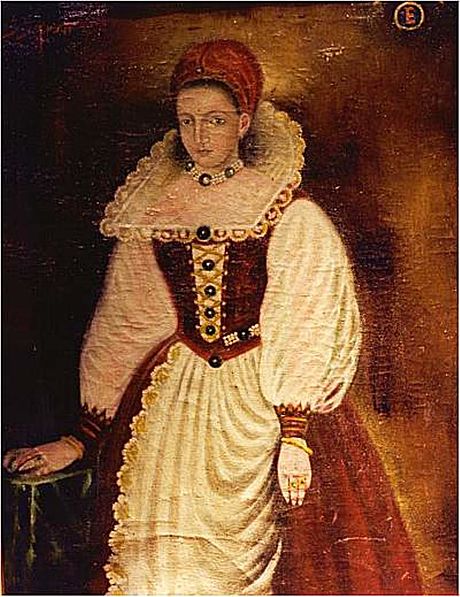
Birth of the Blood Countess

Countess Elizabeth Báthory de Ecsed (1560-1614) has the infamous reputation of being the world’s most prolific female serial killer. Legend has placed the number of her victims in the hundreds.

Elizabeth was a noblewoman of the Holy Roman Empire, owning lands in what is now Hungary and Romania, dangerous border territory at a time when the Empire was at war with the Ottoman Turks. It was said that while in her early teens she took a low-class lover and had a child by him; the poor fellow was castrated and fed to the dogs. She married another aristocrat a few years later and produced four children. She was known to be well-educated, beautiful, multilingual and a competent administrator of estates while her husband was absent in the wars; she was also known to have been less than scrupulous as a monogamist and entertained lovers while her husband was away.

Around the year 1600 rumours began to spread about the horrible fate of young girls who had been lured to her castle on the pretext of employment and who were never seen alive again. She was denounced by a Lutheran minister and the imperial government reluctantly agreed in 1610 to investigate the scandal. At her trial, 300 witnesses were heard; they accused her and her servant accomplices of torture, murder, and drinking the blood of virgins. The servants were executed and the countess was locked in a windowless room until her death.

Modern pop culture has made much of her. Her castle is a tourist attraction; locals make wine with her picture on the label; movies and books have played up the lurid sado-sexual aspects of her life (see below). Some historians believe she was the victim of a conspiracy and doubt her guilt. Where’s the fun in that?


August 4

Home / Today in History / August 4

1892

The Borden Murders

“Lizzie Borden took an axe/ And gave her mother 40 whacks./ When she saw what she had done,/ She gave her father forty-one.” On the morning of August 4, 1892 business man Andrew Borden of Falls River, Massachusetts and his second wife Abby were murdered by multiple blows of a hatchet. Popular opinion always held that the murder weapon was wielded by Lizzie, Borden’s 22-year old spinster daughter, who discovered the body of her father.

Lizzie’s explanation of where she had been and what she was doing that morning were confused and contradictory, and her attitude aroused the suspicions of the police. She was seen destroying a dress that she claimed had been stained by paint; her answers and demeanour at the inquest led to her being charged with murder in December of that year. The trial during the following summer attracted national interest, especially after Lizzie was acquitted by the jury after a mere 90 minutes of deliberation. No one else was ever tried for the crime.

For the rest of their lives Lizzie and her sister Emma were the subjects of lurid fascination. Shunned by the good citizens of Fall River, they nonetheless remained in the town, living together for years and never marrying. In 1905 the sisters quarrelled and never reconciled. They both died in 1927 and were buried side by side.

Numerous movies, plays, and stories have been written about the murders, many suggesting possible solutions to the mystery. The best of them is a 1976 tv movie The Legend of Lizzie Borden, starring Elizabeth McGovern, and a wonderful short story by Avram Davidson entitled “The Deed of the Deft-Footed Dragon”.

August 1

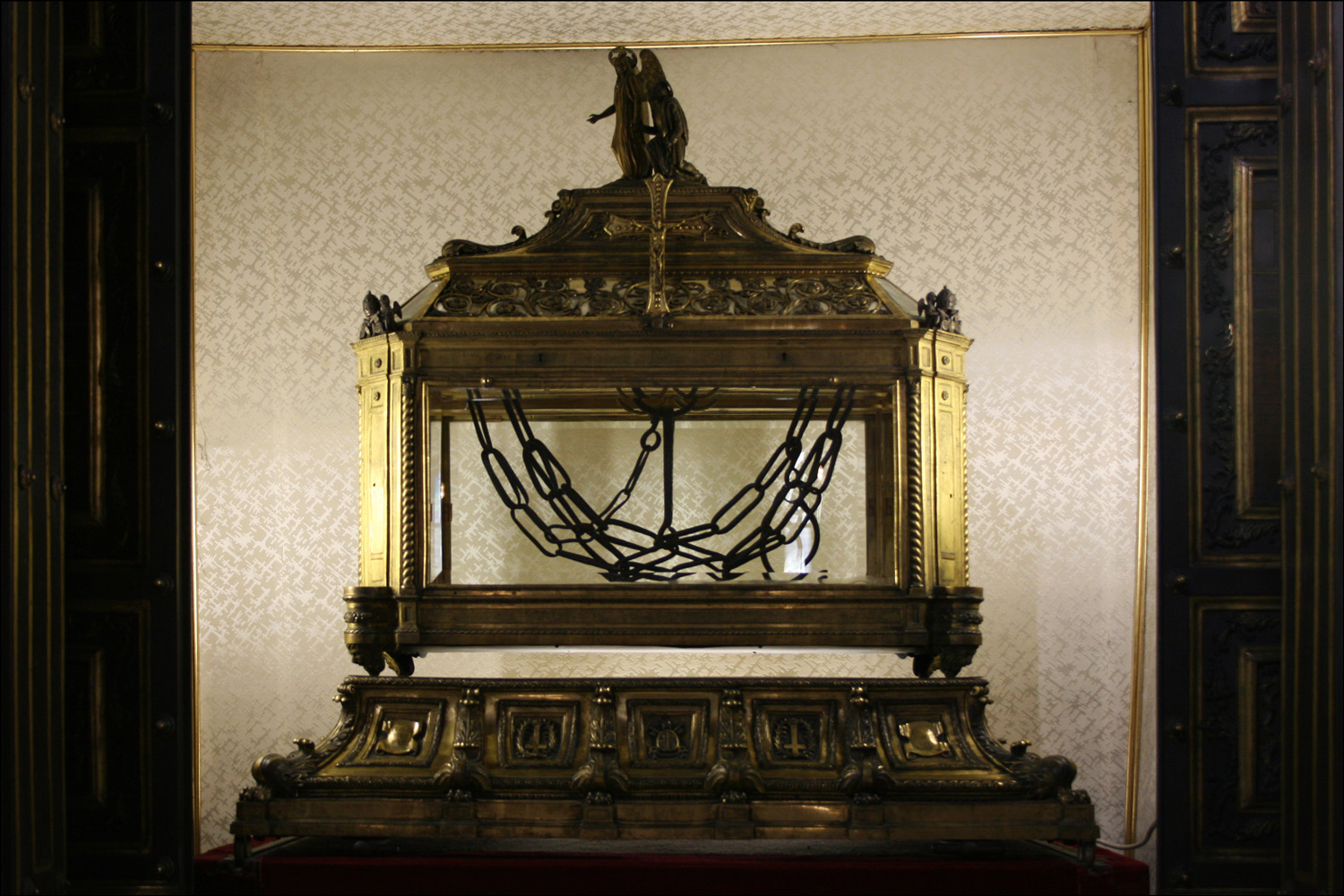
St Peter In Chains

Peter thus was being kept in prison, but prayer by the church was fervently being made to God on his behalf. On the very night before Herod was to bring him to trial, Peter, secured by double chains, was sleeping between two soldiers, while outside the door guards kept watch on the prison. Suddenly the angel of the Lord stood by him and a light shone in the cell. He tapped Peter on the side and awakened him, saying, “Get up quickly.” The chains fell from his wrists. The angel said to him, “Put on your belt and your sandals.” He did so. Then he said to him, “Put on your cloak and follow me.” So he followed him out, not realizing that what was happening through the angel was real; he thought he was seeing a vision. They passed the first guard, then the second, and came to the iron gate leading out to the city, which opened for them by itself. They emerged and made their way down an alley, and suddenly the angel left him. (Acts 12)

The Feast of St Peter in Chains commemorating the Apostle Peter’s miraculous liberation from prison was first celebrated in the church in Rome named after him in the fifth century. The church known as St Peter ad Vincula contains not only the chains that bound him in the Holy Land but also those placed on him in the Mamertine prison during the reign of Nero. Around the year 450 Pope Leo the Great had these two chains united.

A number of churches in Christendom have also taken that name. In the Tower of London is a chapel known as the Church of St Peter ad Vincula. There are buried many victims of of Henry VIII who were executed in the Tower precincts: two of his wives, Anne Boleyn and Catherine Howard; his chief minister Thomas Cromwell; Catholic martyrs, Sir Thomas More and Cardinal John Fisher. There are also the remains of those killed by Henry’s daughter, Mary: Lady Jane Grey and her husband Guildford Dudley; John Dudley, Duke of Northumberland. The 19th-century English historian Thomas Babington Macaulay said of the chapel:

In truth there is no sadder spot on the earth than that little cemetery. Death is there associated, not, as in Westminster Abbey and Saint Paul’s, with genius and virtue, with public veneration and with imperishable renown; not, as in our humblest churches and churchyards, with everything that is most endearing in social and domestic charities; but with whatever is darkest in human nature and in human destiny, with the savage triumph of implacable enemies, with the inconstancy, the ingratitude, the cowardice of friends, with all the miseries of fallen greatness and of blighted fame. Thither have been carried, through successive ages, by the rude hands of gaolers, without one mourner following, the bleeding relics of men who had been the captains of armies, the leaders of parties, the oracles of senates, and the ornaments of courts.