October 12

Home / Today in History / October 12
440px-ascension_de_madame_garnerin_le_28_mars_1802_v2_lib_of_congress

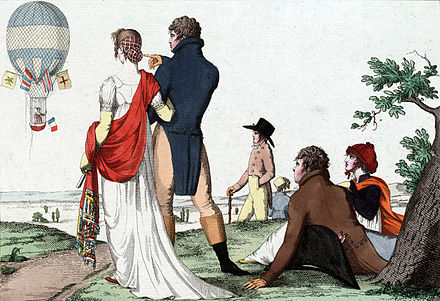
1799 Jeanne Geneviève Garnerin takes a pioneering jump

Late in the 18th century, the French were fascinated by the globe aérostatiquehot-air ballooning. Since the Montgolfier brothers made the first ascent in 1783, the possibilities for air travel — military, commercial, recreational — tickled the French imagination. Women were among the first passengers and in 1799 Jeanne Geneviève Garnerin (neé Labrosse) became the first woman to fly solo and pilot a lighter-than-air craft when she took a hydrogen balloon aloft.

Mme Garnerin was made of very brave stuff. Her husband André-Jacques Garnerin, who would be named the Official Aeronaut of France, had been the first to jump from a balloon and survive with the aid of a parachute. On October 12, 1799 Jeanne Geneviève took a balloon to an altitude of 900 meters and separated her basket from the balloon, controlling her descent with an attached parachute — the first woman to do so. They later filed a patent for  “a device called a parachute, intended to slow the fall of the basket after the balloon bursts. Its vital organs are a cap of cloth supporting the basket and a circle of wood beneath and outside of the parachute and used to hold it open while climbing: it must perform its task at the moment of separation from the balloon, by maintaining a column of air.”

October 11

Home / Today in History / October 11
Barabino, Nicolo; The Death of Pope Boniface VIII; The Collection: Art & Archaeology in Lincolnshire (Usher Gallery); http://www.artuk.org/artworks/the-death-of-pope-boniface-viii-81675

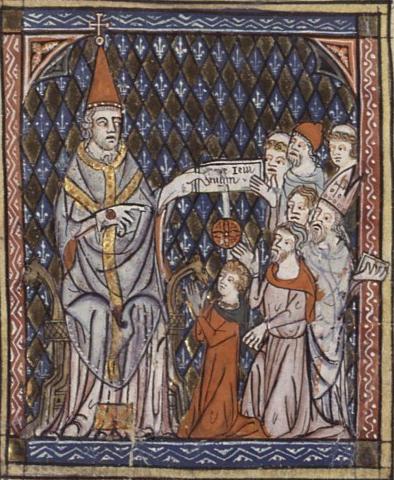
1303 Death of an ambitious pope

Since the middle of the eleventh century, popes had been asserting their power over secular rulers. They claimed that the spiritual authority ordained by God held precedence over mere earthly power. They had deposed kings and emperors and named substitute rulers; they had precipitated civil wars; they had claimed dominion over entire kingdoms and excommunicated princes right, left and centre. By 1300 they had gutted the power of their chief rival, the Holy Roman Emperor, and begun to quarrel with the new centralized monarchies of western Europe.

Benedetto Caetani, elected Pope Boniface VIII in dubious fashion in 1294, had twice forbidden the kings of England and France from taxing the Church in their countries. The King of France, Philip IV “the Fair”, responded by cutting off money from the French church to the papacy. Boniface replied by hinting that he might exercise his right of deposing Philip who immediately began a campaign of vilification of the pope including circulating forged documents.

This led Boniface on November 17, 1302 to issue the proclamation Unam Sanctam, which asserted the doctrine of papal monarchy in the most uncompromising terms ever. He asserted (1) there is but one true Church, outside of which there is no salvation; (2) the Church’s head is Christ, and His representative the pope is above, and can direct, all kings; (3) whoever resists the highest power ordained by God resists Himself; and (4) it is necessary for salvation that all humans should be subject to the Roman Pontiff.

Philip the Fair now summoned a kingdom-wide assembly, and before it he accused Boniface of every imaginable crime from murder to black magic to sodomy to keeping a demon as a pet. A small French military force crossed into Italy in 1303 and took Boniface prisoner at his palace at Anagni with the intention of bringing him to France for trial. The French plan failed—local townspeople freed Boniface a couple of days later—but the proud old pope died shortly thereafter, outraged that anyone had dared to lay hands on his sacred person.

This marks the beginning of the waning of medieval papal power. In 1305 the cardinals elected the Frenchman Clement V who submitted to the French king on the question of clerical taxation and publicly burned Unam Sanctam, conceding that Philip the Fair, in accusing Pope Boniface, had shown “praiseworthy zeal.” A few years after his election, Clement moved the papacy from Rome to Avignon in southern France, the start of the period of papal humiliation known as “The Babylonian Captivity”.

October 10

Home / Today in History / October 10

680 The Battle of Karbala

Though relatively bloodless, few combats in Islamic history have been as consequential as the Battle of Karbala.

When Mohammed died in 632, rulership of the Muslim world fell to a series of four caliphs or “successors”: Abu-Bakr, Mohammed’s father-in-law; Umar; Uthman; and Ali, Mohammed’s cousin and son-in-law. The turbulence of the time may be seen in the fact that the last three were all assassinated. At the death of Ali in 661, the succession was disputed with a regional governor named Muawiyah winning more support than Ali’s oldest son Hasan. Muawiyah would establish a new dynasty, the Umayyads, and move the capital of the Islamic world from Mecca to Damascus.

Resistance to this new caliphate was led by Husayn, Ali’s second son, whose followers came to be known as Shi’ites. Husayn claimed that in establishing a dynasty the Umayyads had forfeited their right to rule. On October 10, 680 Husayn’s caravan was attacked by Umayyad forces and everyone in it killed or taken prisoner.  This Battle of Karbala became part of Shi’ite sacred history, inspiring further resistance and engendering the annual Ashura period of mourning. The split in the Islamic world between the majority Sunni and minority Shia branches remains unhealed to this day.

October 9

Home / Today in History / October 9
_63644522_malala

Given the recent events in Afghanistan and the supposed appearance of a newer and more modern Taliban 2.0, I present this post from last year.

2012 Attempted murder of Malala Yousafzai

The Taliban group of Afghani Islamists arose out of their country’s war against the occupying Soviet army and subsequent struggles against rival rebel groups. Their strict interpretation of Muslim law (combined with Pashtun tribal codes) was enforced when the group took power and ruled Afghanistan from 1996-2001. Banned were modern democracy, women’s rights, music, popular entertainments, television and the internet. The Taliban might well have consolidated power and ruled for a long time, if they had not chosen to let the country be used by jihadist groups conducting anti-western terrorism. One of these groups was al-Qaeda.

In September, 2001 an al-Qaeda operation against the United States attacked New York and Washington, killing almost 3,000 people. The Taliban expected the U.S. to retaliate but expected that they could weather the cruise missiles and air strikes that were anticipated. They refused American demands to hand over the leadership of al-Qaeda and close terrorist training camps. On October 7, 2001 a western coalition attacked Afghanistan and soon drove the Taliban from power, with its cadres fleeing across the border to Pakistan whose government unofficially sheltered them. Since then they have attempted to retake Afghanistan and have conducted a long guerrilla war against the new Afghani government and western military forces.

In the areas the Taliban occupied they opposed education for girls and destroyed over a hundred schools that had taken in female students. One such girl student was 11-year-old Malala Yousafzai, whose father had long supported education for every child. Malala and her father agreed to cooperate with the BBC in publicizing the plight of girls under the Taliban; she wrote a blog, appeared on television and petitioned foreigners to help her cause, becoming along the way famous for her precocious opposition to the Taliban. Death threats were made against the family, quite realistic ones in light of the fact that the Taliban had decided to kill her. On October 9, 2012 a gunman boarded a school bus on which she was riding and shot her, hitting her in the brain and wounding two other girls. Malala was transferred to Germany and later to Britain where surgeons repaired the damage and allowed her to resume her campaigns.

The assassination attempt backfired in that it made of a hero of Malala who went on to win the Nobel Peace Prize. She continues to be an advocate for the education of girls and peace in her homeland.

October 8

Home / Today in History / October 8
perfectlarsen

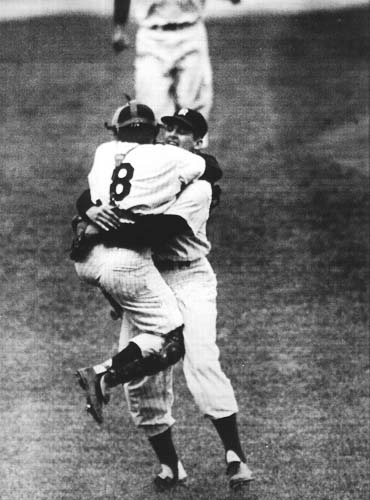
Don Larsen’s Perfect Game

It was the fifth game of the 1956 World Series, between the New York Yankees and the Brooklyn Dodgers, with both teams having won two games. Yankee Stadium was crammed with 64,519 spectators, watching Brooklyn’s Sal “The Barber” Maglie on the mound for the Bums and Don Larsen pitching for the Bronx Bombers. Maglie had earned his nickname because his high and inside fastballs gave batters a close shave; Larsen was having his best year, with an 11-5 record and a 3.26 ERA.

The Yankee lineup was full of stars such as Mickey Mantle, Yogi Berra, Enos Slaughter, and Billy Martin – but the Dodgers’ lineup was equally stellar: Jim Gilliam leading off, followed by four future Hall of Famers in Peewee Reese, Duke Snider, Jackie Robinson and Roy Campanella. On this day in 1956 not one of the Brooklynites was able to get a hit; none of them reached base on a walk or an error. Using only 97 pitches, and shunning a windup, Don Larsen retired 27 Dodgers in a row, thus pitching the first, and only, perfect game in World Series history.

Listen to Vin Scully call the last pitch of the game:

October 7

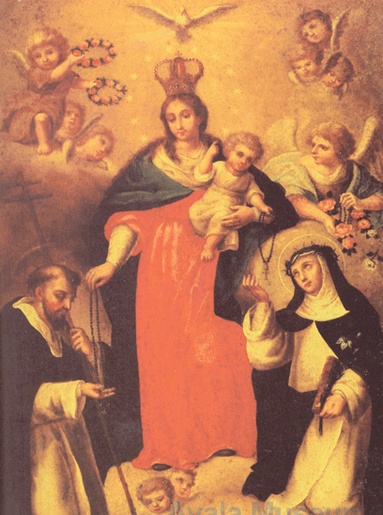
nuestra_senora_del_santisimo_rosario

Our Lady of the Rosary

The 1571 Battle of Lepanto was the biggest oar-powered battle ever, pitting the forces of Islam and the Ottoman Empire against a Christian fleet composed of an alliance of Catholic powers. Hundreds of galleys and tens of thousands of sailors and infantry took part in an encounter that ended with a Christian victory. The Turks suffered 20,000 casualties and lost 187 ships, captured or sunk. 20,000 Christian slaves were freed from the oar-benches of the Turkish galleys.

Prompted by the numerous processions in Rome by the Rosary Confraternity petitioning the aid of Mary, Pope Pius V attributed the triumph at Lepanto to the intercession of the Blessed Virgin and created a new festival for Our Lady of Victory. Two years later Pope Gregory XIII changed the name to “Feast of the Holy Rosary” and in 1960 Pope Paul VI renamed it again to the “Feast of Our Lady of the Rosary”.

There are numerous churches dedicated to either Our Lady of Victory or Our Lady of the Rosary. Maria del Rosario is a common Spanish girl’s name while Rosario is a popular name for boys in the Catholic world.

October 6

A detail from an illustration of Jesuit Father Matteo Ricci is seen at the Beijing Center for Chinese Studies in this 2007 file photo. The sainthood cause of the 17th-century missionary to China has moved to the Vatican after the diocesan phase of the sainthood process closed May 10. Father Ricci was born in Macerata, Italy, in 1552 and died in Beijing May 11, 1610. (CNS photo/Nancy Wiechec) (May 13, 2013) See RICCI-CAUSE May 13, 2013.

1552 Birth of Matteo Ricci

Matteo Ricci (1552-1610) was an Italian Jesuit missionary to China whose techniques of winning the confidence of the Chinese exemplify the Jesuit approach to foreign evangelism.

In the sixteenth century, China was ruled by the decadent and inward-looking Ming dynasty. Once Ming fleets had explored the southern seas all the way to Africa, but by the late 1500s ocean-going vessels were forbidden and contact with the outside world was discouraged. China considered itself literally the centre of the universe, feeling self-sufficient and superior to all other nations. It had a department of state to deal with barbarians along its borders and another to handle its neighbours such as Korea or Vietnam which were willing to acknowledge Chinese superiority and pay tribute, but it had no notion of dealing with technologically-advanced Western nations which were now starting to intrude into Asia. Christianity, in its Nestorian form, had reached China centuries before through an overland route but Catholic presence was found only in the Portuguese colony of Macau on the southern coast.

Ricci had joined the Society of Jesus in 1571 and volunteered himself as a missionary to Asia seven years later. He was sent to Macau where he studied the Chinese language to prepare for the evangelization of the interior of China. He mastered the script and the literary classics that formed the basis of high culture — this at least allowed him to communicate with the officials whose cooperation the Jesuits would need. But how to make themselves useful in the eyes of the Chinese state that regarded foreigners as inherently useless and inferior? Here Ricci employed mathematical and astronomical skills to great advantage, areas in which the West was forging ahead of Asia. The proper way of marking time was necessary for government and religious decision-making; Ricci’s ability to predict eclipses and regulate timepieces won him and his companions the esteem of the ruling class. Ricci’s geographical knowledge presented world maps to the Chinese for the first time.

Part of the Jesuit approach to Asian missions was to adopt appropriate dress for their clergy; in India they dressed as Buddhist priests; in China they went clothed as court mandarins. Ricci also attempted to explain Christianity in a way that was compatible with Confucianism; here he trod perilously close to heresy. The mendicant orders, the Dominicans and Franciscans, who saw themselves as missionary rivals to the Jesuits, complained to Rome about this alleged syncretism and a lengthy controversy erupted, one that hampered evangelism.

Ricci was eventually allowed to travel to the Ming capital in Beijing where established a Catholic cathedral and made some prominent converts. He died there in 1610 and his grave is now a tourist attraction. Efforts are being made to have Ricci named a saint.

October 5

Home / Today in History / October 5

battle_of_the_thames

1813 The death of Tecumseh

The War of 1812 between the United States and Great Britain was fought at sea and along the Canadian border. Allied with the British were many native tribes, resentful at American expansion into their traditional territories. A tribal confederacy under the Shawnee chief Tecumseh and his mystical brother known as The Prophet had consistently opposed yielding land to the Americans but had suffered a number of reversals.

In the autumn of 1813, the British and their native allies were being pushed back from positions below the Great Lakes. Commodore Oliver Hazard Perry had won the Battle of Lake Erie capturing an entire British squadron, which prompted the famous phrase, “we have met the enemy and he is ours” and ashore the future president William Henry Harrison was also successful. He recaptured Detroit and launched an invasion of Upper Canada. On this day Harrison’s forces met a British army under Henry Procter backed by hundreds of Tecumseh’s warrior in what is now southern Ontario. The British wilted under an American charge but Tecumseh’s forces stood their ground. In the fighting Tecumseh was shot and killed.

The battle itself was of little significance as the victorious Americans were obliged to withdraw but the death of Tecumseh was a catastrophe for the native cause. Their confederacy collapsed and hopes of a pan-native resistance died.

October 4

St Francis of Assisi

The most remarkable man of the Middle Ages was born Giovanni di Pietro di Bernardone to a prosperous merchant and his wife in central Italy in 1181. His father nicknamed him Francesco (”Frenchy”) and so the young man became known to history as Francis of Assisi.

After living the carefree life of a rich man’s son, Francis underwent a series of religious experiences that caused him to renounce his father’s wealth and to embrace a life of poverty and service. He begged for his keep, tended to lepers, and preached a message of love and repentance across the local countryside. (He also preached to the birds and fish, urging them to be grateful to God.) Francis travelled widely and even went on the Sixth Crusade where he preached to the politely attentive Sultan of Egypt. Despite his radical approach to property and the environment, Francis attracted large numbers of followers who were eventually organized in the Order of Friars Minor (the Franciscans, for men) and the Order of St Clare (for women).

The tender heart of Francis naturally found expression in his attitude toward Christmas. In 1220 in the town of Greccio, Francis set up the earliest living nativity scene. (From “Greccio” we get the word “crèche”.) It had been customary for centuries for churches to set up a model of a crib near the altar during the Christmas season but Francis was the first to use real animals, a donkey and an ox, a manger full of straw, and a tiny baby to bring home the long-ago events in Bethlehem and makie the Incarnation and humanity of Jesus real to the ordinary people.

Then he prepared a manger, and brought hay, and an ox and an ass to the place appointed. The brethren were summoned, the people ran together, the forest resounded with their voices, and that venerable night was made glorious by many and brilliant lights and sonorous psalms of praise. The man of God [St. Francis] stood before the manger, full of devotion and piety, bathed in tears and radiant with joy; the Holy Gospel was chanted by Francis, the Levite of Christ. Then he preached to the people around the nativity of the poor King; and being unable to utter His name for the tenderness of His love, He called Him the Babe of Bethlehem. A certain valiant and veracious soldier, Master John of Grecio, who, for the love of Christ, had left the warfare of this world, and become a dear friend of this holy man, affirmed that he beheld an Infant so marvelous sleeping in the manger, Whom the blessed Father Francis embraced with both his arms, as if he would awake Him from sleep.

The living Nativity scene is a long-enduring tradition that is still carried out 800 years later.

Another Christmastide example set by Francis that is still observed is the custom of giving animals a special feeding on December 25. He begged farmers to give their livestock extra food at Christmas in memory of the ox and ass between whom the Baby lay. “If I could see the Emperor,” he said, “I would implore him to issue a general decree that all people who are able to do so, shall throw grain and corn upon the streets, so that on this great feast day the birds might have enough to eat, especially our sisters, the larks.” To this day, Norwegians will set out a julenek, a sort of Bird’s Christmas Tree, to provide grain for our winged friends. English farmers may wassail their cattle with an anointing of cider and Polish farmers on Christmas Eve give their cattle an oplatek wafer and bless them with the sign of the cross.

The Franciscan brotherhood is also responsible for the idea of Christmas carols. Before the 1200s most songs celebrating Advent and the Nativity were solemn, theologically-dense hymns in Latin but members of the order took popular tunes – often dance music — and wrote lyrics in the local language. 


October 3

Home / Uncategorized / October 3

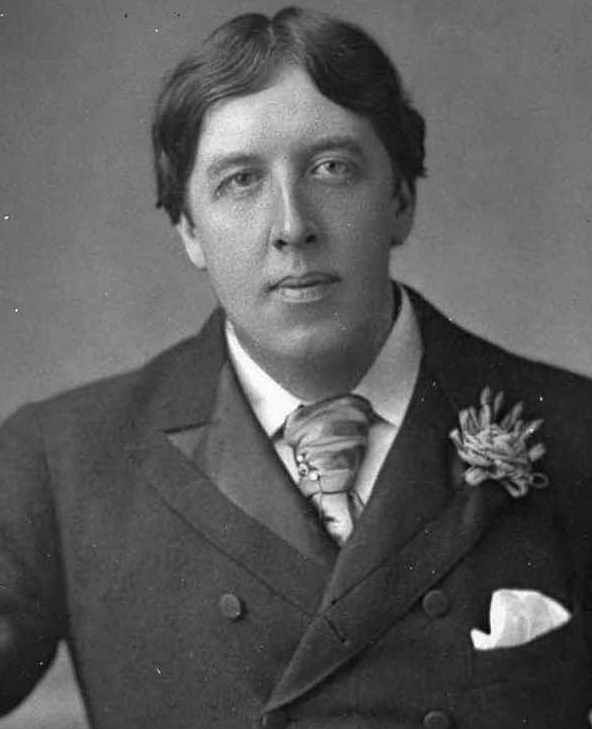
1925 Birth of Gore Vidal

Proof that only the good die young or that more than the weight of years is necessary to keep a man from being a jerk, may be found in the career of Eugene Louis Gore Vidal. Born into a socially prominent family and given an expensive early education, Gore volunteered for military service after Pearl Harbour and spent an uneventful (if chilly) war in the Aleutian Islands.

Gore turned to novel writing after the war and caused a bit of a scandal with his third book Pillars of the City (1948) which treated male homosexuality in an nonjudgemental manner. That notoriety forced him for a time to write low-rent fiction under a pseudonym. He carved a successful career out of plodding high-brow historical fiction, writing accounts of the careers of Julian the Apostate. Aaron Burr, Abraham Lincoln, and William Randolph Hearst. Gore’s transsexual tale Myra Breckinridge was made into a dreadful film flop with Raquel Welch and Mae West.

Gore was not one to shy away from a microphone and became known as much for his caustic commentary as his writing. In one famous encounter he provoked the normally-urbane William F. Buckley into exclaiming “Now listen, you queer, stop calling me a crypto-Nazi or I’ll sock you in your goddam face, and you’ll stay plastered!” Gore’s jealousy of Truman Capote led to this remark:  “My first impression as I wasn’t wearing my glasses was that it was a colourful ottoman. When I sat down on it, it squealed. It was Truman.” Backstage at the Dick Cavett Show, Gore slapped Norman Mailer in the face and Mailer responded by head-butting Gore.

Gore died in 20102, leaving behind these provocative quotes:

• “We should stop going around babbling about how we’re the greatest democracy on earth, when we’re not even a democracy. We are a sort of militarised republic.”

• “There is no human problem which could not be solved if people
would simply do as I advise.”

•”I never a miss a chance to have sex or appear on television.”

• “It is not enough to succeed. Others must fail.”

• “A narcissist is someone better looking than you are.”

“The four most beautiful words in our common language: ‘I told you so.'”