From The Spectator: In the early morning of September 26 1983, Stanislav Petrov of the Soviet Union’s Air Defense Force was on duty, monitoring his country’s satellite system, when the siren sounded. His computer indicated that the US had just launched five nuclear-armed intercontinental ballistic missiles, and protocol required him to notify superiors immediately. Soviet strategy was to ‘launch on warning’, and many in Moscow believed Ronald Reagan was planning a first strike. But Petrov had a gut feeling this was a false alarm. Five missiles seemed too few, and the system itself was new. He did not inform superiors and within a few minutes it became clear that he had been right. Much of the world could have been destroyed within an hour if Petrov had followed protocol.
He says he was the only officer in his team who had received a civilian education. “My colleagues were all professional soldiers, they were taught to give and obey orders.” So, he believes, if somebody else had been on shift, the alarm would have been raised.
A few days later Mr Petrov received an official reprimand for what happened that night. Not for what he did, but for mistakes in the logbook.
He kept silent for 10 years. “I thought it was shameful for the Soviet army that our system failed in this way.” But, after the collapse of the Soviet Union, the story did get into the press. Mr Petrov received several international awards.
He does not think of himself as a hero. “That was my job”, he said. “But they were lucky it was me on shift that night.”
Richard Porson was born on Christmas Day in 1759 to a working-class English family but his brilliance and remarkable memory attracted sponsors who paid for his education at Eton and Cambridge. He soon developed a reputation as a keen scholar of the classics, publishing editions of Aeschylus, Xenophon and Aristophanes. Porson lost his teaching position at Cambridge because he was not in holy orders but his supporters pooled together enough money to give him a comfortable annuity. In 1792 he became Regius Professor of Greek at Cambridge, a position with few duties and less remuneration but in 1806 he was made librarian of the London Institution which came with a handsome salary.
Porson was an engaging conversationalist, though his excessive drinking and lack of personal hygiene were often remarked on. In 1808 he died of a stroke. Chambers has an anecdote to illustrate Porson’s unconventional behaviour:
The circumstances connected with Porson’s marriage are rather curious. He was very intimate with Mr. Perry, the editor of the Morning Chronicle, for whom his sister, Mrs. Lunan, a widow, kept house. One night the professor was seated in his favourite haunt, the Cider Cellars in Maiden Lane, smoking a pipe with a friend, when he suddenly turned to the latter and said: ‘Friend George, do you not think the widow Lunan an agreeable sort of personage, as times go?’ The party addressed replied that she might be so.
‘In that case,’ replied Porson, ‘you must meet me at St. Martin’s-in-the-Fields at eight o’clock to-morrow morning,’ and thereupon withdrew after having called for and paid his reckoning. His friend was somewhat puzzled, but knowing that Porson generally meant what he said, resolved to obey the summons, and accordingly next morning presented himself at the appointed hour at the church, where he found Porson, with Mrs. Lunan and a female friend, and a parson in full canonicals for the solemnisation of matrimony. The service was quickly got through, and thereupon the party quitted the sacred building, the bride and bridegroom going each different ways with their respective friends.
The oddity of the affair did not end here. Porson had proposed to Mrs. Lunan some time before, but had insisted on her keeping it a secret from her brother; and now that the ceremony was completed, seemed as determined as ever that nothing should be said of the marriage, having apparently also made no preparations for taking his bride home. His friend, who had acted as groomsman, then insisted that Mr. Perry should be informed of the occurrence; and Porson, after some opposition, consenting, the two walked together to the residence of the worthy editor, in Lancaster Court, where, after some explanation, an arrangement was effected, including the preparation of a wedding-dinner, and the securing of apartments for the newly-married couple.
After dinner, Porson, instead of remaining to enjoy the society of his bride, sallied forth to the house of a friend, and after remaining there till a late hour, proceeded to the Cider Cellars, where he sat till eight o’clock next morning! Not-withstanding what may well be called this most unprecedented treatment of a wife on her wedding-day, it is said that during the year and a half that the marriage subsisted, Porson acted the part of a kind and attentive husband, and had his wife lived, there is great reason to believe that she might have weaned him in time from his objectionable habits.
Lemon Henry “Blind Boy” Jefferson was born to a family of Texas sharecroppers. Visually impaired since birth, he became a street musician, playing gospel music and dance tunes, developing a unique vocal and guitar style. In the 1920s his talents were discovered and recording contracts made him a rich man. Hits like “See That My Grave is Kept Clean” and “Matchbox Blues” sold well and inspired later musicians such as the Beatles. Jefferson died in 1929 in mysterious circumstances, either in a blizzard, in a street robbery, or of a heart attack. He was indicted into the inaugural class of the Blues Hall of Fame.
Here Jefferson sings “Black Cat Moan”:
Let us also salute those other blues musicians with snappy nicknames: Lightning Hopkins, Blind Boy Grunt, Cripple Clarence Lofton, Muddy Waters, Peg Leg Sam, Washboard Sam, Backwards Sam Firk, Ironing Board Sam, Magic Sam, Watermelon Slim, Eddie “Cleanhead” Vinson, Howlin’ Wolf, Cow-Cow Davenport, Taj Mahal, and the immortal Johnny “Big Moose” Walker.
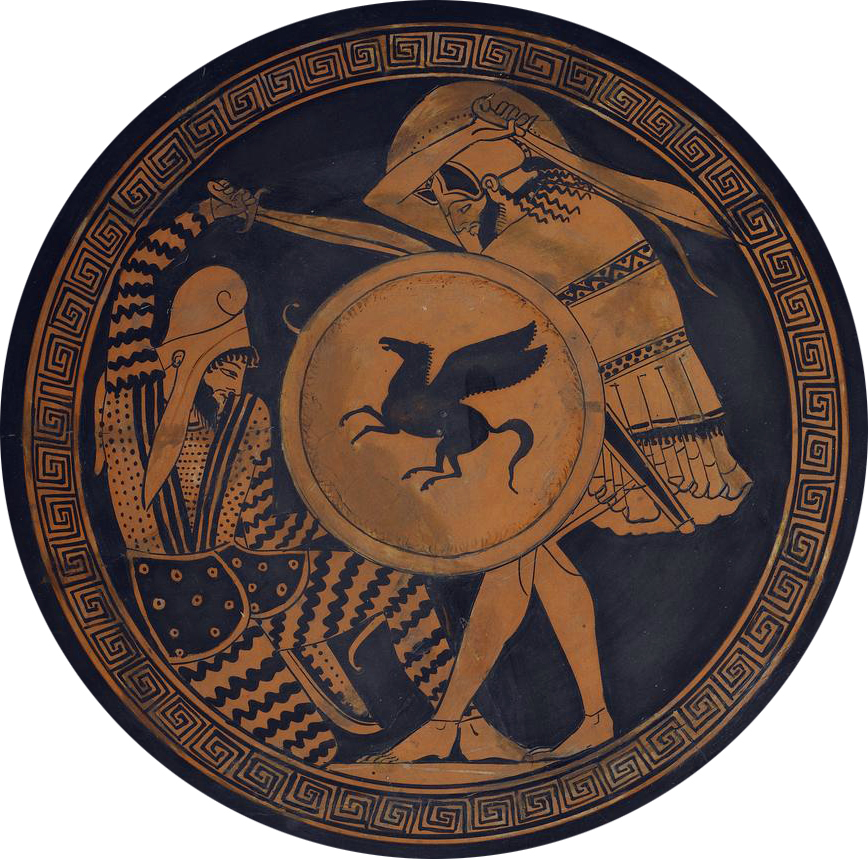
Two tales from the 479 BC Battle of Plataea remain to be told.
The first concerns Aristodemus, a Spartan infantryman who had been part of the 300-hoplite force that guarded the pass at Thermopylae against the full force of the Persian invasion in 480 BC. He and a companion, Eurytus, had been stricken with an eye disease which nearly blinded them and been sent away from the fighting by King Leonidas. Eurytus, feeling guilty, turned back to join his unit and had perished when the Spartans and their allies were wiped out. Aristodemus, on his return to Sparta, was treated with contempt for not having done the same. Herodotus recounts that “no man would give him a light for his fire or speak to him; he was called Aristodemus the Coward.” The same treatment was meted out to another soldier, Pantites, who had been dispatched from Thermopylae with a message — he was so soundly abused that he committed suicide.
When Spartan troops encountered the Persians again at Plataea the following year, Aristodemus was determined to wipe out his shame. He fought with suicidal frenzy and died. After the battle Herodotus said there was discussion about who had fought most bravely:
According to my judgment, he that bore himself by far the best was Aristodemus, who had been reviled and dishonoured for being the only man of the three hundred that came alive from Thermopylae; and the next after him in valour were Posidonius and Philocyon and Amompharetus. Nevertheless when there was talk, and question who had borne himself most bravely, those Spartans that were there judged that Aristodemus had achieved great feats because by reason of the reproach under which he lay he plainly wished to die, and so pressed forward in frenzy from his post, whereas Posidonius had borne himself well with no desire to die, and must in so far be held the better man. This they may have said of mere jealousy; but all the aforesaid who were slain in that fight received honour, save only Aristodemus; he, because he desired death by reason of the reproach afore-mentioned, received none.
The second story concerns this pillar which is erected in the heart of the Old City in Istanbul:
After their victory, the Greeks gathered metal from the spoils from the battle — swords, spear-heads, shields, chariot-fittings, etc. – and ordered a bronze column to made of three twisting serpents. This was erected at Delphi where it held a gold sacrificial cauldron, as a tribute to the gods. There it stood for over 700 years until the emperor Constantine had it removed in 324 to adorn the chariot race stadium in his new capital of Constantinople. The snake heads disappeared over time (though part of one can be seen in the nearby archaeological museum) but visitors in the 21st century can gaze upon the column and see relics of the climactic battle of the Persian wars 2500 years.
The second great Persian incursion into Greece in 480 had seen the invaders victorious on land at Thermopylae and defeated at sea at Salamis. Emperor Xerxes had returned to Asia but he had left a large army under Mardonius which he expected to complete the conquest of Hellas the following year.
Mardonius had been instrumental in putting down rebellions by Greek cities in Ionia but had not been chosen in 490 BC to be part of the first doomed Persian expedition which was defeated by the Athenians at Marathon. He was said to have been the driving force at the court of Xerxes in convincing the emperor to undertake another assault on the Greek mainland.
In the early part of 479 BC, Mardonius invested great effort in trying to pry Athens away from its coalition with the other cities who still defied Persia – Greeks were notoriously unstable in their alliances – but was unsuccessful. Consequently, he moved south into Attica, occupied Athens, and burnt it to the ground. This prompted the Athenian exiles to demand that Sparta and its allies act. They argued that it was the Athenian navy which had protected the Peloponnesus in 480 BC and if they didn’t get the military support they needed they would agree to Persian terms.
The Spartans responded and under Pausanias they led a multi-city force of hoplites and archers north against the Persians. Mardonius was reluctant to fight in the hilly terrain around Athens and so withdrew to the Boeotian plain where his cavalry could perform better.
On September 22 the two armies clashed outside Plataea. The troops of Mardonius were more numerous, including in their forces fighters from all across their empire as far away as India as well as Greeks from cities who had “medized” (bowed the knee to Persia). The Greeks on the other hand were more heavily armoured and in this mismatch they prevailed, killing the Persian general, routing his army, taking massive amounts of booty.
This battle and a near-simultaneous victory over Persian naval units at Mycale meant the end of the Persian threat to mainland Greece and the beginning of a new phase in the war.
And as Jesus passed forth from thence, he saw a man, named Matthew, sitting at the receipt of custom: and he saith unto him, Follow me. And he arose, and followed him. And it came to pass, as Jesus sat at meat in the house, behold, many publicans and sinners came and sat down with him and his disciples. And when the Pharisees saw it, they said unto his disciples, ‘Why eateth your Master with publicans and sinners?’ But when Jesus heard that, he said unto them, ‘They that be whole need not a physician, but they that are sick.’
Matthew seems to have been a publican, one of the hated class of tax-farmers collaborating with the Roman occupation regime, yet another of the acts of social inversion in the story of Jesus. The New Testament names him as one of the Twelve and a witness of the Ascension. Legend has him preaching to various nations, Israel, Persia and Ethiopia and tales abound of his martyrdom. He is the patron saint of accountants, bankers, bookkeepers, security guards, and stockbrokers.
The Gospel which bears his name was attributed to him for a long time but that attribution has been challenged in more recent days and is now doubted by most scholars.
In the illustration above Caravaggio depicts the moment that Jesus summons the unwitting tax collector to be one of his disciples, setting the scene in Renaissance Italy.
Clark Gable. Marlon Brando. Mel Gibson. Hollywood heart-throbs have thrice portrayed the English seaman who led a rebellion aboard His Majesty’s Ship Bounty in 1789.
Fletcher Christian was born in 1764 to a middling English family which fell into debt forcing him to take to a life in the navy. Despite his late start to his career at sea he proved to be a capable sailor and rose to the rank of master’s mate, a junior officer. Several times he served under Lieutenant William Bligh who asked him in 1787 to join the crew of Bounty on a mission to transport a thousand breadfruit plants from Tahiti to the West Indies where they would be grown to serve as food for the slave labour on plantations.
Unfortunately, the Bounty’s sailors found life on Tahiti with its tropical breezes, laidback lifestyle, and sexually complaisant women to be more attractive that the lash, hard labour, and salt beef that the navy offered. After five months of relative bliss they resented being called back to their duties, particularly resenting Bligh’s methods of discipline. On April 28, 1789 Fletcher Christian led a mutiny which captured Bligh and forced him and 18 loyalists into an open ship’s boat before sailing away.
Christian’s hope was to find an island where he and his men could hide from the Royal Navy. His revisit to Tahiti lost him half his men who preferred to remain there but he recruited (or, rather, kidnapped) a number of male and female Tahitians to join him in founding a colony — somewhere. He chose remote Pitcairn Island where he landed on January 23, 1790. After stripping Bounty of any useful items, Christian ordered the ship to be burnt to the waterline, making escape impossible.
Though Pitcairn was a tropical paradise, the behaviour of the mutineers was bestial. With a few years all of the sailors except one, and all of the Tahitian men had died, most of them murdered. Christian was cut down by a group of Tahitians while tending his garden. His descendants survive on the island to this day.
The Hundred Years War was one of the nastiest and most unnecessary conflicts in European history, waged on the flimsiest of pretexts and conducted, by the English at least, as a money-spinning proposition. It pitted a small and not-terribly-prosperous country against the richest and largest nation on the continent but England did surprisingly well for so long because of French disunity and, at critical moments, the superiority of dismounted bowman against heavy feudal cavalry.
One such moment occurred on this date in 1356 when an English army, led by Edward, “the Black Prince, heir to the throne, blundered into a much larger French force when returning from a raid. The result was the Battle of Poitiers and disaster for France.
The disparity in the size of the armies made Prince Edward look for a negotiated way out. The English offered to restore all the towns and castles which they had taken in the course of this campaign, to give up, unransomed, all their prisoners, and to bind themselves by oath to refrain for seven years from bearing arms against the king of France. But King Jean II, confident of victory, insisted on the Black Prince and a hundred of his best knights surrendering themselves as prisoners, a proposition which Edward and his army indignantly rejected.
When battle was joined the English longbow men repulsed charges by French knights, sending them into disarray and causing a large body of other cavalry to retreat without having seen action. Edward then charged with his own armoured horsemen and achieved victory by capturing Jean and one of his sons.
Jean was taken back to comfortable captivity in the Tower of London while an extortionate ransom was being negotiated. In the meantime France fell into chaos, peasant rebellions, and noble disunity from it took decades to recover.
The Axis powers of World War II were famous for their use of English-speaking radio personalities such as Lord Haw-Haw and Tokyo Rose as disseminators of propaganda. What is less well-known is the use of jazz and swing music by the Nazis in attempts to demoralize Western troops and civilian audiences.
Joseph Goebbels used the radio programme “Germany Calling”, first broadcast on this day in 1939, as a means of mocking enemy leaders and sowing discontent. In order to attract listeners in America and Britain he sanctioned musical numbers that were otherwise banned in Germany as being “Negermusik”, “degenerate”, “African”, or “Jewish”. He hired jazz musicians who had performed in underground clubs to do their patriotic duty on radio as “Charlie and His Orchestra”.
Here are the lyrics of Charlie’s version of “You’re Driving Me Crazy”, 1940.
Here is Winston Churchill’s latest tearjerker: Yes, the Germans are driving me crazy! thought I had brains, But they shattered my planes. They built up a front against me, It’s quite amazing, Clouding the skies with their planes.
This first clip is an early broadcast. The second two date from 1944 as the invasion of western Europe drew closer.
Announcers like Lord Haw-Haw were treated harshly after the war because they tended to be citizens of Allied powers but the musicians of Charlie’s orchestra went on to have successful careers in post-Hitler Germany.
A rather flamboyant account by a nineteenth-century English writer of the fall of Marie Jean Antoine Nicolas de Caritat, Marquis of Condorcet, French philosopher and mathematician:
Condorcet was born in Picardy in 1743. Early in life he distinguished himself as a mathematician, and his labours in the development of the differential and integral calculus, will preserve his name in the history of science. Associating with Voltaire, Helvetius, and D’Alembert, he became a sharer in their opinions, and a social reformer with an almost fanatical abhorrence of the present and the past, and with an invincible assurance in a glorious destiny for humanity in the future. The outbreak of the revolution was to him as the dawn of this new era when old wrongs should pass away and justice and goodness should rule the world. He wrote for the revolutionary newspapers, and was an indefatigable member of the Jacobin club, but he was less effective with his tongue than his pen. A cold and impassive exterior, a stoical Roman countenance, imperfectly expressed the fiery energy of his heart, and caused D’Alembert to describe him as ‘a volcano covered with snow.’
When the rough and bloody business of the revolution came on, he was unable, either from timidity or gentle breeding, to hold his own against the desperadoes who rose uppermost. During the violent struggle between the Girondist and Mountain party, he took a decided part with neither, provoking Madame Roland to write of him, ‘the genius of Condorcet is equal to the comprehension of the greatest truths, but he has no other characteristic besides fear. It may be said of his understanding combined with his person, that he is a fine spirit absorbed in cotton. Thus, after having deduced a principle or demonstrated a fact in the Assembly, he would give a vote decidedly opposite, overawed by the thunder of the tribunes, armed with insults and lavish of menaces. Such men should be employed to write, but never permitted to act.’ This mingling of courage with gentleness and irresolution caused him, says Carlyle, ‘to be styled, in irreverent language, mouton enrage’—peaceablest of creatures bitten rabid.’
Robespierre, in July 1793, issued a decree of accusation against Condorcet. At the entreaty of his wife he hid himself in an attic in an obscure quarter of Paris, and there remained for eight months without once venturing abroad. He relieved the weariness of his confinement by writing a treatise on his favourite idea, The Perfectibility of the Human Race; and had he been able to endure restraint for a few months longer, he would have been saved; but he grew anxious for the safety of the good woman who risked her life in giving him shelter, and the first verdure of the trees of the Luxembourg, of which he had a glimpse from his window, brought on an over-powering desire for fresh air and exercise. He escaped into the streets, passed the barriers, and wandered among thickets and stone-quarries in the outskirts of Paris. Wounded with a fall, and half-dead with hunger and fatigue, he entered. a cabaret in the village of Clamart, and asked for an omelet. ‘How many eggs will you have in it?’ inquired the waiter. ‘A dozen,’ replied the starving philosopher, ignorant of the proper dimensions of a working man’s breakfast. The extraordinary omelet excited suspicion. Some present requested to know his trade. He said, a carpenter, but his delicate hands belied him. He was searched, and a Latin Horace and an elegant pocket-book furnished unquestionable evidence that he was a skulking aristocrat. He was forthwith arrested, and marched off to prison at Bourg-la-Reine. On the way, he fainted with exhaustion, and was set on a peasant’s horse. Flung into a damp cell, he was found dead on the floor next morning, 24th March 1794. He had saved his neck from the guillotine by a dose of poison he always carried about with him in case of such an emergency.
Condorcet’s works have been collected and published in twenty-one volumes. The Marquise de Condorcet long survived her husband. She was one of the most beautiful and accomplished women of her day, and distinguished herself by an elegant and correct translation into French of Adam Smith’s Theory of the Moral Sentiments.