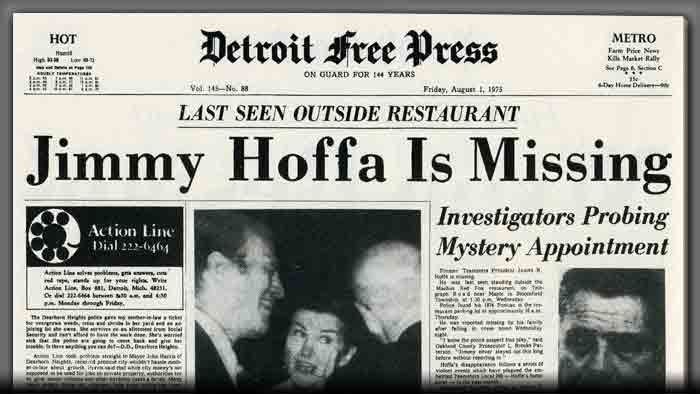
James Riddle Hoffa (1913-75) was a working-class kid who got into the union-organizing business while working in a grocery store. By the time he was in his 20s he was working for the International Brotherhood of Teamsters, a union of truckers and warehouse workers. As Hoffa rose through its ranks, he helped the Teamsters organize on a national basis and become one of the most powerful unions in America, able to disrupt the country’s transport of goods with strikes and boycotts. In order to do so, Hoffa and the Teamsters developed links with organized crime, which wanted to get its hands on the pension fund. He became union vice-president in 1952 and president in 1958, a position he held until 1971.
The corruption of the Teamsters was well-known to authorities in the government and labour circles. The union was expelled from the AFL-CIO, the umbrella organization for organized labour, and Attorney-General Robert Kennedy went after Hoffa and the Teamsters with a vengeance. He was convicted in 1964 of jury-tampering and fraud and served time in prison from 1967-71, though it was widely-believed he continued to control the union through stooges. He was released by President Nixon (some say in return for an exchange of money and guarantee of union support) but only on the condition that he refrain from Teamster activity until 1980.
Hoffa’s attempts to regain control of the Teamsters was resisted from many inside the union and may have disrupted plans by organized crime to work closely with those now in charge of the union. On the afternoon of July 30, 1975 he was scheduled to meet Anthony Giacalone and Anthony Provenzano, two Mafia bosses, at a restaurant in Detroit but he was never seen again. Though his body has never been recovered (its position was said to be under various highways, in various fields or beneath Giants Stadium in New Jersey) the consensus is that he was murdered very soon after his disappearance. Hoffa’s son James has been president of the Teamsters since 1999.
A great wedding and a terrible marriage. On this day in 1981, Lady Diana Spencer and His Royal Highness Prince Charles Philip Arthur George, Prince of Wales, KG, KT, GCB, OM, AK, CC, QSO, PC, ADC, Earl of Chester, Duke of Cornwall, Duke of Rothesay, Earl of Carrick, Baron of Renfrew, Lord of the Isles and Prince and Great Steward of Scotland, Field Marshal, Admiral of the Fleet in the Royal Navy, Marshal of the Royal Air Force and Colonel in the Papua New Guinea Defence Force, (MA Cantab), were wed at St Paul’s Cathedral in London in a ceremony watched by 3,000 in the church, 750,000,000 on television around the world. Among the guests were most of the crowned heads of the planet, including the dispossessed claimants to monarchies that had ceased to exist, such as Greece, Romania, Bulgaria and Yugoslavia.
As heir to the throne it was essential that Charles should wed. Though he had had numerous girl friends and mistresses before his proposal to Lady Diana, none of these women were considered suitable marriage partners or a future Queen — soft porn actresses, wives of his friends, and Catholic princesses all fell short of the required standard. It does not appear that he was much in love with his intended spouse but she was young, beautiful, of noble birth, and a virgin: four qualities rarely found in the same woman in England at the time. They became engaged in February 1981 and plans for a sumptuous ceremony were set in motion immediately.
The bride wore a gown of ivory silk taffeta, decorated with lace, hand embroidery, sequins, and 10,000 pearls with a 25-foot train of ivory taffeta and antique lace. The dress had to be altered considerably as Diana had suffered a weight loss due to bulimia. (One critic called the outfit “too much dress, too little princess.”) Charles wore the uniform of a naval commander, festooned with the decorations of the Orders of the Garter, Thistle, and the Bath. Three choirs, three orchestras and a brass ensemble provided the music; the Archbishop of Canterbury, the Dean of St Paul’s, a Catholic cardinal and sundry Protestant clerics conducted the service.
The marriage soon fell apart. Charles insisted on the royal prerogative of keeping a mistress and Diana took to preying on other women’s husbands.
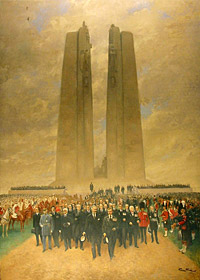
After World War I Canadians were anxious to remember their deeds and their dead in monumental form; all across the country hundreds upon hundreds of local statues, cairns, and cenotaphs were erected. The government also planned to memorialize battle sites in Europe with a series of identical monuments in Belgium and France and held a competition for designs. When over 160 proposals were submitted in 1921, what emerged was overwhelming support for a single spectacular construction based on a design by architect Walter Allward, on Vimy Ridge where Canadian troops had won a bloody victory in 1917. France agreed to donate land to Canada in perpetuity for such a memorial, provided Canada was responsible for its upkeep.
The monument was years in the making, partly because of the difficulty in finding and transporting exactly the right stone. The original plan called for marble but this was deemed to be too susceptible to erosion in the climate of northern France and builders chose instead a type of limestone found in Croatia — it had been used in Diocletian’s palace at Split built 1,650 years earlier and was still in fine shape. 6,000 tonnes of the stone had to be quarried and moved to Vimy while 11,000 tonnes of concrete and hundreds of tonnes of steel were being employed on the foundation.
An enormous pilgrimage of veterans was planned for the official dedication in 1936. Politicians, military units, bands, and clergy were in abundance, presided over by King Edward VIII, performing one of his few official duties before his abdication.
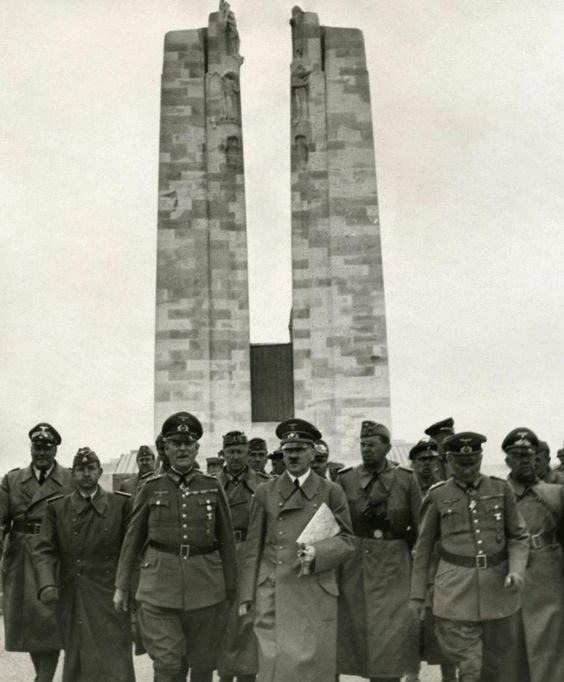
During World War II, the site was in German-occupied France and rumours spread that the Nazis would desecrate the memorial. In order to dispel such stories the German government published pictures of Adolf Hitler triumphantly visiting the monument and showing that it was still being preserved.
At Queenston Heights and Lundy’s Lane, Our brave fathers, side by side, For freedom, homes and loved ones dear, Firmly stood and nobly died; And those dear rights which they maintained, We swear to yield them never! Our watchword evermore shall be “The Maple Leaf forever!”
Those pesky Americans keep trying to invade Canada and keep failing. Yankee intruders were forced to retreat from Montreal and Quebec during their ill-advised War of Independence and in the aftermath of their Civil War the Fenians were repelled from New Brunswick, Ontario, Quebec and Manitoba. The only American defeats we actually sing about, however, are those drubbings we dealt them in the War of 1812, at Queenston Heights and Lundy’s Lane.
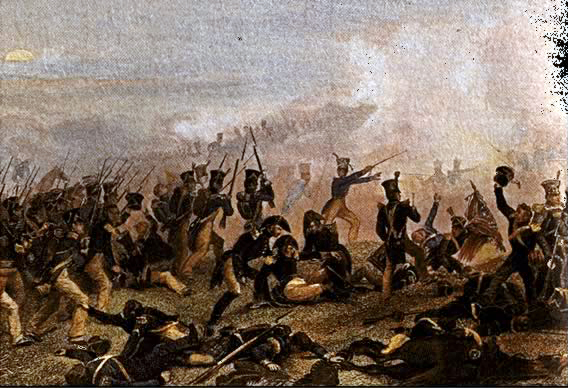
Lundy’s Lane was along a commanding piece of ground in the Niagara peninsula and there British and Canadian troops were attacked by an American force led by Generals Jacob Brown and Winfield Scott who had been successfully racking up victories in Ontario since early July. This battle was particularly bloody with hundreds of casualties from artillery duels, rocket barrages, friendly fire, and bayonet charges. Ground and guns changed hands several times until the bloodied Americans withdrew. Both sides had exhibited considerable bravery but no military genius. The result of the battle was a thwarted American thrust and a shift in the balance of power in the area to the Canadians and British.
A well-known part of recent Manitoba history is the flight (and descent) of the Gimli Glider, a tale of breath-taking incompetence, serial disasters and unearthly flying skills. The story is best told in the Wikipedia entry, which is reproduced here.
On July 22, 1983, Air Canada’s Boeing 767 (registration C-GAUN) flew from Toronto to Edmonton where it underwent routine checks. The next day, it was flown to Montreal. Following a crew change, it departed Montreal as Flight 143 for the return trip to Edmonton (with a stopover in Ottawa), with Captain Robert (Bob) Pearson, 48, and First Officer Maurice Quintal at the controls. Captain Pearson was a highly experienced pilot, having accumulated more than 15,000 flight hours. First Officer Quintal was also very experienced, having logged over 7,000 hours of total flight time.
On July 23, 1983, Flight 143 was cruising at 12,500 metres (41,000 ft) over Red Lake, Ontario. The aircraft’s cockpit warning system sounded, indicating a fuel pressure problem on the aircraft’s left side. Assuming a fuel pump had failed the pilots turned it off, since gravity should feed fuel to the aircraft’s two engines. The aircraft’s fuel gauges were inoperative because of an electronic fault indicated on the instrument panel and airplane logs.
During the flight, the management computer indicated that there was still sufficient fuel for the flight but only because the initial fuel load had been incorrectly entered; the fuel had been calculated in pounds instead of kilograms by the ground crew and the erroneous calculation had been approved by the flight crew. Effectively, this error meant that less than half the amount of intended fuel had been loaded. Because the incorrect fuel weight data had been entered into the system, it was providing incorrect readings. A few moments later, a second fuel pressure alarm sounded for the right engine, prompting the pilots to divert to Winnipeg. Within seconds, the left engine failed and they began preparing for a single-engine landing.
As they communicated their intentions to controllers in Winnipeg and tried to restart the left engine, the cockpit warning system sounded again with the “all engines out” sound, a long “bong” that no one in the cockpit could recall having heard before and was not covered in flight simulator training. Flying with all engines out was something that was never expected to occur and had therefore not been covered in training. Seconds later, with the right-side engine also stopped, the 767 lost all power, and most of the instrument panels in the cockpit went blank.
The 767 was one of the first airliners to include an electronic flight instrumentation system, which operated on the electricity generated by the aircraft’s jet engines. With both engines stopped, the system went dead, leaving only a few basic battery-powered emergency flight instruments. While these provided sufficient information with which to land the aircraft, a vertical speed indicator – that would indicate the rate at which the aircraft was descending and therefore how long it could glide unpowered – was not among them.
On airliners the size of the 767, the engines also supply power for the hydraulic systems without which the aircraft cannot be controlled. Such aircraft are therefore required to accommodate this kind of power failure. With the 767, this is usually achieved through the automated deployment of a hydraulic pump (and on some airplanes a generator) driven by a small turbine, which is driven by a propeller that rotates because of the forward motion of the aircraft in the manner of a windmill. As the Gimli pilots were to experience on their landing approach, a decrease in this forward speed means a decrease in the power available to control the aircraft.
In line with their planned diversion to Winnipeg, the pilots were already descending through 35,000 feet (11,000 m) when the second engine shut down. They immediately searched their emergency checklist for the section on flying the aircraft with both engines out, only to find that no such section existed. Captain Pearson was an experienced glider pilot, so he was familiar with flying techniques almost never used in commercial flight. To have the maximum range and therefore the largest choice of possible landing sites, he needed to fly the 767 at the optimal glide speed. Making his best guess as to this speed for the 767, he flew the aircraft at 220 knots (410 km/h; 250 mph). First Officer Maurice Quintal began to calculate whether they could reach Winnipeg. He used the altitude from one of the mechanical backup instruments, while the distance travelled was supplied by the air traffic controllers in Winnipeg, measuring the distance the aircraft’s echo moved on their radar screens. In 10 nautical miles (19 km; 12 mi) the aircraft lost 5,000 feet (1,500 m), giving a glide ratio of approximately 12:1.
At this point, Quintal proposed landing at the former RCAF Station Gimli, a closed air force base where he had once served as a Royal Canadian Air Force pilot. Unbeknownst to Quintal or to the air traffic controller, a part of the facility had been converted to a race track complex, now known as Gimli Motorsports Park. It included a road race course, a go-kart track, and a dragstrip. A Canadian Automobile Sport Clubs-sanctioned sports car race hosted by the Winnipeg Sports Car Club was underway the Saturday of the incident and the area around the decommissioned runway was full of cars and campers. Part of the decommissioned runway was being used to stage the race.
Without power, the pilots used a gravity drop, which causes gravity to lower the landing gear and lock it into place. The main gear locked into position, but the nose wheel did not; this later turned out to be advantageous. As the aircraft slowed on approach to landing, the ram air turbine generated less power, rendering the aircraft increasingly difficult to control.
As the runway drew near, it became apparent that the aircraft was coming in too high and fast, raising the danger of running off the runway before it could be stopped. The lack of hydraulic pressure prevented flap/slat extension that would have, under normal landing conditions, reduced the stall speed of the aircraft and increased the lift coefficient of the wings to allow the aircraft to be slowed for a safe landing. The pilots briefly considered a 360-degree turn to reduce speed and altitude, but decided that they did not have enough altitude for the manoeuvre. Pearson decided to execute a forward slip to increase drag and lose altitude. This manoeuvre is commonly used with gliders and light aircraft to descend more quickly without increasing forward speed.
Complicating matters was the fact that with all of its engines out, the plane made virtually no noise during its approach. People on the ground thus had no warning of the impromptu landing and little time to flee. As the gliding plane closed in on the runway, the pilots noticed that there were two boys riding bicycles within 1,000 feet (300 m) of the projected point of impact. Captain Pearson would later remark that the boys were so close that he could see the looks of sheer terror on their faces as they realized that a commercial airliner was bearing down on them.
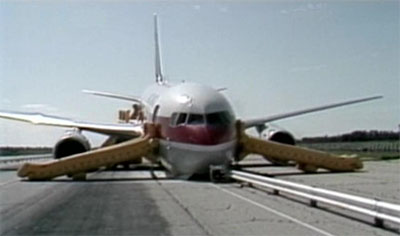
Two factors helped avert a potential disaster: the failure of the front landing gear to lock into position during the gravity drop, and the presence of a guardrail that had been installed along the centre of the decommissioned runway to facilitate its use as a racetrack. As soon as the wheels touched down on the runway, Pearson braked hard, blowing out two of the aircraft’s tires. The unlocked nose wheel collapsed and was forced back into its well, causing the aircraft’s nose to slam into, bounce off, and then scrape along the ground. This additional friction helped to slow the airplane and kept it from careening into the crowds surrounding the runway. After the aircraft had touched down, the nose began to scrape along the guardrail in the centre of the tarmac; Pearson applied extra right brake, which caused the main landing gear to straddle the guardrail creating additional drag that further reduced the speed. Air Canada Flight 143 came to a final stop on the ground 17 minutes after running out of fuel.
There were no serious injuries among the 61 passengers or the people on the ground. A minor fire in the nose area was extinguished by racers and course workers armed with fire extinguishers. Because the aircraft’s nose had collapsed onto the ground, its tail was elevated and there were some minor injuries when passengers exited the aircraft via the rear slides, which were not long enough to sufficiently accommodate the increased height.
In 1920 the British government undertook the rule of some parts of the former Turkish Empire. In the form of a mandate from the League of Nations, Britain occupied Palestine and Transjordan with their mixture of Arabs and Jews, Christians and Muslims. It was an unhappy regime with all sides calling for the withdrawal of the foreigners and independence for the various religious groups; Jews fought Arabs, Arabs fought Jews, and both sides took shots at the British.
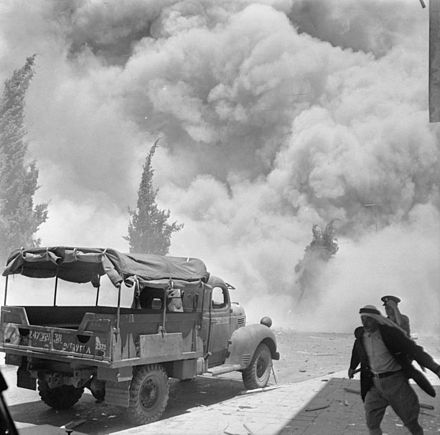
After the end of World War II, Arabs and Jews continued their attacks on each other and on the British occupying force, who had no intention of staying but who had to maintain order until an international settlement was agreed upon to divide the land between Jews and Palestinians. An obvious target was the King David Hotel, headquarters of the Secretariat of the Government of Palestine and of the British Armed Forces in the region. A hard-line group of Jewish terrorists, the Irgun, received permission from the umbrella group guiding the Zionist military movement to attack the hotel and planned to plant hundreds of pounds of explosives in milk cans in the basement. This they did at noon on July 22; phone calls warning of the bombs may — or may not — have been made, but no evacuation had taken place before the devices exploded, bringing down a wing of the hotel.
The explosions killed 91 people, a mixture of British officials and clerks, Jews (including some supporters of Irgun), foreign visitors and Arabs. An outraged Britain clamped down on Jewish life in Jerusalem, achieving Irgun’s aim of causing further discontent with the Mandate occupation. To this day, the Israeli government treats the bombers as heroes.
As Muslim conquest of the southern shore of the Mediterranean proceeded, taking first Egypt, then Carthage, then Caesarea, it was inevitable that it would reach across the Straits to Spain. In 711, Arab and Berber forces from what is now Morocco, crossed the channel to the Visigothic kingdom, at the invitation of one of the factions in a civil war, and went on to subdue almost all of the Iberian peninsula.
The Visigoths were a Germanic tribe that had invaded Hispania in the 5th century, driving out other earlier northen intruders such as the Vandals (who left behind the name Andalusia — land of the Vandals) and the Suevi. They were Arian Christians when they first arrived but as they gradually became more civilized they adopted the Catholic religion of their subjects. Despite their faith, they remained a quarrelsome and murderous bunch, so fond of killing their own kings, that the Romans laughingly called assassination the morbus Gothicus, the Gothic Disease. It was one of their frequent tussles for the throne that the Muslim army was able to take advantage of.
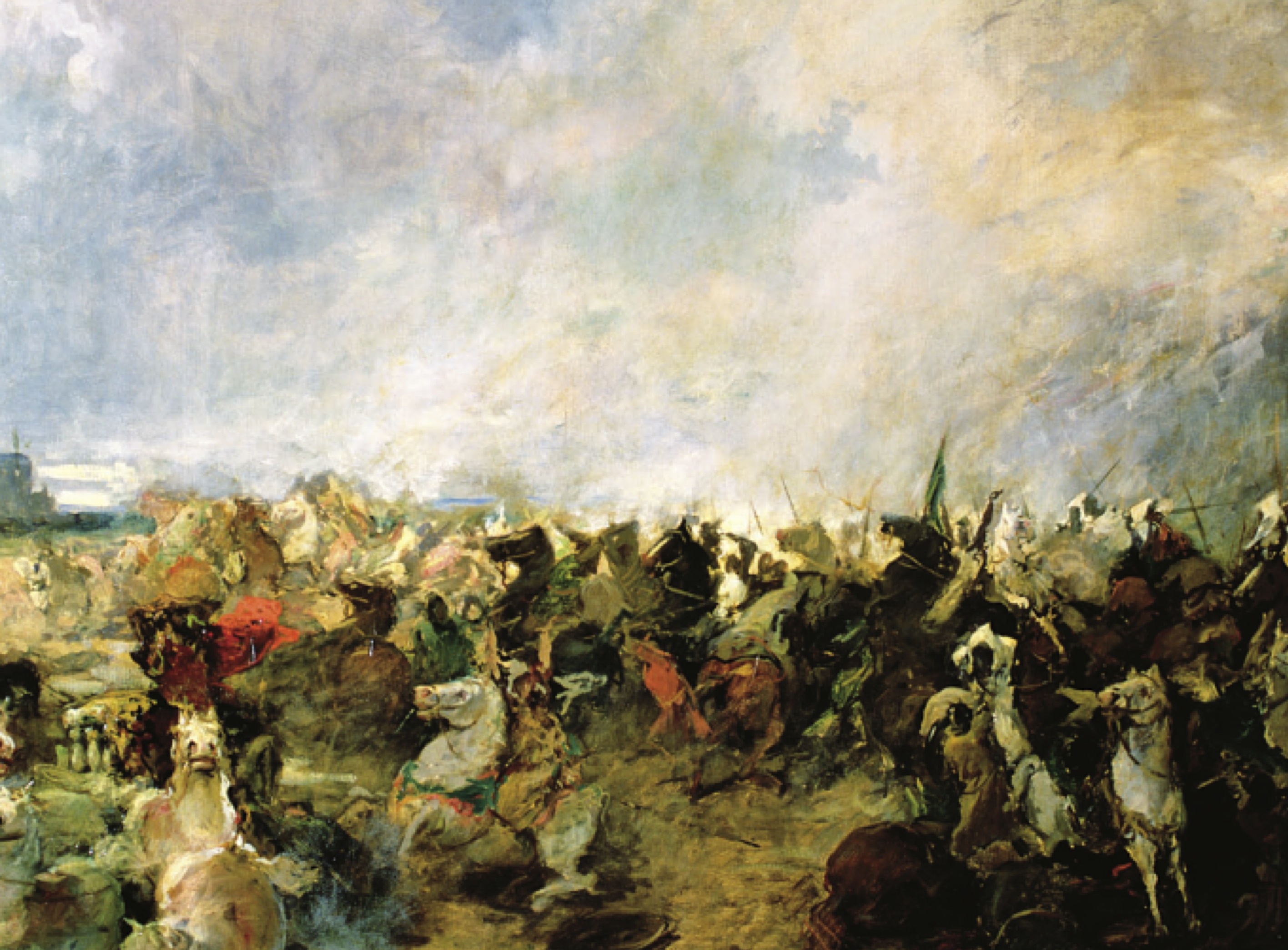
The leader of the Arab-Berber army was Tariq ibn Ziyad (after whom Gibraltar – Jib-al-Tariq – is named). He probably did not suspect that his expedition would be so successful but it appears that the victory on this day at the Battle of Guadalete killed the Visigothic king Roderic and much of his warrior class, leaving a political vacuum which the Muslims exploited over the next couple of years. By 713-14 they had reached the Pyrenees, leaving only the northwest corner of Spain in the hands of Christians. The Moorish occupation of the peninsula would be ended only in 1492 with the fall of Granada to Ferdinand and Isabella.
In the long and squalid annals of the Kennedy family, few incidents are more shameful than the behaviour of Senator Ted Kennedy in the Chappaquiddick incident.
Edward Moore Kennedy was the last remaining son of the famous clan. Though young and already tarnished by scandal (expelled from Harvard for cheating) he had been elected to the Senate for Massachusetts in 1962 and was the white hope of left-wing Democrats who expected he would use the memory of his assassinated brothers to ascend to the White House. That plan was dealt a fatal blow in the aftermath of a July 1969 party, held to celebrate the “Boiler Room Girls”, a group of six young women who had worked on Robert Kennedy’s campaign the previous year. All the women were single and in their twenties; all the men attending were married.
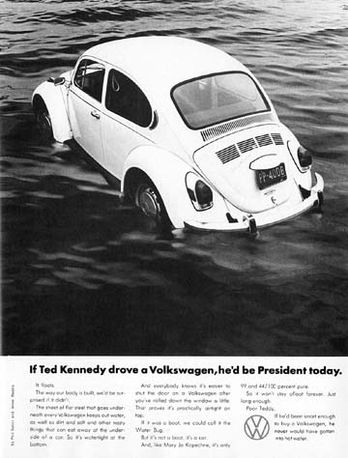
At about 11:15 p.m., Kennedy and one of the women, Mary Jo Kopechne, left the party and drove off in Kennedy’s Oldsmobile. Over an hour later the car, with two people in it, was spotted by a policeman parked on a rural road; when the man approached the car, it departed in a cloud of dust. Shortly thereafter, the car drove off a bridge into the water where it overturned and sank, ending up on its roof. Kennedy was able to escape and walked to the party where he alerted friends to the accident and the fact that Ms Kopechne was still under water. With two companions Kennedy returned to the car where they tried in vain to rescue the trapped woman. Though his friends insisted that he report the incident, Kennedy, instead, dove into the water to swim across the channel and go back to his hotel. There he complained about other noisy guests and went to sleep. In the morning the submerged car was noticed by fishermen and reported to the police; Kennedy and his friends had still not made any contact with the authorities until he heard on the radio that a body had been found in his car. He then attended the police station and dictated a short statement (at variance with the facts).
Despite the fact that the police diver who recovered the body said that Ms Kopechne had survived some hours in the car until the trapped air ran out and that she could have been rescued if Kennedy had called for help, the affair was soon dispensed with. No autopsy was held; Kennedy was convicted only of leaving the scene of a crash. His driver’s license was temporarily suspended. The incident, however, showed Kennedy in the worst possible light and the stink of it prevented Kennedy from daring to run for the presidency until an unsuccessful bid for the Democratic nomination in 1980. Even then he was dogged by the memory of Chappaquiddick when his opponent Jimmy Carter injected it into the campaign. The good people of Massachusetts, however, kept returning Teddy to the Senate, until his death in 2009.
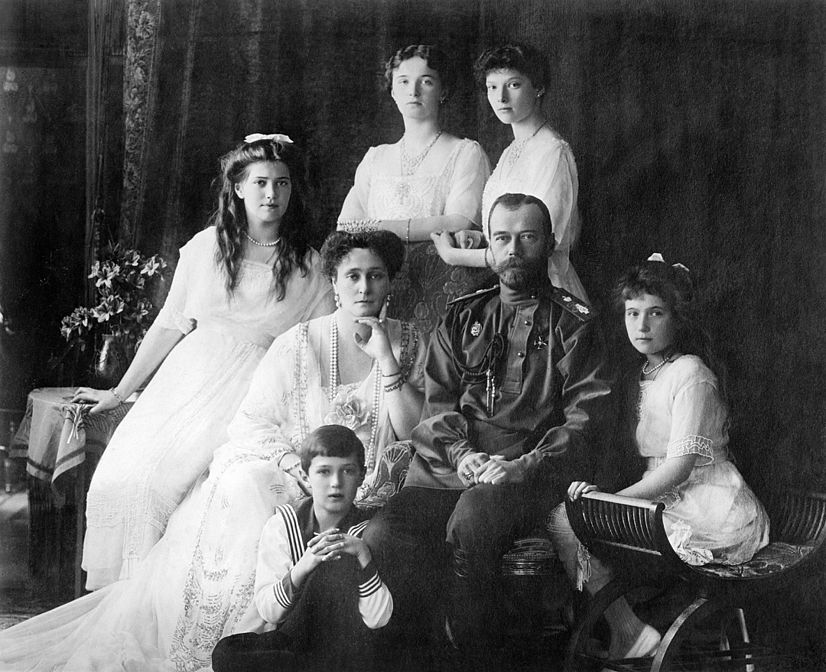
A revolution in February 1917 overthrew the house of Romanov and ended the tsarist autocracy in Russia. Tsar Nicholas II was a decent man but a stubborn and incompetent ruler; he and his German-born wife had grown increasingly unpopular and their deposition at the hands of democratic revolutionaries was well-received in the country. The provisional government imprisoned the royal couple, their chronically-ill son, and four daughters in relative comfort in the Urals, with the hope of sending them into exile. However, the Bolshevik coup dropped the family into the hands of people with little thought of mercy. For Lenin’s Communists, Nicholas was a class enemy whose presence abroad would only encourage opposition to world revolution.
On the night of July 16-17, the royal family, a doctor, and three servants were led to a basement and a death sentence was pronounced against them. Seven executioners then shot, bludgeoned, and bayoneted the victims and disposed of their mutilated bodies in crude fashion. A press release by the local soviet read:
In view of the enemy’s proximity to Yekaterinburg and the exposure by the Cheka [Bolshevik secret police] of a serious White Guard plot with the goal of abducting the former Tsar and his family… In light of the approach of counterrevolutionary bands toward the Red capital of the Urals and the possibility of the crowned executioner escaping trial by the people (a plot among the White Guards to try to abduct him and his family was exposed and the compromising documents will be published), the Presidium of the Ural Regional Soviet, fulfilling the will of the Revolution, resolved to shoot the former Tsar, Nikolai Romanov, who is guilty of countless, bloody, violent acts against the Russian people.
In 1979, the bodies of Nicholas, Alexandra, their servants and four children were discovered but it was not until 2007 that the bodies of Alexei and Maria were identified. The royal family is now entombed together in Peter and Paul Cathedral, St Petersburg.
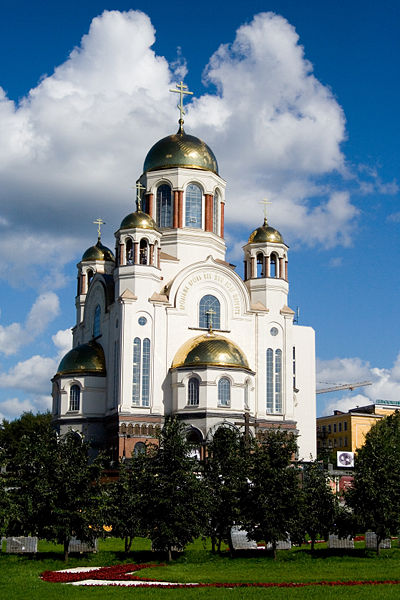
Many of the execution squad met their own grisly ends, either killed by angry peasants or shot by their own party in purges of the Stalin era. A cathedral has been erected over the site of the murders.
In the early summer of 1381 the English peasantry, oppressed by the latests in a series of increased poll taxes, rose in rebellion. The most serious of these risings was that of the men of Kent. Led by Wat Tyler, the peasant army grew to number in the thousands, able to take several towns, including Canterbury, burning tax records and opening the jails. Among the prisoners freed was John Ball (c. 1338-81) a “hedge-priest”, or excommunicated cleric, who may well have been of a Lollard church.
Ball accompanied the rebels in their assault on London and in their attempt to force a meeting with the young king Richard II. When the peasant army was camped on Blackheath outside London he spoke to them of revolution in terms they could understand. “When Adam dalf, and Eve span” he asked [When Adam was digging and Eve was at her spinning], “who was thanne a gentilman? From the beginning all men were created equal by nature, and that servitude had been introduced by the unjust and evil oppression of men, against the will of God, who, if it had pleased Him to create serfs, surely in the beginning of the world would have appointed who should be a serf and who a lord”. Ball ended by recommending “uprooting the tares that are accustomed to destroy the grain; first killing the great lords of the realm, then slaying the lawyers, justices and jurors, and finally rooting out everyone whom they knew to be harmful to the community in future.”
Though Wat Tyler was murdered, the king promised to honour the promise he made to end serfdom, and the peasants dispersed. When London was free of the threat, Richard II ordered a mass round-up and execution; Ball was arrested in Coventry, and condemned to death by being hanged, drawn and quartered in the presence of the king. His head was exhibited on London Bridge as a warning to would-be rebels.