November 5

Home / Today in History / November 5

1605 The Gunpowder Plot exposed.

images

Remember, remember the Fifth of November:
Gunpowder, treason and plot!
I can think of no reason why gunpowder treason
Should ever be forgot.

The open practice of Roman Catholicism had been banned since 1559 but many English families remained loyal to the Catholic church. They had hoped that the accession of King James to the throne in 1603 would lead to religious toleration. James was, after all, the son of Mary Queen of Scots the Catholic martyr, and a man known to be in favour of peace. But both extreme Protestants, the Puritans, and Catholics were to be disappointed by the king’s religious policies. It was the opinion of William Cecil, the advisor to James, that “the state would never be in safety, where there was toleration of two religions. For there is no enmity so great as that of religion, and they that differ in the service of God can never agree in service of their country”.

A group of disappointed Catholics decided that violence was the answer. They planned to blow up the opening of the 1605 Parliament and, at a stroke, wipe out the leadership of Protestant England. The king, his sons, the English aristocracy, and all of the bishops of the Anglican Church were expected to die in the explosion. Princess Elizabeth (age 9) would be abducted and made a figure-head queen while a general uprising of Catholics would seize the nation’s strong points. Barrels of gunpowder had been placed under the Houses of Parliament but one of the conspirators foolishly warned a Catholic nobleman to stay away from the opening and he alerted the authorities. Explosives expect Guy Fawkes was arrested at the site and his fellow conspirators were rounded up; they were all tried and gruesomely executed.

November 5 became known as Guy Fawkes Day and the date became a national, patriotic, anti-Catholic holiday for centuries.

November 3

Home / Today in History / November 3

361 The Christian emperor Constantius II dies, leaving the throne of the Roman Empire to his cousin Julian, a born-again pagan. Julian, known to history as the Apostate, will die in battle less than two years later, the last ruler of the Constantinian dynasty. The Roman empire will thereafter always be ruled by a Christian.

1534 Henry VIII establishes the Church of England. Needing to abandon the jurisdiction of the pope to gain legitimacy for his divorce to Katherine of Aragon and marriage to Anne Boleyn, Henry has his Parliament pass the Act of Supremacy, naming the king “the only supreme head on Earth of the Church of England”.

1491_henry_viii

1793 The execution of Olympe de Gouges. Born Marie Gouze in 1748 Olympe lived a life of scandal and radicalism. She advocated sexual freedom, easy divorce, an end to slavery, and political rights for women. An early supporter of the French Revolution, she was arrested by the Jacobin faction who were beginning their Reign of Terror. On this date she was executed by the Paris guillotine.

November 2

Home / Today in History / November 2

1917 The Balfour Declaration. A letter from Foreign Secretary Arthur Balfour to Walter Rothschild and the Zionist Federation declares British support for “the establishment in Palestine of a national home for Jewish people” providing “that nothing shall be done which may prejudice the civil and religious rights of existing non-Jewish communities”.

1917 The Military Revolutionary Committee of the Petrograd Soviet (under control of V.I. Lenin and the Bolsheviks) meets to lay the groundwork for a rebellion against the democratic government of Russia.

1947 The Flight of the Spruce Goose. The largest fixed-wing aircraft ever built takes its first, and only, flight with designer Howard Hughes at the controls. Despite the nickname the H-4 seaplane was built from fir.

h-4_hercules_2

1963 The assassination of the Diem brothers. An American-backed coup by elements of the South Vietnamese Army deposes President Ngo Dinh Diem, murdering him and his brother Ngo Dihn Nhu.

November 1

all-saints

All Saints’ Day

All Saint’s Day, All Hallow’s Day, or Hallowmas is a commemoration of all of those who are part of the heavenly communion of saints. Though it was customary since the days of early Christianity to honour martyrs on the anniversary of their death, a day to remember all saints seems to have begun in the West after the dedication of the old pagan temple, the Pantheon, as the Church of St Mary and the Martyrs. However,  the date of November 1 was the decision of Pope Gregory III in the 730s. (Some historians have tried to link this tradition to similar pagan days to honour the dead such as the Celtic Samhain.)

The Catholic Church takes the word “saint” to be less inclusive than Protestants for whom the term takes in all the faithful dead. For the latter, November 1 is a day to remember family and congregational members who have passed away and in many Christian cultures it is a time to visit cemeteries, tidy up grave sites, and light candles.

November 1

Home / Today in History / November 1

lissabon-2

1755 The Lisbon Earthquake

On the morning of November 1, All Saint’s Day, at 9:40, a massive earthquake, followed a tsunami, and a series of devastating fires destroyed the city of Lisbon and wrought havoc on much of the Portuguese coastal area. The quake’s effects were felt as far away as Brazil and Greenland. It is estimated that 40,000-50,000 people may have died with many more injured or homeless.

About 85% of the city was destroyed. Palaces, hospitals, churches, homes and government buildings were obliterated. Precious libraries and art work were lost forever as well as much of the architecture of earlier ages. (Those who find the distinctive Portuguese late Gothic style known as Manueline to be too ugly for words will not rue the destruction of the Ribeira Palace.)

The saviour of Lisbon was the Prime Minister Sebastião de Melo, later ennobled as the Marquis of Pombal. His immediate task was to “bury the dead and heal the living” but important decisions were to be made about the future of the city. Should it be abandoned, rebuilt with scavenged material, or levelled and rebuilt from scratch? It was the latter course that was adopted. The dark, narrow and winding streets of medieval Lisbon were gone, and a beautiful new central Lisbon emerged with wide streets laid out in a grid, spacious squares and a handsome neoclassical architecture that came to be known as Pombaline. These new buildings were designed to be earthquake-proof, one of the earliest attempts at anti-seismic building; many of them were pre-fabricated outside the city and moved quickly into place.

Though Lisbon was confidently rebuilt, the disaster seems to have shaken European philosophy as well. Voltaire used the catastrophe to mock the optimism of Leibniz and Pope, asking “And can you then impute a sinful deed/ To babes who on their mothers’ bosoms bleed?/ Was then more vice in fallen Lisbon found,/ Than Paris, where voluptuous joys abound?/Was less debauchery to London known,/ Where opulence luxurious holds the throne?” Kant and Rousseau also weighed in on the subject.

October 31

Home / Today in History / October 31

large

1940 End of the Battle of Britain

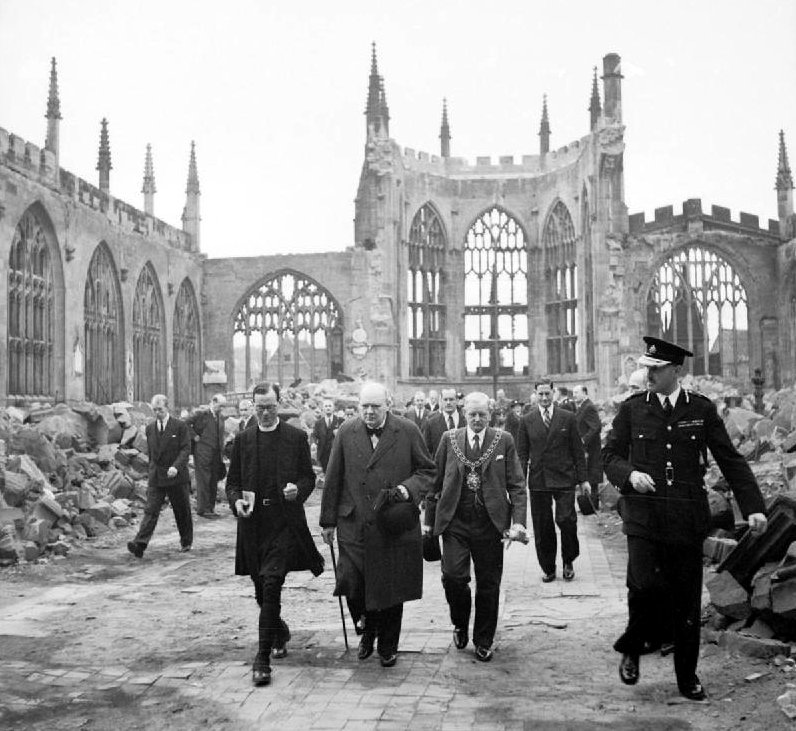
In June of 1940 as the armies of Nazi Germany sprawled triumphantly across western Europe, Prime Minister Winston Churchill spoke to the House of Commons:

What General Weygand called the Battle of France is over. I expect that the Battle of Britain is about to begin. Upon this battle depends the survival of Christian civilization. Upon it depends our own British life, and the long continuity of our institutions and our Empire. The whole fury and might of the enemy must very soon be turned on us.

Hitler knows that he will have to break us in this Island or lose the war. If we can stand up to him, all Europe may be free and the life of the world may move forward into broad, sunlit uplands. But if we fail, then the whole world, including the United States, including all that we have known and cared for, will sink into the abyss of a new Dark Age made more sinister, and perhaps more protracted, by the lights of perverted science.

Let us therefore brace ourselves to our duties, and so bear ourselves that if the British Empire and its Commonwealth last for a thousand years, men will still say, ‘This was their finest hour.’

The Battle of Britain, which was to prepare for a sea-borne invasion of England, was entrusted by Adolf Hitler to the Luftwaffe, his airforce. The plan was to secure a safe crossing of the Channel by wiping out the possibility of resistance by the Royal Air Force. RAF squadrons were to be lured to the sky or destroyed on the ground by the veteran pilots of the Luftwaffe who had successfully destroyed the airforces of Poland, France, Belgium, Norway and the Netherlands. Once the RAF was out of the way, bombing of cities would destroy the British economy and morale and pave the way for an easy invasion. The ineffective performance of the RAF in the skies over France gave Field Marshal Hermann Goering much optimism.

For months in the summer and autumn of 1940 thousands of missions were flown against Britain. Though the RAF was outnumbered, it possessed two excellent fighter craft, the Hurricane and the Spitfire, manned not only by British crews but exiles from Nazi Europe and volunteers from the Commonwealth. Radar intelligence gave the defenders a look at their attackers as they formed up and advanced. It was a close run thing. On October 31, the Luftwaffe abandoned the attempt to destroy the RAF and abandoned plans for an invasion. The Battle of Britain had ended and the Blitz — the attack on British cities — would begin.

October 30

Home / Today in History / October 30


nat_turner_captured

1831 Nat Turner is arrested

Nat Turner was a slave born in a plantation area of Virginia in 1800. As a youth he was recognized to be of high intelligence and piety, acquiring literacy and a love of reading the Bible. By his early 20s he had begun to experience religious visions which he spoke of as he preached and conducted Baptist services among his fellow slaves. He acquired the nickname of “the Prophet”. One vision in 1828 convinced him that he was destined for great things and he came to believe that he would lead an army against the forces of darkness; Turner began to speak with his enslaved friends about a rebellion against their white masters. Solar eclipses he interpreted as a sign to begin the violence in the summer of 1831.

On August 21, Turner and a gang of perhaps as many as 70 blacks, slave and free, rose up and embarked on an attack on neighbouring plantations. Slaves were freed, weapons were gathered, and whites — men, women and children — were indiscriminately murdered. Their ambition seems to have been to provoke a larger rising, terrorize the white inhabitants, and bring the evils of slavery before the world. But after only two days, local militias were able to crush the rebellion. Turner fled into hiding but on October 30 he was captured.

In the days after the rising, hundreds of blacks died at the hands of vengeful white mobs; Turner and 19 others were executed after trials. The failure of the rebellion led to both harsher legal restrictions on slaves and attempts by some owners to ameliorate the condition of their human chattels.


October 29

Home / Today in History / October 29
march_on_rome

1922 Benito Mussolini takes over Italy

Italy after World War I was in terrible shape. The economy was shattered, politic legitimacy was shaky, and hundreds of thousands of disillusioned veterans looked to radical solutions for the country’s problems. There were monarchist paramilitaries, anarchist gangs, peasant violence, Marxist attacks on industrialist and landowners, and the “black shirts” of Benito Mussolini.

Mussolini was born in 1883, the son to a socialist blacksmith. As a student, he would have fit in with Stalin’s turbulent seminary. (Instead of killing teachers, Mussolini stabbed fellow students).  He first became a teacher, schoolmaster, then a journalist. As he was growing up, he was not a fascist but a socialist, running his own newspaper called Class Struggle. He then became editor of the official Italian Socialist newspaper called Avanti. Mussolini was a very violent kind of socialist and during WWI he was expelled from the Socialist party for wanting Italy to take part in the war. He left the party and joined the army, where he was wounded.

When Mussolini emerged from the war, he was definitely not a socialist. He and a couple hundred discontents of various brands of returning veterans met in Milan and founded the first of the “Fascist fighting squads”. They banded under two symbols, one was the black shirt,  and the other, the fasces — the Roman symbol for authority, consisting of rods bound together with an axe in the middle. These “fascists” wanted an end to democracy and the institution of a totalitarianism: “All within the state, nothing outside the state, nothing against the state.”

In the early 1920s there is widespread violence of the kind that fascists love — thuggery, kidnappings, beatings, murders, sabotage — and conflict between the left wing and the right wing. The fascists seized the opportunity to say that they were the solution to the nation’s disorder. In 1922, Mussolini sent out four fascist columns from different parts of Italy to converge on Rome. They announced long ahead of time that they were going to seize power but none dared hinder their advance. They marched into Rome where the constitutional democracy quickly collapsed and the king Victor Emmanuel III called on Mussolini to form a government. In the Chamber of Deputies, he gave a speech boasting about what a moderate fellow he was.

I am here to defend and enforce to the highest degree the revolution of the black shirts, injecting them intimately into the history of the nation as a force of development, progress, and equilibrium. With 300,000 youths fully armed, fully determined, and almost mystically ready to act at my command. I could have chastised all those who have defamed and tried to hinder fascism, I could have made of this sordid grey assembly hall  a bivouac for my squads. I could have kicked out parliament and constructed a government exclusively of fascists. I could have done so, but did not want to, at least not for the present.

Mussolini will rule Italy until his wartime fall in 1943.

October 26

statue_dalfred_le_grand_a_winchester899 Death of Alfred the Great

The only British king ever to be called “the Great” Alfred was born in 849 into the royal family of Wessex which ruled parts of southern England. As the fourth son of King Aethelwulf, Alfred was not expected to ascend the throne; he appears to have been a sickly child with a penchant for learning that was uncommon in Anglo-Saxon noblemen of the time. Unfortunately for Wessex, the king and his three oldest sons Aethelbald, Aethelred and Aethelberht all died in a short span which coincided with the invasion of England by the Great Heathen Army, a Scandinavian alliance bent on conquering the island.  Alfred became king at age 22 when most of the Anglo-Saxon kingdoms had been gobbled up by the Vikings. For seven years Alfred battled the invaders when he could and bribed them to stay away from Wessex when he had to, but in 878 a surprise winter attack by a Danish force compelled Alfred to flee and take refuge in the marsh country. Later that year Alfred gathered an army and smashed the Danes who were obliged to withdraw and agree to the conversion of their leadership to Christianity. Despite this victory, Alfred would spend the rest of his life battling one set of Vikings or another, slowly driving them north.

To enable the English to resist the invaders Alfred built a series of forts called burhs to which his people could resort with their property and cattle, thus denying the Vikings the ability to live off the land. He also divided the men of his kingdom in two, with each half taking turns serving in the army and working the land. Alfred is considered the father of the Royal Navy, having commissioned large ships to intercept the invaders at sea.

Alfred was more than just a successful warrior. He was a legal reformer, organizing an efficient system of taxation and maintenance of infrastructure. Anglo-Saxon England would become a model of medieval statecraft because of Alfred’s efforts. He was also committed to an active and effective religious life for his nation; like Charlemagne earlier in the century he saw church and state functioning together as a Christian commonwealth. Alfred refounded monasteries, took care in the appointment of bishops, imported foreign clergy, communicated regularly with the papacy and established schools. He took part in the translation of St Gregory’s book on pastoral care, Boethius’s Consolation of Philosophy and St Augustine’s Soliloquies. He ordered that the works of Gregory, Boethius and the History of the Church in England by the Venerable Bede be acquired by every English church.

Attempts by English kings to have Alfred canonized were not successful but he is honoured on this day by churches of the Anglican communion.

October 25

Home / Today in History / October 25

1938 An archbishop denounces “swing music”

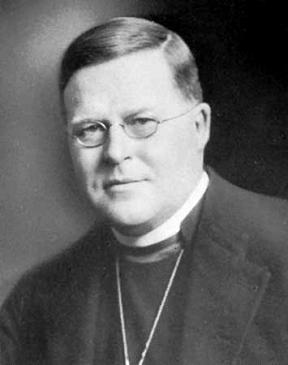
Churches have always been ambivalent about dance music, some clergy fearing it is the devil’s tool, an incitement to lascivious behaviour; some have made use of dance music in liturgy and in Christmas carols. The waltz, where a man and a woman hold each other in their arms and sway rhythmically, was denounced in the 19th century. The bishop of Santa Fe condemned dances as “conducive to evil, occasions of sin, [providing] opportunities for illicit affinities and love that was reprehensible and sinful.” In 1938, Francis Beckman, the Catholic Archbishop of Dubuque campaigned against “swing music”.

Beckman (1875-1948) was no stranger to controversy. He was an isolationist in foreign policy and a supporter of the radical priest Father Charles Coughlin whose radio broadcasts beamed antisemitic messages to millions in Depression-era America. He believed that calls for the USA to oppose Hitler were a communist plot. In October 1938,  in a speech to the National Council of Catholic Women, he launched a crusade against contemporary dance music which he termed  “a degenerated musical system… turned loose to gnaw away the moral fiber of young people”. “Jam sessions, jitterbugs and cannibalistic rhythmic orgies occupy a place in our social scheme of things,” said the archbishop, “wooing our youth along the primrose path to Hell!” He went on to say that though the Church was zealously trying to promote and preserve the best of modern art, swing music was among “the evil forces … hard at work to undermine its Christian status, debauch its high purposes and harness it to serve individual diabolical ends.”

Archbishop Beckman’s career was curtailed during the Second World War when it was discovered that he had borrowed money in his diocese’s name to invest in a shady gold mine scheme. He was allowed to retain his post but all decisions were left in the hands of a coadjutor bishop.