November 10

Home / Uncategorized / November 10

In these days when journalism is in so much disrepute and disrespect, it is useful to remember an earlier time when journalists might behave well. From Chambers’ Book of Days:

A remarkable instance was afforded, a few years ago, of the power of an English newspaper, and its appreciation by the commercial men of Europe. It is known to most readers at the present day, that the proprietors and editors of the daily papers make strenuous exertions to obtain the earliest possible information of events likely to interest the public, and take pride in insuring for this information all available accuracy and fulness; but it is not equally well known how large is the cost incurred by so doing. None but wealthy proprietors could venture so much, for an object, whose importance and interest may be limited to a single day’s issue of the paper.

In 1841, Mr. O’Reilly, the Times correspondent at Paris, received secret information of an enormous fraud that was said to be in course of perpetration on the continent. There were fourteen persons—English, French, and Italian—concerned, headed by a French baron, who possessed great talent, great knowledge of the continental world, and a most polished exterior. His plan was one by which European bankers would have been robbed of at least a million sterling; the conspirators having reaped about £10,000, when they were discovered. The grand coup was to have been this—to prepare a number of forged letters of credit, to present them simultaneously at the houses of all the chief bankers in Europe, and to divide the plunder at once. How Mr. O’Reilly obtained his information, is one of the secrets of newspaper management; but as he knew that the chief conspirator was a man who would not scruple to send a pistol-shot into any one who frustrated him, he wisely determined to date his letter to the Times from Brussels instead of Paris, to give a false scent. This precaution, it is believed, saved his life. The letter appeared in the Times on 26th May. It produced a profound sensation, for it revealed to the commercial world a conspiracy of startling magnitude.

One of the parties implicated, a partner in an English house at Florence, applied to the Times for the name of its informant; but the proprietors resolved to bear all the consequences. Hence the famous action, Bogle v. Lawson, brought against the printer of the Times for libel, the proprietors, of course, being the parties who bore the brunt of the matter. As the article appeared on 26th May, and as the trial did not come on till 16thAugust, there was ample time to collect evidence. The Times made immense exertions, and spent a large sum of money, in unravelling the conspiracy throughout. The verdict was virtually an acquittal, but under such circumstances that each party had to pay his own costs.

The signal service thus rendered to the commercial world, the undaunted manner in which the Times had carried through the whole matter from beginning to end, and the liberal way in which many thousands of pounds had been spent in so doing, attracted much public attention. A meeting was called, and a subscription commenced, to defray the cost of the trial, as a testimonial to the proprietors. This money was nobly declined in a few dignified and grateful words; and then the committee determined to perpetuate the memory of the transaction in another way. They had in their hands £2700, which had been subscribed by 38 public companies, 64 members of the city corporation, 58 London bankers, 120 London merchants and manufacturers, 116 county bankers and merchants, and 21 foreign bankers and merchants. In November, the committee made public their mode of appropriating this sum: namely, £1000 for a ‘Times Scholarship’ at Oxford, for boys in Christ’s Hospital; £1000 for a similar scholarship at Cambridge, for boys of the city of London School; and the remainder of the money for four tablets, to bear suitable inscriptions—one to be put up at the Royal Exchange, one at Christ’s Hospital, one at the City of London School, and one at the Times printing-office.


November 9

raffael_040_crop

1518

Pope Leo X issues the bull Cum postquam which defends indulgences as a treasury of merits, from which popes may make withdrawals to be applied to the spiritual accounts of believers, remitting their temporal suffering in Purgatory and speeding their way to Heaven.

In the previous year the Augustinian monk and Wittenberg professor Martin Luther issued his 95 Theses attacking the doctrines of Purgatory and indulgences. Angered by the papally-approved sale of indulgences in eastern Germany by the Dominican monk Johann Tetzel, Luther proclaimed “I say that no one can prove by a single word of Scripture that divine justice desires or demands any sort of suffering or satisfaction from the sinner other than his heartfelt and genuine sorrow or conversion, with the intention to bear the cross of Christ from now on …” The resulting brouhaha we call the Protestant Reformation.

It was unfortunate for the Catholic Church that Leo, born Giovanni di Lorenzo de’ Medici, son of Lorenzo the Magnificent of Florence, was its ruler at the time of this controversy. He was not even a priest until his election as pope; he was a patron of the arts but no shepherd of souls.

November 8

Home / Something Wise / November 8

Some quotes from the 20th century’s greatest English writer, P.G. Wodehouse.

She fitted into my biggest arm-chair as if it had been built round her by someone who knew they were wearing arm-chairs tight about the hips that season.

She had a penetrating sort of laugh. Rather like a train going into a tunnel. 

I could see that, if not actually disgruntled, he was far from being gruntled.

He looked haggard and care-worn, like a Borgia who has suddenly remembered that he has forgotten to put cyanide in the consommé, and the dinner gong due any minute.

Unseen in the background, Fate was quietly slipping lead into the boxing-glove.

There has never been much difficulty in telling the difference between a Scotchman with a grievance and a ray of sunshine.

The lunches of fifty-seven years had caused his chest to slip down into the mezzanine floor.

November 7

Home / Today in History / November 7

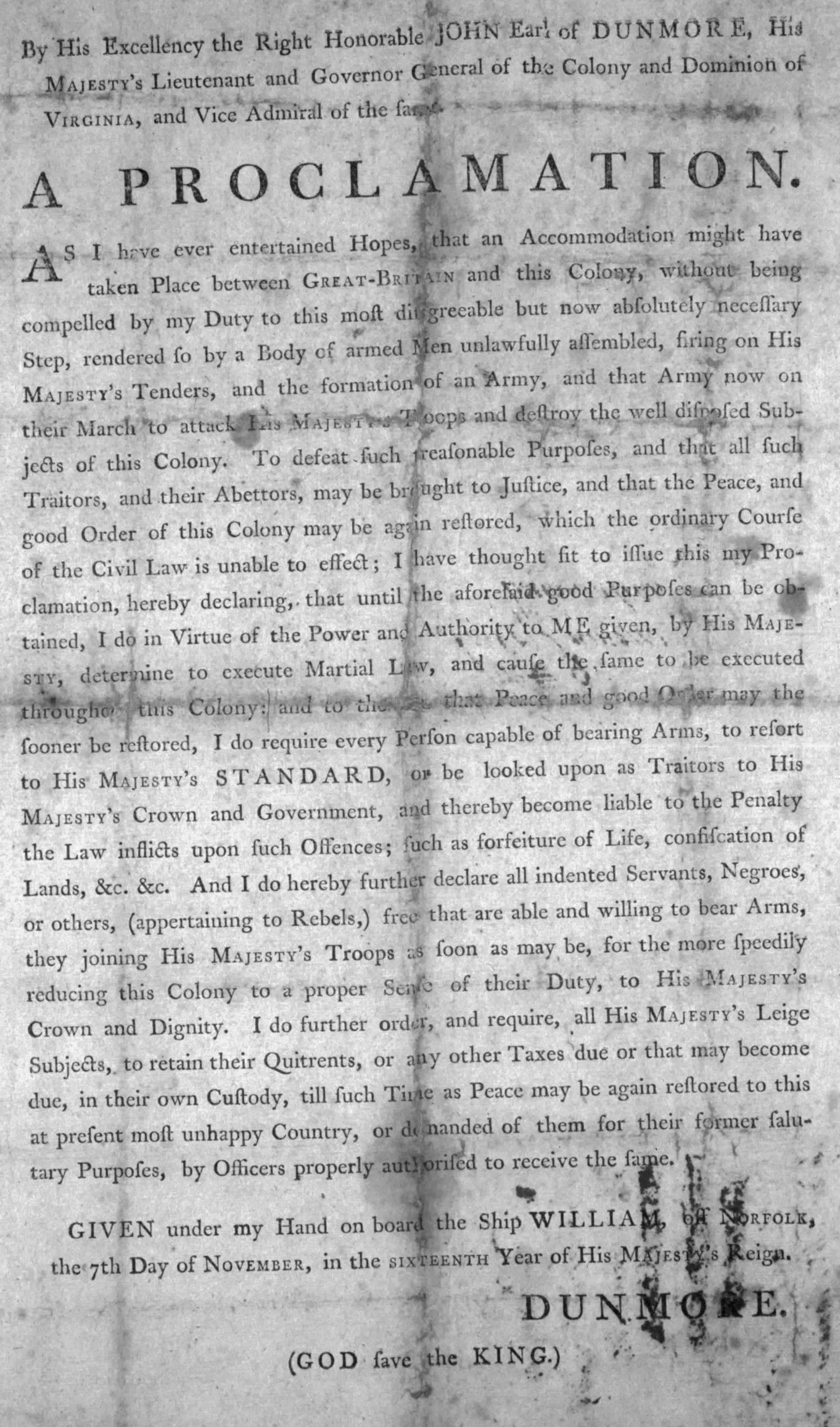
1775 Lord Dunmore’s Proclamation

screen-shot-2016-11-05-at-9-03-44-pm

In order to hinder the rebellion of some American colonists in Virginia, British Governor John Murray, Earl of Dunmore, issues a proclamation calling loyal citizens to arms and offering to free any slaves who will serve the crown militarily. Perhaps as many as 2,000 slaves flee the plantations and take up Dunmore’s offer. The move outraged many prominent Virginians (loyal and disloyal) who supported slavery. They in turn issued proclamations that threatened runaway slaves with death. In the end, Dunsmore and hundreds of freed slaves were forced out of the colony but throughout the conflict the British kept offering freedom to escaping slaves whether they joined the army or not. When the revolutionary war ended, thousands of black slaves migrated to the loyal colony of Nova Scotia and slavery continued to plague America until the 1860s.

November 6

Home / Something Wise / November 6

I think it’s time for some more wisdom from dead white guys. 

If you could kick the person in the pants responsible for most of your trouble, you wouldn’t sit for a month.

– Theodore Roosevelt

The parable of Pythagoras is dark, but true; Cor ne edito; “Eat not the heart.” Certainly if a man would give it a hard phrase, those that lack friends to open themselves unto are cannibals of their own hearts. But one thing is most admirable (wherewith I will conclude this first fruit of friendship), which is, that this communicating of a man’s self to his friend, works two contrary effects; for it redoubleth joys, and cutteth griefs in halves. For there is no man, that imparteth his joys to his friend, but he joyeth the more; and no man that imparteth his griefs to his friend, but he grieveth the less.

– Francis Bacon

The condition and characteristic of an uninstructed person is this: he never expects from himself profit, or advantage, nor harm, but from externals.

The condition of a philosopher is this: he expects all advantage and all harm from himself. The signs of one who is making progress are these: he censures no man, he praises no man, he says nothing about himself as if he were somebody or knew something. When he is impeded or hindered, he blames himself. If a man praises him he ridicules the praiser to himself and if a man censures him, he makes no defence. He removes desires from himself, and transfers aversion to those things which are contrary to nature. He employs a moderate attitude towards everything; whether he is considered fooling or ignorant he cares not.  

In a word, he watches himself as if he were an enemy and lying in an ambush. 

— Marcus Aurelius

I am a democrat because I believe in the Fall of Man. I think most people are democrats for the opposite reason. A great deal of democratic enthusiasm descends from the ideas of people like Rousseau, who believed in democracy because they thought mankind so wise and good that everyone deserved a share in the government. The danger of defending democracy on those grounds is that they’re not true. And whenever their weakness is exposed, the people who prefer tyranny make capital out of the exposure… The real reason for democracy is just the reverse. Mankind is so fallen that no man can be trusted with unchecked power over his fellows. Aristotle said that some people were only fit to be slaves. I do not contradict him. But I reject slavery because I see no men fit to be masters.

– C.S. Lewis


November 5

1605 The Gunpowder Plot is discovered.

23168272-guyfawkes-news-large_transpnt_ohcsvbfwgo9niq34nggxi2oufgxtjddbxl2htqs

Remember, remember the Fifth of November,

The Gunpowder Treason and Plot,

I know of no reason

Why Gunpowder Treason

Should ever be forgot.

Guy Fawkes, Guy Fawkes, t’was his intent

To blow up King and Parli’ment.

Three-score barrels of powder below

To prove old England’s overthrow;

By God’s providence he was catch’d

With a dark lantern and burning match.

Holloa boys, holloa boys, let the bells ring.

Holloa boys, holloa boys, God save the King!

A penny loaf to feed the Pope

A farthing o’ cheese to choke him.

A pint of beer to rinse it down.

A faggot of sticks to burn him.

Burn him in a tub of tar.

Burn him like a blazing star.

Burn his body from his head.

Then we’ll say ol’ Pope is dead.

Hip hip hoorah! Hip hip hoorah hoorah!

November 4

Home / Today in History / November 4

1839 The Newport Rising. The last significant rebellion in Britain was crushed on this day when police and army units faced thousands of armed peasants and workers supporting democratic reform and attempting to liberate some jailed rebels in Newport, Wales. Firing broke out in which 22 demonstrators were killed and 50 wounded.

1922 British archaeologist Howard Carter discovers the entrance to Pharaoh Tutankhamun’s (King Tut’s) tomb.iran_hostage_crisis_-_iraninan_students_comes_up_u-s-_embassy_in_tehran

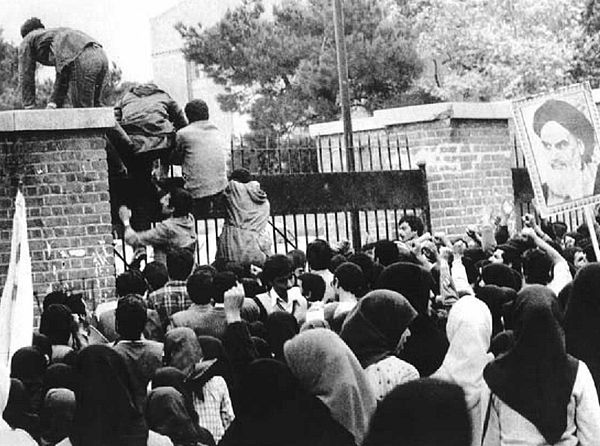
1979 Iran Hostage Crisis. A mob of students attacks the U.S. embassy in Tehran, taking 90 hostages and starting a major diplomatic standoff that lasted until early 1981.

1995 Israeli Prime Minister Yitzhak Rabin is assassinated by a Jewish extremist who opposed Rabin’s peace proposals.

November 2

All Souls’ Day

Chamber’s Book of Days has this to say:

This is a festival celebrated by the Roman Catholic Church, on behalf of the souls in purgatory, for whose release the prayers of the faithful are this day offered up and masses performed. It is said to have been first introduced in the ninth century by Odilon, abbot of Cluny; but was not generally established till towards the end of the tenth century. Its observance was esteemed of such importance, that in the event of its falling on a Sunday, it was ordered not to be postponed till the Monday, as in the case of other celebrations, but to take place on the previous Saturday, that the souls of the departed might suffer no detriment from the want of the prayers of the church. It was customary in former times, on this day, for persons dressed in black to traverse the streets, ringing a dismal-toned bell at every corner, and calling on the inhabitants to remember the souls suffering penance in purgatory, and to join in prayer for their liberation and repose.

At Naples, it used to be a custom on this day to throw open the charnel-houses, which were lighted up with torches and decked with flowers, while crowds thronged through the vaults to visit the bodies of their friends and relatives, the fleshless skeletons of which were dressed up in robes and arranged in niches along the walls. At Salerno, also, we are told, that a custom prevailed previous to the fifteenth century, of providing in every house on the eve of All-Souls-Day, a sumptuous entertainment for the souls in purgatory who were supposed then to revisit temporarily, and make merry in, the scene of their earthly pilgrimage. Every one quitted the habitation, and after spending the night at church, returned in the morning to find the whole feast consumed, it being deemed eminently inauspicious if a morsel of victuals remained uneaten. The thieves who made a harvest of this pious custom, assembling, then, from all parts of the country, generally took good care to avert any such evil omen from the inmates of the house by carefully carrying off whatever they were unable themselves to consume. A resemblance may be traced in this observance, to an incident in the story of Bel and the Dragon, in the Apocrypha.

November 1

Home / Uncategorized / November 1

1972 Death of Ezra Pound

Ezra Weston Loomis Pound was born in 1885 in Idaho but grew up in Pennsylvania. As a university student he was insolent and lazy but he benefited from wide reading. He launched himself into the world as a poet and critic, finding patrons in the USA and London, making influential connections.
He was a pioneer and prophet of the Imagist mode, privileging the concrete object and minimalism. Pound was instrumental in helping the careers of T.s. Eliot, James Joyce, and Ernest Hemingway but he was also in talented in the art of making enemies.
Like many intellectuals of the 1920s he felt that the old world was in need of revolution and he fell under the spell of Italian-style fascism. Pound espoused an anti-capitalist economic vision of “social credit” which despised usury. This led the poet into a virulent anti-semitism which he never abandoned and which drew him closer, first to Benito Mussolini, and then to Adolf Hitler. He spent the years of World War II in Italy making pro-fascist broadcasts and inveighing agains the Jews.
After the war, Pound was arrested and tried for treason. Other who had done what he had (like Lord Haw-Haw) were executed but the literary world rallied round him and fought for his release. The US government compromised and had him declared insane and confined to a mental hospital. He was released in 1958 having been declared incurable and thus in no need of further treatment. He spent most of the rest of his life living in Italy, repenting of both his earlier poetry and his antisemitism.
Pound was clearly a major force in 20th century literature but much of his poetry was obscurantist rubbish. Nonetheless there are gems amid the dross, and I include two here: the beginning of the Norse-flavoured “The Seafarer” and his Li Po imitation, “The River-Merchant’s Wife”.
 
The Seafarer
 
May I for my own self song’s truth reckon,
Journey’s jargon, how I in harsh days
Hardship endured oft.
Bitter breast-cares have I abided,
Known on my keel many a care’s hold,
And dire sea-surge, and there I oft spent
Narrow nightwatch nigh the ship’s head
While she tossed close to cliffs. Coldly afflicted,
My feet were by frost benumbed.
 
The River-Merchant’s Wife: A Letter
While my hair was still cut straight across my forehead
I played about the front gate, pulling flowers.
You came by on bamboo stilts, playing horse,
You walked about my seat, playing with blue plums.
And we went on living in the village of Chōkan:
Two small people, without dislike or suspicion.
At fourteen I married My Lord you.
I never laughed, being bashful.
Lowering my head, I looked at the wall.
Called to, a thousand times, I never looked back.
 
At fifteen I stopped scowling,
I desired my dust to be mingled with yours
Forever and forever, and forever.
Why should I climb the look out?
 
At sixteen you departed
You went into far Ku-tō-en, by the river of swirling eddies,
And you have been gone five months.
The monkeys make sorrowful noise overhead.
 
You dragged your feet when you went out.
By the gate now, the moss is grown, the different mosses,
Too deep to clear them away!
The leaves fall early this autumn, in wind.
The paired butterflies are already yellow with August
Over the grass in the West garden;
They hurt me.
I grow older.
If you are coming down through the narrows of the river Kiang,
Please let me know beforehand,
And I will come out to meet you
As far as Chō-fū-Sa.