Book of the Day — April 4

Home / Uncategorized / Book of the Day — April 4

The French Revolution which began in the summer of 1789 and continued in one form or another until the coronation of Napoleon in 1804 is one of those cataclysmic moments in history over which historians love to argue. In general, modern Europeans and leftists tend to treat it as a great movement for human liberation, while the English-speaking world and conservatives look at it with a jaundiced glance. Nowhere was this more evident than in the bicentenary celebrations of the Revolution in 1989. To Paris, in July of that year, came the leaders of the world to mark the fall of the Bastille prison which ignited the uprising whose consequences we still live with today.

To Paris, the leaders of other nations brought gifts and salutations, bowing before President François Mitterand and muttering words of admiration for the French example. Not so, Margaret Thatcher, the British Prime Minister. In an interview with the newspaper Le Monde she blithely reminded the world that Britain had not needed a revolution to establish democracy and that its free parliament existed well before 1789. French history held no lessons for the English.

For this boldness (or perhaps, rudeness) the French exacted revenge, putting Thatcher way down the receiving line behind obscure leaders of former French colonies and sitting her in the back row of the official photo.

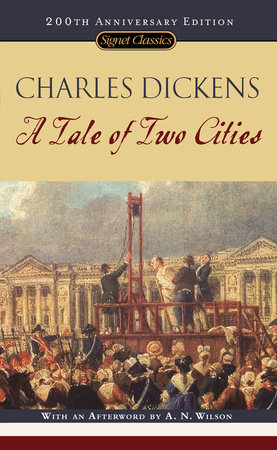
But Mrs Thatcher wasn’t finished making her statement on the French Revolution — her parting gift to Mitterand was a beautifully bound edition of Charles Dickens’ A Tale of Two Cities, an account of the Revolution that was not at all complimentary to the revolutionaries, emphasizing their bloodiness and cruelty.

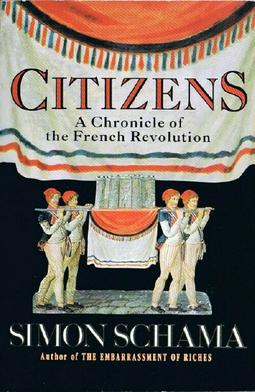
Equally disenchanted with 1789 was what I think is the best history of the Revolution to come out of those years, Citizens: A Chronicle of the French Revolution by Simon Schama. I am, by no means, a fan of Schama but for this book I will forgive him much. In a very readable style and with lavish illustrations, the book shows a dark side of the uprising and the cost it exacted on its opponents, supporters, and Europe as a whole.

April 3

St Richard of Chichester

RICHARD was born, 1197, in the little town of Wyche, eight miles from Worcester, England. He and his elder brother were left orphans when young, and Richard gave up the studies which he loved, to farm his brother’s impoverished estate. His brother, in gratitude for Richard’s successful care, proposed to make over to him all his lands; but he refused both the estate and the offer of a brilliant marriage, to study for the priesthood at Oxford. In 1235 he was appointed, for his learning and piety, chancellor of that University, and afterwards, by St. Edmund of Canterbury, chancellor of his diocese. He stood by that Saint in his long contest with the king, and accompanied him into exile. After St. Edmund’s death Richard returned to England to toil as a simple curate, but was soon elected Bishop of Chichester in preference to the worthless nominee of Henry III. The king in revenge refused to recognize the election, and seized the revenues of the see. Thus Richard found himself fighting the same battle in which St. Edmund had died. He went to Lyons, was there consecrated by Innocent IV in 1245, and returning to England, in spite of his poverty and the king’s hostility, exercised fully his episcopal rights, and thoroughly reformed his see. After two years his revenues were restored.

Young and old loved St. Richard. He gave all he had, and worked miracles, to feed the poor and heal the sick; but when the rights or purity of the Church were concerned he was inexorable. A priest of noble blood polluted his office by sin; Richard deprived him of his benefice, and refused the king’s petition in his favor. On the other hand, when a knight violently put a priest in prison, Richard compelled the knight to walk round the priest’s church with the same log of wood on his neck to which he had chained the priest; and when the burgesses of Lewes tore a criminal from the church and hanged him, Richard made them dig up the body from its unconsecrated grave, and bear it back to the sanctuary they had violated. He lived an ascetic lifestyle and was a vegetarian.

Richard died in 1253, while preaching, at the Pope’s command, a crusade against the Saracens. His tomb was in Chichester cathedral was the site of pilgrimage and miracles but it was plundered during the reign of Henry VIII when he was under the influence of Thomas Cromwell. The royal order for its 1538 destruction reads:

Forasmuch as we have lately been informed that in our cathedral church of Chichester there hath been used long heretofore, and yet at this day is used, much superstition and a certain kind of idolatry about the shrine and bones of a certain bishop of the same, whom they call Saint Richard, and a certain resort there of common people, which being men of simplicity are seduced by the instigation of some of the clergy, who take advantage of their credulity to ascribe miracles of healing and other virtues to the said bones, that God only hath authority to grant. . . . . We have appointed you, with all convenient diligence to repair unto the said cathedral church, and to take away the shrine and bones of that bishop called Saint Richard, with all ornaments to the said shrine belonging, and all other the reliques and reliquaries, the silver, the gold, and all the jewels belonging to said shrine, and that not only shall you see them to be safely and surely conveyed unto our Tower of London there to be bestowed and placed at your arrival , but also ye shall see both the place where the shrine was kept, destroyed even to the ground and all such other images of the said church ,where about any notable superstition is used, to be carried and conveyed away, so that our subjects shall by them in no ways be deceived hereafter, but that they pay to Almighty God and to no earthly creature such honour as is due unto him the Creator. . . . . Given under our privy seal at our manor of Hampton Court, the 14th day of Dec., in the 30th year of our reign.

April 2

Home / Today in History / April 2

742

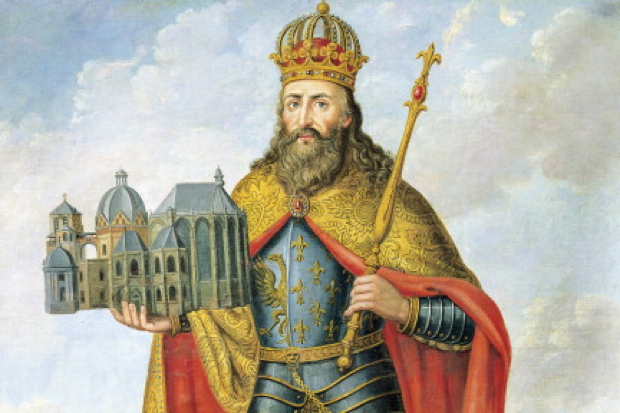
Charlemagne is born

Karl was the oldest son of Pepin the Short and Bertha Bigfoot (or Broad Foot or Goose Foot; medieval nicknames were not meant to flatter). Pepin was the de facto ruler of the Kingdom the Franks; as major domo, or “Mayor of the Palace”, he was officially the servant of the ineffectual Merovingian dynasty. With the consent of the papacy, Pepin ended this fiction with a palace coup in 751 that deposed Childeric III and established a new Carolingian dynasty. When Pepin died on campaign in 768, his sons Karl and Carloman were named kings; after his brother’s death, Karl was undisputed ruler of a territory roughly corresponding to present-day France and Germany.

Karl is considered the greatest of the medieval European rulers, and the father of a united Europe, deserving of his title, Karl “the Great”, Carolus Magnus or Charlemagne. He expanded his kingdom by wars with Saxons on his eastern border, Muslims on the Spanish border and Lombards in northern Italy. The Avar invasions of central Europe were crushed and Charlemagne pushed his domain toward the Danish lands and the Balkans as well. He inspired the Carolingian Renaissance by inviting scholars, architects and artists to his court at Aachen and demanding literacy training for his nobles and their children. He insisted on church reform, standardising canon law in his lands, and sent out watchdog commissions to ensure compliance with his commands.

On Christmas  Day 800 Charlemagne was crowned emperor in Rome by Pope Leo III, thus setting up the Frankish empire as a rival to the claims of the Eastern Roman Emperor in Constantinople. This is sometimes referred to as the establishment of the Holy Roman Empire, but that is more properly reserved for another, later dynasty.

When Charlemagne died in 814, his four wives and numerous concubines had produced at least sixteen children but the throne descended to his son Louis the Pious, an earnest but not quite capable king. In the next generation Charlemagne’s huge empire had been split into three.

April 1

Home / Today in History / April 1

1924

Adolf Hitler is jailed

Ex-soldier Adolf Hitler greeted the end of World War I with tears: so much sacrifice and death culminating in a betrayal of the German people by Jews, socialists and democrats. He resolved to make his voice heard in the post-war chaos by joining the German Workers’ Party which he soon turned into the National Socialist German Workers’ Party (NSDAP or “Nazis”). Hitler’s oratorical skills attracted a number of followers, from disillusioned veterans of the trenches to rich society women.

In 1923 Hitler joined with General Erich Ludendorff and other Munich politicians in a plot to seize power locally and use the city as a base from which to overthrow the troubled Weimar Republic. Hyperinflation was rampant, the middle class was being overwhelmed, discontent with the government was massive; Hitler thought that it was time for violent action lest the situation be used to the advantage of Communist revolutionaries. On November 8, with over 600 of his Sturmabteilung storm-troopers, he seized a beer hall being used for a political rally by the rulers of Munich. He took hostages, declared the government of Bavaria deposed and announced the formation of new government. This created chaos in the city with the military, police and citizenry confused and leaderless but the coup failed when Hitler’s men marched on the Defence Ministry and were dispersed by troops loyal to the government. Four policemen and 16 Nazis were killed.

At his trial, Hitler claimed to be acting only for the good of the country and was given a light sentence, of which he served only eight months, using the time to write his political manifesto, Mein Kampf.

March 31

Home / Uncategorized / March 31

On this date in history, a number of great artistic creators appeared or made their exits.

Born on this day were Johann Sebastian Bach (1685), Joseph Haydn (1732), Edward Fitzgerald (1809), and Nikolai Gogol (1809). Taking leave of this earthly plane on March 31 were John Donne (1631), John Constable (1837), and Charlotte Brontë (1855). We are all richer for their contributions.

But because it is also the birthday of William Orville “Lefty” Frizzell (1928) who penned “If You’ve Got the Money (I’ve Got the Time)” and “I Never Go Around Mirrors”, I wish to salute the lyricists of country music. They may lack the profundity of Donne and Bach but they are keen observers of the human condition and possess a sly wit. Consider the following genuine song titles:

She Got the Gold Mine (I Got the Shaft); I Gave Her The Ring, And She Gave Me The Finger; I May Be Used, But Baby I Ain’t Used Up; I’ve Got Hair Oil On My Ears And My Glasses Are Slipping Down, But Baby I Can See Thru You; If The Phone Don’t Ring, Baby, You’ll Know It’s Me; I’m Gonna Put A Bar In The Back Of My Car And Drive Myself To Drink; You Can’t Have Your Kate And Edith Too; and Run for the Roundhouse Nellie (He Can’t Corner You There).

And who could forget There Ain’t Enough Room In My Fruit Of The Looms To Hold All My Lovin’ For You; Thank God and Greyhound She’s Gone; Please Bypass This Heart; I Went Back To My Fourth Wife For The Third Time And Gave Her A Second Chance To Make A First Class Fool Out Of Me; and I Fell Into A Pile Of You And Got Love All Over Me?

Book of the Day – March 30

Home / Uncategorized / Book of the Day – March 30

I thought my vast readership might welcome an occasional break from the usual “this date in history” approach and so I will make so bold as to talk here every now and again about some of my favourite history books that might also appeal to a non-specialist. 

“Of the making of many books there is no end and much study is a weariness of the flesh.” So sayeth the Preacher in Ecclesiastes 12:12 and as one who has spent many decades in such an activity I can attest to its truth. Therefore, I will avoid tomes that are classics but snoozers (yes, I’m talking about you, Edward Gibbon, with your six-volume History of the Rise and Fall of the Roman Empire and you, Arnold Toynbee, with your interminable 12-volume A Study of History).

Let’s begin with a book that has so many virtues: it is short, argumentative, and deadly to its foes. It is The Fall of Rome and the End of Civilization by Bryan Ward-Perkins.

When I was a student at university, I was taught that the end of the Roman Empire in the fifth century was violent and tragic, that it meant a collapse of civilization in western Europe that would take a thousand years to rebuild, that it ushered in a Dark Age.

Then along came postmodern historians in the 1980s and 1990s who shrank at the notion that there was a real distinction between civilization and barbarism — that was a racist idea that “othered” the Germanic peoples. Instead of a conquest of Roman forces and way of life, there was a vigorous intermingling — kind of like rough sex, after which the participants would share a cigarette and stare dreamily at the ceiling. Besides, the only sources testifying to violence were books written by the Romans and postmodernists knew how slippery and unreliable “the text” could be.

The late 20th century was also the time of growing European integration and the development of common history curricula in the European Union nations. Since Germany was the dominant power in the EU, it was felt that one mustn’t “mention the war”, either those periods of German nastiness in 1914-18 and 1939-45 or the sacks and pillaging of the 400s and 500s.

So, for a number of years I revised my lectures and taught that the fall of Rome wasn’t such a big deal after all. Then I read Bryan Ward-Perkins’ book which blew the doors off of the postmodern bus. OK, he said, you don’t trust texts: let’s just look at the physical evidence, the bits and pieces that archaeologists dig up. And using the comparative skeletal sizes of cattle in garbage pits of various era, the relative quality of mass-manufactured goods like dinner plates, the absence of graffiti or any other evidence of literacy, the remains of abandoned towns, he demonstrated that the Fall was nasty and produced a society that was incomparably poorer, less populated, more rural, illiterate, without a money economy or even (as was the case in Britain for a century) incapable of operating a potter’s wheel.

The postmodernists fled shrieking and a blow was struck for genuine and entertaining scholarship.


March 29

Image processed by CodeCarvings Piczard ### FREE Community Edition ### on 2016-02-10 22:40:49Z | http://piczard.com | http://codecarvings.com

1788

Death of Charles Wesley

Charles Wesley (1707-88) was one of the greatest contributors to Protestant hymnody in the English language and an able companion to his brother John’s evangelistic project.

The Wesley brothers were sons of a clergyman and attended Oxford University where their regular devotions and lives of service earned them and their friends the nicknames “Methodist” and “Holy Club”.  After an abortive attempt to spread the gospel in the American colony of Georgia, Charles and John returned to London where they both underwent conversion experiences in 1738. While John would undertake a massive program of itinerant preaching, Charles settled in London where he would write most of his 6,000 hymns.

Among the most popular of his compositions were “Arise, My Soul, Arise”, “And Can It Be”, “Christ, the Lord, is Risen Today”, “Jesus, Lover of My Soul”, “Lo! He Comes with Clouds Descending”, “Love Divine, All Loves Excelling”. On Christmas morning, 1739 Wesley was walking to church when he was struck by the beauty of the ringing bells. He was thus inspired to create a piece which he called “For Christmas Day” and which began “Hark, how all the welkin rings” — welkin being an antique term for the heavens. Over the years, a number of authors including Wesley’s fellow-Methodist George Whitefield and Martin Madan revised the poem until it gradually assumed the form of the hymn we now know as “Hark! The Herald Angels Sing”.

March 28

Home / Today in History / March 28

1606

The trial of Henry Garnet, SJ

The Gunpowder Plot of 1605 was a plan by English Catholics to blow up Parliament, killing all its Members, the heads of the aristocracy, the Protestant bishops, and the royal family. Though the bombs were successfully placed, the conspirators were apprehended before the terroristic atrocity could be carried out. The English government arrested the leading plotters but was intent on uncovering the role played by Catholic priests, particularly Jesuits in encouraging the murders. Especially sought was Henry Garnet (1555-1606), chief of the priests of the Society of Jesus that had been smuggled into the country. Informants revealed that Garnet was probably hiding with a Catholic family in the countryside and that, as was common, the house in which he was staying had a “priest hole” to conceal him in case of a search. The following passage describes the search of Hindlip Hall in Worcestershire.

When Father Garnet came to be inquired after, the government, suspecting Hendlip to be his place of retreat, sent Sir Henry Bromley thither, with instructions which reveal to us much of the character of the arrangements for the concealment of priests in England. ‘In the search,’ says this document, ‘first observe the parlour where they use to dine and sup; in the east part of that parlour it is conceived there is some vault, which to discover you must take care to draw down the wainscot, whereby the entry into the vault may be discovered. The lower parts of the house must be tried with a broach, by putting the same into the ground some foot or two, to try whether there may be perceived some timber, which, if there be, there must be some vault underneath it. For the upper rooms, you must observe whether they be more in breadth than the lower rooms, and look in which places the rooms be enlarged; by pulling up some boards, you may discover some vaults. Also, if it appear that there be some corners to the chimneys, and the same boarded, if the boards be taken away there will appear some. If the walls seem to be thick, and covered with wainscot, being tried with a gimlet, if it strike not the wall, but go through, some suspicion is to be had thereof. If there be any double loft, some two or three feet, one above another, in such places any may be harboured privately. Also, if there be a loft towards the roof of the house, in which there appears no entrance out of any other place or lodging, it must of necessity be opened and looked into, for these be ordinary places of hovering [hiding].’

Sir Henry invested the house, and searched it from garret to cellar, without discovering anything suspicious but some books, such as scholarly men might have been supposed to use. Mrs. Abingdon—who, by the way, is thought to have been the person who wrote the letter to Lord Monteagle, warning him of the plot—denied all knowledge of the person searched for. So did her husband when he came home. ‘I did never hear so impudent liars as I find here,’ says Sir Henry in his report to the Earl of Salisbury, forgetting how the power and the habit of mendacity was acquired by this persecuted body of Christians. After four days of search, two men came forth half dead with hunger, and proved to be servants. 

Sir Henry occupied the house for several days more, almost in despair of further discoveries, when the confession of a conspirator condemned at Worcester put him on the scent for Father Hall, as for certain lying at Hendlip. It was only after a search protracted to ten days in all, that he was gratified by the voluntary surrender of both Hall and Garnet. They came forth from their concealment, pressed by the need for air rather than food, for marmalade and other sweetmeats were found in their den, and they had had warm and nutritive drinks passed to them by a reed ‘through a little hole in a chimney that backed another chimney, into a gentlewoman’s chamber.’ They had suffered extremely by the smallness of their place of concealment, being scarcely able to enjoy in it any movement for their limbs, which accordingly became much swollen. Garnet expressed his belief that, if they could have had relief from the blockade for but half a day, so as to allow of their sending away books and furniture by which the place was hampered, they might have baffled inquiry for a quarter of a year.


March 27


Riots-Cover00011881

Basingstoke rioters attack the Salvation Army

“Drunk for a penny, dead drunk for tuppence. Clean straw for nothing.” The consumption of cheap liquor in the nineteenth century by what Oscar Wilde termed the “drinking classes” was a major social problem, a leading cause of death, marital breakdown, unemployment and violence. The temperance movement sought to make the manufacture, sale and use of alcohol illegal and the Salvation Army in England was in the forefront of this cause.

In September 1880 the Salvation Army arrived in the Hampshire town of Basingstoke proclaiming an anti-drink crusade that would “open fire on Sin and Satan.” Though their presence was welcomed by some Dissenting churches, pub-owners and brewers (major employers in the town) saw the Salvationists as a threat to their livelihood and many of their customers perceived a threat to their main source of enjoyment. Within a month sporadic acts of violence had been directed at those preaching teetotalism. In March of 1881 organized opposition appeared in the form of the “Massagainians”, sponsored by local brewers who gathered in mobs to confront Salvation Army marches. The hooligans greatly outnumbered the Salvationists and the police who had to call in reinforcements. Windows were smashed, a home was burnt, assaults took place and the Riot Act had to be read on a number of occasions. Eventually ten men were sent to jail for their violence but on their release they were treated as heroes by many in Basingstoke:

 They were fetched home in carriages with postillions. They had a band of hundreds of people to welcome them home, with flags flying and strings of flags across Winchester Street. Dinner was held for them in the Corn Exchange and each received a silver watch. The Corn Exchange was crammed full and the noise they kicked up was awful.

The town was clearly divided on the subject. In August 1881 the Magistrates were presented with two petitions: one signed by the Vicar of Basingstoke and 498 others, called for the Salvation Army marches to be banned as they were disturbing the peace and quiet of the town; the other, signed by the minister of the Congregational Church and 613 others, called for the processions to be properly protected. The violence continued on and off for a year before the brewers realized that their business was not going to be affected unduly.


March 25

Paolo_Veronese_-_The_Annunciation_-_WGA24828

The Annunciation to Mary

And in the sixth month the angel Gabriel was sent from God unto a city of Galilee, named Nazareth, to a virgin espoused to a man whose name was Joseph of the house of David: and the virgin’s name was Mary.” The story of the angel’s visit to Mary and her agreement with the divine plan that she should conceive a child by the Holy Spirit is the subject of Luke’s gospel 1: 26-38. It has been the inspiration for centuries of artists fascinated by the meeting between an angel of the Lord and a simple country girl. Among the more spectacular depictions are The Cestello Annunciation by Botticelli with Gabriel kneeling before the Virgin and Dante Gabriel Rossetti’s Ecce Ancilla Domini where Mary cowers on her bed. In the Gallerie dell’Accademia in Venice, Veronese’s Annunciation (above) shows the angel wheeling into the Virgin’s room still in flight. Common iconographic elements are a lily, a dove or a ray of light.

Since the second century Christians have fixed the date of March 25 as the Feast of the Annunciation. March 25 was known as Lady Day in medieval England and was considered the first day of the new legal year.