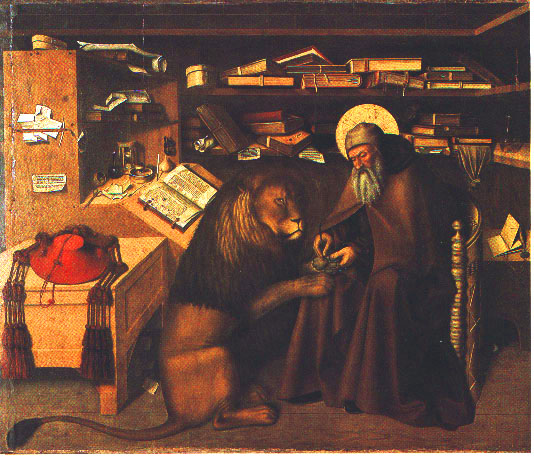
Eusebius Sophronius Hieronymus (347-420) was born into a pagan family living in what is now Croatia. He converted to Christianity after coming to Rome to study rhetoric and philosophy, a sensible move in an empire whose ruling class was abandoning traditional religion. After a riotous student life, Jerome began to take the faith increasingly seriously and in his late 20s experienced a revelation that drove him to a life of ascetic withdrawal and deeper study of the Scriptures. He immersed himself in Hebrew and Greek and was commissioned by Pope Damasus I to produce a new version of the Latin Bible. His work, which came to be called the Vulgate, became the standard Bible in western Christianity for over 1,000 years.
Jerome was critical of the worldliness of the Roman clergy; they would accuse him of improper relations with some of the wealthy women whose spiritual adviser he was. He left Rome and settled in Bethlehem in 388. For the rest of his life he lived simply and dedicated himself to his studies, turning out numerous commentaries, saints’ lives, and polemics against contemporary heresies.
Jerome is the patron saint of translators, archaeologists, librarians, archivists and students. In art he is portrayed as an old hermit or monk, studying, or with a lion sitting tamely by, a reference to a story wherein he plucked a thorn from the beast’s foot.
I reveal myself in my true colors, as a stick-in-the-mud. I hold a number of beliefs that have been repudiated by the liveliest intellects of our time. I believe order is better than chaos, creation better than destruction. I prefer gentleness to violence, forgiveness to vendetta. On the whole I think that knowledge is preferable to ignorance, and I am sure that human sympathy is more valuable than ideology. I believe that in spite of the recent triumphs of science, men have not changed much in the last two thousand years; and in consequence we must still try to learn from history. History is ourselves. I also hold one or two beliefs that are more difficult to put shortly. For example, I believe in courtesy, the ritual by which we avoid hurting other people’s feelings by satisfying our own egos. I think we should remember that we are part of a great whole, which for convenience we call nature. All living things are our brothers and sisters. Above all, I believe in the God-given genius of certain individuals, and I value a society that makes their existence possible. – Kenneth Clark, Civilization
The dog is the most faithful of animals and would be much esteemed were it not so common. Our Lord God has made His greatest gifts the commonest. – Martin Luther
It is always disagreeable to say: “I do not know. I cannot know.” It must not be said except after an energetic, even a desperate search. But there are times when the sternest duty of the savant, who has first tried every means, is to resign himself to his ignorance and to admit it honestly. – March Bloch, The Historian’s Craft
In my study of communist societies, I came to the conclusion that the purpose of communist propaganda was not to persuade or convince, not to inform, but to humiliate; and therefore, the less it corresponded to reality the better. When people are forced to remain silent when they are being told the most obvious lies, or even worse when they are forced to repeat the lies themselves, they lose once and for all their sense of probity. To assent to obvious lies is…in some small way to become evil oneself. One’s standing to resist anything is thus eroded, and even destroyed. A society of emasculated liars is easy to control. I think if you examine political correctness, it has the same effect and is intended to. – Theodore Dalrymple
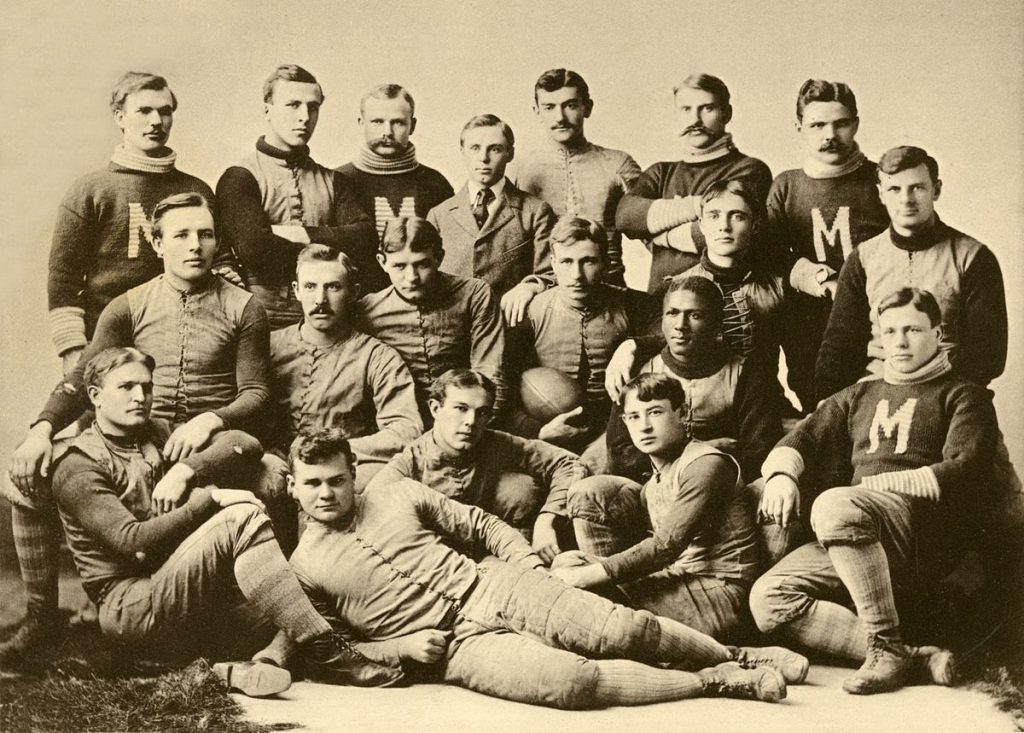
The 1892 Wyoming Seminary vs. Mansfield State Normal football game, played September 28, 1892, was the first-ever American football game played at night. The game was played between Wyoming Seminary (a private college preparatory school located in the Wyoming Valley of northeastern Pennsylvania) and Mansfield State Normal School in Mansfield, Pennsylvania.
The lighting system brought in turned out to be inadequate for gameplay. The game itself lasted only 20 minutes and there were only 10 plays. Both sides agreed to end at halftime with a 0–0 tie after several players had an unfortunate run-in with a light pole.
This historic game is celebrated by a yearly reenactment of the original game played between Wyoming Seminary and Mansfield State Normal School during an autumn festival known as the “Fabulous 1890s Weekend.” The re-enactment of the game is a play-by-play version of the actual game as recorded. Fans who watch the game are sometimes known to correct players when they deviate from the original recorded plays.
The 100th anniversary of the game happened to occur on Monday, September 28, 1992. Monday Night Football celebrated “100 years of night football” with a game between the Los Angeles Raiders and the Kansas City Chiefs at Arrowhead Stadium. The Chiefs won 27–7 in front of 77,486 fans.
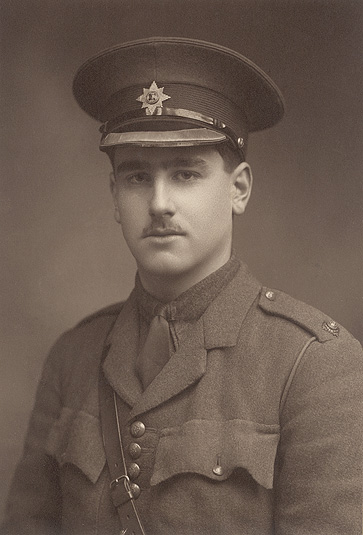
The life expectancy of a junior officer in the British Army on the Western Front in the First World War was rather short — six weeks was the average length of time an officer in a front-line unit could be expected to serve before being killed or wounded. Armed only with a swagger stick or a pistol, they were required to walk ahead of their men across no-man’s-land into the teeth of withering rifle and machine-gun fire. Tens of thousands of young men of the educated class perished in the mud of Flanders. Such a one was John Kipling, only son of the great poet Rudyard Kipling whose hymns to British imperialism had shaped much of the moral landscape of his country.
When the war erupted in 1914 many, including Rudyard Kipling, saw the struggle as one of civilization against barbarism, especially after news of German atrocities in Belgium and the sinking of civilian passenger ships became widespread. Kipling Senior was employed in the development of propaganda to support the war effort and his son was eager to join the armed forces. John tried to join the Royal Navy but his eyesight was too weak to allow him a naval career. He was rejected twice for the same reason by the Army, but his father had connections high up in the chain of command and convinced the generals that his son should be given a commission in a prestige unit, the Irish Guards. After months of training in England, John was sent as an 18-year-old second lieutenant to the front lines just in time for the disastrous Battle of Loos. This was the first British attack to use poisonous chlorine gas, a weapon pioneered by the Germans at Ypres, and the first to employ aircraft as tactical bombers. Nonetheless, the infantry charge on the German trenches failed — on one afternoon, the twelve attacking battalions suffered 8,000 casualties out of 10,000 men in four hours. John Kipling was one of those casualties.
The website “Epitaphs of the Great War” notes that letters of condolence arrived from all over the world. A few of them remain in the Kipling Archive at Sussex. Words of comfort took a different form in those days; I’m not sure we’d appreciate them today, I’m not sure the Kiplings appreciated them then: “I do not imagine that any two parents in England will more cheerfully make the sacrifice or more heroically bear the loss,” (Lord Curzon); “There are so many things worse than death” (Theodore Roosevelt). The novelist Marie Corelli struck the right note when she wrote, “You foresaw what was coming years ago – but few listened to your clarion call of warning”. To her the soldiers were the innocent and their fathers the guilty ones, guilty because they had ignored the warnings about German militarism. This is exactly how Kipling felt, and it is the meaning behind his famous epitaph:
If any question why we died, Tell them, because our fathers lied.
His father, who was at the Front as a war correspondent, searched desperately for his son’s body but it was not until 1992 that his burial place was located. Kipling’s search and grief are recounted in the play (and later movie) My Boy Jack.
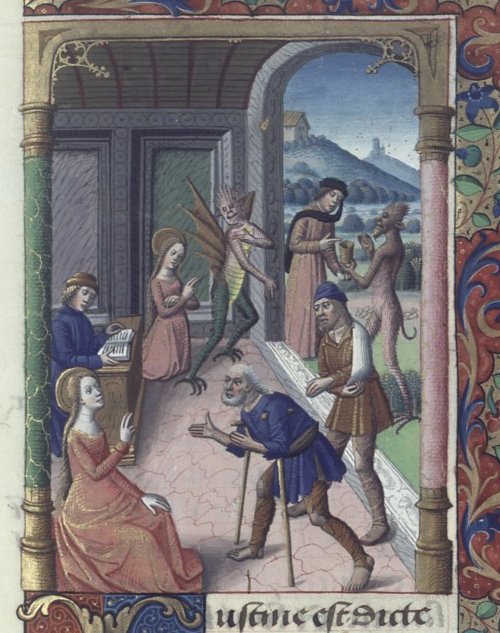
This saint, so surnamed from his having, previous to his conversion, practised the arts of a magician or diviner, has been coupled in the calendar with Justina, a young Syrian lady, regarding whom a young pagan nobleman applied to Cyprian to assist him with his arts in rendering her more favourable to his suit. Justina was a Christian, and opposed, we are told, through the aid of the Virgin, such an effectual resistance to the devices of Cyprian, that the latter was convinced of the weakness of the infernal spirits, and resolved to quit their service. He consulted a priest named Eusebius, who encouraged him in the work of conversion, which he ultimately consummated by burning all his magical books, giving his substance to the poor, and enrolling himself among the Christian catechumens. On the breaking out of the persecution under Dioclesian, Cyprian was apprehended and carried before the Roman governor at Tyre. Justina, who had been the original mover in his change of life, was, at the same time, brought before this judge and cruelly scourged, whilst Cyprian was torn with iron hooks. After this the two martyrs were sent to Nicomedia, to the Emperor Diocletian, who forthwith commanded their heads to be struck off. The history of St. Cyprian and St. Justina was recorded in a Greek poem by the Empress Eudocia, wife of Theodosius the Younger, a work which is now lost.
The two were struck from the saints’ calendar in the papal reforms of 1969, but since that purge also demoted Saint Nicholas we need pay no attention to it.
The parable of Pythagoras is dark, but true; Cor ne edito; “Eat not the heart.” Certainly if a man would give it a hard phrase, those that lack friends to open themselves unto are cannibals of their own hearts. But one thing is most admirable (wherewith I will conclude this first fruit of friendship), which is, that this communicating of a man’s self to his friend, works two contrary effects; for it redoubleth joys, and cutteth griefs in halves. For there is no man, that imparteth his joys to his friend, but he joyeth the more; and no man that imparteth his griefs to his friend, but he grieveth the less. – Francis Bacon, “Friendship”, Essays
It tickles human vanity to tell us that we are wiser than our fathers; and it is one of those propositions which is likely to pass without contradiction, from the circumstance that all those most interested in denying it are dead and gone. But if the grave could speak, and the churchyards vote upon the question, we living boasters would be in a most pitiful minority. – James K. Paulding, The Merry Tales of the Three Wise Men of Gotham.
Someone asked Diogenes why people gave to beggars, but not to philosophers. He answered, “Because they think it’s possible that they themselves might become lame and blind, but they don’t expect that they’ll ever end up philosophers.” – Diogenes Laertius, Lives of the Philosophers.
There are two phases for each period in history. The first phase is called “What Can It Hurt?” and the second is called “How Were We to Know?” – Mark Shea
It’s amazing how many heretical groups start off with changes in sexual behaviour among their tenets: the nudism of the Adamites, the antinomianism of the Ranters and the multiple wives of Islam and the Church of Jesus Christ of Latter Days Saints. With the exception of Islam, it usually ends, or ends badly. In 1890, under pressure from the U.S. government and eager for Utah statehood, the LDS Church forbade future multiple wife taking. Existing polygamous unions were left unaffected and covert evasion of the decree continues to this day among some sects.
1957 Little Rock Schools integrated by the 101st Airborne
Arkansas Governor Orval Faubus opposed integration of public schools and ordered his state’s National Guard to prevent black students from entering Little Rock Central High School. President Dwight Eisenhower countered by sending in the paratroopers. Though admitted, the first nine black students were subject to shameful verbal and physical abuse by townsfolk and their fellow students.
One of my favourite diversions when I travel is to have my picture taken beside the statues of famous historians, imagining that I, too, one day, will be immortalized in bronze by a grateful nation, gazed at uncomprehendingly by generations of school children, and used as a toilet by neighbouring birdlife. Here is a photograph of me and the statue of Icelandic historian Snorri Sturluson, erected in Bergen, Norway.
Snorri was born in 1179 and died on this date in 1241, one of the few of my profession to be thought worthy of assassination. He was born into a rich Icelandic family and married well, becoming prosperous and head of the Althing, the national assembly. On a visit to Norway he made an impression and was cultivated by those hoping to add Iceland to the King of Norway’s domain. Back in Iceland, his unionist position was not well-received by other chiefs; civil strife broke out and continued for years. Eventually Snorri was murdered, cowering in his cellar, with the connivance of the Norwegian king he had once sided with.
Snorri’s lasting fame comes from his historiography. The Prose Edda, Egli’s Saga, and the Heimskringla give us valuable information on the mythology and history (legendary and otherwise) of Iceland and Norway.
It is often forgotten that the decision by Nazi Germany to invade Poland in September 1939, and thus to start the Second World War, was only made possible by a secret agreement with the government of the USSR. The Molotov-Ribbentrop Pact of the previous month contained clauses that partitioned Poland into German and Soviet zones of influence and allowed Russia to drive into Poland from the east while the Wehrmacht struck from the west.
On this date in 1939, German and Soviet forces met, and in token of their victory over Poland, held a celebratory military parade in Brest-Litovsk (ironically the site of a humiliating capitulation by Lenin’s Bolshevik government to imperial Germany in World War I). Standing on the platform in the photo above are two geniuses of tank warfare, Germany’s Heinz Guderian and the Soviet Semyon Krivoshein.
The Soviets occupied eastern Poland until 1941 when Hitler’s surprise attack, Operation Barbarossa, broke the peace treaty with the USSR and opened up a new front in the war. In the interim the Soviets had taken hundreds of thousands of Polish prisoners and massacred the officer class in the Katyn forest in 1940. The Red Army would return in 1944 and drive out the Germans. Their stay would last until the fall of eastern European communism in 1989.
In 1689 James II, King of England and Scotland, was deprived of his throne in what came to be known as the Glorious or Bloodless Revolution. His desire to bring about religious toleration for Catholics (he was one) and his abuse of constitutional norms to do so united much of the political class who summoned James’s daughter Mary and her Dutch husband William to assume rule. William and Mary died childless and were succeed by James’s other daughter Anne. When she died in 1714, the English looked about for a Protestant heir and found one in George I who became the first of the Hanoverian line.
The descendants of James II were not willing to let the Stuart claim to the throne lapse. In 1715 James the Old Pretender launched an invasion of England with French help but was repelled. In 1745, his son (the grandson of James II) Charles Edward, known as the Young Pretender or Bonnie Prince Charlie landed in Scotland and found a small army of supporters to rally around him. His men (called Jacobites after the Latin translation of James) quickly took Edinburgh, forcing the British army to try and bring him to open battle.
This they did at Prestonpans, east of the capital. The redcoats outnumbered the Scots and were better armed but the Jacobites were made of sterner stuff than the ill-trained and inexperienced Englishmen. A sudden and savage Highland charge broke their opponents in less than fifteen minutes, killing hundreds and taking even more prisoners.
Charles Stuart’s success here led him and his generals to believe that such a charge could win them more battles but the Highlanders were massacred at Culloden when they faced disciplined troops and artillery fire.