September 27

Home / Today in History / September 27

1915 The death of John Kipling

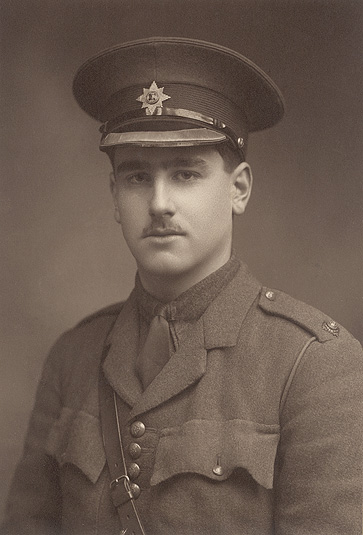
The life expectancy of a junior officer in the British Army on the Western Front in the First World War was rather short — six weeks was the average length of time an officer in a front-line unit could be expected to serve before being killed or wounded. Armed only with a swagger stick or a pistol, they were required to walk ahead of  their men across no-man’s-land into the teeth of withering rifle and machine-gun fire. Tens of thousands of young men of the educated class perished in the mud of Flanders. Such a one was John Kipling, only son of the great poet Rudyard Kipling whose hymns to British imperialism had shaped much of the moral landscape of his country.

When the war erupted in 1914 many, including Rudyard Kipling, saw the struggle as one of civilization against barbarism, especially after news of German atrocities in Belgium and the sinking of civilian passenger ships became widespread. Kipling Senior was employed in the development of propaganda to support the war effort and his son was eager to join the armed forces. John tried to join the Royal Navy but his eyesight was too weak to allow him a naval career. He was rejected twice for the same reason by the Army, but his father had connections high up in the chain of command and convinced the generals that his son should be given a commission in a prestige unit, the Irish Guards. After months of training in England, John was sent as an 18-year-old second lieutenant to the front lines just in time for the disastrous Battle of Loos. This was the first British attack to use poisonous chlorine gas, a weapon pioneered by the Germans at Ypres, and the first to employ aircraft as tactical bombers. Nonetheless, the infantry charge on the German trenches failed — on one afternoon, the twelve attacking battalions suffered 8,000 casualties out of 10,000 men in four hours. John Kipling was one of those casualties.

The website “Epitaphs of the Great War” notes that letters of condolence arrived from all over the world. A few of them remain in the Kipling Archive at Sussex. Words of comfort took a different form in those days; I’m not sure we’d appreciate them today, I’m not sure the Kiplings appreciated them then: “I do not imagine that any two parents in England will more cheerfully make the sacrifice or more heroically bear the loss,” (Lord Curzon); “There are so many things worse than death” (Theodore Roosevelt). The novelist Marie Corelli struck the right note when she wrote, “You foresaw what was coming years ago – but few listened to your clarion call of warning”. To her the soldiers were the innocent and their fathers the guilty ones, guilty because they had ignored the warnings about German militarism. This is exactly how Kipling felt, and it is the meaning behind his famous epitaph:

If any question why we died,
Tell them, because our fathers lied.

His father, who was at the Front as a war correspondent, searched desperately for his son’s body but it was not until 1992 that his burial place was located. Kipling’s search and grief are recounted in the play (and later movie) My Boy Jack.

September 23

Home / Today in History / September 23

One of my favourite diversions when I travel is to have my picture taken beside the statues of famous historians, imagining that I, too, one day, will be immortalized in bronze by a grateful nation, gazed at uncomprehendingly by generations of school children, and used as a toilet by neighbouring birdlife. Here is a photograph of me and the statue of Icelandic historian Snorri Sturluson, erected in Bergen, Norway.

Snorri was born in 1179 and died on this date in 1241, one of the few of my profession to be thought worthy of assassination. He was born into a rich Icelandic family and married well, becoming prosperous and head of the Althing, the national assembly. On a visit to Norway he made an impression and was cultivated by those hoping to add Iceland to the King of Norway’s domain. Back in Iceland, his unionist position was not well-received by other chiefs; civil strife broke out and continued for years. Eventually Snorri was murdered, cowering in his cellar, with the connivance of the Norwegian king he had once sided with.

Snorri’s lasting fame comes from his historiography. The Prose Edda, Egli’s Saga, and the Heimskringla give us valuable information on the mythology and history (legendary and otherwise) of Iceland and Norway.


September 22

Home / Today in History / September 22

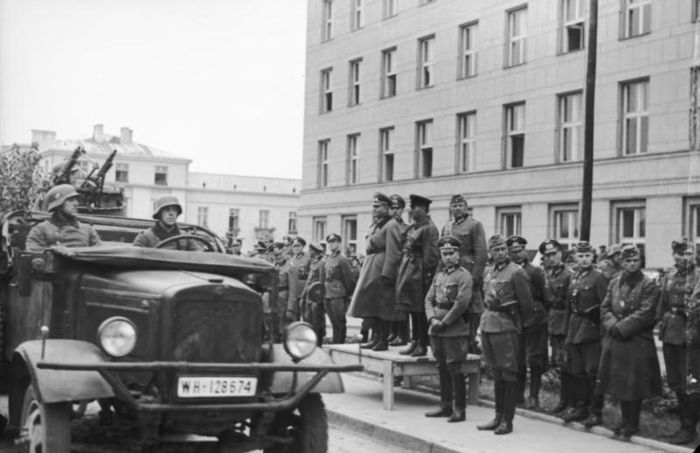
It is often forgotten that the decision by Nazi Germany to invade Poland in September 1939, and thus to start the Second World War, was only made possible by a secret agreement with the government of the USSR. The Molotov-Ribbentrop Pact of the previous month contained clauses that partitioned Poland into German and Soviet zones of influence and allowed Russia to drive into Poland from the east while the Wehrmacht struck from the west.

On this date in 1939, German and Soviet forces met, and in token of their victory over Poland, held a celebratory military parade in Brest-Litovsk (ironically the site of a humiliating capitulation by Lenin’s Bolshevik government to imperial Germany in World War I). Standing on the platform in the photo above are two geniuses of tank warfare, Germany’s Heinz Guderian and the Soviet Semyon Krivoshein.

The Soviets occupied eastern Poland until 1941 when Hitler’s surprise attack, Operation Barbarossa, broke the peace treaty with the USSR and opened up a new front in the war. In the interim the Soviets had taken hundreds of thousands of Polish prisoners and massacred the officer class in the Katyn forest in 1940. The Red Army would return in 1944 and drive out the Germans. Their stay would last until the fall of eastern European communism in 1989.

September 18

Home / Today in History / September 18


96

The assassination of a tyrant

The Romans, after dispensing with their Republic, tried a series of imperial dynasties. The problem was that, while the founder was often a man of restraint and competence, his children or grandchildren were likely as not to be monsters. The very able Augustus gave way to the paranoid Tiberius, the ghoulish Caligula, the dotard Claudius, and the fiendish Nero. After a year of four rival claimants Nero was replaced by the moderate Vespasian. Unfortunately Vespasian’s decent son Titus died early and was replaced in 81 AD by the younger Domitian, whose tale Chambers takes up here:

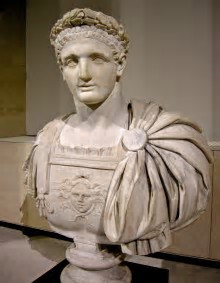
The obituary for this day includes the name of one of those monsters, who disgrace so frequently the annals of the ancient Roman empire. On 18th September, 96 A. D., the Emperor Domitian was assassinated by a band of conspirators, after having rendered himself for many years the terror and detestation of his subjects. The son of Vespasian, and the brother and successor of Titus, he exhibited in the commencement of his reign a great show of righteous severity, and came forward as a reformer of public morals. Several persons who had transgressed the laws of conjugal fidelity, as well as some vestal virgins who had violated their vows, were punished with death. It was not long, however, before his real character showed itself; and he became a disgrace to humanity by his acts of cruelty and avarice. Cowardice and falsehood entered largely into his disposition, which, if we are to credit all the accounts that have descended to us, seems to have scarcely had a redeeming point. Multitudes of persons were put to death, either because the emperor desired their wealth, or from his having become apprehensive of their popularity or influence. Secret informers were encouraged, but philosophers and literary men were slaughtered or banished, though Martial and Silius Italicus could so far degrade poetry, as make it the vehicle for flattery of the imperial monster.

A favourite amusement of his, it is said, was killing flies, in which he would spend whole hours, and nothing seemed to give him greater pleasure than to witness the effects of terror on his fellow-creatures. On one occasion, he invited formally the members of the senate to a grand feast, and caused them on their arrival to be ushered into a large hall, hung with black and lighted with funeral torches, such as only served to exhibit to the awe-struck guests an array of coffins, on which each read his own name. Whilst they contemplated this ghastly spectacle, a troop of horrid forms, habited like furies, burst into the apartment, each with a lighted torch in one hand, and a poniard in the other. After having terrified for some time the members of Rome’s legislative body, these demon-masqueraders opened the door of the hall, through which the senators were only too happy to make a speedy exit. Who can doubt that the character of Domitian had as much of the madman as the wretch in its composition?

At length human patience was exhausted, and a conspiracy was formed for his destruction, in which his wife and some of his nearest friends were concerned. For a long time, the emperor had entertained a presentiment of his approaching end, and even of the hour and manner of his death. Becoming every day more and more fearful, he caused the galleries in which he walked to be lined with polished stones, so that he might see, as in a mirror, all that passed behind him. He never conversed with prisoners but alone and in secret, and it was his practice whilst he talked with them, to hold their chains in his hands. To inculcate on his servants a dread of compassing the death of their master, even with his own consent, he caused Epaphroditus to be put to death, because he had assisted Nero to commit suicide.

The evening before his death, some truffles were brought, which he directed to be laid aside till the next day, adding, ‘If I am there;’ and then turning to his courtiers said, that the next day the moon would be made bloody in the sign of Aquarius, and an event would take place of which all the world should speak. In the middle of the night, he awoke in an agony of fear, and started from his bed. The following morning, he had a consultation with a soothsayer from Germany, regarding a flash of lightning; the seer predicted a revolution in the empire, and was forthwith ordered off to execution. In scratching a pimple on his forehead, Domitian drew a little blood, and exclaimed: ‘Too happy should I be were this to compensate for all the blood that I cause to be shed!’ He asked what o’clock it was, and as he had a dread of the fifth hour, his attendants informed him that the sixth had arrived. On hearing this he appeared reassured, as if all danger were past, and he was preparing to go to the bath, when he was stopped by Parthenius, the principal chamberlain, who informed him that a person demanded to speak with him on momentous business of state. He caused every one to retire, and entered his private closet. Here he found the person in question waiting for him, and whilst he listened with terror to the pretended revelation of some secret plot against himself, he was stabbed by this individual, and fell wounded to the ground. A band of conspirators, including the distinguished veteran Clodianus, Maximus a freedman, and Saturius the decurion of the palace, rushed in and despatched him with seven blows of a dagger. He was in the forty-fifth year of his age, and fifteenth of his reign. On receiving intelligence of his death, the senate elected Nerva as his successor.
September 15

Home / Today in History / September 15

1963 The Birmingham Church Bombing

In the early 1960s demands for voting rights and civil rights for African Americans were met by violence, particularly in the southern states. There, support for separation of the races was a deeply entrenched social belief and the Ku Klux Klan attracted many men (and women) who would fight for segregation. Increased media attention, the popularity of leaders such as Martin Luther King, Jr., and political considerations by the Kennedy regime in Washington turned up the pressure. Vigilante attacks on civil rights workers and those attempting to march or vote escalated to murder.

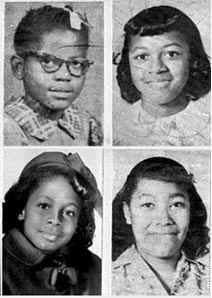
On the morning of Sunday, September 15, 1963 a bomb was placed outside Birmingham’s 16th Street Baptist Church. The church had been active in organizing protests against segregation and this made it a target in the eyes of some. At 10:22, fifteen sticks of dynamite under the porch exploded killing four children and wounding 22 others. The dead were four little girls: Addie Mae Collins, Cynthia Wesley, Carole Robertson and Carol Denise McNair.

This atrocity did much to energize the civil rights movement and discredit southern segregationists but justice for the victims was not easily forthcoming. The federal government dispatched FBI agents to help in the investigation and the state of Alabama issued a paltry $5,000 reward for information. Martin Luther King condemned Governor George Wallace, a vociferous segregationist, telling him “the blood of four little children … is on your hands. Your irresponsible and misguided actions have created in Birmingham and Alabama the atmosphere that has induced continued violence and now murder.”

The FBI eventually identified 4 members of a Klan splinter group as the perpetrators — Thomas Blanton, Jr., Herman Frank Cash, Robert Chambliss, and Bobby Frank Cherry — but no federal action was taken against them while J. Edgar Hoover headed the FBI. In the 1970s a new Alabama Attorney General secured a murder conviction against Chambliss who had purchased the dynamite. In 2000 the federal government reopened the case and convicted the two surviving bombers, Cherry and Blanton, of murder, 37 years after the deed. All four of the accused maintained their innocence throughout.

September 12

Home / Today in History / September 12

490 B.C. Athens defeats the Persians at Marathon

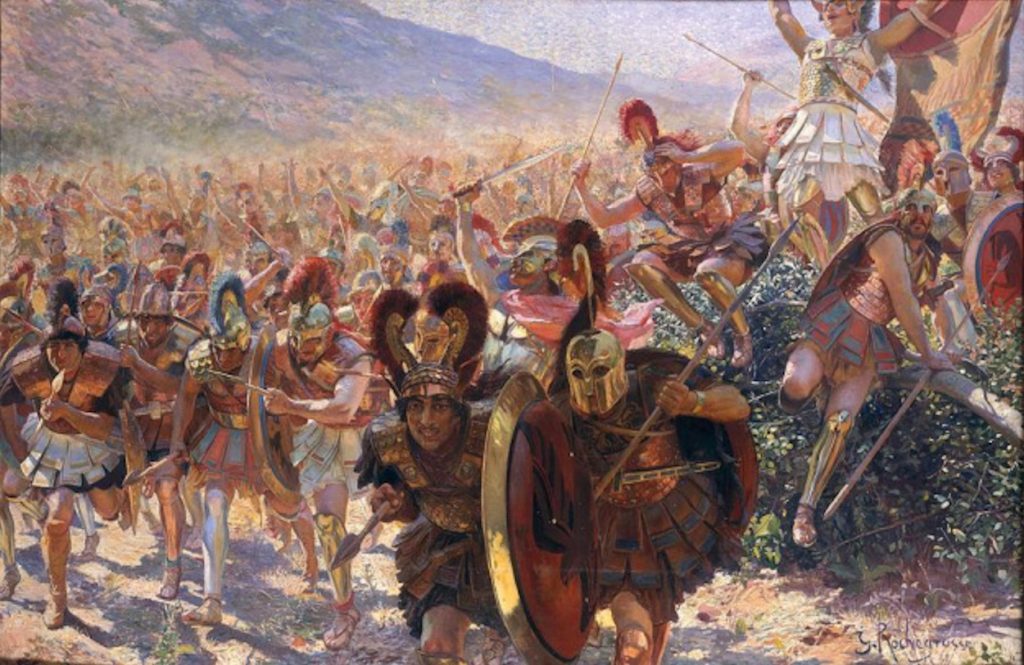
Darius, the Persian emperor, was bent on expanding his realm into the Greek world. The help given by the newly-democratized city of Athens to Greek cities in Asia Minor in their resistance to Persia persuaded Darius to invade their territory with a huge fleet and army. He landed his army at Marathon, some 25 miles from Athens, because it was an area supposedly loyal to Hippias, a former Athenian tyrant who accompanied the Persians and who hoped to be restored as a puppet ruler under Darius.

Sparta declined to send help immediately to its fellow Greeks, using the excuse of a religious festival, but the small city of Plataea sent 1,000 men to aid the Athenian force of 9,000 hoplites — heavy infantry. Under Miltiades the Athenians blocked the Persians from moving inland and forced a battle, despite being outnumbered by at least 2 to 1. The Persians seem to have been taken by surprise by a sudden Greek charge, panicked, and were slaughtered in great numbers on the beach.

The Athenian victory was important because it convinced Greece that Persia was not unbeatable and because, had they lost the battle, their experiment with democracy would have ended.  

Ten years later, the son of Darius, Xerxes, returned to Greece with an even larger force and confronted the Hellenes in battles at Thermopylae, Salamis, and Plataea. 

September 11, 1565

Home / Today in History / September 11, 1565

The lifting of the siege of Malta

When we think of September 11 we are apt to most quickly remember the horrors visited on New York and the Pentagon in 2001, but there are many other noteworthy events which have taken place on that date. On this day in history William Wallace and his Scots defeated the English at Stirling Bridge, Oliver Cromwell’s troops stormed the Irish town of Drogheda and massacred the inhabitants, and the American consulate in Benghazi was overrun by Islamic militants.

Of more significance than any of those was the conclusion of the Great Siege of Malta in 1565. The Turkish emperor Suleiman the Magnificent had launched an expedition against the  pesky Knights of St John at Malta who dared to contest Islamic naval supremacy in the Mediterranean. 48,000 troops were landed on Malta from 150 ships — Barbary pirates, Turkish cavalry, regular Janissaries and sundry religious fanatics and volunteer adventurers, opposing 500 Knights of St John, 2500 Italian and Spanish infantry and a few thousand Maltese volunteers. The siege lasted for four months and was waged with intense cruelty and bravery on both sides. The Knights’ town and fort were pounded into rubble but they repelled every attack. In September 1565 the Turks finally sailed away leaving behind at least 25,000 dead. 

This victory and a naval battle at Lepanto in 1571 kept Italy safe from a Turkish invasion that would have spread Islam deeper into Europe.

September 9

Home / Today in History / September 9

384 The birth of a nincompoop

It was the ill-fortune of the Roman Empire at the beginning of the fifth century to be governed by a pair of useless twits, the sons of the capable Theodosius I, Honorius in the West and Arcadius in the East.

Honorius succeed to the imperial throne at the age of ten. As long as he was under the tutelage of Stilicho, the half-Vandal general who had married into the royal family, things went fairly smoothly: revolts were put down and barbarian invasions were thwarted. In 408, however, Honorius had Stilicho and his family murdered. This not only deprived him of an able general but prompted barbarian troops in the service of Rome to defect to the Visigoths, who in 410 sacked Rome while Honorius hid out in Ravenna. 

Thomas Hodgkin, the 19th-century historian and author of the massive Italy and her Invaders sums up the life of this hapless emperor:

Let us now turn from poetry to fact, and see what mark the real Honorius made upon the men and things that surrounded him. None. It is impossible to imagine a character more utterly destitute of moral colour, of self-determining energy, than that of the younger son of Theodosius. In Arcadius we do at length discover traces of uxoriousness, a blemish in some rulers, but which becomes almost a merit in him when contrasted with the absolute vacancy, the inability to love, to hate, to think, to execute, almost to be, which marks the impersonal personality of Honorius. After earnestly scrutinising his life to discover some traces of human emotion under the stolid mask of his countenance, we may perhaps pronounce with some confidence on the three following points.

1. He perceived, through life, the extreme importance of keeping the sacred person of the Emperor of the West out of the reach of danger.

2. He was, at any rate in youth, a sportsman.

3. In his later years he showed considerable interest in the rearing of poultry.


September 8

Home / Today in History / September 8


1397 The murder of the Duke of Gloucester

The arrest and murder of Thomas of Woodstock, Duke of Gloucester, is one of the most tragical episodes of English history. However guilty he might be, the proceedings against him were executed with such treachery and cruelty, as to render them revolting to humanity. He was the seventh and youngest son of Edward III, and consequently the uncle of Richard II. Being himself a resolute and warlike man, he was dissatisfied with what he considered the unprincipled and pusillanimous conduct of his nephew, and, either from a spirit of patriotism or ambition, or, more probably, a combination of both, he promoted two or three measures against the king, more by mere words than by acts. On confessing this to the king, and expressing his sorrow for it, he was promised forgiveness, and restored to the royal favour. Trusting to this reconciliation, he was residing peaceably in his castle at Pleshy, near London, where be received a visit from the king, not only without suspicion, but with the fullest confidence of his friendly intentions. The incident is thus touchingly related by Froissart, a contemporary chronicler:

The king went after dinner, with part of his retinue, to Fleshy, about five o’clock. The Duke of Gloucester had already supped; for he was very sober, and sat but a short time at table, either at dinner or supper. He came to meet the king, and honoured him as we ought to honour our lord, so did the duchess and her children, who were there. The king entered the hall, and thence into the chamber. A table was spread for the king, and he supped a little. He said to the duke: “Fair uncle! have your horses saddled: but not all; only five or six; you must accompany me to London; we shall find there my uncles Lancaster and York, and I mean to be governed by your advice on a request they intend making to me. Bid your maitre-d’hotel follow you with your people to London.”

The duke, who thought no ill from it, assented to it pleasantly enough. As soon as the king had supped, and all were ready, the king took leave of the duchess and her children, and mounted his horse. So did the duke, who left Fleshy with only three esquires and four varlets. They avoided the high-road to London, but rode with speed, conversing on various topics, till they came to Stratford. The king then pushed on before him, and the earl marshal came suddenly behind him, with a great body of horsemen, and springing on the duke, said: “I arrest you in the king’s name!” The duke, astonished, saw that he was betrayed, and cried with a loud voice after the king. I do not know if the king heard him or not, but he did not return, but rode away.’

The duke was then hurried off to Calais, where he was placed in the hands of some of the king’s minions, under the Duke of Norfolk. Two of these ruffians, Serle, a valet of the king’s, and Franceys, a valet of the Duke of Albemarle, then told the Duke of Gloucester, that ‘it was the king’s will that he should die. He answered, that if it was his will, it must be so. They asked him to have a chaplain, he agreed, and confessed. They then made him lie down on a bed; the two valets threw a feather-bed upon him; three other persons held down the sides of it, while Serle and Franceys pressed on the mouth of the duke till he expired, three others of the assistants all the while on their knees weeping and praying for his soul, and Halle keeping guard at the door.  When he was dead, the Duke of Norfolk came to them, and saw the dead body.

The body of the Duke of Gloucester was conveyed with great pomp to England, and first buried in the abbey of Pleshy, his own foundation, in a tomb which he himself had provided for the purpose. Subsequently, his remains were removed to Westminster, and deposited in the king’s chapel, under a marble slab inlaid with brass. Immediately after his murder, his widow, who was the daughter of Humphry de Bohun, Earl of Hereford, became a nun in the abbey of Barking; at her death she was buried beside her husband in Westminster Abbey.

September 5

Home / Today in History / September 5

A good day for terror.

1793

The French Revolution institute the Reign  of Terror.

“Let’s make terror the order of the day!” said the French politician Bertrand Barère in the National Assembly. The revolutionaries of 1793 were afraid both of the unpredictable violence of the Parisian mob and the gathering forces of counter-revolution, so they launched an attack not only on the aristocrats and clergy but also political moderates such as the Girondists. Over 16,000 death sentences were passed in less than a year. Former leaders of the Revolution such as Georges Danton, Louis Hébert, and Camille Desmoulins, found themselves being sent to the guillotine by their old comrades. Maximilien Robespierre explained the ideological underpinnings of this bloody project: “If the basis of popular government in peacetime is virtue, the basis of popular government during a revolution is both virtue and terror; virtue, without which terror is baneful; terror, without which virtue is powerless. Terror is nothing more than speedy, severe and inflexible justice; it is thus an emanation of virtue; it is less a principle in itself, than a consequence of the general principle of democracy, applied to the most pressing needs of the patrie.”

But the Revolution always eats its own children. In July 1794 Robespierre and his followers were executed and the steam went out of the Terror.

1918

The Bolsheviks unleash the Red Terror.

The assassination of Moisei Uritsky, the secret police chief in St Petersburg, and the attempt on the life of Vladimir Lenin led the Bolshevik secret police, the Cheka, on the orders of Lenin, to issue the decree “On Red Terror”. Frightful violence against class enemies was necessary to save the Revolution. It was not necessary to have actually done anything to merit death. Martin Latsis, the head of the Chekists in Ukraine, proclaimed: “Do not look in the file of incriminating evidence to see whether or not the accused rose up against the Soviets with arms or words. Ask him instead to which class he belongs, what is his background, his education, his profession. These are the questions that will determine the fate of the accused. That is the meaning and essence of the Red Terror.” Communist leader Grigory Zinoviev declared: “To overcome our enemies we must have our own socialist militarism. We must carry along with us 90 million out of the 100 million of Soviet Russia’s population. As for the rest, we have nothing to say to them. They must be annihilated.”  And annihilated they were, by gunfire, drowning, burning, crucifixion, live burial, and starvation. It aroused similar atrocities by the White counter-revolutionary forces and inspired other Communist revolutions to practise their own Terrors.  As is usual, the perpetrators themselves were later victims of their own methods: Latsis, Zinoviev and Leon Trotsky (see illustration above) and many more of the Bolshevik revolutionaries of 1918 perished at the hands of their former colleagues.