Christmas in Panama

Home / Christmas / Christmas in Panama

Like many Latin American countries Panama celebrates its Christmas with a mixture of traditions from its Spanish Catholic heritage and the influence of the United States; the latter is particularly acute because of the long American occupation of the Panama Canal Zone which ended only in 1999.

In Panamanian homes, for example, the family Nativity scene, always important to Catholic families, will share space with that northern import the Christmas tree. For many years the country had to import tens of thousands of evergreens from the United States — they would arrive in mi-December on ships — but now Panama has its own tree-farming industry and they are much more wide spread. The mix of cultures can also be heard in the Christmas music broadcast by radio and television: traditional songs, the Spanish-influenced “villancicos” and  “gaitas”, coexist with American English-language carols.

 The approach of Christmas is marked by novenas, nine days of religious services involving special Christmas prayers, songs and devotions which take place both in churches and homes, and posadas (above) which reenact the search of the Holy Family for lodgings. It is also a time of parties, little treats from godparents to godchildren, Christmas markets, home decoration and parades. The climax is Christmas Eve with its family dinner: on the menu is sure to be tamales —  cornmeal stuffed with chicken, onions and sauce and wrapped in plantain — beans, Arroz con Pollo — chicken and rice — and seafood, especially shrimp. To drink there is rum punch, piña colada, wine and beer with soft drinks for the kids. For Catholic families the Misa de Gallo, the midnight “rooster” mass, is not to be missed.

 Influenced by the American example many Panamanian children now expect to find presents under the tree on Christmas, brought either by Santa Claus or the Christ Child. In other families children will have to wait until the more traditional Epiphany date. Then on Dia de los Reyes, Kings’ Day, the Magi will bring gifts and the Christmas season will come to an end with another round of parties.

A Lebensborn Christmas

Home / Christmas / A Lebensborn Christmas

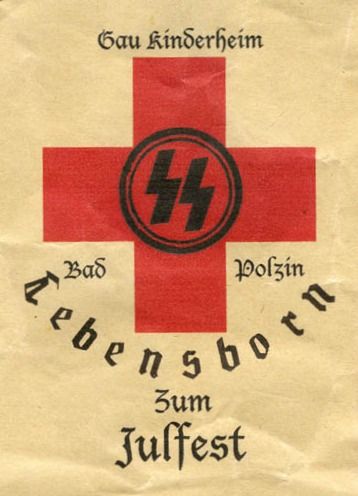
One of the creepier programs of the Nazi state was the Lebensborn (Fountain of Life) project. Originally a maternity service for wives of SS men, it turned into a means to encourage the birth of racially-pure babies by every means possible. It took in unwed mothers who could pass a racial-conformity test; it encouraged young German women to be impregnated by SS officers or physically-correct strangers; it kidnapped children in conquered lands; and it sheltered women from conquered countries who had become pregnant by German soldiers.

After the end of World War II officials of the program were put on trial and attempts were made to recover kidnapped children from the Aryan families with whom they had been placed.

The image below is from a paper bag full full of goodies distributed to expectant mothers for Christmas (or in SS parlance, “Julfest”) at the Bad Polzin Lebensborn home in Pomerania.

Beatings at Christmas

Home / Christmas / Beatings at Christmas

There are a number of different types of thrashings connected with the Christmas season in many countries over the centuries. The first is a threat of chastisement and is connected with the switches and rods carried by gift-bringers and their helpers. St Nicholas was equally adept at thrashing bad children as he was in rewarding good behaviour.  German families kept a Klausholz – a Nicholas stick – on which to keep track of the number of Our Fathers said by the child, both to impress the saint when he arrived and to remind the child of the conditional nature of the anticipated gifts. In England a 1483 book of saints’ legends printed by William Caxton noted that while Nicholas was humble and joyous, he was also “cruel in correctyng”.

In the sixteenth-century Germany the Christmas bundle of presents included: “things that belong to teaching, obedience, chastisement and discipline, as A.B.C tablets, Bibles and handsome books, writing materials, paper, etc. and the Christ-rod”. The first book in the United States to include a picture of Santa Claus, the 1821 Children’s Friend, has the gift-giver state that he was happy to reward good girls and boys but

Where I found the children naughty,

In manners rude, in temper haughty,

Thankless to parents, liars, swearers,

Boxers, or cheats, or base tale-bearers,

I left a long, black birchen rod,

Such as the dread command of God

Directs a parent’s hand to use

When virtue’s path his sons refuse.

 December 28, the Feast of the Holy Innocents, commemorates the murder of the male babies of Bethlehem by King Herod. In England the day was known as Childermas (or Dyzemas) and was considered an ill-omened time; few would want, for example, to be married on that date. Not only was no business conducted on that day, but the day of the week on which it fell was deemed unlucky for the rest of the year. In Ireland it was the “cross day of the year” when no new enterprise was begun. Many sailors would not sail on that day; on the Aran isles no one was buried on Childermas (or the day of the week on which it occurred); and in Cornwall to wash on that day was to doom one of your relatives to death. On Childermas it was once customary in England to beat children. The explanation given in the seventeenth century was that that the memory of Herod’s crime “might stick the closer; and, in a moderate proportion, to act over the crueltie again in kind” but anthropologists have noted that ritual beatings are more likely descended from pagan rituals of good luck than punishment. An old German custom called “peppering” saw children beating their parents and servants beating their masters with sticks while asking in verse form for a treat. An equally venerable tradition in Normandy allowed children to give a thrashing to those who stayed too long in bed on December 28. In Wales on St Stephen’s Day, the practice was called “holming” or “holly-beating” — the last person to get out of bed was hit with holly sprigs and made to act as servant to the rest of the family. Sometimes the purpose of the holming was to draw blood. In parts of Scotland on New Year’s Eve boys beat each other with holly branches in the belief that for every drop of blood shed a year of life was saved for the victim. In Sweden it was once customary for the first-riser on Christmas Eve to give other family members small bundles of twigs which they would use to beat each other in the spirit of imparting vitality. In France children who let themselves be caught in bed on the morning of Holy Innocents’ came in for a whipping from their parents; while in one province, Normandy, the early risers among the young people themselves gave the sluggards a beating. The practice even gave birth to a verb—innocenter.

Buzzlewit Day Encore

Home / Christmas / Buzzlewit Day Encore

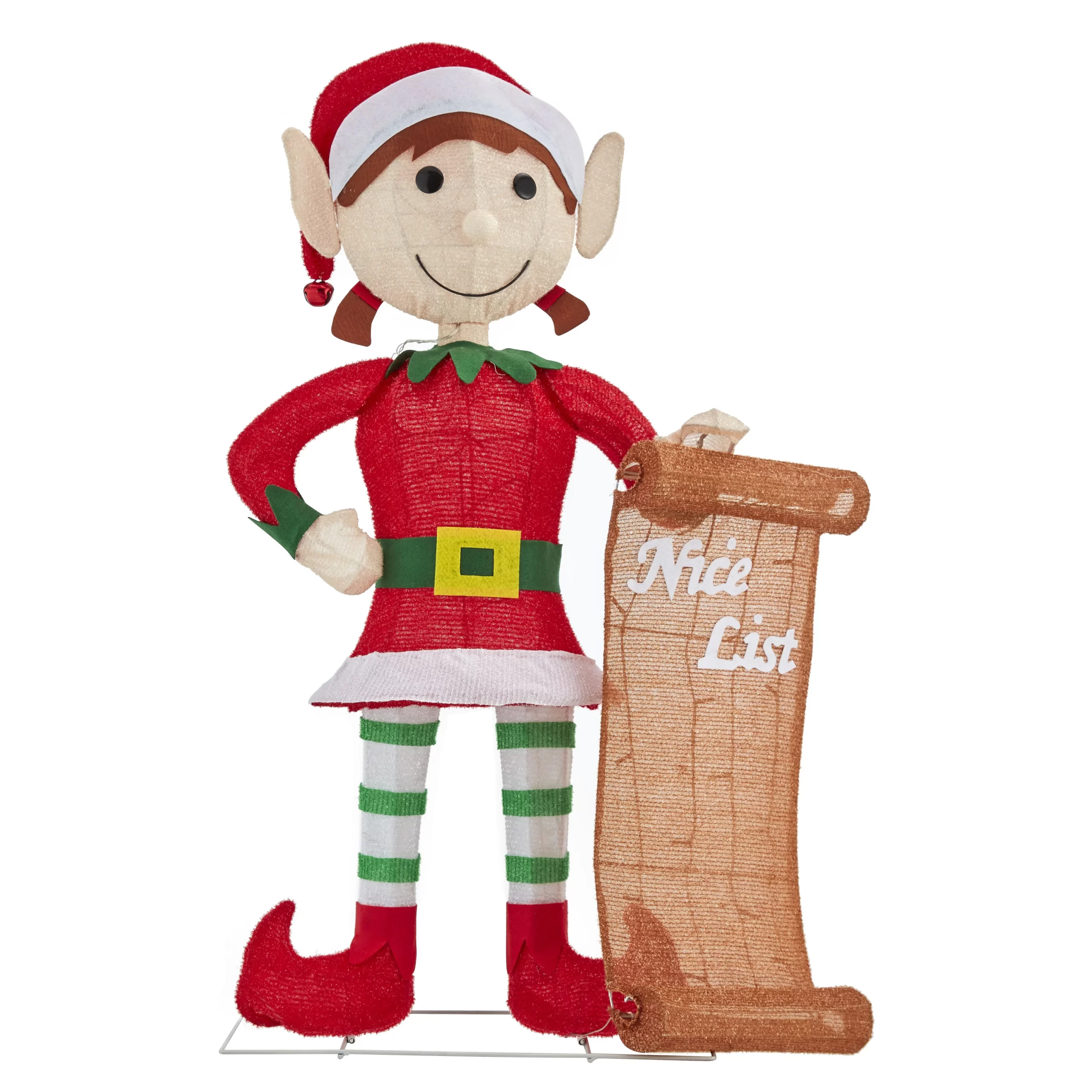
Four years ago I posted the following, with the caveat that I had only seen it in one source. Later, I had the source confirmed, so, in the hope that this is all true, I wish a Happy Buzzlewit Day to you all. Buzzlewit seems to me to be a more congenial creature than the creepy Elf on the Shelf.

Altoona, Pennsylvania, and a growing number of communities in the Boston area celebrate Buzzlewitz Day on November 11. According to the Lowther tradition, Buzzlewitz is the elf that is sent by Santa to collect children’s Christmas lists. On 11 November of each year at 11 pm, children leave their Christmas lists and a snickerdoodle cookie on the mantle or in the kitchen. Buzzlewitz comes in the night to collect the lists. In return, he leaves a mint and an acorn.

Canadian Santas of Yesteryear

Home / Christmas / Canadian Santas of Yesteryear

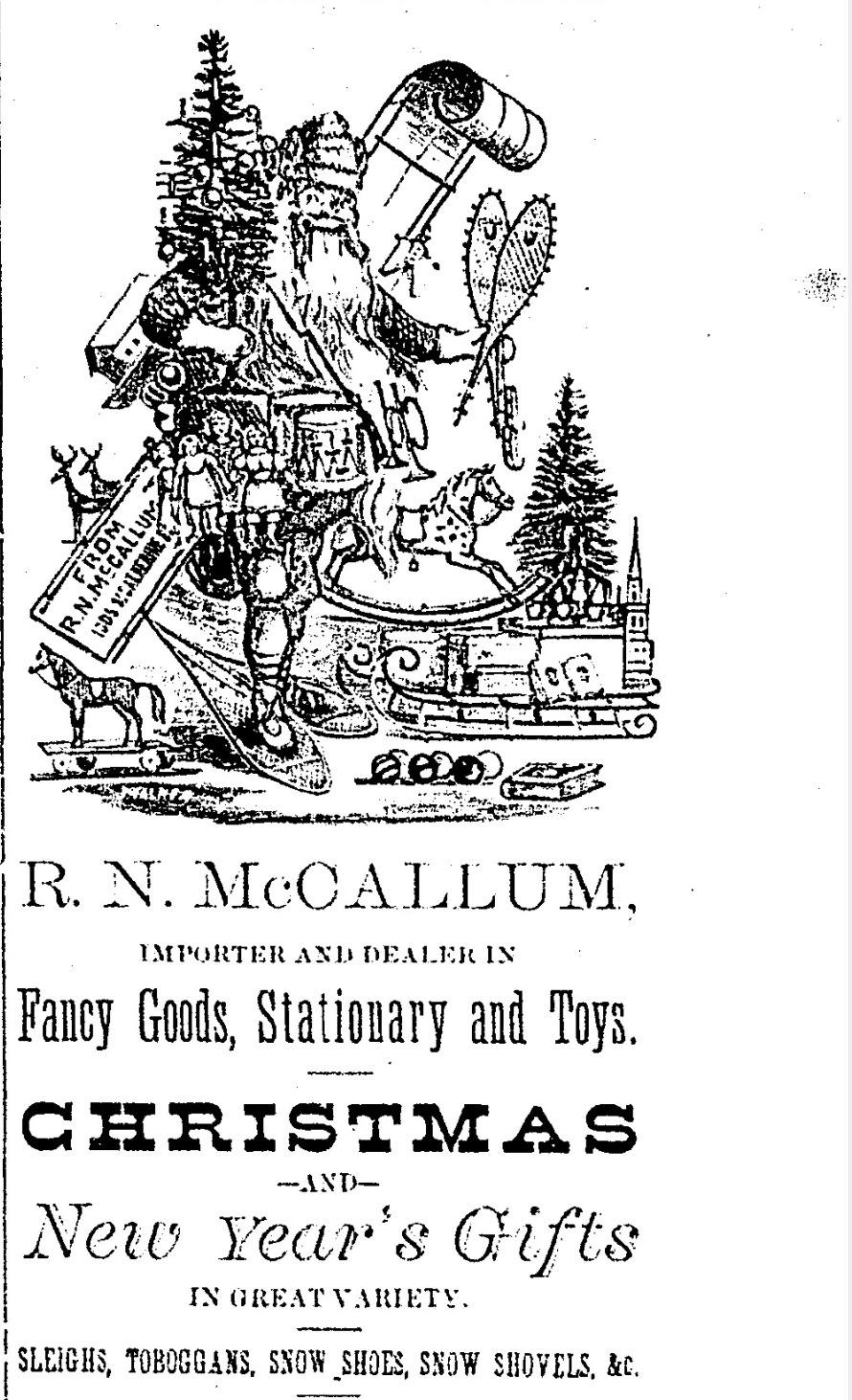
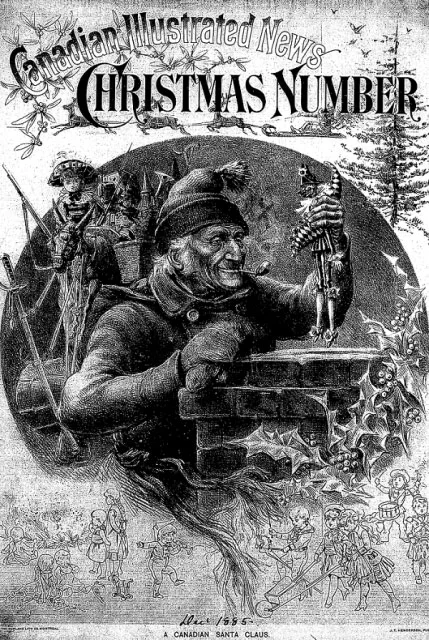
Here is a Santa Claus figure featured in an advertisement from the Canadian Illustrated News of 1883.

Being Canadian he is, of course, equipped with snowshoes and sled.

Here is a Santa from the same magazine in 1885.

You will note how distinctive this version of the Gift Bringer is. He is clean-shaven and wears no furs; instead he had a voyageur’s ceinture flechée sash, a floppy voyageur toque, and he is pulled by six reindeer. His sleigh has no runners (which would be useful on snowy roads) but is flat-bottomed like dog-powered sleds, good for deeper snow. Among the gifts he carries are a sword and a musket.

The Great Paignton Pudding Disaster

Home / Christmas / The Great Paignton Pudding Disaster

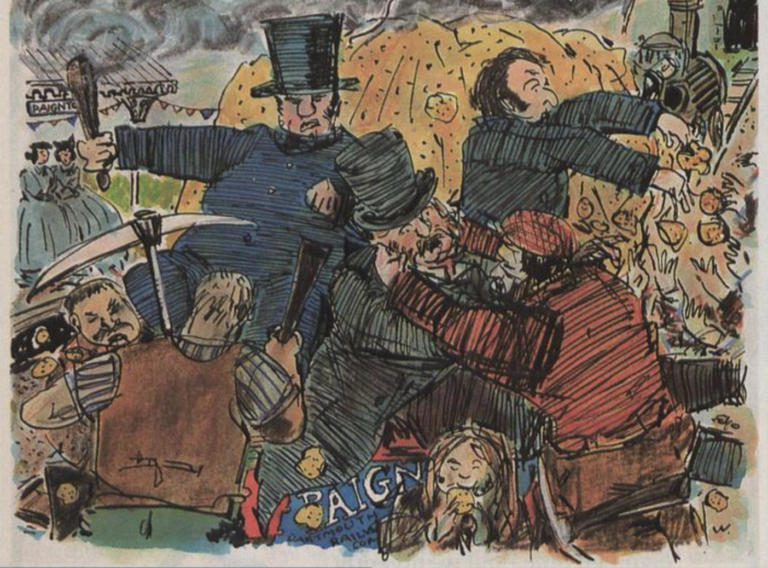
In 1819 the English town of Paignton produced a 900 lb. Christmas pudding in honour of the anniversary of their town charter. Despite being boiled in a brewer’s furnace for four days it remained uncooked, with the inside still raw. The townsfolk attempted an even more massive pudding in 1859 as part of a celebration of the arrival of the railway. This time it was cooked to perfection; made of 500 lbs of flour, 190 lbs of bread, 400 lbs of raisins, 184 lbs of currants, 400 lbs of suet, 96 lbs of sugar, 320 lemons, 150 nutmegs and 360 quarts of milk. The Monster Pudding (as newspapers referred to it) was over 13’ feet in circumference and rested on a wagon pulled by 8 horses. It was meant to feed 850 poor of the parish as well as 300 railway labourers but before that could happen a crowd of 18,000 sight-seers, well-lubricated by the local cider, rushed the pudding, swept aside its police escort and demolished the dessert in scenes of riotous disorder.

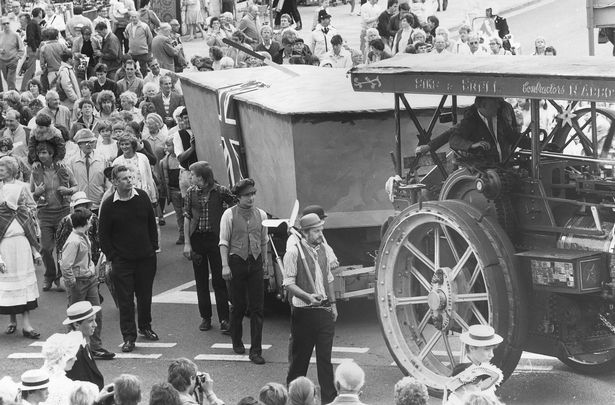
To this day residents of Paignton are called “Pudden Eaters” and pudding festivities are still observed with pride. In 1986 a giant casket containing 900 individual puddings on little pots was mounted on a wagon and pulled through the town by a steam-powered tractor. Mercifully, no rioting took place.

As monstrous as the Paington Pudding was, it would have been dwarfed by that giant Christmas pudding of over 3 tons made in Aughton, Lancashire in 1992. This confection was verified by the Guinness Book of World Records but there are stories of a 10-ton pudding created in 1931 in London.

Knut’s Day Yeast and Weevils

Home / Christmas / Knut’s Day Yeast and Weevils

In folklore, Nuutti has meant the day after Epiphany, the seventh of January. The day was not moved to its current location on the calendar until January 13, until the early 18th century. Many of Nuut’s customs and sayings related to the end of Christmas actually belong to the day after Epiphany.

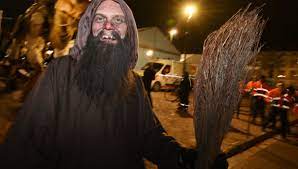
The Nuuttipuk tradition has continued alive in Finland until the last wars. At the heart of the procession of yeast or weevils were strangely dressed men or women. The dresses had the skin of a goat or sheep on their heads, their faces covered with leather or a masked face, or blackened. There was a long beard in his chin. The jacket on the stand could be leather upside down or a jacket made of straw braids. Some had in their hands a rod with a wet scepter at their head to swing people.

The nuts went from house to house, singing greetings and asking: Is there any yeast left? The peasants had to endure the buck with food and food. If the sahti was over, the goats took the pegs out of the beer kegs and sang mocking songs. In northern Finland, poor houses were also carried inside. However, if entertainment was received, the goats gave thanks and sang. The peasants responded to the costumes with their own songs.

People along the way joined the crowd passing from house to house. The procession marked on the door or aft wall of each house that the house had paid its “tax”. If the entertainment had been plentiful, as many pictures of the branch as had been offered in the house were drawn on the wall. The drawing was allowed to be in place all winter to witness the wealth and hospitality of the house.

The food and drinks collected by the buck could be gathered in one house that had been chosen to host the last games and dances of the Christmas season. The people of the village arrived there in the evening together to eat, drink and thus say goodbye during Christmas. The parties played, danced and made noise. At the end of the celebration, Christmas straws were carried out of the house.

Childermas

Home / Christmas / Childermas

The Feast of the Holy Innocents

December 28, the Feast of the Holy Innocents, commemorates the murder of the male babies of Bethlehem by King Herod. In England the day was known as Childermas (or Dyzemas) and was considered an ill-omened time; few would want, for example, to be married on that date. Not only was no business conducted on that day, but the day of the week on which it fell was deemed unlucky for the rest of the year. In Ireland it was Lá Crostna na Bliana, the “cross day of the year” when no new enterprise was begun. Many sailors would not sail on that day; on the Aran isles no one was buried on Childermas (or the day of the week on which it occurred); and in Cornwall to wash on that day was to doom one of your relatives to death. Childermas was also a day for ritual beatings. The seventeenth-century writer Gregorie notes the custom of whipping children in the morning of that day so that Herod’s murderousness “might stick the closer; and, in a moderate proportion, to act over the crueltie again in kind.”

In the Middle Ages the Shearmen and Tailors’ Guild of Coventry took their part in the famous cycle of mystery plays staged annually at the feast of Corpus Christi. The Bible stories they were responsible for portraying included the Massacre of the Innocents. It is this story for which the song known as “The Coventry Carol” was written, sung in the pageant by women of Bethlehem trying to keep their children quiet lest their crying betray them to the murderous soldiers of King Herod.

Lullay, Thou little tiny Child,

Bye, bye, lully, lullay.

Lullay, Thou little tiny Child,

By, by, lully, lullay.

O sisters too, how may we do,

For to preserve this day?

This poor youngling for whom we sing,

“By, by, lully, lullay.”

Herod the king, in his raging,

Charged he hath this day.

His men of might, in his own sight,

All young children to slay.

That woe is me, poor child for Thee!

And ever morn and say,

For thy parting neither say nor sing,

“By, bye lully, lullay.”

The painting above by Pieter Brueghel sets the massacre in a Dutch village in the 16th century as if it were carried out by the occupying Spanish army.

December 24

Home / Christmas / December 24

The feast of Saints Adam and Eve

Adam and Eve, the ancestors of the human race, were first honoured as saints in the churches of Eastern Christianity and during the Middle Ages their cult spread into the West. Though the Catholic church never officially recognized them with a feast day, popular veneration of Adam and Eve was widespread, particularly on December 24 when it was thought fitting that those responsible for the Fall of mankind be linked with the birth of the Saviour who came to redeem humanity.

Medieval dramas which told the story of Adam and Eve had as a stage prop a tree representing the Garden of Eden and the Tree of the Fruit of the Knowledge of Good and Evil. This tree was decorated with apples or round wafers representing the host of the Mass and it is this “Paradise Tree” which some historians see as a precursor to the modern Christmas tree. This link is evident when we note that as late as the nineteenth century some American and German Christmas trees had images of Adam and Eve and the Serpent underneath them. Godey’s magazine claimed “an orthodox Christmas-Tree will have the figures of our first parents at its foot, and the serpent twining itself. The apples were placed on the table on Christmas Eve to recall those through whose sin mankind first fell as well as the Virgin Mary, the new Eve.”