10 Interesting Events on Christmas Day 1

Home / Christmas / 10 Interesting Events on Christmas Day 1

Today we will look at events from Late Antiquity, a period that covers the last couple centuries of the Roman Empire in the West and the early period of the barbarian incursions, so roughly 250-500.

• 283 Emperor Carus on campaign in Mesopotamia dies. His secretary reports his death in this way: “Carus, our dearest emperor, was confined by sickness to his bed, when a furious tempest arose in the camp. The darkness which overspread the sky was so thick, that we could no longer distinguish each other; and the incessant flashes of lightning took from us the knowledge of all that passed in the general confusion. Immediately after the most violent clap of thunder, we heard a sudden cry that the emperor was dead; and it soon appeared that his chamberlains, in a rage of grief, had set fire to the royal pavilion, a circumstance which gave rise to the report that Carus was killed by lightning.” Carus’s demise leaves the throne in the hands of his sons Carinus and Numerian. 

• 303 In Nicomedia, a large number of Christians suffer martyrdom when their basilica is burned down.

304 St Anastasia martyr d. Anastasia is murdered in the persecutions of the emperor Diocletian. Her cult became strong in Constantinople and she will be honoured in the second of three masses in Rome on Christmas morning in her basilica at the foot of the Palatine.

• 360 In North Africa, Optatus of Mileve delivers the earliest known Christmas sermon. The text he preaches on is the Massacre of the Innocents, chosen because Christianity was then undergoing trials at the hands of Julian the Apostate, the last pagan emperor. The sister of St Ambrose is consecrated as a nun by Pope Liberius. 

• 362 Emperor Julian, who has abandoned Christianity to take up the old Roman paganism, publishes his “Hymn to King Helios”, the sun god. 

What I am now about to say I consider to be of the greatest importance for all things “that breathe and move upon the earth” and have a share in existence and a reasoning soul and intelligence, but above all others it is of importance to myself. For I am a follower of King Helios. And of this fact I possess within me, known to myself alone, proofs more certain than I can give. But this at least I am permitted to say without sacrilege, that from my childhood an extraordinary longing for the rays of the god penetrated deep into my soul; and from my earliest years my mind was so completely swayed by the light that illumines the heavens that not only did I desire to gaze intently at the sun, but whenever walked abroad in the night season, when the firmament was clear and cloudless, I abandoned all else without exception and gave myself up to the beauties of the heavens.

• 386 Christmas is celebrated on this date in Antioch over much objection (locals preferred a January 6 date) as John Chrysostom asserts: “I have three convincing arguments to share with you through which we will know for sure that this is the time at which our Lord Jesus Christ, God the Word, was born.”  In Cappadocia, Gregory of Nyssa sermonizes on the nativity, saying that it is not by chance that Christ was born on the day of the winter solstice. Nature seems to me to say: “Know, oh man! that under the things which I show thee, mysteries lie concealed. Hast thou not seen the night, that had grown so long, suddenly checked? Learn hence, that the black night of Sin, which had reached its height, by the accumulation of every guilty device, is this day, stopped in its course.”

• 406 Germanic barbarians – Vandals, Suevi, and Alans – invade the Roman empire, crossing the frozen Rhine at Coblenz.

• 409 Emperor Honorius is forced to bribe the rampaging Goths with 5,000 pounds of gold, 30,000 pieces of silver, 4,000 silk tunics, 3,000 scarlet hides, and 3,000 pounds of pepper. Imperial decree abolishes the office of “Magistrate of the Peace” as tending to corruption.

• 441 In his exile in Phrygia, Cyrus Panopolites, the bishop of Cotyaeum,  preaches a 30-second Christmas sermon in a front of a hostile congregation that had murdered four previous bishops. Here it is in its entirety:

Brethren, let the birth of God our Saviour Jesus Christ be honoured with silence, because the Word of God was conceived in the holy Virgin through hearing alone. To him be glory for ever. Amen.

The oration was greeted with great enthusiasm instead of a lynching, and Cyrus went to become a beloved bishop.

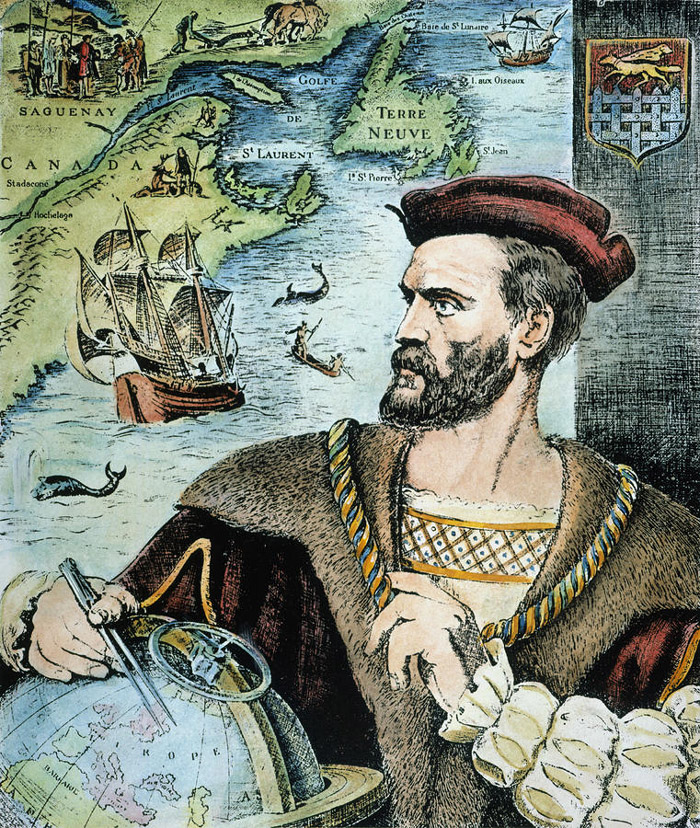
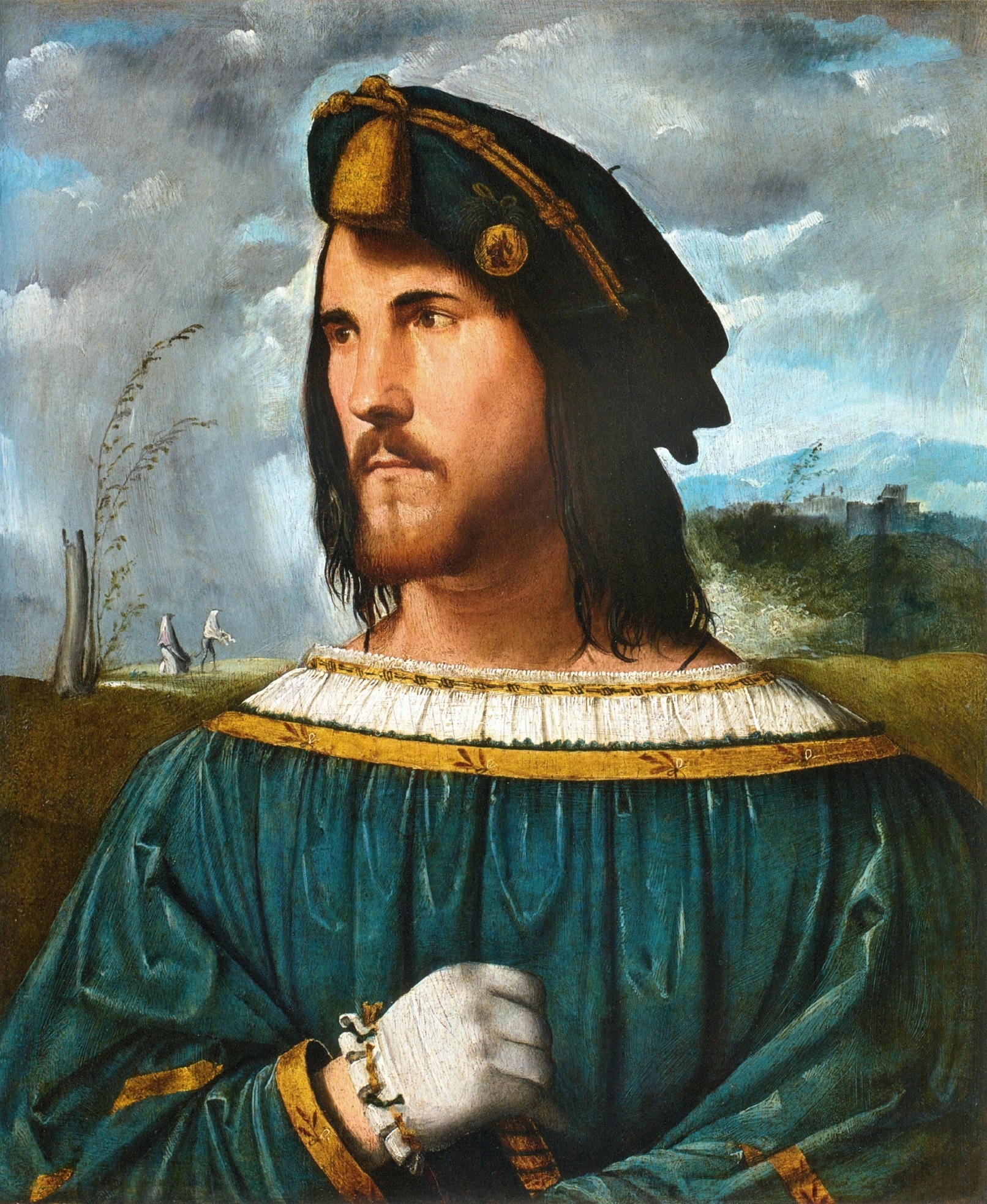
• 496 Clovis and 3,00 Franks are baptized as Catholic Christians. [pictured above] Gregory of Tours described the occasion: The public squares were draped with coloured cloths, the churches were adorned with white hangings, the baptistry was prepared, sticks of incense gave off clouds of perfume, sweet-smelling candles gleamed bright and the holy place of baptism was filled with divine fragrance. God filled the hearts of all present with such grace that they imagined themselves to have been transported to some perfumed paradise. Clovis was leader of the Frankish tribe that had occupied most of Gaul. His conversion to Roman Catholicism was a triumph over the paganism of his ancestors and the lure of Arian Christianity to which many other barbarians had been converted.  (Some historians make the case that the baptism took place in 508.) 

Santa Baby

Home / Christmas / Santa Baby

In this holiday tribute in song to the give-and-take of personal relationships, Santa Claus is urged to provide a yacht, furs, jewelry and other consumer durables to a young woman who assures him she could be good if only her needs were met. Written by Joan Javits, and Phil Springer, the song was a hit for Eartha Kitt in 1953 (still the best version) and was later recorded by Michael Bublé, Taylor Swift, Ariana Grande, and Madonna, the self-anointed Material Girl.

Santa baby, slip a sable under the tree, for me
I’ve been an awful good girl
Santa baby, and hurry down the chimney tonight

Santa baby, an out-of-space convertible too, light blue
I’ll wait up for you dear
Santa baby, and hurry down the chimney tonight

Think of all the fun I’ve missed
Think of all the fellas that I haven’t kissed
Next year I could be oh so good
if you’d check off my Christmas list

Boo doo bee doo

Santa honey, I wanna yacht and really that’s
Not a lot
I’ve been an angel all year
Santa baby, and hurry down the chimney tonight

Santa cutie, there’s one thing I really do need, the deed
To a platinum mine
Santa cutie, and hurry down the chimney tonight

Santa baby, I’m filling my stocking with a duplex, and checks
Sign your ‘X’ on the line
Santa baby, and hurry down the chimney tonight

Come and trim my Christmas tree
With some decorations bought at Tiffany’s
I really do believe in you
Let’s see if you believe in me

Boo doo bee doo

Santa baby, forgot to mention one little thing, a ring
I don’t mean a phone
Santa baby, and hurry down the chimney tonight
Hurry down the chimney tonight

Julehalm

Home / Christmas / Julehalm


In the old days, Norwegian householders would carry “Christmas hay”, or julehalm, into the house and spread it on the floor of the front room. On Christmas Eve the master and his servants would sleep there together, partly for mutual support on that night of the year when demonic forces outside were at their strongest and partly in remembrance of the baby Jesus and his bed in the hay-filled manger. The custom was also observed in Sweden in the belief that the beds should be left empty for the spirits of the family dead who had returned for the holiday. Food would be left on the table
After three nights the “hayday” period ended and all returned to their own beds.
The tradition of decorating with straw for Christmas is also very old. Goats of straw are a favourite in all Scandinavia as are stars, geometric patterns, and mobiles hanging from the ceiling. 

Christmas Day in the Workhouse

Home / Christmas / Christmas Day in the Workhouse

“In the Workhouse, Christmas Day” is a longish poem, much parodied, by George R. Sims (1847-1922), often referred to as “Christmas Day in the Workhouse”. A poor man in the midst of the Christmas feast brought by the wealthy to the parish workhouse angrily refuses to eat his pudding because of the memory of his wife who starved to death rather than go to there last year. The parish had refused him “relief” and told him the House was the only option. Its penultimate verse gives a sample of the bathos the poem invokes:

Yes there, in the land of plenty,
Lay a loving woman dead,
Cruelly starved and murdered
For a loaf of parish bread.
At yonder gate, last Christmas,
I craved for a human life.
You who would feast us paupers,
What of my murdered wife!

Lutefisk

Home / Christmas / Lutefisk

The piece of cod that passeth all understanding. In Norway and Norwegian-America lutefisk is the quintessential Christmas dish, prepared from cod soaked in lye and possessing a pungency of aroma that deters many outsiders from appreciating its delights.

A popular Norwegian-American song sung to the tune of “O Tannenbaum” has outlined the attractions of the dish:

Lutefisk, O Lutefisk, how fragrant your aroma,
Lutefisk, O Lutefisk, you put me in a coma.
You smell so strong, you look like glue,
You taste just like an overshoe,
But lutefisk, come Saturday,
I tink I eat you anyvay

Lutefisk, O lutefisk, I put you in the doorvay.
I wanted you to ripen up just like they do in Norvay.
A dog came by and sprinkled you.
I hit him with my overshoe.
O lutefisk, now I suppose
I’ll eat you while I hold my nose.

Here is a light-hearted set of instructions for making this delicacy:

1. Get the lutefisk.
2. Lay it on a pine board.
3. Flatten with a meat cleaver.
4. Salt and pepper it and pour on butter.
5. Bake on board in oven for 30 minutes.
6. Remove from oven and allow to cool.
7. Throw out the lutefisk and eat the board.

Christmas Cracker

Home / Christmas / Christmas Cracker

A Christmas novelty popular in Britain and countries of the Commonwealth. A Christmas cracker takes the form of a small cardboard tube covered in decorative wrap and containing a strip of chemically-impregnated paper which, when pulled, creates a miniature explosive snap. When opened the cracker reveals a paper hat, a motto or joke and a small prize.

The cracker was invented in 1847 by a London confectioner named Tom Smith. The idea began with the “bon bon”, a French candy in a twist of paper. To this Smith added a small motto and then conceived the idea of a noise when throwing a log on a crackling fire. After much experiment Smith came up with the right chemical formula and the cracker was born. He soon discarded the candy and began to call his invention “cosaques”, after the crack of the Cossack whip.

Since the 1840s the Christmas cracker has contained mottoes humorous, romantic, artistic and puzzling with prizes ranging from inexpensive plastic toys to decorated boxes to real musical instruments to expensive jewelry with special lines prepared annually for the Royal Family. It is now an indispensable part of Christmas dinner in millions of houses around the world.

A Charlie Brown Christmas

Home / Christmas / A Charlie Brown Christmas

“All I want is what I have coming to me. All I want is my fair share,” says Lucy in this little animated film on the dangers of a materialistic view of Christmas. Though there are some chuckles over Charlie Brown’s direction of the school pageant and his search for a suitable tree, A Charlie Brown Christmas (1965) is more of a morality play than a light-hearted romp.

CBS apparently had misgivings about the religious content of the show — one of the few explicitly Christian animated films about Christmas — but this Charles Schulz creation won an Emmy for Best Children’s Program and went on to become an enduring holiday favourite.

The score was written by Vince Guaraldi who boldly chose to do a jazz-flavoured set of compositions instead of the more juvenile music that usually accompanied children’s cartoons. The show was produced by Bill Melendez and Lee Mendelson who were to collaborate on further Charlie Brown specials. A sequel, less profound but more amusing, was the 1992 television special It’s Christmastime Again, Charlie Brown.

“Broncho Billy and the Baby” and the movies

Home / Christmas / “Broncho Billy and the Baby” and the movies

“Broncho Billy and the Baby” was a short Christmas allegory by Peter B. Kayne which appeared in The Saturday Evening Post in 1910 and which spawned seven motion pictures. The story is of three bandits who rob the bank at New Jerusalem and head out into the desert to escape. There they encounter a dying woman who extracts a promise from them that they will save her new-born baby. The outlaws battle thirst and the elements and finally one of them makes it back to New Jerusalem with the infant just in time for the Christmas Eve service.

The first cinematic version appeared in 1911, a one-reeler called The Outlaw and the Child; it was followed by three more silent films in 1913, 1916 and 1919. The first sound version (and Universal Studio’s first outdoor talkie) was Hell’s Heroes in 1930, filmed by William Wyler in the Mojave Desert. Charles Bickford, Raymond Hatton, and Fred Kohler Sr play three genuinely hard men and the movie is uncompromising and harsh. Two more sentimental renditions both called Three Godfathers appeared in 1936 and, more memorably, in 1948. The latter was a John Ford western starring John Wayne, Harry Carey Jr. and Pedro Armendariz; it was the only one to dare a happy ending. In 1974 the made-for-television The Godchild moved the plot to three Civil War escapees played by Jack Palance, Jack Warden and Keith Carradine.

Tokyo Godfathers (2003) transfers the story to mean urban streets of contemporary Japan. The baby in this animated movie by director Satoshi Con is tended by three homeless people, a transgender woman, a young girl, and an alcoholic.