All I Want for Christmas Is My Two Front Teeth

Home / Christmas / All I Want for Christmas Is My Two Front Teeth

This popular novelty tune written by Donald Yetter Gardner in 1946. Gardner was a music teacher who noticed that most of his young pupils were missing their baby teeth. With that observation as inspiration, Gardner went home and wrote the words and music in about half an hour. As a recording, it was a success in 1948 for Spike Jones (pictured above) and the City Slickers. The words were sung in a child’s voice by George Rock, one of the Slickers. Danny Kaye, the Andrews Sisters and Nat King Cole all recorded it and it was a Top Ten hit again in 1955 when it was sung by seven-year-old Barry Gordon.

Everybody stops and stares at me.
These two teeth are gone as you can see.
I don’t know just who to blame for this catastrophe,
But my one wish on Christmas Eve is as plain as can be

All I want for Christmas is my two front teeth,
My two front teeth, see my two front teeth.
Gee, if I could only have my two front teeth,
Then I could wish you “Merry Christmas.”

It seems so long since I could say,
“Sister Susie sitting on a thistle.”
Gosh, oh gee, how happy I’d be
If I could only whistle.

All I want for Christmas is my two front teeth,
My two front teeth, see my two front teeth
Gee, if I could only have my two front teeth,
Then I could wish you “Merry Christmas.”


The earliest Christmas card

Home / Christmas / The earliest Christmas card

The credit for the earliest published Christmas card has usually gone to Sir Henry Cole who in 1843 commissioned John Callcott Horsley to produce this image, a hand-coloured lithograph of a family party with the message, “A Merry Christmas and a Happy New Year to You.” 1,000 of these were manufactured and sent out, causing a minor scandal because the family on the card appeared to be drinking.

Recently, however, Timothy Larsen (editor of the splendid Oxford Handbook of Christmas) has found a notice in the December 7, 1829 issue of the Hampshire Chronicle: “We learn that the ‘Olde Winchester’ Christmas and New Year’s Greetings, designed by Mr. A. Clements, of Northgate Studio, are receiving a most cordial welcome from Christmas card buyers, sales already nearing the 2000 mark. Large numbers have been sent abroad to friends interested in Winchester”.

Dinner for One

Home / Christmas / Dinner for One

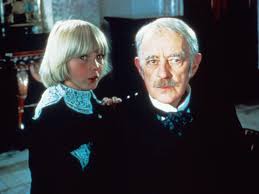
Dinner for One (or The 90th Birthday): this short British comedy film from 1963, virtually unknown in the English-speaking world, is one of Europe’s favourite holiday season movies. Starring Freddie Frinton and May Warden, it concerns an elderly lady and her butler celebrating her birthday with four imaginary friends. The butler becomes increasingly inebriated as he is forced to imitate each of the long-dead guests and drink toasts in their names. The recurring line “The same procedure as every year” has become a catch phrase across northern Europe.

For some reason this little slapstick farce has become a tradition in late December in many countries. It is broadcast every December 23 on Norwegian television and on New Year’s Eve in the rest of Scandinavia and Germany.

Similar curious broadcast traditions occur in Italy where the 1983 American comedy Trading Places has become a Christmas Eve staple, Britain where the animation of Brigg’s book The Snowman is shown every year over the holidays and in eastern Europe where a variation on the Cinderella story Tři oříšky pro Popelku is popular.

A Disillusioned Christmas

Home / Christmas / A Disillusioned Christmas

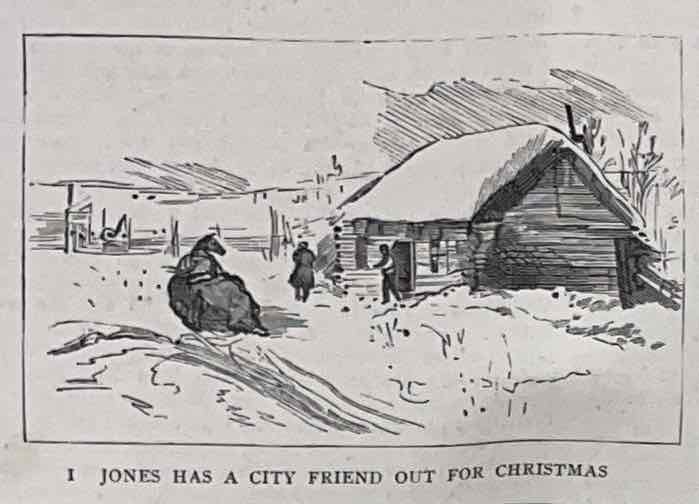
By the end of the 19th century the Santa Claus story had embedded itself in Anglophone family culture. Parents had discovered that Santa offered their children not just gifts but magic and imagination as well. In an astonishing display of altruism millions of fathers and mothers deflected the gratitude due them to an imaginary midnight Gift-Bringer. But, as this poem from 1880 shows, not all parents were that way inclined.

A Christmas Sermon

Home / Christmas / A Christmas Sermon

In 1887 the Scottish poet and novelist Robert Louis Stevenson was recovering for a moment from the lung disorder that would eventually kill him. In his convalescence he wrote his “Christmas Sermon”, a melancholy reflection on human striving. Here are a few of the notable passages from it.

To make our idea of morality centre on forbidden acts is to defile the imagination and to introduce into our judgments of our fellow-men a secret element of gusto.

If your morals make you dreary, depend upon it they are wrong. I do not say “give them up,” for they may be all you have; but conceal them like a vice, lest they should spoil the lives of better and simpler people.

To be honest, to be kind — to earn a little and to spend a little less, to make upon the whole a family happier for his presence, to renounce when that shall be necessary and not be embittered, to keep a few friends, but these without capitulation — above all, on the same grim condition, to keep friends with himself — here is a task for all that a man has of fortitude and delicacy. He has an ambitious soul who would ask more; he has a hopeful spirit who should look in such an enterprise to be successful. There is indeed one element in human destiny that not blindness itself can controvert: whatever else we are intended to do, we are not intended to succeed; failure is the fate allotted.

There is an idea abroad among moral people that they should make their neighbors good. One person I have to make good: myself.

In his own life, then, a man is not to expect happiness, only to profit by it gladly when it shall arise: he is on duty here; he knows not how or why, and does not need to know; he knows not for what hire, and must not ask. Somehow or other, though he does not know what goodness is, he must try to be good; somehow or other, though he cannot tell what will do it, he must try to give happiness to others. 

How the Movies Saved Christmas

Home / Christmas / How the Movies Saved Christmas

Christmas seems always to be in danger of extinction, at least according to television and cinema. Indefatigable chronicler of Christmas in popular culture, William D. Crump, has listed 53 different programs where the holiday was threatened. In his book, How the Movies Saved Christmas: 228 Rescues from Clausnappers, Sleigh Crashes, Lost Presents and Holiday Disasters, Crump identifies the following five most frequent menaces: 

  1. Santa Claus or Santa surrogate or elves or reindeer are sick, injured, or incapacitated (36 films, eight of which depict Santa suffering from amnesia).
  2.  Villains sabotage or take over the North Pole (29 films).
  3. Santa crashes his sleigh (24 films).
  4. Christmas decorations and/or presents are lost or stolen (18 films). 
  5. Protagonists lose the Christmas spirit (17 films).

Though not among the top 5 kidnapping Santa has featured in 10 films, including the amazingly dreadful Santa Claus conquers the Martians.