From the Jesuit Relations
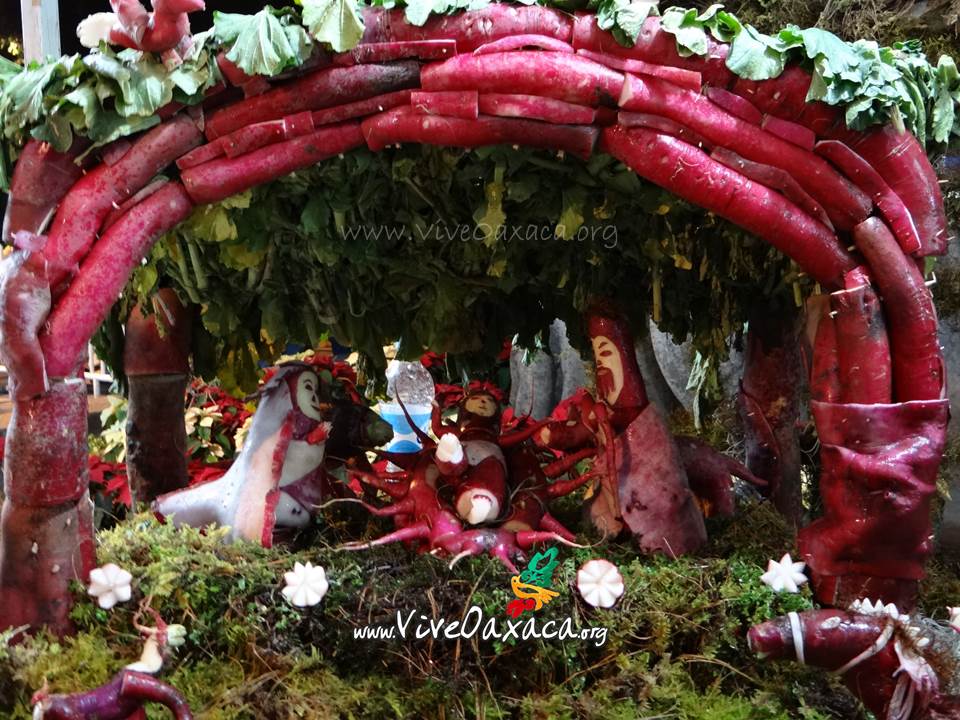
All our savages, but especially the Hurons, profess to have a special esteem for the all-endearing mystery of the birth of our lord Jesus Christ. I have seen some notable proofs of this given by these latter; they themselves entreated the father, long before the feast-day, to make arrangements so as to celebrate it in the most solemn manner possible. They sent their children to seek for what could be used in constructing a grotto, in which they were to make a representation of the mystery; and I took pleasure in hearing a little girl who, having brought with much care a beautiful sort of grass, said that she had done it in the thought and hope that the little infant Jesus might be laid upon that grass. Our good Christians made some more serious preparations, For they all confessed; and those to whom permission was given to receive Communion, did so very devoutly, at the midnight mass. The grotto, which was well fitted to inspire devotion, was Incessantly visited; and it rendered a very pleasing although rather protracted Service,—to draw from them the expression of their feelings as they themselves express them, when addressing the divine child. As a climax to their devotion, they asked that the infant Jesus should do them the favour of visiting them, by being carried through their village. But, as they thought that they had rendered themselves unworthy of this by some things that had taken place, they held grand Councils and took great precautions to obtain this favour from their missionary. The Matter was conceded to them, and carried out on the Day of the epiphany in a manner that seems to me worthy of being recorded. For my part, I was much touched by it.
They desired, then, in execution of their design, to imitate what in other ages had been done by the three great stranger Captains, who came to confess and adore Jesus Christ in the Manger, and afterward went to preach him in their own country. All the Hurons, Christians and non-Christians, divided themselves into three companies, according to the different nations that constitute their village; and, after choosing their Chiefs, one for each nation, they furnished them with porcelain, of which they were to make an offering to the infant Jesus. Every one adorned himself as handsomely as he could. The three Captains had each a scepter in his hand, to which was fastened the offering, and wore a gaudy head-dress in guise of a crown. Each company took up a different position. The signal for marching having been given them at the sound of the trumpet, they heeded the sound as that of a voice Inviting them to go to see and adore an infant God new-born. Just as the 1st company took up their march,—conducted by a star fastened to a large standard of the colour of sky-blue, and having at the rear (head) their Captain, before whom was carried his banner,—The 2nd company, seeing the first marching, demanded of them (aloud) the object of their journey; and on learning it, they Joined themselves to them, having in like manner their chief at their head with his banner. The third company, more advanced on the road, did as the second; and, one after another, they continued their march, and entered our Church, the star remaining at the entrance. The 3 chiefs, having first prostrated themselves, and laid their Crowns and sceptres at the feet of the infant Jesus in the Cradle, offered their Congratulations and presents to their saviour. As they did so, they made a public protestation of the submission and obedience that they desired to render him; solicited faith for those who possessed it not, and protection for all their nation and for all that land; and, in conclusion, entreated him to approve that they should bring him into their village, of which they desired he should be the master.
I was engaged in carrying the little statue of the divine infant, which inspired great devotion; I took it from the grotto, and from its cradle, and carried it on a fine linen cloth. Everyone seemed touched, and pressed forward in the crowd, to get a nearer view of the holy Child. Our Hurons left the church in the same order in which they had come. I came after them, carrying the little statue, preceded by two Frenchmen bearing a large standard, on which was represented the infant Jesus with his holy mother.