September 28

Home / Today in Church History / September 28

935 The murder of “Good King Wenceslas”

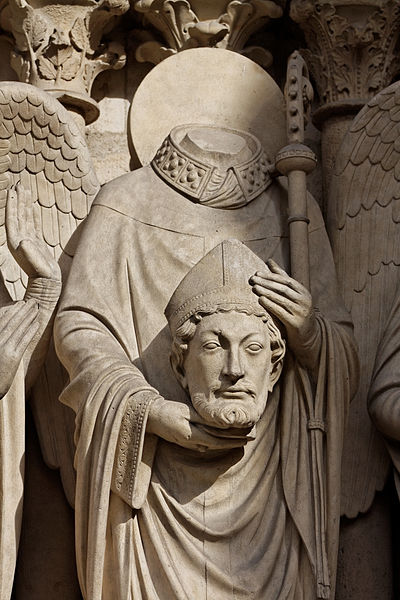
The Czechs know him as Vaclav, their patron saint, and process with his skull on this day; English-speakers believe he was a king and sing about him on the day after Christmas. Wenceslas (908-935) was Duke of Bohemia at a time when his nation was pressured by pagan Magyar invaders from the east and expanding German rulers in the west who often levied tribute from the Czechs. Bohemia had been evangelized and partially converted to Christianity but powerful pagan factions held out. Court politics were particularly brutal. Wenceslas’s mother had ordered his grandmother, St Ludmilla, strangled and when he reached the age of majority Wenceslas exiled his mother.

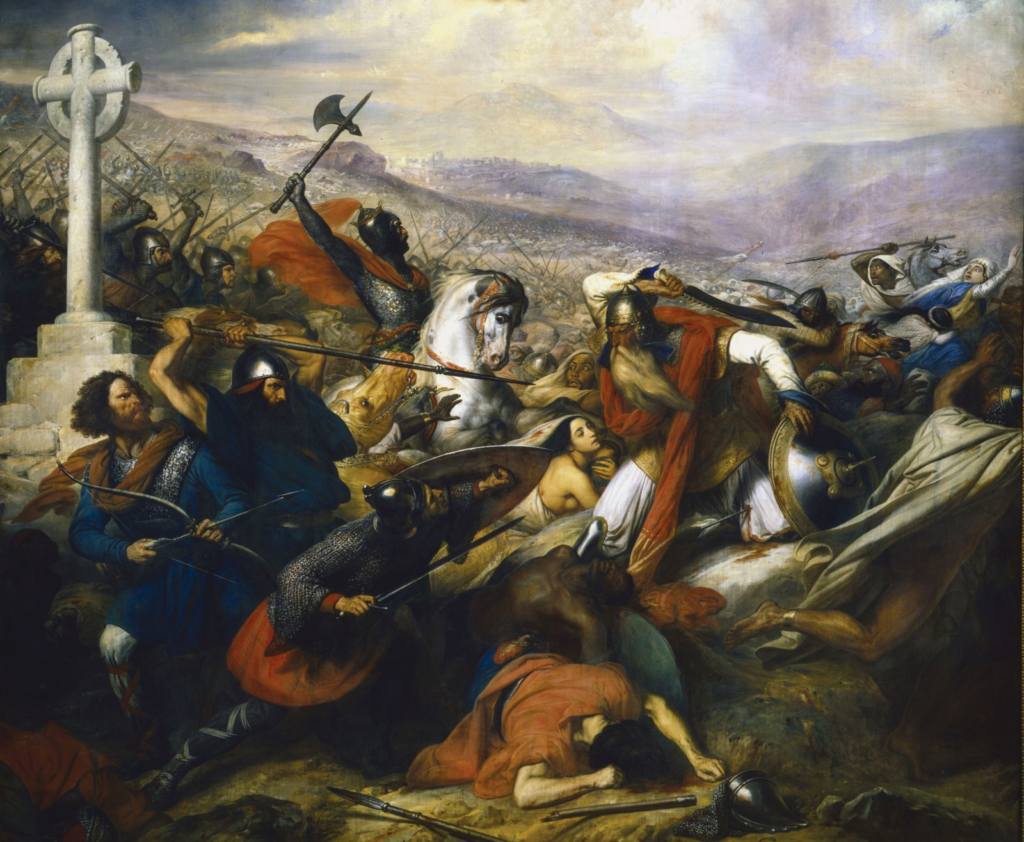
On this date in 935 followers of his brother Boleslav stabbed Wenceslas on his way to church. It was once thought that Wenceslas, a pious Christian, was killed by Boleslav (nicknamed the Cruel) over religion but now his death is attributed to factional politics. Almost immediately after his murder a saintly cult grew up around the dead man, one which grew throughout the Middle Ages. Like Charlemagne to the French; Frederick Barbarossa to the Germans; Arthur to the English, and Sebastian to the Portuguese, Wenceslas is a Sleeping King — one who is not truly dead but only slumbers until his nation needs him.

“Good King Wenceslas looked out on the Feast of Stephen” …. Though music critics have complained for over a century about the awkward combination of words and music, the St. Stephen’s Day carol by J.M. Neale has proven to be an enduring favourite. Neale’s words, written in 1853, about the tenth-century Bohemian duke were matched to a spring carol from the sixteenth-century collection Piae Cantiones with an 1871 arrangement by John Stainer. Why Neale should have chosen Wenceslas to embody the call to Christmas charity remains a mystery. Some claim that there was a long-standing legend about his generosity which English soldiers who fought during the Thirty Years War in Bohemia brought home, but, if there was, no trace of it remains. Neale would most likely have used “the feast of Stephen” because December 26 (St Stephen’s Day) was Boxing Day in England, a customary time for seasonal charity.

September 27

Home / Uncategorized / September 27

1627 Birth of the “Eagle of Meaux”

Jacques-Bénigne Bossuet (1627-1704) has been called the greatest pulpit orator ever; his name is a byword for elegance of speech. As a preacher and Catholic bishop he engaged in the great religious controversies of his time, taking on Protestants, Quietists, ultramontanists and secularists; as a tutor to the heir to the throne he failed miserably.

Bossuet was born to a prosperous provincial family of lawyers with powerful connections. He was destined by his family for the Church and in the amiable corruption of the age became tonsured at age 10 and a canon of the cathedral of Metz at 13. Though he continued to take advantage of sins against canon law such as absenteeism, Bossuet took his religious commitment seriously; he studied for the priesthood under St Frances de Sales and received his Doctor of Divinity.

Even in his teens Bossuet had a reputation as a brilliant public speaker and he eventually attracted the attention of the court of Louis XIV. He preached before royalty and was rewarded with a bishopric and the post of tutor to Louis’ oldest son, the Grand Dauphin. His efforts in this regard were misplaced and wasted. To school the lumpish lad he wrote three grand tomes, a treatise on knowing God and oneself, a history of the world, and a creaky master-piece entitled  Politique Tirée des Propres Paroles de L’Ecriture Sainte. [This is the book I translated as Political Theory Drawn from the Very Words of Holy Scripture for part of my Master’s thesis.] The latter was the last bold attempt at defending absolute monarchy, no surprise from a courtier of the Sun King, but it fell on deaf ears — not only those of the Dauphin but the larger world about to experience the Enlightenment and the Age of Revolutions. It may be said that Bossuet was born a generation too late but that his golden expressions are still valued by lovers of the French language.

September 25

Home / Today in Church History / September 25

1555 The Peace of Augsburg

Martin Luther’s 1517 attack on the doctrine of Purgatory and indulgences did not result, as he had hoped, in a reform of Catholic church practices; instead it led to wide-spread schism, violence and open warfare. German territories were particularly hard-hit as the hundreds of minor states that made up the Holy Roman Empire coalesced into rival camps, some professing Lutheranism, some Catholicism, and some religiously neutral. When the Emperor Charles V decided to use the force of arms to defend Catholicism, Protestant princes formed the Schmalkaldic League for self-defence. Though Charles defeated the League, he could not enforce a religious settlement on Germany, harassed as he was by the French on his western border and the Turks to the east. Worn out by the struggle Charles decided to abdicate and spend his last years in retirement in Spain.

The vast Habsburg empire that Charles had ruled was split. His son, Philip, was given Spain, the Netherlands, parts of Italy, and overseas holdings in Africa, the Americas and Asia. His brother, Frederick, was given the German lands and the title of Emperor. Philip was determined that no heretic should survive in his realms and continued the policy of war and persecution. Frederick opted for a policy of toleration by separation as set out in the Peace of Augsburg, negotiated between the Lutheran princes and Charles, before his abdication.

The main principle of the Peace, which largely ended sectarian warfare in Germany for several generations, was cuius regio, eius religio, or “whose kingdom, his religion”. The prince of each territory (either Lutheran or Catholic only, no provision was made for Anabaptist or Calvinist options) would determine the religion of his subjects. Those who did not wish to live under such a regime were given five years to sell up and move to a more congenial location. Despite some local breakdowns, the Peace was largely observed until the eruption of the tragic Thirty Years War in 1618.

September 23

Home / Today in Church History / September 23

1122 An End to the Investiture Controversy

Like every long-enduring institution, the papacy has had its up and downs, with moments of greatness mixed with periods of lassitude or decline. Around the turn of the first millennium the office of the Bishop of Rome was in a sorry shape. The era of corruption known as the Pornocracy had seen the papacy in the hands of Roman gangs with the bastard teenage sons of harlots ascending the papal throne. Despite attempts at correction by the Cluniac movement and the German emperors, this corruption continued into the eleventh century with popes trying to sell their position and three men simultaneously claiming the See of Peter.

The papacy was finally set on the path of reform by Henry III, Holy Roman Emperor, who in 1049 sponsored Leo IX as pope. Leo and his successors set about to repair the damage of centuries – mandating clerical celibacy, banning absenteeism, pluralism and simony. The latter sin had been originally defined as the buying or selling of church offices but zealots now widened the term to include any kind of lay interference in the naming of abbots, bishops or popes, especially where the secular ruler invested the clergyman with the symbols of rank: the staff and ring. The College of Cardinals was established and henceforth it would be charged with naming popes. This spawned the Investiture Controversy, a struggle between lay and clerical spheres that broke out into open warfare. Popes were deposed and anti-popes named; emperors were deposed and rival claimants named.

The newly-reformed papacy was anxious to ensure that never again would local lords control the church; local rulers argued that these powerful church officials were also holders of feudal rights and vast land-holdings. As such they were political players who ought to be nominated by their kings or emperors. Though the most heated exchanges and open battles were in Germany and Italy, this was a crisis that occurred in many western European realms.

On this date in 1122, Pope Calixtus II and Emperor Henry V agreed to the Concordat of Worms, whereby secular rulers would cease their formal investing but retain considerable say in the appointment of church officers in their lands. The struggle between popes and emperors would continue, however, in other areas, to the detriment of both.

September 22

Home / Today in Church History / September 22

St Maurice and the Theban Legion

In 287, at Agaunum in the Swiss Alps, a strange massacre took place. It was the murder of a legion of Roman troops, recruited from Egypt, by their fellow soldiers.

St Maurice is said to have been born near Thebes on the Nile River in 250 and to have joined the Roman army. Despite his professed Christianity, he rose in the ranks and ended up in command of a legion, a unit of 6,000 men. In 287 under the command of Emperor Maximian he was ordered to sacrifice to the pagan gods and attack local Christians. He and his unit refused to do so, so they were subject to “decimation”, the execution of every tenth man. They remained steadfast and were eventually all killed.

The story of the Theban Legion and Maurice were extremely popular in the Middle Ages and for a thousand years his spurs and sword were used in the coronation of Holy Roman emperors. Maurice is portrayed in art as an African in armour, sometimes carrying a spear or a flag with a red cross. He is the patron saint of alpine troops, the pope’s Swiss Guards, infantrymen, weavers, dyers, cloth makers and swordsmiths and can be invoked by those suffering from cramp and gout.

A Canadian Battles the Fuzzy-Wuzzy

Home / Uncategorized / A Canadian Battles the Fuzzy-Wuzzy

In the 19th century, Sudanese territory was claimed by Egypt, which ran a corrupt and oppressive rule over the territory. In 1881 a devout Muslim religious scholar named Muhammad Ahmad declared himself the Mahdi, the legendary prophesied figure that would appear at the end of time and who would herald the arrival of Isa (Jesus) and the Final Judgment. He was able to rally the disaffected tribes of the Sudan against the Egyptians, conquering much of the upper Nile valley. Like ISIS and their caliphate, the Mahdi attempted to reintroduce the pure, harsh Islam of the 7th century.

After several military attempts to defeat the Mahdi, the British (who now controlled Egypt) decided to pull out of the Sudan and sent the charismatic, popular hero General Charles Gordon to arrange the evacuation. Gordon, instead, chose to stay and fight. He and his troops were massacred in the capital Khartoum in 1884, causing an enormous scandal back in Britain. Though the Mahdi soon died, his successor, known as the Khalifa, built a powerful Mahdist state that attempted to spread its variety of Islam by the sword.

In 1898 the British decided to put an end to this threat to European imperialism in Africa, sending an army up the Nile, under General Herbert Kitchener. The Mahdist forces greatly outnumbered Kitchener’s troops but the British had machine guns and artillery. Near the confluence of the Blue and White Niles at Omdurman, the wild charges of the Mahdists (called “dervishes” or “Fuzzy-Wuzzy” by the British) were mowed down by disciplined fire of the more modern army.


Four Victorian Crosses were awarded for that day’s action including one to a Canadian, Captain Raymond de Montmorency of the 21st Lancers (whose charge is depicted here.)

The citation for the medal reads: “At the Battle of Khartum on the 2nd September 1898, Lieutenant de Montmorency, after the charge of the 21st Lancers, returned to assist Second Lieutenant R. G. Grenfell, who was lying surrounded by a large body of Dervishes. Lieutenant de Montmorency drove the Dervishes off, and, finding Lieutenant Grenfell dead, put the body on his horse which then broke away. Captain Kenna and Corporal Swarbrick then came to his assistance, and enabled him to rejoin the Regiment, which had begun to open a heavy fire on the enemy.”

De Montmorency was born in Quebec in 1867, the son of a British general, and he joined the British Army at the age of 20. After Sudan, de Montmorency was assigned to South Africa where he fought in the Boer War, dying at the Battle of Stormberg in 1900.

The classic 1939 movie “The Four Feathers” recreates the Battle of Omdurman with a cast of tens of thousands. It’s quite impressive. Do not, on any account, watch the putrid remake of 2003.

September 21

Home / Uncategorized / September 21

1217 Death of Kaupo the Accursed

One of the joys of being a medieval historian is understanding the nicknames of famous leaders of the day. A single battle in 1066, for example, transformed William “the Bastard” into William “the Conqueror” while a lifetime of feckless behaviour earned Ethelred the label of “the Unready”. Wonderful stories lie behind the origins of sobriquets like “Bushy-Brow”, “the Impotent”, “the Boneless”, “Hare-Foot”, “the Twister”, and “Blood-Axe”. But what about Kaupo of Livonia who ended up being known as “the Accursed”?

The last parts of Europe to be Christianized lay at the eastern end of the Baltic, between the Orthodox lands of Russia and Catholic Germany and Poland, inhabited by tribes of Finns, Livonians, Latvians, etc. Attempts to peacefully evangelize them were met with resistance, prompting a series of Northern Crusades by military orders such as the Teutonic Knights or Knights of the Sword who combined missionary work with brutal conquest.

As these German-speaking orders pressed eastward, one of the first Livonians to accept baptism was Kaupo of Turaida, a local chieftain who so impressed the Bishop of Riga that he took him to Rome where he was presented to the pope. On his return to his native land, however, Kaupo was rejected for his new religion and alliances with foreigners. He had to reconquer his own castle and died fighting along side crusaders against pagan Estonians; for his divided loyalties he was labelled a traitor and “the Accursed”. It was not until the early 1300s that the territory was nominally Christianized.

Alexander Roberts Dunn

Home / Today in History / Alexander Roberts Dunn

Alexander Roberts Dunn VC (15 September 1833 – 25 January 1868) was born in York (later Toronto) in 1833, the son of John Henry Dunn, a prominent politician. He studied at Upper Canada College and at Harrow School, England. He purchased a commission in the 11th Hussars in 1852. This would have been an expensive move because that regiment was one of the most prestigious and elegant units in the British Army, famous for its cherry-coloured trousers.

Dunn was awarded the Victoria Cross for his actions at the Charge of the Light Brigade during the Battle of Balaclava on 25 October 1854 when he was 21 years of age. Dunn rescued a sergeant by cutting down two or three Russian lancers who had attacked from the rear. Later in the battle he killed another Russian who had been attacking a private.

He sold his commission at the end of the Crimean War but rejoined the Army in 1858 as a major in the 100th Regiment of Foot. He exchanged into the 33rd Regiment of Foot, in 1864 in which regiment he remained until his death.

Dunn was promoted to the rank of colonel in 1864, making him the first Canadian to command a British regiment. He led the 33rd Regiment at the start of the 1868 expedition to Abyssinia (meant to rescue British hostages and teach the mad King Tewodros of Ethiopia a lesson), but he was killed in unusual circumstances during a hunting accident at Senafe before the military part of the campaign started.

His grave (in present-day Eritrea) had been neglected for many years. It was discovered after over a century by Canadian Army Forces for the United Nations Mission to Ethiopia and Eritrea (UNMEE) during their mission as peacekeepers in the Eritrea-Ethiopia war of 1998-2000. The discovery as narrated by Ben Mitchell of the Canadian Armed Forces is:

We had just advanced from our rear camp in Dekemhare into Senafe. We had crossed both trench lines in Senafe and their mine fields. Tensions were very high for not only the Eritrea and Ethiopian armies but for us as well. There was still military forces in the area, whom were not supposed to be there. We knew our task of getting the militaries to withdraw would be tuff. We set up camp in the school yard at the base of that amazing cliff. My Lieutenant and I left the camp right away to search for a well in the city and this is when it first happened. The children in the city gathered around us and said “Canada” while pulling our hands to lead us somewhere. Now there was no way we were going anywhere with these kids. This thing smelled of an ambush badly. How did they know the word “Canada” and why were they so eager to lead us away? The two of us then returned to the schoolyard and reported this unusual event to Headquarters (HQ). 2 weeks went by and each patrol that entered the city had the same experience with the kids. Each time they would report it to HQ and say they did not follow the children. Finally HQ got tired of hearing about these children and orders us to investigate. Now this is when it gets embarrassing for us. We geared up to follow these kids like we were entering an ambush…we were ready for anything that may happen. We had over 300 rounds of ammunition per soldier, flak jackets, radios, machine guns. We were not going to be caught off guard. When we entered the city, the same routine happened with the kids, but this time we let them lead us. Weapons on our shoulders we walked through the city slowly waiting for something to happen. I remember how hot it was that day and how much I was sweating. Finally we got to a cemetery on the outskirts of the city and the kids started pointing at this tombstone. We looked at the name “COL DUNN”. When we got back to camp we radioed in what had happened. HQ sent a report back to Canada asking them to figure out who this DUNN was. A week later we found out. The kids had led us to the grave of a Canadian war hero R. Dunn, one of the first winners of the Victoria Cross. The highest order of merit issues in the Canadian Forces. This man was a legend. He had gone on safari Africa in 1860’s and never returned. He was a Canadian hero who had been lost for over a hundred years. These kids whom we thought were leading us into an ambush had done Canada a great service and located Colonel R. Dunn Victoria Cross. If those kids were not as persistent as they were we would never have followed them and we would have never found Colonel Dunn.

His grave after the discovery was repaired in 2001 by a group of Canadian Forces engineers from CFB Gagetown.

Balaclava

Home / Uncategorized / Balaclava

I pause here to draw your attention to two Canadians of whom you have never heard. They were not particularly great, and they are not men of the 20thcentury, so they will not pop up on my list – but their appearances in history are remarkable.

If one were to ask what were the most interesting battles of the 19thcentury, the answer would certainly include Waterloo in 1815, where Wellington defeated Napoleon, or Sedan in 1870 where the Prussians smashed the French under Napoleon III. Both battles ended French empires. But for sheer excitement, you can’t beat the Charge of the Light Brigade at Balaclava during the Crimean War in 1854 or the Battle of Omdurman, where the jihadists of Sudan faced the British in 1898. Today, I’ll tell you about Balaclava.

For the first time in over 600 years, the British and French armies were allies, not enemies. Their governments decided to prop up the shaky Ottoman Empire of the Turks and protect it from Russian ambitions to drive Turkey out of Europe, retake Constantinople and have an outlet to the Mediterranean. (The world would have been a better place if they had been allowed to do so, but that’s a topic for a rant on another day.) This explains what badly-equipped and atrociously-led French and British armies were doing on the Crimean peninsula, besieging Sevastopol in 1854.

On October 25, a misunderstood communication between the commander, Lord Raglan, and his light cavalry forces resulted in disaster and glory. Raglan meant to send his troops to recapture some British artillery that had been hauled away by the Russians but his messenger, Captain Nolan screwed up, and pointed the cavalry, led by the Earl of Cardigan, toward a heavily defended valley lined with Russian artillery. The exchange went like this:

Attack, sir!”

“Attack what? What guns, sir?”

“There, my Lord, is your enemy!” said Nolan indignantly, vaguely waving his arm eastwards. “There are your guns!

And so, Cardigan, knowing full well that this was madness, ordered his 670 horsemen up the valley to attack 20 battalions of dug-in infantry and 50 artillery pieces. This charge was suicidal but it was carried out successfully. The men and horses were shredded by Russian guns for over a mile before they reached the end of the valley where they destroyed some Russian positions and rode back out, under heavy fire again from three sides.

The cost was 118 men killed, 127 wounded, and about 60 taken prisoner, with 335 horses destroyed. The various generals all blamed each other and Captain Nolan, but Alfred Tennyson immortalized the engagement in his poem “The Charge of the Light Brigade”.

So why am I telling you all this? Because, to my astonishment, I learned that a Canadian had taken part in the charge and, better yet, had been awarded a Victoria Cross. More about him, Alexander Roberts Dunn and his mysterious grave, tomorrow.