February 11

Home / Today in History / February 11

grant_a_douglas_tyson_576

1990

Down goes Tyson

The most ferocious of all heavyweight boxing champions was Mike Tyson, who was also the youngest man to win the world title. He was fast and a tremendously hard hitter. It also helped that he was insane, a wife abuser, convicted rapist, an ear biter and capable of threatening to eat an opponent’s children. The sight of him charging across the ring in the first round was enough to cause faint hearts and trembling knees in those he faced.

In February 1990 he was at the peak of his form, with a 37-0 record, almost all by knockouts early in the fight. He had defeated creditable foes such as Larry Holmes, Trevor Berbick, James “Bonecrusher” Smith, and Michael Spinks.  His opponent in Tokyo was the little-regarded Buster Douglas, 29-4-1, who deemed to be a mere warm-up for a match later in the year with Evander Holyfield. Only one Las Vegas casino would even take a bet on the fight and the single one to do so offered odds of 42-1.

But from the beginning it was clear that Douglas had no fear of Tyson and refused to be bullied. His jab, with a 12-inch reach advantage, kept the shorter Tyson at bay and by the fifth round had created a dangerous lump above the champion’s left eye. Tyson seemed to believe he could end the fight with a single blow and was willing to trade punches, a tactic that seemed to work in the 8th round when he felled Douglas with an uppercut. Taking advantage of what seemed to be a long count, Douglas was able to regain his feet. Tyson’s aggression was reawoken, but to no avail. In the ninth and tenth rounds Douglas battered him into submission, finally knocking Tyson off his feet for the first time in his career. The dazed champion could not beat the count and Buster Douglas was declared the winner of what was called the most amazing upset in boxing history.

Alas for Douglas. He declined a rematch with Tyson and elected to fight up-and-coming Evander Holyfield. During his nine-month reign he had let himself get fat and lazy and was knocked out in the third round. His career was over but his fight with Tyson is part of boxing history.

February 10

Home / Today in Church History / February 10

th

St Scholastica’s Day

Scholastica (c.480-542) was the sister of St Benedict of Nursia, the founder of western monasticism, and was the first Benedictine nun. The story most frequently told about her concerns the yearly meeting that she would have with her brother. As her death drew near, she begged him to stay longer to discuss the joys of heaven. Not wishing to break his vows, Benedict refused but Scholastica prayed and a fierce storm erupted requiring Benedict to stay and talk longer. A few days later Scholastica died with her shroud, Benedict testified, ascending to heaven in the form of a dove. Scholastica is the patron saint of nuns and children suffering from seizures and is the go-to saint for prayers against storms.

Havac! Havoc! Smyt fast, give gode knocks!” On St Scholatica’s Day in 1355 a riot broke out between the students of Oxford and townsmen after an incident in a pub over the quality of wine being served. The disorders claimed the lives of 63 students and 30 locals. On the 600th anniversary of the massacres a ceremony of reconciliation was held between the University and the town.

Unknown

1846

The Mormon exodus west from Nauvoo begins.

The members of the Church of Jesus Christ of Latter Day Saints founded by their prophet Joseph Smith (1805-44), found it hard to establish themselves peaceably in the United States. Their heterodox ideas of revelation, the nature of God and polygamy were branded as heretical by American Christian leaders and violence was often visited upon them, violence which they often returned in kind. The Mormons, as they came to be called, were driven out of Missouri to Illinois where they established the city of Nauvoo as their headquarters. Again violence broke out and Smith was arrested in 1844 along with his brother and subsequently murdered by a lynch mob in jail.

Plans were then made for a mass migration of Mormons outside the USA, either to California (then occupied by Mexico) or a settlement on unclaimed land across the Rockies. In February 1846, groups of settlers began to move out of Nauvoo. Eventually thousands would trek to the Great Salt Lake Valley in what is now Utah and establish themselves in the security they sought.

February 9

d6501e74b86d3088a95264580730ed57

1921

Death of Hannah Grier Coome

On this day the Anglican Church in Canada honours Hannah Grier Coome (1837-1921) or Mother Hannah who found the country’s first Anglican religious order for women.

Born thirty years before Confederation in what was then Upper Canada, Hannah Grier was the daughter of an Anglican clergyman. At age 22 she married an engineer, Thomas Coome, and moved with him to England until 1877 when they returned to North America. At the death of her husband Hannah resolved to return to England to join the order of the Sisters of St Mary but she was persuaded to set up a similar sisterhood in Canada instead. While funds were being raised to endow the order, Hannah worked with nuns in New York to gain experience in hospital and social work.

In 1884 Hannah made her vows and established the Sisterhood of St John the Divine in Toronto. With Sister Aimée Hare, she began to provide meals and clothing for the poor, teach Bible classes, visit the sick and sew for churches. The next year she volunteered for nursing duties during the Northwest Rebellion and helped set up a field hospital in Moose Jaw.

When she returned, the order established the first surgical hospital for women in Toronto and a home for the aged. Over the past century they have trained nurses, in convalescent care, and in rehabilitation; administered schools and an orphanage; worked with the mentally handicapped; ministered to the elderly; and worked with the poor in large cities and depressed rural areas. Today the sisterhood is best known for its rehabilitation hospital and retreat centres and for urging liturgical renewal.

For more on the Sisterhood of St John the Divine: http://www.ssjd.ca/history.html

February 8

Home / Today in History / February 8

th

1945

Daring escape from Peenemünde

In July 1944 Soviet pilot Mikhail Devyatayev was shot down over Poland and made a prisoner of war by the Germans. He was held in a series of concentration camps (Nazis treated Soviet prisoners much more harshly than those captured on the Western Front) and was eventually sent as a slave labourer to the missile site at Peenemünde, on an island in the Baltic. There Germany developed the V-1 and V-2 missiles that were used against Britain late in the war and where conditions for the slaves were brutal.

Devyatayev was determined to escape and convinced other Russian prisoners to join his plan. On February 8, 1945 ten captives overpowered their guards and made for the airfield where the camp commandant had landed his Heinkel bomber. Devyatayev piloted the craft back to Soviet territory despite Luftwaffe attempts to shoot him down and fire from Soviet air defences.

The daring prisoners were not, however, treated as heroes. The paranoid Soviet authorities were scornful of their story. Devyatayev was thrown in jail (a common fate for returned prisoners, especially officers) and the others were posted to penal battalions where they were assigned the most dangerous duties and from which only a battle wound could release them. Five of them died before the war ended. As a “criminal” Devyatayev had a miserable post-war existence until 1957 when he was finally cleared on the testimony of rocket scientists who affirmed that his information about the German programs was correct. He was then rehabilitated and given military decorations.

February 7

Home / Today in History / February 7

Nick_Adams_The_Rebel_1959

1968

Death of The Rebel

There was a day when every self-respecting tv series had a catchy theme song, particularly westerns. To this day I sing the lyrics of the Disney oater “Texas John Slaughter” — “Texas John Slaughter made ’em do what they oughter/ And if they didn’t they died.”  And how about Bonanza? “We chased lady luck, ’til we finally struck Bonanza!/ With a gun and a rope and a hat full of hope, planted a family tree. /We got hold of a pot full of gold, Bonanza!”One of the catchiest of these ditties was the theme for “The Rebel” 

Johnny Yuma, was a rebel, 
He roamed, through the west. 
And Johnny Yuma, was a rebel, 
He wandered alone. 

He got fightin’ mad, 
This rebel lad, 
He packed his star as he wandered far 
Where the only law was a hook and a draw, the rebel. 

On this day in 1968 died Nick Adams, the eponymous rebel who, as you may have heard, roamed through the west. Adams was a relentlessly self-promoting actor known for such classics as Invasion of Astro-Monster and Frankenstein Conquers the World before landing the lead role in The Rebel which ran from 1959-1961. His death was the result of a drug overdose.

February 6

220px-King_James_II_by_Sir_Godfrey_Kneller,_Bt

1685

The accession of the last Catholic ruler of the United Kingdom.

James II of England (James VII of Scotland) (1633-1701) was born to King Charles I and his queen Henrietta Maria. He was captured by the forces of Parliament during the English civil war but escaped and fled to France where he joined his mother at the court of his uncle Louis XIV. Parliament had executed his father in 1649 which made his older brother Charles, the king of a throne he could not recover until 1660 and James became the heir presumptive — meaning that he would be displaced as heir as soon as his brother produced a child. However Charles II, though capable of siring any number of bastard sons and daughters (at least 14), remained in a childless marriage.

Though both had been brought up as Protestants (and the ruler of England was expected to be head of the Anglican church), both Charles and James converted to their mother’s Catholicism. While Charles concealed his conversion as long as he lived, James made no secret of it after 1679. This led many in England to call for his being barred from the throne but when his brother died in 1685, on this day James succeeded as king with little public opposition.

Within three years, however, James would be deposed from the throne in a Protestant coup. There were three main reasons for this: James’s attempts to win toleration for his Catholic subjects, his use of non-Parliamentary powers to do so, and the astonishing birth of a male son who would be the Catholic heir which the English political class dreaded. In 1688 politicians conspired with Mary, the daughter of James II and her husband, William of Orange, the Dutch prince. An Orange-led army invaded England causing James to flee; he returned with an army to invade Catholic Ireland where he hoped to build a base of support but he was defeated in 1689 at the Battle of the Boyne. James then went into permanent exile in France; by his flight he was deemed to have abdicated and William and Mary were installed as joint rulers.

The consequences of this “Glorious Revolution” were enormous. The two new monarchs had to accept a Bill of Rights and new laws that would result eventually in the supremacy of Parliament. Catholics were (and still are) barred from the throne but further religious toleration was granted to non-Anglican Protestants. James, his son (the Old Pretender) and grandson (Bonnie Prince Charlie, the Young Pretender) kept up their claims to the throne, often backed by armed invasions. It was not until 1807 that the last Stuart claimant, a Catholic cardinal named Henry Benedict Thomas Edward Maria Clement Francis Xavier Stuart died.

February 5

Portrait_of_soldier-statesman_James_Stanhope_(1673–1721),_detail,_oil-on-canvas,_by_Balthasar_Denner_(1685-1749)

Death of an apoplectic earl

Given the heated tenor of recent political exchanges, it seems worthwhile to remember that one may literally burst a blood vessel when arguing with one’s opponents. That was the case with James Stanhope, (1673-1721) the first Earl Stanhope, who was defending his conduct during the infamous Southsea Bubble scandal, a failed investment scheme in which many lost their fortunes and government finances took serious damage. Chamber’s Book of Days notes:

This eminent person carried arms under King William in Flanders; and his Majesty was so struck with his spirit and talent that he gave him a captain’s commission in the Foot Guards, with the rank of lieutenant-colonel, he being then in his 21st year. He also served under the Duke of Schomberg and the Earl of Peterborough; and subsequently distinguished himself as Commander-in-chief of the British forces in Spain. At the close of his military career, he became an active Whig leader in Parliament; took office under Sunderland, and was soon after raised to the peerage. His death was very sudden. He was of constitutionally warm and sensitive temper, with the impetuous bearing of the camp, which he had never altogether shaken off. 

In the course of the discussion on the South Sea Company’s affairs, which so unhappily involved some of the leading members of the Government, the Duke of Wharton (Feb. 4th, 1721) made some severe remarks in the House of Lords, comparing the conduct of ministers to that of Sejanus, who had made the reign of Tiberius hateful to the old Romans. Stanhope, in rising to reply, spoke with such vehemence in vindication of himself and his colleagues, that he burst a blood-vessel, and died the next day. 

‘May it be eternally remembered,’ says the British Merchant, ‘to the honour of Earl Stanhope, that he died poorer in the King’s service than he came into it. Walsingham, the great Walsingham, died poor; but the great Stanhope lived in the time of South Sea temptations.’

February 4

Home / Today in History / February 4

iur

1985 End of the Third Punic War

The Punic Wars were waged between Carthage (a Phoenician-founded city, thus the name “Punic) and the Roman Republic in the third and second centuries B.C. Both were aggressive, bloody, expanding empires and it appeared that only one of them would survive to dominate the Mediterranean world.

The First Punic War (246-241 BC) was fought over control of the rich island of Sicily. The Romans were victorious and Carthage then turned its eyes toward dominating the Iberian peninsula. The Second Punic War (218-201 BC) began with the invasion of Italy by a Carthaginian army from Spain led by Hannibal. Though he was never defeated on Italian soil, Hannibal never succeeded in either taking Rome or causing Rome’s alliances to fall apart. When Roman forces landed near Carthage, Hannibal was called home to defend the city. He suffered his only defeat at the Battle of Zama and the Carthaginian empire was reduced to a small area of North Africa.

The revival of Carthage over the next fifty years led some Roman politicians to call for the final extinction of their rival. “Cartago delenda est!” — Carthage must be destroyed — became the watchword. In 146 BC, Carthage was overrun by Roman troops after a lengthy siege, the city was burnt to the ground and its inhabitants were sold into slavery.

In 1985 the mayor of Rome and the honorary mayor of Carthage met to put an end to bad feelings, signing a symbolic friendship and collaboration pact in a ceremony at the ruins of ancient Carthage outside Tunis.

February 2

Candlemas

Since the sixth century, February 2 has been the day of the Feast of the Purification of the Blessed Virgin Mary — now known as the Feast of the Presentation — marking the ritual in the Temple required by Jewish law law forty days after the birth of a male child.

When the infant Jesus was brought to the Temple, Simeon spoke of him as “a light to lighten the Gentiles” (Luke 2:32) and so light is the theme of the day. Believers bring a candle to the church to be blessed; these candles are thought to possess magical powers against sickness and thunder storms. Across many cultures it is the last day of the Christmas season when all ornaments must be taken down and greenery burnt. In England the Yule log for the next Christmas was selected and set to dry; in Mexico it is the Dia de Candelaria when the image of the baby Jesus is removed from the cradle. On Candlemas, Scottish school children used to bring money to their teacher to buy candles to light the school room, a practice that turned into simply bringing gifts to the master. The boy who brought the most money (the term for this gratuity was bleeze-money) was named Candlemas King whose reign lasted six weeks and who was allowed to remit punishments.

The custom of predicting the weather based on conditions on Candlemas has turned into Groundhog Day wherein North Americans watch the emergence of particular groundhogs from their hibernation — if they see their shadows on February 2, six more weeks of winter will follow. (Americans scrutinize the reaction of the Pennsylvania groundhog named Punxsutawney Phil while Canadians observe Ontario’s Wiarton Willie or Nova Scotia’s Shubenacadie Sam. Animal rights advocates have recently demanded that these animals be replaced by robot groundhogs.)

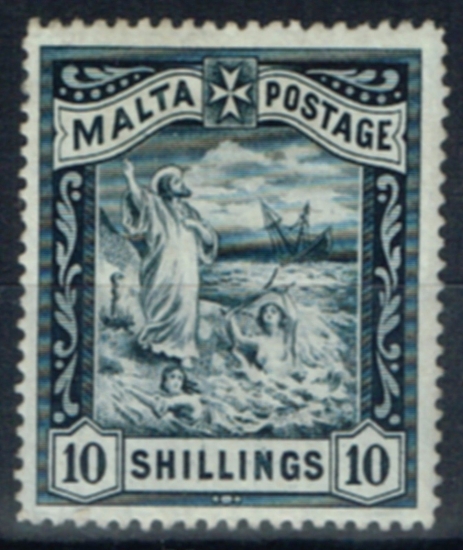
Candlemas was also believed to be a time when the soul of Judas is temporarily allowed out of Hell to ease his torment in the sea.

February 1

Home / Today in History / February 1

1981Underarm

1981 Australia’s shame: the underarm bowling affair

Australians have a reputation as ruthless athletic competitors. Cricket is a sport which prides itself on gentlemanly behaviour. Sometimes these two impulses collide, as in the case of the infamous end to a one-day international match between Australia and New Zealand.

One ball remained to be bowled with Australia leading, but should the New Zealand batter, Brian McKechnie, hit it in the air out of the field of play, he would score six runs and New Zealand would win. In order to make that strike impossible, Australian captain Greg Chappell instructed the bowler, his brother Trevor, to roll the ball underhand along the ground. This was entirely legal but very much not “in the spirit of the game”.

As Trevor Chappell bowled, his other brother Ian, in the commentary box reporting on the game, cried out “No, Greg, no, you can’t do that!” Richie Benaud, a famed Australian cricketer and former captain, was commentating on television and instantly voiced his dismay. He called it  “disgraceful” and said it was “one of the worst things I have ever seen done on a cricket field.” The New Zealand Prime Minister was no less heated.  He said Chappell’s decision “an act of true cowardice” and he considered it appropriate that the Australian team were wearing yellow. Even the Australian Prime Minister said it was against the traditions of the sport.

Greg Chappell soon regretted his actions and blamed it on fatigue. Thirty-nine years later the incident is still remembered and considered a black day in Australian sporting history. And that’s why I love cricket.