March 12

Catholicism-Pope-John-Paul-II

2000

The pope apologizes

Pope St John Paul Paul II (1920-2005) made it a hallmark of his pontificate to apologize for sins committed by Christians  over the centuries. Among the subjects of his regrets were:

  • The conquistadors’ behaviour in Latin America
  • The judicial treatment of Galileo
  • The sacking of Constantinople by the Fourth Crusade in 1204
  • Christian involvement in the African slave trade
  • Failure to do enough to prevent the Jewish Holocaust
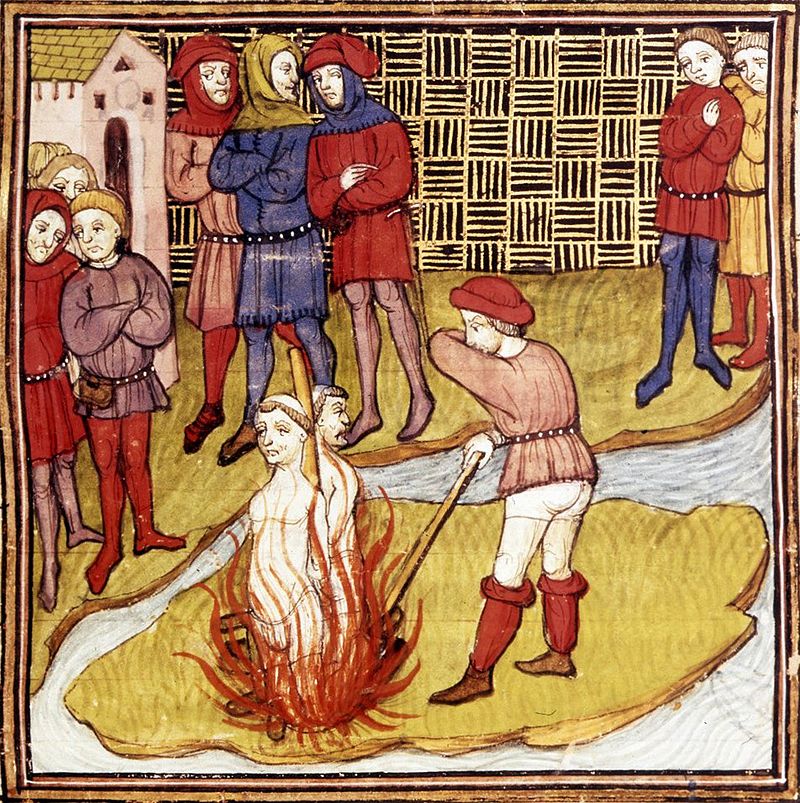
  • The burning of Jan Hus by the Council of Constance in 1415

On this date in 2000 John Paul gave a homily at the Mass for Pardon in the Vatican during which he implored God’s forgiveness for the faults of all believers.

“We are asking pardon for the divisions among Christians, for the use of violence that some have committed in the service of truth, and for attitudes of mistrust and hostility assumed toward followers of other religions.”

Though no specific groups were named by the pope, cardinals speaking later in the service singled out Jews, gypsies, women and marginalized ethnic groups.

March 11

Home / Today in History / March 11

image

1977

Hanafi Siege in Washington

The Nation of Islam (NOI), or Black Muslim cult, is no stranger to murderous violence, as the assassination of breakaway leader Malcolm X shows. Another such dissident was Hamaas Abdul Khaalis, (born Ernest Timothy McGhee, also known as Ernest “XX” McGee and Ernest 2X McGee), former national secretary of the Nation of Islam, who left NOI and formed his own sect in 1958 called the Hanafi Movement. In 1973, Black Muslims entered a house owned by basketball player Kareem Abdul Jabbar and murdered seven members of Khaalis’s family in revenge for his insulting the leader of the Nation of Islam. The dead included children, slain because “the seed of the hypocrite is in them.” Though the killers were convicted of murder, Khaalis was not satisfied and his precarious mental state was worsened.

On March 9, 1977 armed members of the Hanafi Movement stormed three buildings in Washington, DC: the B’nai Brith headquarters, city hall, and an Islamic Center, taking 149 people hostage and killing two bystanders. Khaalis’s main demand was that the 1973 killers be turned over to him but he also railed against Jews  who controlled the courts and media, ordered the end of showing a movie about the life of Muhammed, demanded a refund on a $750 fine, and insisted on a meeting with boxer Muhammed Ali. After negotiations with the police and three ambassadors from Islamic countries, the siege was ended. Khaalis was sentenced to a lengthy prison term and died in jail in 2003.

March 10

Home / Today in History / March 10

600px-Tokyo_kushu_1945-3

1945

Operation Meetinghouse Burns Tokyo

In the 1930s the Japanese Empire launched a war to conquer China, expel Europeans and Americans from their Asian and Pacific holdings, and establish a Japanese hegemony. At its greatest extent in 1942, the Japanese “Greater East Asia Co-Prosperity Sphere” held sway over millions of square miles from Alaska to Burma.

The decision to attack the United States at Pearl Harbor in December 1941 was supposed to buy Japan enough time to conquer eastern Asia and present the Americans with a fait accompli. However, the failure to sink American carriers meant that a fight-back began very quickly and for the next few years, while American efforts were concentrated on Europe, the war in the Pacific consisted of a battle for a series of island chains ever closer to Japan.

Mainland Japan remained largely out of range of American bombers until late 1944 when new airbases on the Mariana Islands and new B-29 high-altitude bombers were brought into the fight. The failure of the Japanese kamikaze attacks deprived Japan of any effective air cover, making its cities virtually defenceless against B-29 raids using incendiary bombs.

On March 10, 1945, an air raid by almost 300 planes on Tokyo dropped 1,665 tons of bombs, mostly phosphorus or napalm. The resulting firestorm killed at least 100,000 people, injured hundreds of thousands more, and rendered a million Japanese homeless. The Americans lost 27 planes during the raid, some of them victims of huge winds which the bombing created.

Raids of this sort should have convinced the Japanese government that defeat was inevitable, but Hirohito’s cabinet held out until August, 1945 after atomic bombs destroyed Hiroshima and Nagasaki.

March 9

1762-Jean-Calas

1765

Jean Calas is vindicated

In October 1761, Marc-Antoine Calas was found dead on the floor of his family home. At first, his parents claimed that the man had been murdered but then changed their story to say that they had found him hanging and, wishing to avoid the scandal of suicide, cut him down. The father, Jean Calas, a prosperous merchant of Toulouse, was arrested and charged with the murder of his son. The motive imputed to him was that the younger Calas wished to convert to Catholicism and the father, a Protestant, killed him to prevent that. To the mob and the authorities, Marc-Antoine was a Catholic martyr. Under horrible torture, Calas refused to confess and even during his execution by being broken on the wheel, he clung to the story of suicide. His body was then burnt, his daughters were forced into a convent, his wife and sons forced to flee and his property was confiscated.

The case was taken up by the philosophe Voltaire who used it as a way of attacking the Catholic Church, accusing them of perverting justice in order to kill a Protestant. Since the 1685 Edict of Fontainebleau by Louis XIV, Catholicism had been the country’s only legal religion and Huguenots (French Protestants) always worshipped and lived under a cloud. In his Traité sur la Tolerance à l’occasion de la mort de Jean Calas Voltaire excoriated the Church for its bigotry, obscurantism and fanaticism. The case became a cause célebre throughout Europe and did much to discredit religion in the eyes of those who considered themselves enlightened.

What is less well known is the reaction of the court of Louis XV. Within less than three years of the trial, the king ordered a new panel to reconsider the evidence. They voted to rehabilitate the reputation of Jean Calas and vacate the guilty sentence. Louis XV also paid restitution to the family.

March 8

Home / Today in History / March 8

1939_Playball_Joe_Dimaggio_(minus_halftone)

1999

Death of the “Yankee Clipper”

Joseph Paul “Joe” DiMaggio (1914 –1999), aka “Joltin’ Joe” and “The Yankee Clipper” was born to an Italian immigrant family in San Francisco that produced three major league baseball centre-fielders. After a minor league career in the Pacific Coast League, DiMaggio joined the New York Yankees for the 1936 season and led them to four straight World Series titles. Aside from his war-time duty in the airforce, Joe played with the Bronx Bombers from 1936 to 1951. He was an All-Star every year (13 times), Most Valuable Player 3 times, World Series winner 9 times, leading the league twice in batting average, runs batted in and home runs. His range in centre field was legendary.

DiMaggio’s most famous feat was the 56-game hitting streak in 1941, breaking the record of 45 games set in 1896-97 by “Wee Willie” Keeler. It has been called “the most extraordinary thing that ever happened in American sports.” Since then the closest anyone has come to breaking the mark was Peter Rose of Cincinnati with 45 games.

After his retirement DiMaggio was briefly married to Marilyn Monroe.

March 7

Home / Today in History / March 7

580px-Laurentius_de_Voltolina_001

1277 

Bishop Tempier condemns 219 propositions

Stephen, by divine permission unworthy servant of the church of Paris, sends greetings in the Son of the glorious Virgin to all those who will read this letter. We have received frequent reports, inspired by zeal for the faith, on the part of important and serious persons to the effect that some students of the arts in Paris are exceeding the boundaries of their own faculty and are presuming to treat and discuss, as if they were debatable in the schools, certain obvious and loathsome errors, or rather vanities and lying follies, which are contained in the roll joined to this letter.

Stephen Tempier was Bishop of Paris during a time of great philosophical excitement; the University of Paris was the leading site for an attempt to reconcile the intellectual contributions of Aristotle and his Muslim commentators, with Christian doctrine. Thomas Aquinas and his fellow Dominicans were developing Scholasticism, the dominant intellectual mode of the late Middle Ages, and in the process aroused suspicions that they were treading on to heretical ground. Tempier established a commission to investigate such Aristotelian writings and came up with 219 propositions in the work of thinkers such as Aquinas, Siger of Brabant, and Egidius Romanus that were contrary to orthodoxy.

Some of the objectionable doctrines were:

• That the world is eternal

• That there is only a single intellect

• That one should not hold anything unless it is self-evident or can be manifested from self-evident principles.

• That man should not be content with authority to have certitude about any question.

• That God could not move the heaven in a straight line, the reason being that He would then leave a vacuum.

• That there was no first man, nor will there be a last; indeed, the generation of man from man always was and always will be.

• That our will is subject to the power of the heavenly bodies.

• That it is not true that something comes from nothing or was made in a first creation.

Though this move was meant to be a conservative attack on Aristotle and the dangers he posed to Christian theology, Tempier’s condemnations did little in the short run to stop the study of the Greek philosopher at Paris or elsewhere. However, his actions may have helped spur a tendency to regard Aristotle as untrustworthy and not the unimpeachable source of knowledge that some had come to see him. By freeing some thinkers from the errors of Aristotle, (particularly in his natural science) Tempier seems to have contributed to the rise of experimentation and the Scientific Revolution of the thirteenth century.

March 6

Santarosaviterbo

St Rose of Viterbo’s Day

Rose (1234-52) was a short-lived but meteoric saint of thirteenth-century Italy whose astonishing career began at age 3 when she raised her aunt from the dead. At the age of seven she was living an ascetic lifestyle; by the age of ten she believed she had been commissioned by the Virgin Mary and was preaching repentance in the streets and leading religious processions. She had a reputation as a prophet and as one who could communicate with the birds. For taking the side of the papacy in the quarrel with the Holy Roman Emperor Frederick II, she was exiled to Soriano where she prophesied the death of the emperor — this occurred within a week. In a neighbouring town she confronted a notorious sorceress and converted the townspeople and the witch by standing unscathed for three hours in a burning pyre.

Returning to Viterbo, Rose wished to enter the Poor Clares, a Franciscan order for women, but was refused because she was too poor to bring a “dowry” with her. She prophesied that she would be admitted after her death which took place shortly after at age 17. Pope Alexander IV ordered the convent to receive her body.

Rose is the patron saint of Viterbo, exiles and those refused by religious orders. A procession honouring her takes place yearly in her native town.

March 5

190px-De_Revolutionibus_manuscript_p9b

1616

Copernicus is added to the Index of Prohibited Books

The Polish priest Nicolas Copernicus was the first astronomer to effectively challenge the age-old notion of a universe with the Earth at its centre. In his book De revolutionibus orbium coelestium (On the Revolutions of the Heavenly Spheres), published in 1543 shortly before its author’s death, Copernicus proposed a heliocentric system, with the sun surrounded by the Earth, the stars and other planets. The book solved many of the problems astronomers had been having in calculating the movement of the heavens, but it was an incomplete solution, leaving more work to be done by the likes of Brahe, Kepler and Galileo.

The book was dedicated to Pope Paul III but it contained notions that seemed to be at odds not only with established scientific orthodoxy but Scripture as well. Certainly Martin Luther was at odds with heliocentrism, saying “people gave ear to an upstart astrologer who strove to show that the earth revolves, not the heavens or the firmament, the sun and the moon … This fool wishes to reverse the entire science of astronomy; but sacred Scripture tells us [Joshua 10:13] that Joshua commanded the sun to stand still, and not the earth.” The Catholic Church was also troubled by it, as the scandal with Galileo proved, and in 1616 it put Copernicus’s writings on the Index.

This Holy Congregation has also learned about the spreading and acceptance by many of the false Pythagorean doctrine, altogether contrary to the Holy Scripture, that the earth moves and the sun is motionless, which is also taught by Nicholaus Copernicus’ De revolutionibus orbium coelestium and by Diego de Zúñiga’s In Job … Therefore, in order that this opinion may not creep any further to the prejudice of Catholic truth, the Congregation has decided that the books by Nicolaus Copernicus [De revolutionibus] and Diego de Zúñiga [who had defended Copernicus in his book In Job] be suspended until corrected.

The book remained prohibited until 1758 when Pope Benedict XIV removed it from the Index.

March 4

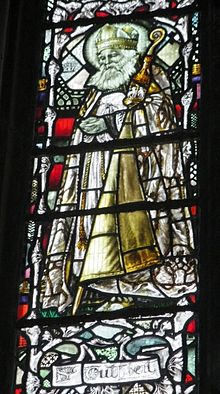
St. Adrian of Nicomedia

St Hadrian of Nicomedia’s Day

As the bodyguard of Eastern Roman emperor Galerius, Adrian was so impressed by the fortitude of Christians undergoing persecution in 306 that he decided to become one himself. This naturally led to his own martyrdom, a gruesome process that involved being broken by an anvil, thrown to the lions and chopped into pieces. Adrian may be invoked by believers suffering from epilepsy or the plague and he is the patron of arms dealers, butchers, prison guards and soldiers.

2615

St Casimir’s Day

Casimir (1461-84) was not your usual late-medieval prince. The son of King Casimir IV, he was uncomfortable with worldly power and, growing up, got a reputation for prayer, asceticism and all-round saintliness. When ordered by his father to lead what he felt was an unjust invasion of Hungary, Prince Casimir turned the army around and came home, resulting in his banishment to a remote castle. He also refused to fight any Christian country when the Turks were posing such a danger to Europe. Preferring celibacy, he rejected the political marriage planned for him by his father and concentrated on acts of charity. He died of a lung disease at the age of 23.

Casimir is the patron saint of Poland and Lithuania.

March 3

Home / Today in History / March 3

Victoria-rink-1893

1875

The first indoor hockey game

Ice hockey and related games had been played out of doors for some time before someone thought of bringing such sporting contests indoors. The credit for this act of genius goes to James Creighton, a lawyer and figure skater, who organized a game between members of Montreal’s Victoria Skating Club.

The Montreal Gazette announced the impending tussle thusly:

Victoria Rink – A game of Hockey will be played at the Victoria Skating Rink this evening, between two nines chosen from among the members. Good fun may be expected, as some of the players are reputed to be exceedingly expert at the game. Some fears have been expressed on the part of intending spectators that accidents were likely to occur through the ball flying about in too lively a manner, to the imminent danger of lookers on, but we understand that the game will be played with a flat circular piece of wood, thus preventing all danger of its leaving the surface of the ice. Subscribers will be admitted on presentation of their tickets.

The paper duly reported the results of the match:

HOCKEY — At the Rink last night a very large audience gathered to witness a novel contest on the ice. The game of hockey, though much in vogue on the ice in New England and other parts of the United States, is not much known here, and in consequence the game of last evening was looked forward to with great interest. Hockey is played usually with a ball, but last night, in order that no accident should happen, a flat block of wood was used, so that it should slide along the ice without rising, and thus going among the spectators to their discomfort. The game is like Lacrosse in one sense — the block having to go through flags placed about 8 feet apart in the same manner as the rubber ball — but in the main the old country game of shinny gives the best idea of hockey. The players last night were eighteen in number — nine on each side — and were as follows: — Messrs. Torrance (captain), Meagher, Potter, Goff, Barnston, Gardner, Griffin, Jarvis and Whiting. Creighton (captain), Campbell, Campbell, Esdaile, Joseph, Henshaw, Chapman, Powell and Clouston. The match was an interesting and well-contested affair, the efforts of the players exciting much merriment as they wheeled and dodged each other, and notwithstanding the brilliant play of Captain Torrance’s team Captain Creighton’s men carried the day, winning two games to the single of the Torrance nine. The game was concluded about half-past nine, and the spectators then adjourned well satisfied with the evening’s entertainment.

It would not have been a hockey game, of course, without a fight breaking out. The fisticuffs were not on the ice, but broke out after the game when players encountered hostile members of the skating club angry that the ice had been denied to them for their usual skate.